Non-white scientists appear on fewer editorial boards, spend more time under review, and receive fewer citations; barriers to entry & success in academia https://t.co/c16r5YRtkB
There are 2 more days to submit comments on Idaho's new wolf management plan. The plan gives no justification to change trapping and hunting restrictions for the purpose of decreasing wolf the population size. See thread below.
Did you know 500 wolves are killed each year in Idaho? 500 is 2x the # of livestock killed by wolves. Still ID F&G aims to reduce wolf pops from ~1200 to 500 in next 5 yrs by incentivizing & removing restrictions on trap/hunt. Write a comment on plan here: https://t.co/3uwx4LmsHT
Even if Idaho decreases the wolf pop to 500, we do not have monitoring to track a pop this small. Current pop estimates have 95% conf intervals that span 800 wolves. Error in the estimate > the estimate itself. Wolves could to decline to just a few individuals.
Did you know 500 wolves are killed each year in Idaho? 500 is 2x the # of livestock killed by wolves. Still ID F&G aims to reduce wolf pops from ~1200 to 500 in next 5 yrs by incentivizing & removing restrictions on trap/hunt. Write a comment on plan here: https://t.co/3uwx4LmsHT
What a cool project. Large mammals that strip bark from trees create opportunities for fungus infections leading to cavities for birds and other animals.
Hola Gente!
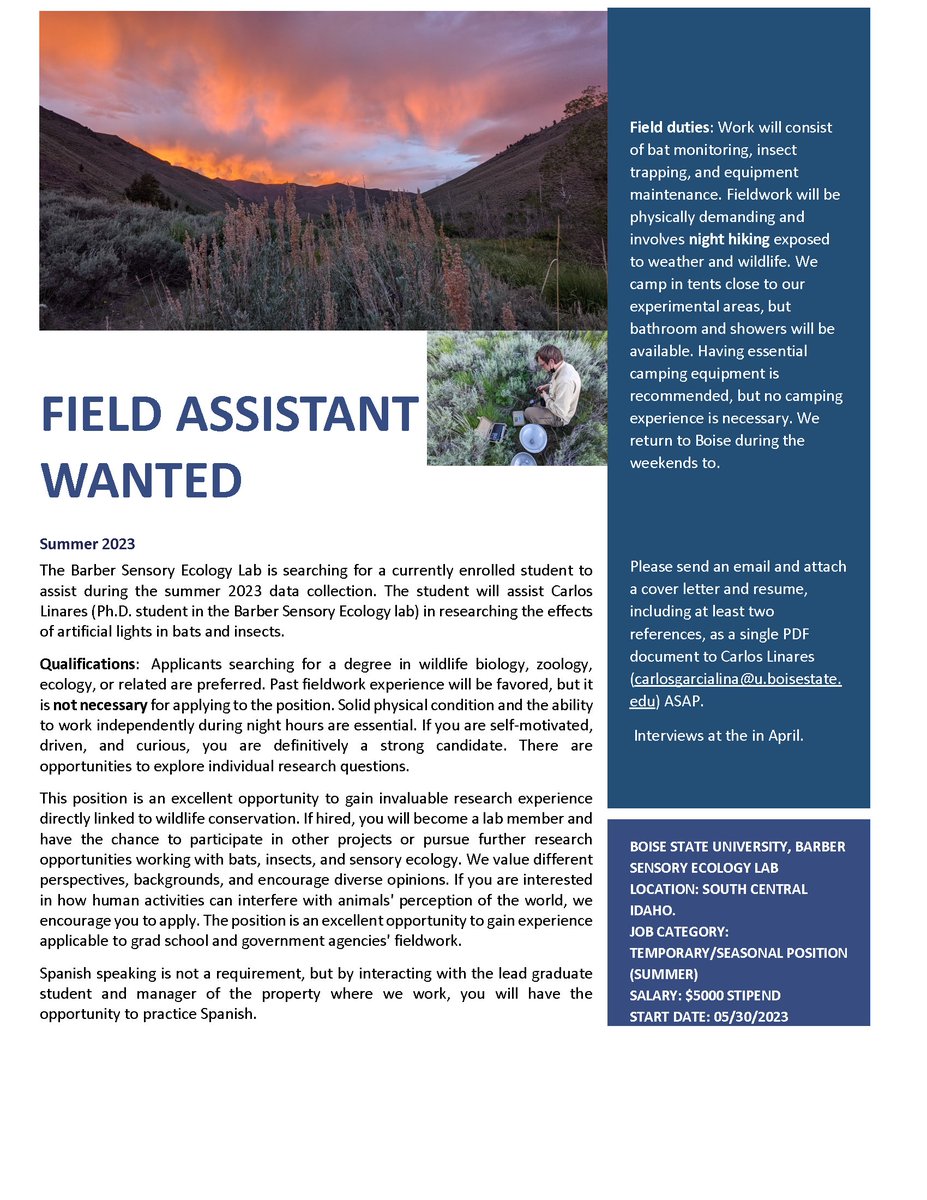
Fieldwork! Join me and the Barber lab at Boise State University this summer. We are looking for assistants to help me collect data on bats and moths and their response to light. Please share! #biology#fieldwork#ecology
We are hiring! We are looking for a field technician to help with golden eagle research this spring (Apr 15-Jul 31). Position details are here: https://t.co/YgiwVyx5At
If you have climbing skills and are interested in raptors, please apply.
Plz retweet
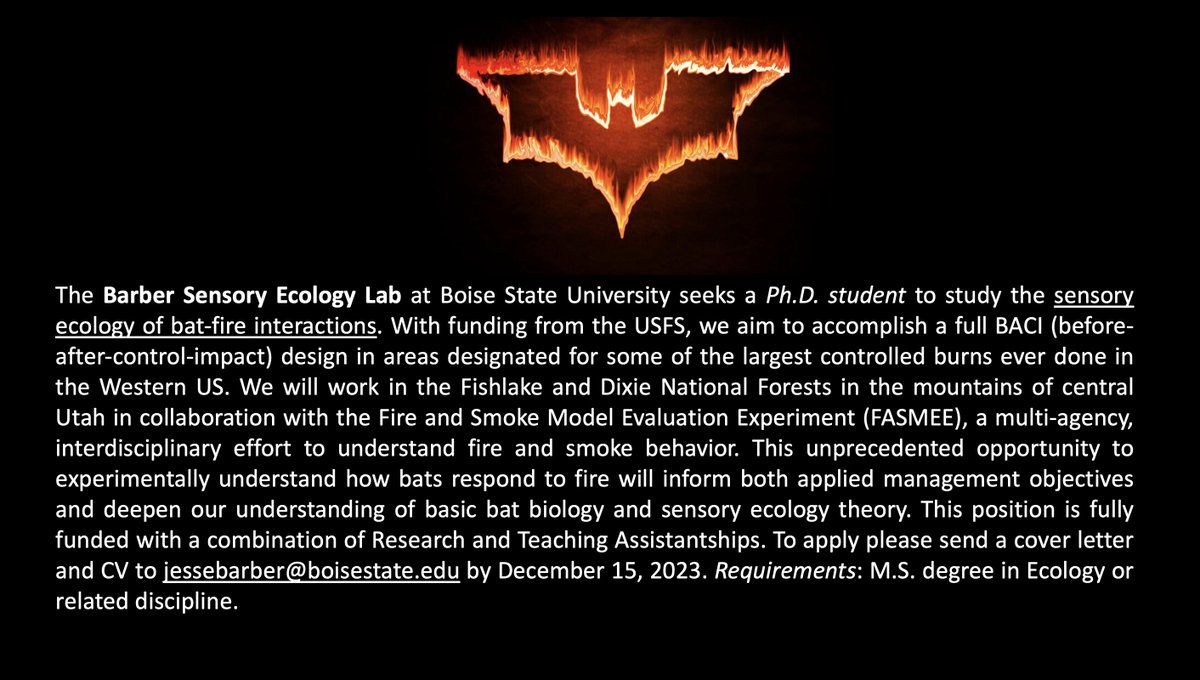
The Barber Sensory Ecology Lab at Boise State University seeks a Ph.D. student to study the sensory ecology of bat-fire interactions!
Follow us on Mastodon: @[email protected]
@brols Yeah, that was my thought- the NE declines have been going on for so long maybe they’ve flattened out a bit. Still curious about the west declines, though. Some evidence for west declines from BBS, but not much from CBC or migration counts.
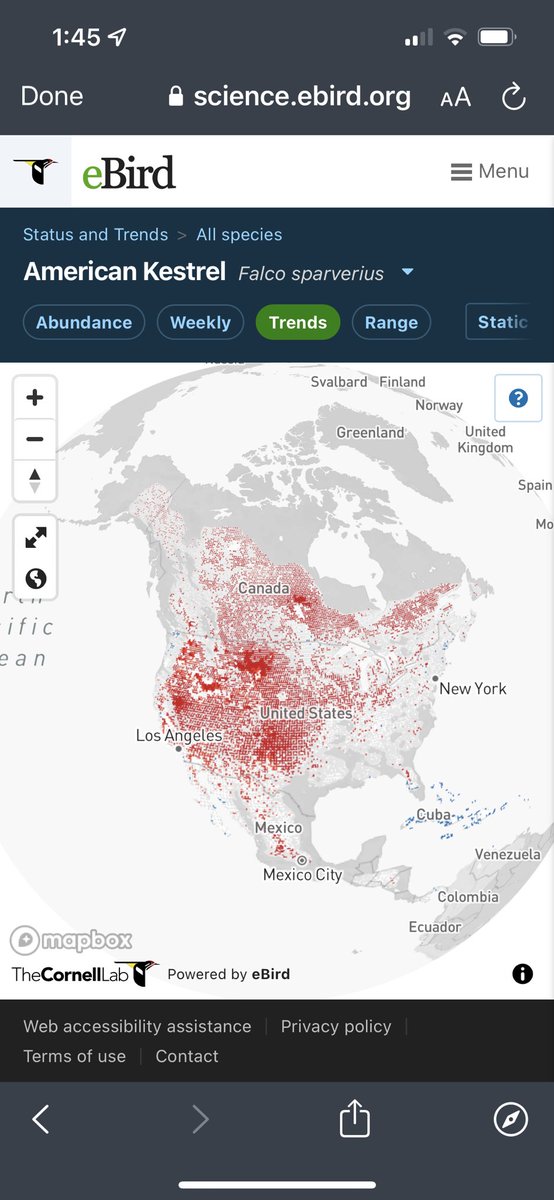
eBird trend map for American Kestrels 2007-2021 shows significant declines in west and parts of the northeast. Interesting how this differs from other pop estimates that show kestrels relatively stable in west and strong declines in east.
Interesting study on how captive breeding and a parasite (Trichomonas gallinae) change the oral microbiome of Bonelli's Eagle nestlings https://t.co/hctcF8t0Zn