Pare de David | Neurociència, dades i IA | Exploro com comprendre millor la intel·ligència humana i la IA pot ajudar-nos a aprendre, treballar i viure millor.
Un estudi recent del Consell Assessor per al Desenvolupament Sostenible (CADS), elaborat per Josep Oliver, estima que entre 2024 i 2050 l’escenari alt acumularia aproximadament 1,4 milions de saldo migratori amb l’estranger, davant d’uns 953.000 en l’escenari mitjà.
Com podem estudiar el desenvolupament del cervell humà si no podem observar directament molts dels processos que tenen lloc durant les primeres etapes de la vida? Aquesta és una de les dificultats de la neurociència.
La capacitat d'estudiar els trastorns cerebrals que sorgeixen abans del naixement ha fet un gran salt endavant, ja que investigadors de Stanford Medicine han trobat una nova manera de cultivar teixit cerebral humà fora del cervell humà.
Llegir ➡️ https://t.co/hlqLIk8x54
Potser una de les claus és aquest «humans amb robots»: no només quina feina substituirà la IA, sinó quina nova divisió del treball construirem entre persones i màquines.
Aquí hi ha un enorme camp per a la IA aplicada a Catalunya.
via @diariARA
https://t.co/PbQ8ZGvvml
Molt interessant, @albertcadanet
La IA permetrà personalitzar cada vegada més les decisions empresarials, també els preus.
Però la pregunta rellevant no és només què podem fer amb els algoritmes, sinó què volem fer-ne.
via @diariARA
https://t.co/oL9oa5wlmE
"Serem la primera generació eternament recordada gràcies a la IA".
José Ignacio Latorre, expert internacional en computació quàntica i intel·ligència artificial, proposa un nou contracte social entre humans, naturalesa i màquines https://t.co/m3nB89ncxl #MésNit3Cat
Barcelona plena.
Badalona íntima.
Reus profunda.
Lleida al límit.
Sabadell catarsi.
Aquest relat no va només de salut mental.
Va de la vida, del vincle i la humanitat.
Former Meta Chief AI Scientist Yann LeCun on the three paradigms of machine learning — and why the third is what made ChatGPT possible:
Here's each one, and where it breaks.
First, supervised learning. You tell the machine the answer.
"You show it a picture, let's say of a table, and you tell it this is a table. So it's supervised because you tell it what the correct answer is."
Get it wrong, and the machine rewrites itself:
"The system computes its output, and if it says something else than table, then it's going to adjust its parameters, its internal structure, so that the output it produces gets closer to the output you want."
Repeat at scale and something more than memorisation appears:
"Eventually the system will find a way to recognize every image you trained it on, but also images it's never seen that are similar to the one you train it on. This is called a generalization ability."
The limit: a human has to supply every single answer. That doesn't scale to the size of the internet.
Second, reinforcement learning. You don't give the answer, only a verdict.
"You don't tell the system what the correct answer is. You only tell it whether the answer it produced was good or bad."
Learning to ride a bike, essentially:
"You try to ride a bike and you don't know how to ride the bike and after a while you fall. So you know you did something bad and so you change your strategy a little bit. And eventually you learn how to ride a bike."
For years the field assumed this was the closest thing to how animals actually learn. @ylecun's verdict:
"Now it turns out reinforcement learning is extremely inefficient."
It dominates wherever failure is free:
"It works really well if you want to train a system to play chess or play go or poker, because you can have the system play millions and millions of games against itself and basically fine-tune itself. But it doesn't really work in the real world."
The limit, in one image:
"If you want to train a car to drive itself, you're not going to do it with reinforcement learning. It's going to crash thousands of times."
On robotics he's careful rather than dismissive:
"Reinforcement learning can be part of the solution, but it's not the complete answer. It's not sufficient."
Third, self-supervised learning. You tell the machine nothing at all.
"And this is what has enabled the recent progress in natural language understanding and chatbots."
The strange part is that you stop asking for a task:
"You don't train the system to accomplish any particular task. You just train it to basically capture the structure..."
The method is deliberate sabotage:
"You take a piece of text, you corrupt it in some way, by for example removing some words, and then you train a big neural net to predict the words that are missing."
And one narrow version of that trick runs every chatbot on Earth:
"A special case of this is that you take a piece of text and the last word in that text is not visible, and so you train the system to predict the last word in that text — and this is the way large language models are trained on."
So why did the third one win?
Supervised learning needs a human. Reinforcement learning needs a crash. Self-supervised learning needs neither — because the missing word and the correct answer are the same thing. The data grades itself.
Val la pena llegir amb atenció Demis Hassabis.
No només pel que planteja sobre l’AGI, sinó per les preguntes que posa sobre la taula: ciència, seguretat, governança, economia, propòsit i futur del progrés humà.
Un text per llegir a poc a poc i tornar-hi amb el temps.
Filadèlfia és aquests dies la capital mundial de les matemàtiques amb el #ICM2026 en marxa.
Què representa aquest congrés i per què és la cita més important de les matemàtiques a escala mundial?
🧵Obrim fil!
La IA no va només de tecnologia.
Va de transformar com treballem, produïm i prenem decisions. I també de poder viure millor, ser més autònoms i cuidar millor les persones.
Analitzo aquesta transformació, les oportunitats que obre i el que vindrà després.
IA amb impacte real.
La IA no va només de tecnologia.
Va de transformar com treballem, produïm i prenem decisions. I també de poder viure millor, ser més autònoms i cuidar millor les persones.
Analitzo aquesta transformació, les oportunitats que obre i el que vindrà després.
IA amb impacte real.
La missió institucional i empresarial de Sant Cugat del Vallès [@ajsantcugat], a Changzhou liderada per l’alcalde Josep Maria Vallès [@josepmvalles], ha permès establir contactes amb un dels principals pols industrials del delta del Yangtsé
@VIAEmpresa
https://t.co/1lwprdAqCH
🧠 Cent-vint-i-sisena entrega de la sèrie #IAperatothom d’@elpuntavui
Entrevista exclusiva a Pompeu Casanovas, professor d’investigació en IA, ètica i dret.
🗣️ «La intel·ligència artificial ens obliga a redefinir el dret.»
🔗 https://t.co/8HWyOcwcBt
@alfons_godall Al David li apassiona el futbol ⚽️, però és molt reticent a participar quan l’ambient és massa intens: l’incomoda i l’inhibeix.
I és una llàstima, perquè poques coses l’ajuden tant a créixer, socialitzar i guanyar confiança com el futbol.
Prenc nota d’Ordino per l’estiu vinent!
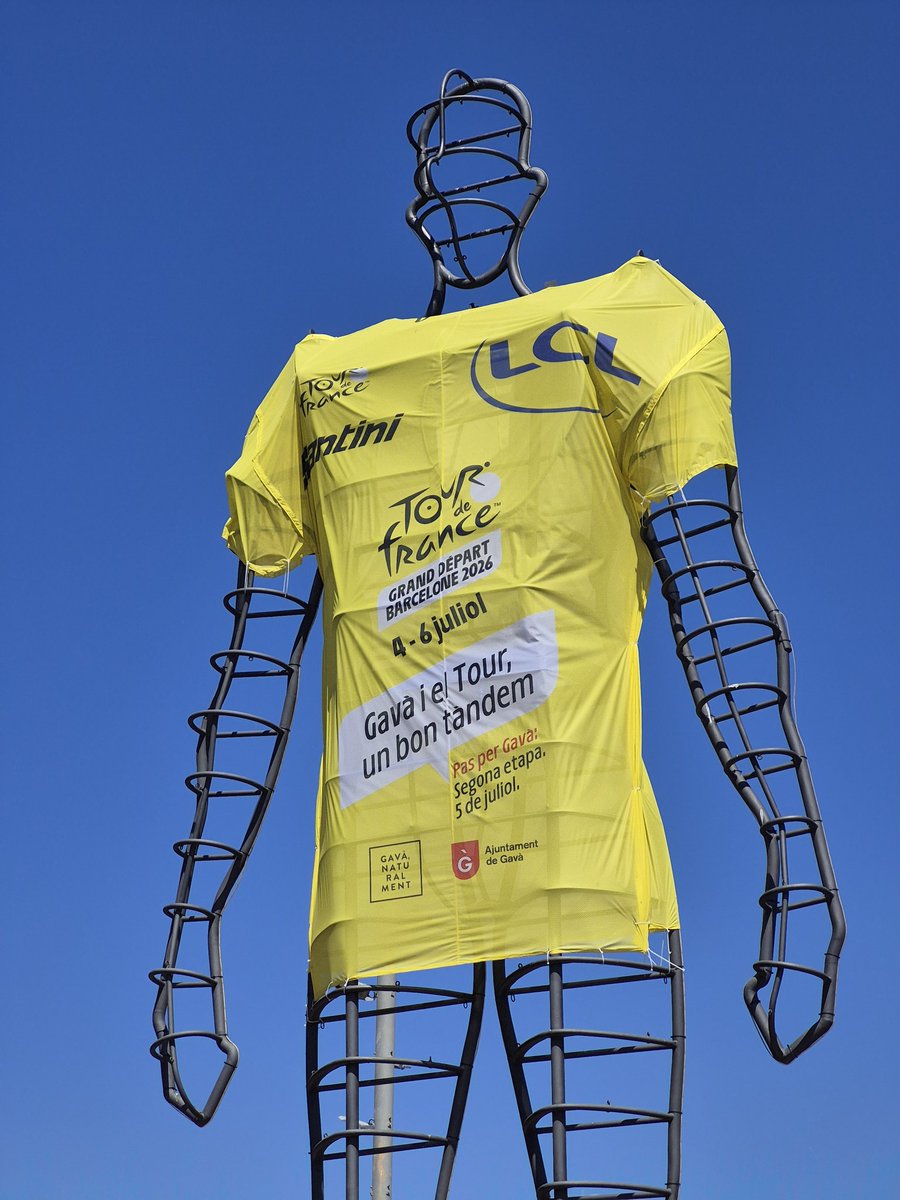
Demà tinc un pla molt especial amb el David: veure passar el Tour de França per Gavà.
Serà una oportunitat per observar com funciona un gran esdeveniment internacional... i, és clar, l'espectacle del millor ciclisme del món.
Hi ha moments que val la pena viure en directe.






![JLMoralesAI's tweet photo. "Volem generar referents perquè les nenes puguin pensar que poden fer allò que vulguin fer"
Roser Bastida [ @bb_roser ] a @elbruguers https://t.co/PJx4QVBaqW](https://pbs.twimg.com/media/HQxfYuZXwAEV5H3.jpg)


