5 prop firms. 25+ accounts. $400k+ in lifetime payouts (might be more now lol)
but it took me 3ish months to get my first payout and i blew a LOT of evals before any of this worked
here's the full eval and payout strategy i figured out the hard way (thread)
Brutal truth about trading:
The traders who usually lose it all are the ones who come in needing to make a quick buck or pay off a debt
The moment you become consumed by the outcome, trading stops being trading
It becomes gambling
Now you’re forcing setups
Oversizing positions
Chasing money instead of following a process
That desperation takes the beauty out of trading and replaces it with pressure
And pressure destroys execution
𝗜𝘁’𝘀 𝘁𝗮𝗸𝗲𝗻 𝗺𝗲 𝟭𝟰 𝘆𝗲𝗮𝗿𝘀 𝗮𝘀 𝗮 𝘁𝗿𝗮𝗱𝗲𝗿 𝘁𝗼 𝗿𝗲𝗮𝗹𝗶𝘇𝗲 𝘄𝗵𝗮𝘁 𝗜’𝗺 𝗮𝗯𝗼𝘂𝘁 𝘁𝗼 𝘁𝗲𝗹𝗹 𝘆𝗼𝘂 𝗶𝗻 𝗹𝗲𝘀𝘀 𝘁𝗵𝗮𝗻 𝟯 𝗺𝗶𝗻𝘂𝘁𝗲𝘀 (𝗯𝗼𝗼𝗸𝗺𝗮𝗿𝗸 𝗳𝗼𝗿 𝗹𝗮𝘁𝗲𝗿):
1) A winning streak can be more dangerous than a losing streak
-Losing makes you cautious. Winning makes you careless
-Most traders give back profits because confidence turns into ego, and rules start feeling optional
2) Your need to make money is exactly why you don’t
-The moment you “need” a trade to work, you stop trading objectively
-You start forcing setups, chasing moves, and taking trades you wouldn’t normally touch
3) If you size too big, your psychology will collapse before your strategy does
-A good system doesn’t matter if you can’t execute it under pressure
-Most traders don’t lose because they’re wrong, but because they’re oversized
4) Most of the time, it’s what you need to stop doing, not what you need to add, that levels you up:
-Stop overtrading
-Stop chasing
-Stop listening to every opinion on social media
5) To make 6 figures, you need to be comfortable losing 5 figures
-If a normal drawdown breaks you mentally, you’ll never survive the size required to scale
6) Doubt from others will hurt you. Especially when it comes from friends and family
-They’ll call it gambling. They’ll tell you to be realistic
-And most of the time it comes from love… but it still tests you
4) Most traders fail because they chase money instead of building a system
-They want the outcome without the process
-But profits are a byproduct of a repeatable framework, not a goal you can force
7) You have to believe in yourself when no one else does.
-In the beginning, nobody understands the vision
-You’re building a skill that takes thousands of hours. Confidence has to come from work, not validation
8) Impatience can cost you millions
-Impatience makes you chase entries
-It makes you overtrade
-It makes you abandon the system right before it would’ve paid
9) The more boring you can make trading, the more profitable you’ll be
-Excitement is usually a red flag
-The best trading feels like executing the same play over and over
-Some lessons can only be learned through your own experience
But if you’re able to learn from the experience of others, it will save you years of struggle and thousands of dollars.
The Grand Cup has officially begun. ⚔️
ROUND 1 is LIVE.
5 trading days.
$50,000 starting balance.
Top 1,000 traders advance to Stage 2. 🏆
Join FREE before it’s too late 👇
https://t.co/Eiczq267xZ
First 1000 comments only 💚
5 × $25k LucidFlex Evals Giveaway!
Follow: @propfirmsplaza
Turn on our notifications 🔔
Use code: PLAZA
(50% OFF + 2 FREE account on 1st payout)
We've rewarded 300+ users, their 2 free accounts (winners before today EOD)
20 rules to reprogram your mind for successful trading in under 3 minutes
(bookmark this)
1. Your first job each day is not to make money. It is to avoid doing something stupid.
2. If a trade needs hope to work, it was never a good trade to begin with.
3. A setup does not become valid because you're behind on the week.
4. Your P&L should never be allowed to decide your next trade.
5. The market is not asking how badly you want it. It is asking how well you can wait.
6. You do not rise to the level of your goals in trading. You fall to the level of your habits.
7. Most traders don’t break rules because they forgot them. They break them because they dislike what the rules require.
8. If you need excitement to stay interested, trading will punish you for it.
9. The hardest part of trading is often respecting a plan you made while calm, once emotions show up.
10. If you are constantly tweaking your system, you may be avoiding the discomfort of fully committing to one.
11. A trade can be technically right and still be wrong for you if the size changes your behavior.
12. A trader who cannot end the day flat emotionally will eventually end up flat financially.
13. If you are watching every tick, you are probably trying to control what cannot be controlled.
14. Consistency is built when your worst habits stop being stronger than your best intentions.
15. Your job is not to predict every move. Your job is to execute your edge cleanly.
16. A good trade can lose. A bad trade can win. Judge the process, not just the outcome.
17. The goal is not to avoid losses. The goal is to avoid unnecessary losses.
18. If there is no setup, there is no trade. Boredom is not a valid entry signal.
19. The size you trade should allow you to think clearly, not emotionally.
20. The real flex in trading is not making a lot on one trade. It's being able to maintain consistent behaviour across all your trades.
Read that again.
Then read it before the next session.
Because the faster you train your mind to think like this, the faster you stop trading like your emotions are in charge.
The best traders I know can mute their emotions by following a few simple rules.
Accept that there’s no shortcut:
You do not learn trading psychology from books alone.
You learn it through screen time, mistakes, and reps.
Use a rule-based system:
Emotion thrives in uncertainty.
You need a system that tells you exactly what to do so you’re not guessing in real time.
Cut out the noise:
Anything outside your trade plan is noise.
That includes random opinions on X and other people’s biases.
All of it weakens execution.
Build a routine:
Not just in trading, in life.
How you behave outside the market affects how you behave inside it.
Discipline carries over.
Lower your size:
A lot of “emotional trading” is really just oversized trading.
Smaller size = clearer thinking.
Define risk before entry
Know where you’re wrong before you enter.
That alone will save a lot of traders.
Focus on process, not money
The traders obsessed with P&L usually stay emotional.
The traders obsessed with execution are the ones who last.
Emotional trading usually isn’t a strategy problem. It’s a structural problem.
okay so I did my taxes last night and it's as bad as I thought lol
I owe ~$60k from prop firm payouts this year
nobody talks about what happens AFTER you start making money from props.
here's everything I've learned about taxes, LLCs, deductions, and not going broke (thread)
🚨GIVEAWAY: 2 x $25K Select Accounts from @Tradeify
To enter:
1. Follow @aw_trades_ & @Tradeify
2. Like & repost
3. Reply with your favorite Tradeify 3.0 feature
2 winners drawn tomorrow!!
40% off all accounts - code AW
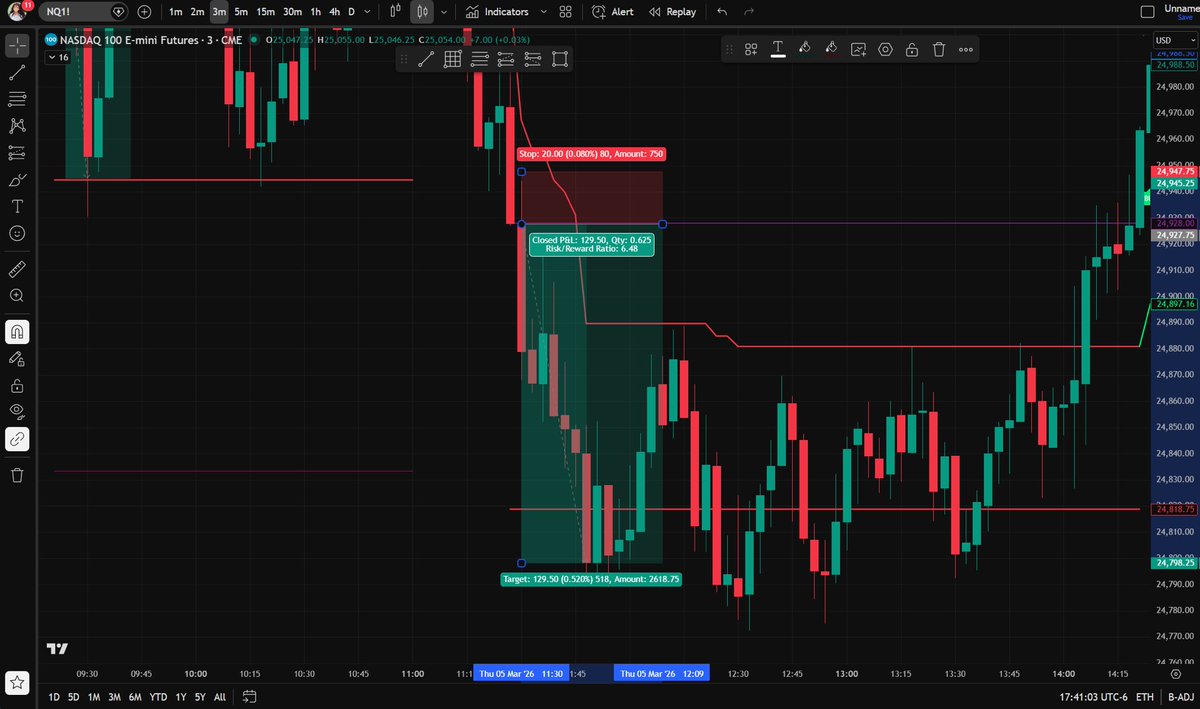
Started 5 new 150k Flex accounts with @TradingLucid today :))
First trade of the run:
110pt NQ short using Bloop🤖
Good start lol
So let’s do something fun!!
I’m giving away one of every Flex account size:
- 150k
- 100k
- 50k
- 25k
4 winners total!!
To enter:
1. Follow @aw_trades_
2. Like
3. RT
4. Comment which account you want!!
Winner chosen Sunday night!!
Let’s get some of you funded🤍
Code AW :))
I use RSI to determine position sizing:
RSI 70+ → 0% deployed (cash)
RSI 60 → 25% deployed
RSI 50 → 50% deployed
RSI 40 → 75% deployed
RSI 30 → 100% deployed
One number tells me exactly how aggressive to be.
No guessing. No emotions. Just math.