Can telerehab work in rural areas without reliable internet?
This study found asynchronous video-based therapy was highly usable, effective, and reduced travel burden for rural patients even with limited connectivity.
Design for real-world conditions matters more than perfect infrastructure.
Read the full study: https://t.co/Md30wDRXY2
#DigitalHealth #Telerehabilitation #GlobalHealth #HealthTech #mHealth #Rehab #HealthEquity #JMIR #RuralHealth
From emerging AI applications and evolving regulatory landscapes to new research shaping the future of care.
This month’s Digital Health Debrief brings you your daily dose of stories, studies, and developments driving conversation across digital health, along with job postings, funding opportunities and more.
Explore Volume 6 now: https://t.co/Ni1ipw9Ryv
The @MNDRegister protocol paper is now published.
The register, covering England, Wales, and Northern Ireland, holds data on over 11,000 people diagnosed with #MND and connects 60 clinical sites across three nations.
Published in @jmirpub👇
https://t.co/ae9KT5ZDuT
The prescription may be the easiest part.
As telehealth expands access to GLP-1 medications, some patients are missing the nutrition, exercise, and behavioral support needed for long-term success.
New from JMIR Correspondent Anna Zucker:
https://t.co/yVRTsjSEye
#GLP1 #Telehealth #MetabolicHealth #HealthcareInnovation
Can AI, wearables, and real-time analytics make workplaces safer?
JMIR Public Health and Surveillance is seeking papers for its new e-collection: Occupational Health and Digital Safety.
Topics include workplace AI, IoT sensors, digital safety tools, worker well-being, privacy, and more.
Submit your manuscript today: https://t.co/y3TTcsPOTN
#OccupationalHealth #WorkplaceSafety #DigitalHealth #PublicHealth #AIinHealthcare #HealthInformatics #callforpapers
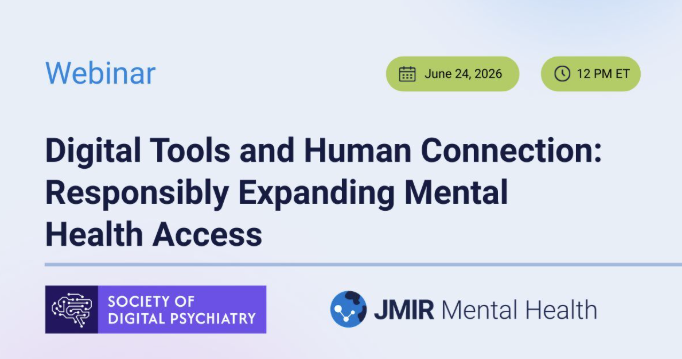
NEW WEBINAR ALERT
Mental health care is changing fast. The challenge? Ensuring technology enhances, not replaces, human connection.
Dr. John Torous and NAMI Board President Jeff Fladen will discuss this on June 24 for a conversation on responsibly expanding mental health access with AI and digital tools.
📅 June 24 | 12 PM ET
Register now: https://t.co/1EcEITJ3Nr
#MentalHealth #DigitalPsychiatry #DigitalHealth #AIinHealthcare #MentalHealthInnovation #HealthTech #JMIR
A @WHO - self-help intervention (“Doing What Matters in Times of Stress”) significantly reduced psychological distress in Afghan refugees in a randomized controlled trial.
Individually supported self-help may offer a scalable, low-barrier mental health solution in humanitarian settings.
Read the full study from @UNSW: https://t.co/Y7uTiO8KTS
#MentalHealth #RefugeeHealth #GlobalHealth #WHO #PublicHealth #JMIR
AI is getting better at spotting gestational diabetes early.
A new article shows that combining synthetic data (GANs) + medical knowledge–guided features significantly improves early GDM prediction performance and recall.
More accurate, more explainable, earlier intervention.
Read the full paper: https://t.co/9tu9UAnvVx
#AIinHealthcare #DigitalHealth #MaternalHealth #MachineLearning #JMIR
APA 2026 may be over but digital psychiatry is only accelerating !
From clinical AI to digital navigators, the conversations in San Francisco made one thing clear: AI and digital mental health are reshaping psychiatric care.
Explore Dr. John Torous's top AI & mental health reads, join the SODP community, and grab an exclusive JMIR author discount valid until May 2027: https://t.co/6EyFo037yp
#DigitalMentalHealth #DigitalPsychiatry #AIinMentalHealth #Psychiatry #JMIR #MentalHealthInnovation #APA2026
Pregnant women have long been excluded from clinical research—creating major evidence gaps in drug safety.
In her first News & Perspectives piece, JMIR Correspondent Michelle Falci explores how machine learning and data mining could help close that gap. Read more: https://t.co/d2QZ6KkAee
#MachineLearning #AI #DrugSafety #PregnancyHealth #DigitalHealth
Could your barber or local café become a source of health information?
A new study found many adults are open to receiving health messages from neighborhood food and beauty businesses.
Public health outreach may be moving beyond the clinic.
Read the full study: https://t.co/KhUxHP619f
#PublicHealth #HealthCommunication #CommunityHealth #JMIR
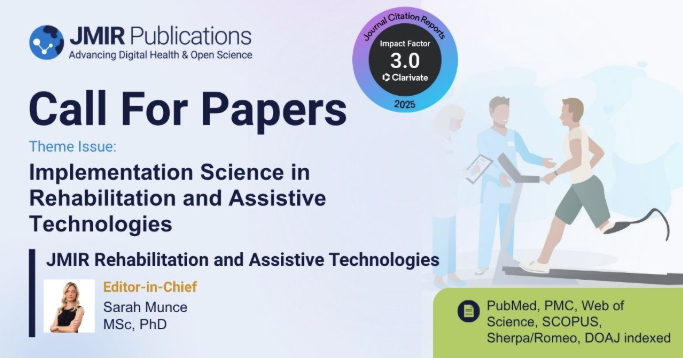
New JMIR Rehabilitation and Assistive Technologies call for papers 📢
Implementation Science in Rehabilitation & Assistive Technologies
We’re seeking research on how rehab interventions + assistive tech are adopted, scaled, and sustained in real-world settings.
Focus areas include:
• Scale-up & implementation strategies
• Co-design & user-centered approaches
• Workforce training
• Equity in LMIC settings
• De-implementation of low-value care
📌 Submit via JMIR Rehabilitation and Assistive Technologies
Learn more: https://t.co/GJwYI9AdT5
#JMIR #RehabilitationScience #AssistiveTechnology #ImplementationScience #DigitalHealth #HealthEquity #TranslationalResearch #GlobalHealth
New in JMIR Mental Health: When AI Colludes: Clinical Reliability of Training and Preference Data as a Trustworthy-AI Criterion
Read the full article: https://t.co/ofplxcEpCe
Can virtual reality reduce stress?
A new review of 55 randomized controlled trials found VR interventions significantly reduced stress, anxiety, depression, and even blood pressure.
The future of mental wellness may be immersive.
Read the full article: https://t.co/6DQMeE574q
#VirtualReality #MentalHealth #DigitalHealth #VR #HealthTech #JMIR
Can a mindfulness app help teens after a concussion?
A feasibility RCT from @CHEO suggests smartphone-delivered mindfulness interventions are acceptable and feasible in early recovery.
Digital support for concussion care is gaining ground.
Read the full study: https://t.co/r6hax99bge
#DigitalHealth #Concussion #JMIR #HealthTech
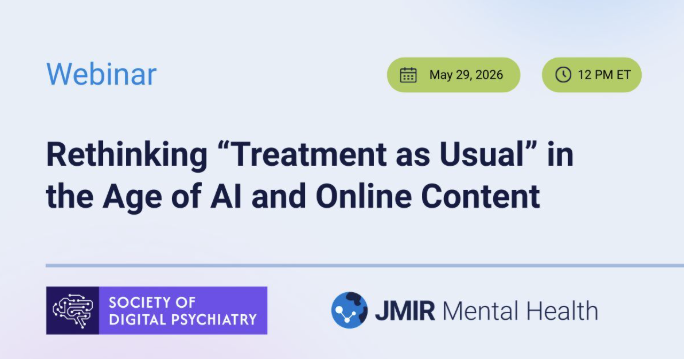
Last call 🚨
How should digital mental health trials evolve when patients are already turning to AI, YouTube, and online content for support?
Join Dr Benjamin Kaveladze and @JohnTorousMD tomorrow for a live Society of Digital Psychiatry + JMIR Mental Health webinar on rethinking “treatment as usual.”
Secure your spot: https://t.co/OkMK7QDJfP
#DigitalMentalHealth #DigitalPsychiatry #AIinHealthcare #MentalHealthResearch #ClinicalTrials #BehavioralHealth #JMIR #HealthInnovation
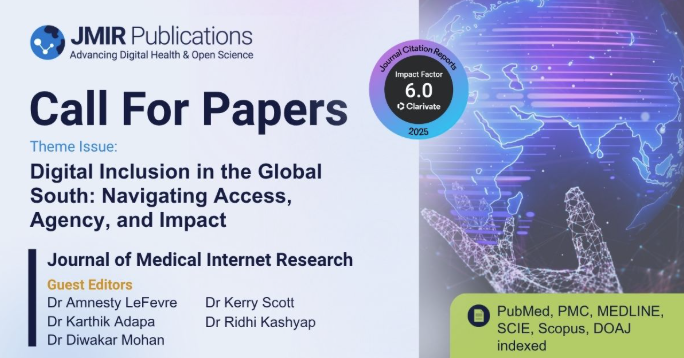
New call for papers in the Journal of Medical Internet Research 📢
Digital Inclusion in the Global South: Navigating Access, Agency, and Impact
We’re looking for research on digital transformation through a “promise & peril” lens covering measurement innovation, gendered digital inequality, and digital health + livelihood impacts across the Global South.
📅 Submission deadline: May 31, 2027
📌 Submit via the Journal of Medical Internet Research
Learn more: https://t.co/b1fxTGNE4Q
#DigitalHealth #GlobalHealth #HealthEquity #DigitalInclusion #JMIR
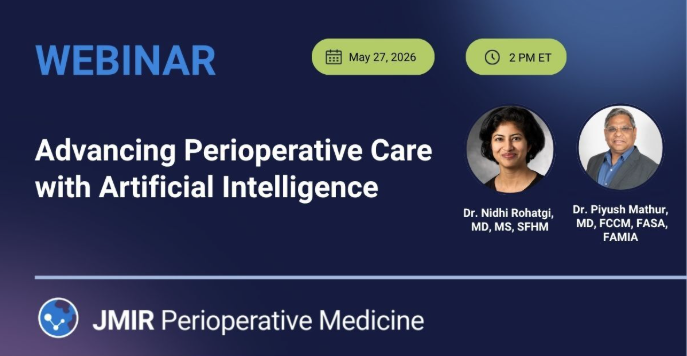
Last chance to register!
Tomorrow, Dr. Nidhi Rohatgi and Dr. Piyush Mathur discuss how AI is transforming perioperative care in a live webinar, from risk prediction to recovery, patient safety, and clinical workflows.
📅 May 27, 2026
⏰ 2:00 PM EDT | 11:00 AM PDT | 6:00 PM GMT
Register here: https://t.co/KIWcjcUbiF
#ArtificialIntelligence #PerioperativeCare #HealthcareInnovation #DigitalHealth #MedicalAI
APA San Francisco, wrapped.
From Dr. @JohnTorousMD on podcasting in mental health to conversations across the JMIR team, one message kept coming through: research has to travel further than the page.
Digital mental health is moving toward something more accessible and equitable.
Grateful for the conversations that shaped the week.
#JMIR #APAM2026 #DigitalHealth #DigitalMentalHealth #MentalHealthResearch #DigitalPsychiatry #Psychiatry
Too many health AI chatbots, too little clarity.
In a News and Perspectives article, Tejas S. Athni breaks down 5 major Big Tech health AI assistants, comparing access, safety, HIPAA alignment, and real-world risk as care becomes increasingly “AI-mediated.”
Read more: https://t.co/oBWxmF62t5
#DigitalHealth #HealthAI #AIinHealthcare #HealthTech #PatientSafety #HealthcareInnovation #MedTech #AIChatbots