Selling one isolated service makes it easy for customers to compare you on price.
Strategic bundling changes the conversation by combining services that naturally belong together into a stronger offer.
Don’t just sell individual services. Package the value your customers need.
Build upsells, cross-sells, and additional offers into your process so they become repeatable, measurable, and easier to improve.
Profit becomes more predictable when the actions that create it become part of how you do business.
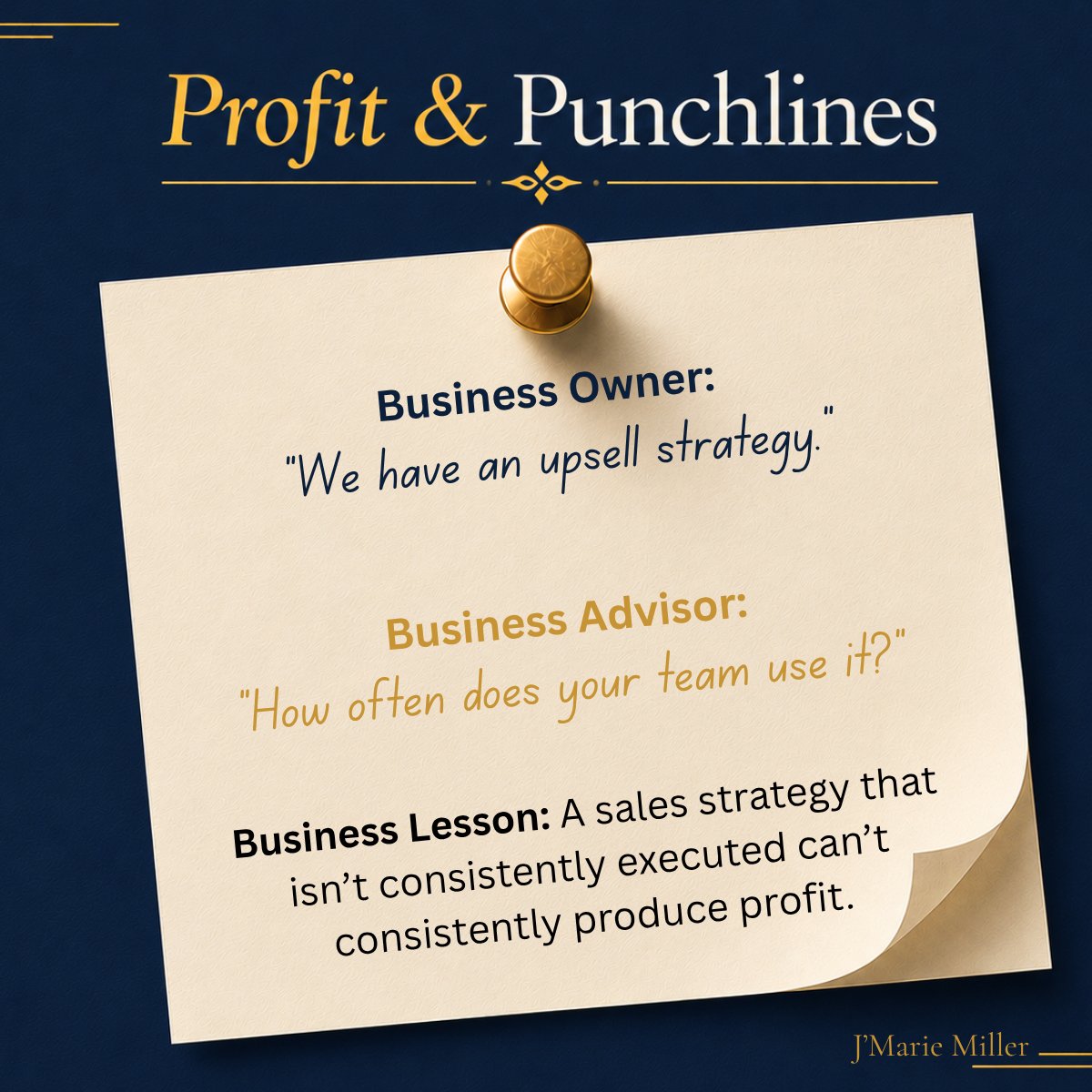
If upselling or cross-selling only happens when someone remembers, you don’t have a strategy—you have an occasional opportunity.
Decide what to offer, when to offer it, and who presents it.
If the opportunity matters to your profit, build it into the process.
Your customers don’t know everything you offer.
When there’s a relevant upgrade or complementary option that could benefit them, don’t assume they’ll discover it on their own.
Give them the information. Let them decide.
They can’t say yes to an option they were never given.
A growth strategy only works when it’s consistently executed.
If additional offers depend on someone remembering, opportunities will be missed.
Decide what to offer, when to offer it, and build it into the sales process.
Don’t rely on memory. Build a repeatable process.
Customers can’t say yes to an option they were never given.
Once a customer decides to buy, don’t automatically end the opportunity at the first purchase.
A relevant upgrade or complementary offer can add value for the customer while creating additional profit for the business.
Too often, the transaction ends with the first purchase.
But an upsell or relevant cross-sell can create additional profit while giving the customer more value.
The key is relevance. Don’t just ask what else you can sell. Ask what else would make the customer’s purchase better.
Once someone chooses your business, don’t overlook the potential value of that existing relationship.
A relevant upgrade or complementary offer can give customers another option that better fits what they need—while increasing the value of the sale for your business.
A customer saying yes doesn’t mean the sales opportunity is over.
A relevant upgrade or complementary offer can create more value for the customer—and more profit for the business.
Sometimes there’s more opportunity in a transaction than the first purchase reveals.
Doing nothing can feel like the safest option. But if your pricing is squeezing your margins, staying put has a cost too.
Calculate the cost of leaving them unchanged.
Playing it safe only works when the numbers say it’s actually safe.
Pricing decisions shouldn’t start with, “What if customers don’t like it?”
They should start with the numbers.
Your costs, margins, value delivered, and profitability all matter.
Your customers matter. But so does the financial health of the business serving them.
Not every customer has to stay for a pricing decision to make financial sense.
Fewer transactions can still leave your business more profitable if the numbers work.
Customer count tells you how many stayed. The numbers tell you whether the decision worked.
What if the fear of losing customers is costing you more than a price increase would?
Not every customer will respond the same way—and keeping every customer isn’t always the most profitable decision.
Don’t assume the reaction. Evaluate the economics.
Sometimes underpricing has less to do with the numbers and more to do with confidence.
You know the value you deliver, yet hesitate to charge accordingly because you’re worried about how it will be perceived.
Your pricing shouldn’t be built around making everyone comfortable.
When was the last time you actually evaluated your pricing?
Costs change. Your business changes. The value you deliver changes. Yet pricing can stay untouched for years.
Don’t just ask what you should charge. Ask whether what you charge still makes financial sense today.
Pricing has leverage. One decision can affect every sale after.
That’s why it shouldn’t be set once and forgotten.
As your costs, margins, and business change, your pricing needs another look.
The price that worked before may not be the price that supports your business now.
Business owners often look outward for profit growth—more leads, customers, and sales.
But sometimes the opportunity is already inside the business.
A strategic pricing adjustment can improve the economics of every sale without requiring more work.
Selling more is only impressive if the profit follows.
More transactions can mean more revenue—but if margins are shrinking, more volume can simply mean more work for less return.
Don’t just track what you sold. Track what you kept.
A great offer isn’t great if the numbers don’t work.
Before you get excited about leads, conversions, or sales, make sure the offer can actually support a profitable business.
Revenue can look good on paper. Profit tells the real story.