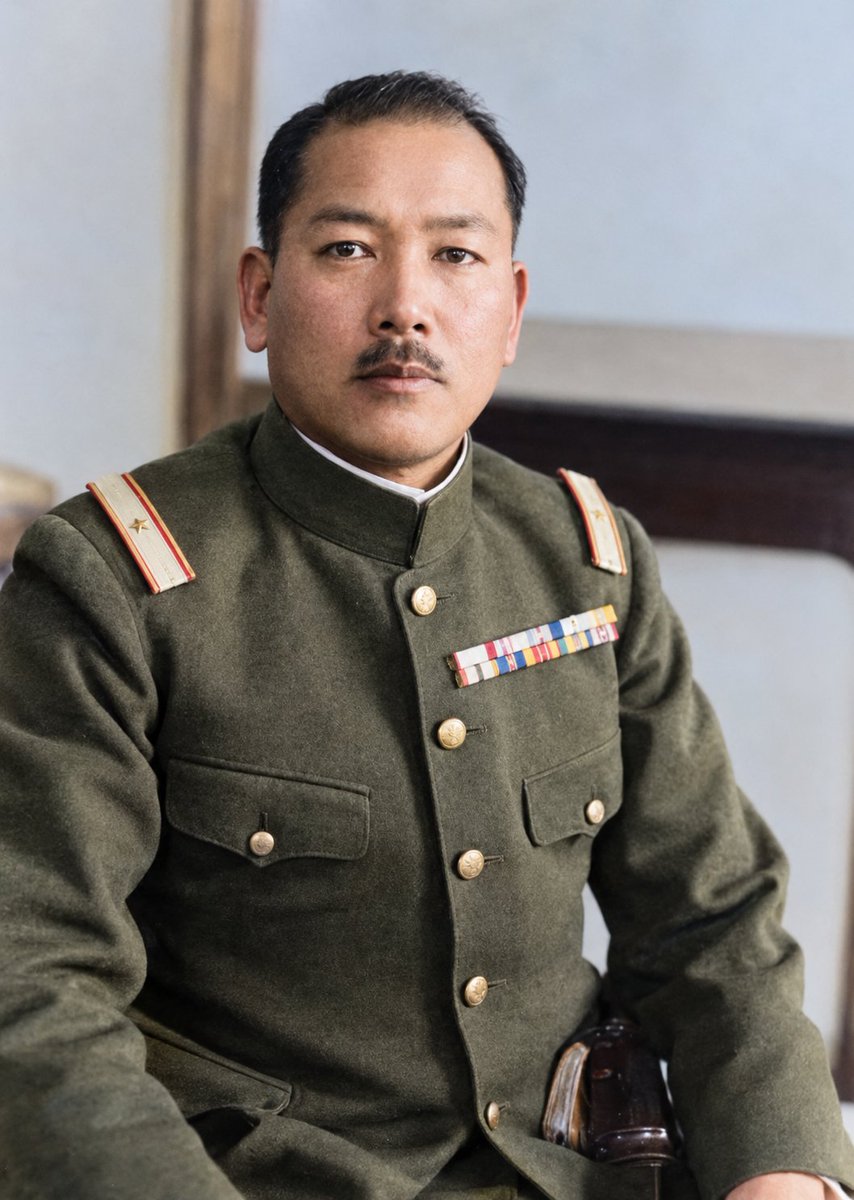
Kiichiro Higuchi might be the most underrated Japanese general of WW2, and almost nobody outside Japan knows his name.
March 1938. Jewish refugees fleeing Nazi Germany are stuck at Otpor, a Soviet railway station on the border with Manchuria. The Soviets won't let them back. Manchukuo won't let them in. They're camped out in brutal Siberian cold with almost no food.
Higuchi was the Japanese army's intelligence chief in Harbin. He arranged food, medical care, and visas, and worked with the South Manchuria Railway to get trains sent to the border to carry them out.
Japan had signed a pact with Hitler less than two years earlier. Berlin filed a formal protest. Higuchi was called before the Kwantung Army's chief of staff, Hideki Tojo, the future prime minister. As the story goes, Higuchi asked him whether Japan was supposed to be Germany's servant. Tojo let it drop.
Fast forward to 1943. Higuchi commands Japanese forces in the North Pacific when the Americans retake Attu. His garrison there fights almost to the last man. But on nearby Kiska, more than 5,000 Japanese troops are cut off. Under his command, a navy squadron slips in through the fog and evacuates the entire garrison in under an hour without losing a man.
Weeks later about 34,000 American and Canadian troops storm Kiska. The island is empty. They still take casualties from friendly fire, mines, and booby traps.
Then August 1945. Japan announces its surrender on the 15th. Three days later the Soviets invade Shumshu, the northernmost of the Kuril Islands. Higuchi, now commanding the Fifth Area Army, orders his men to fight. The battle costs the Soviets heavily and slows their timetable. Many historians believe that stand helped keep Stalin from grabbing Hokkaido and splitting Japan the way Germany and Korea were split.
After the war Moscow demanded Higuchi as a war criminal. MacArthur refused to hand him over.
He saved Jewish refugees from the Nazis, pulled off one of the cleanest evacuations of the war, and may have helped keep Japan in one piece. He died in 1970.