🇺🇸 🇮🇷 THIS HAS TO BE A JOKE!
U.S. STATE DEPARTMENT:
“OUR OPERATION AGAINST IRAN 🇮🇷 DOESN’T JUSTIFY IRAN’S 🇮🇷 ATTACKS ON OUR TROOPS”
WHAT ARE THEY SMOKING 😭😭😭😭😭😭😭😭😭😭😭😭😭😭😭😭😭
A British scientist invented the single most valuable piece of technology in human history, then signed a document that legally guaranteed he would never make a cent from it, and he did it on purpose while every university around him was racing to patent everything they could.
His name is Tim Berners-Lee, and the invention was the World Wide Web (WWW).
Not the internet, which already existed as a way to connect computers, but the actual web of pages and links you are using to read this right now. HTML. HTTP. The URL. He built all three while working at CERN, a physics lab in Switzerland, between 1989 and 1991.
He wrote the first browser on a NeXT computer and stuck a label on it that said "DO NOT POWER IT DOWN" because if anyone unplugged it, the entire web would vanish.
Here is the part that should stop you cold.
CERN owned the invention. Under the rules of the time, the lab could have licensed it, charged a fee for every installation, and collected a royalty on every server that ever came online.
His colleague Robert Cailliau confirmed they actively discussed exactly this, because in the early 1990s patenting university inventions and squeezing money out of them was the standard move.
They could have charged for every search. Every upload. Every page load on Earth, forever.
Berners-Lee fought to give it away instead.
He pushed CERN to release the source code into the public domain with no patent and no fee of any kind. On April 30, 1993, two CERN directors signed a half-page document that relinquished all intellectual property rights to the World Wide Web. A few signatures on a single sheet of paper.
That was the moment nobody came to own the thing that now connects more than five billion people.
His reasoning was not sentimental. It was mechanical.
He understood something most inventors never grasp. The value of the web was not in the code. It was in the network. And a network only grows if everyone can join without asking permission.
The second you charge a toll, people route around you, and you end up with a hundred tiny incompatible webs instead of one universal one. He said it plainly years later.
If he had demanded fees, there would be no World Wide Web. There would be lots of small webs, and none of them would have mattered.
So the thing that made the web worth trillions is the exact same thing that guaranteed he would never personally capture any of it. Openness was not a sacrifice he made against the invention's success. Openness was the success. The free part was the product.
People who made far less consequential things became billionaires off the platform he built. He watched it happen and kept running a nonprofit standards body out of an office at MIT, setting the rules that keep the web working for everyone, paid like a normal professor.
When an interviewer once asked him why he never cashed in, he refused the premise of the question. He said that framing only makes sense if you measure a person's worth by their net worth. People are what they have done and what they stand for, not what sits in their bank account.
The man who could have owned a piece of every click ever made chose to own none of it, because he understood that the only way to give the world something this big was to make sure he could never take it back.
The most valuable thing ever built belongs to everyone, and that was the entire point.
Takeaways on the regional landscape:
🔹Last week, Pakistani and Qatari mediation efforts produced a potential deal. Both faced a heavy discrediting campaign. Now Oman is targeted.
🔹Trump remains undecided, struggling to find a way to be seen as "winning," with no cards but to compromise. (He might opt to use force at the Strait of Hormuz, against which Iran is resolutely prepared.)
🔹Heavy pro-war and pro-Israel pressure already mounted to brand Trump a "loser" if he signs any deal with Iran.
🔹The Israeli regime is pounding Lebanon to sabotage a deal, knowing that a regional cessation of hostilities is an integral part of it, coupled with its efforts to raise the political cost of any future deal or de-escalation with Iran.
🔹Trump's combo: Arab normalization to offset the nuances of a deal with Iran, projecting it as a massive victory. A highly unlikely proviso since the genocide in Gaza and the Israeli regime's noisily voiced expansionist agenda—which has caused deep resentment across the Muslim world—with little left to breathe new life into the worn-out agenda of an "anti-Iran alliance."
🔹Here comes Trump's political blackmail: "No normalization, no deal with Iran, and I will leave you to face the consequences of my war alone—and the blame will be yours." Pressuring Oman with threats is to display his decayed rules of the game.
Finally, let's not forget that Oman has constantly been the voice of wisdom and balance in the region, credited internationally for its long history of maintaining diplomacy, having sought to prevent the region from falling into the same escalation trap ignited by the U.S. and Israeli regimes' war against Iran.
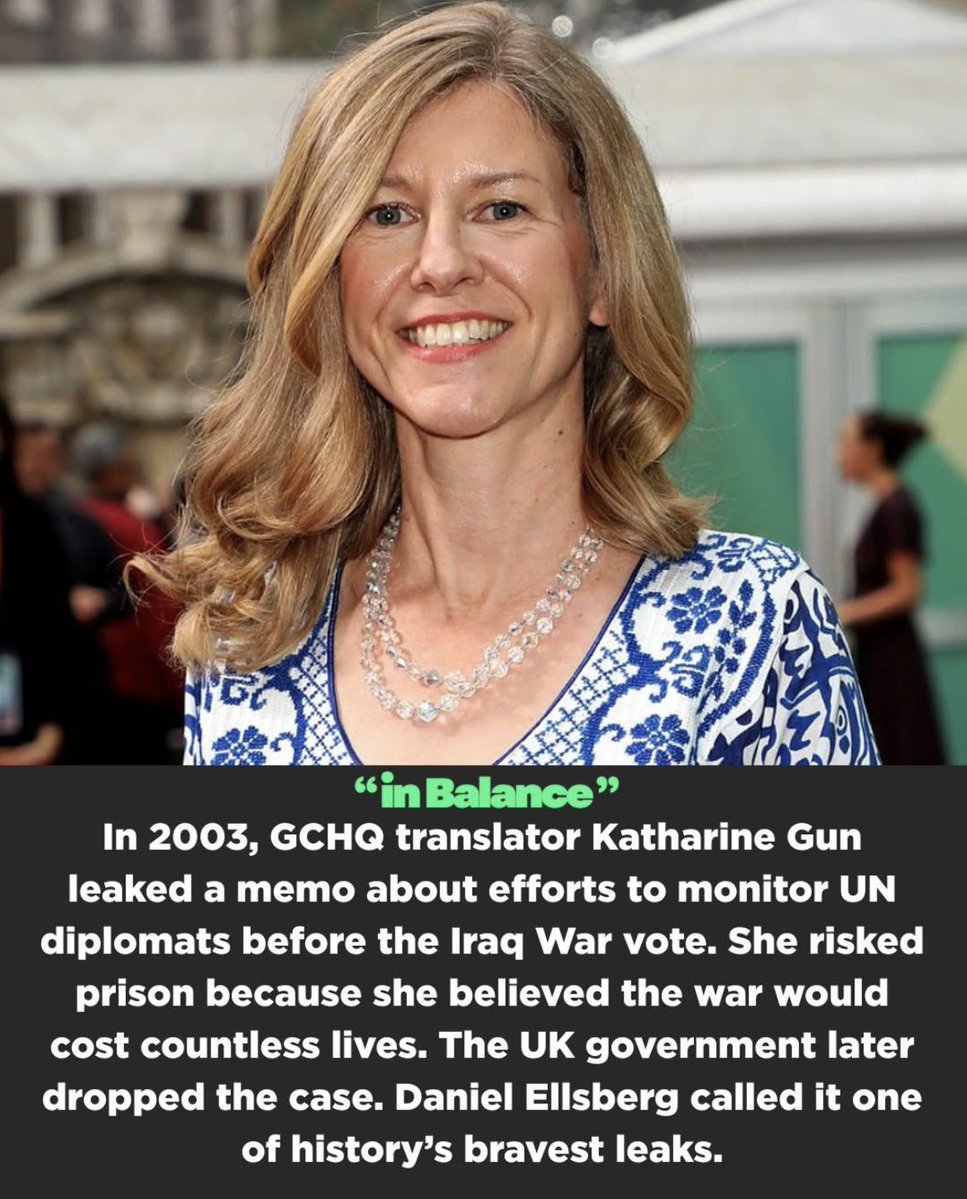
In 2003, a 28-year-old translator working for British intelligence received an email she wasn’t supposed to see. What she read convinced her that governments were trying to manipulate the world into war.
Her name was Katharine Gun.
She worked at GCHQ - Britain’s top-secret intelligence agency. On January 31, 2003, she received an email from senior NSA official Frank Koza. The US wanted British intelligence to help spy on members of the UN Security Council.
Specifically, diplomats from Angola, Chile, Pakistan, Cameroon, Guinea and Bulgaria - nations whose votes could decide whether the UN backed the invasion of Iraq. The operation was simple: bug phones, read private emails, uncover secrets, weaknesses, fears and anything that could pressure diplomats into supporting the war.
Katharine read the email in disbelief.
This was not ordinary intelligence gathering: it looked like an attempt to manipulate the UN into approving a war. She knew what leaking the document could cost her. Prison.
The destruction of her career. Under Britain’s Official Secrets Act, she could face years behind bars for exposing classified intelligence. But she leaked the email anyway. On March 2, 2003, The Observer newspaper published the secret NSA request on its front page.
Suddenly, the world could see evidence that intelligence agencies were allegedly targeting UN diplomats ahead of the Iraq War vote.
Inside GCHQ, panic exploded. Investigators began interrogating employees, searching for the source of the leak, monitoring staff and creating an atmosphere of fear throughout the building. Katharine watched innocent coworkers fall under suspicion. That’s when she made another decision that stunned people around her. She confessed. Rather than allow others to suffer for something she’d done, Katharine walked into her manager’s office and admitted she was responsible.
She was arrested.
Suspended from her job. Formally charged under the Official Secrets Act.
By late 2003, she faced trial at London’s Old Bailey with the possibility of being sent to prison. But her legal defence created a dangerous problem for the British government when her lawyers argued she acted to prevent an illegal war. To challenge that claim, the government would need to release confidential legal advice discussing whether the Iraq invasion itself was lawful under international law.
Then came February 25, 2004. The courtroom filled.
Katharine Gun sat waiting as prosecutors prepared to move forward against one of the most famous intelligence leaks in modern British history. Then, without warning, the government collapsed the case.
“The Crown offers no evidence.”
After months of preparation, the trial ended almost instantly. Katharine walked free. Many observers believed the government feared the public release of its own private legal doubts surrounding the Iraq War more than it feared letting the whistleblower go.
Years later, former Pentagon Papers whistleblower Daniel Ellsberg called Katharine Gun’s leak one of the bravest acts he had ever seen.
Edward Snowden would later cite her as one of the people who proved intelligence systems could be challenged from the inside. And perhaps the most remarkable part of the story was this:
Katharine Gun was not a politician.
Not a famous activist.
Not a powerful insider.
She was simply a young translator who read one email and decided her conscience mattered more than her career.
Two governments.
Major intelligence agencies.
The full force of secrecy laws.
And one woman still chose to stand up and speak out.
After the case was dismissed, reporters asked whether she regretted leaking the document.
Katharine Gun answered calmly:
“I have no regrets. I would do it again.”
WE ALL NEED TO BE THIS BRAVE. WE ALL NEED TO DO THE RIGHT THING. WE ALL NEED TO BE MORE LIKE KATHARINE GUN.
Good morning, everyone!
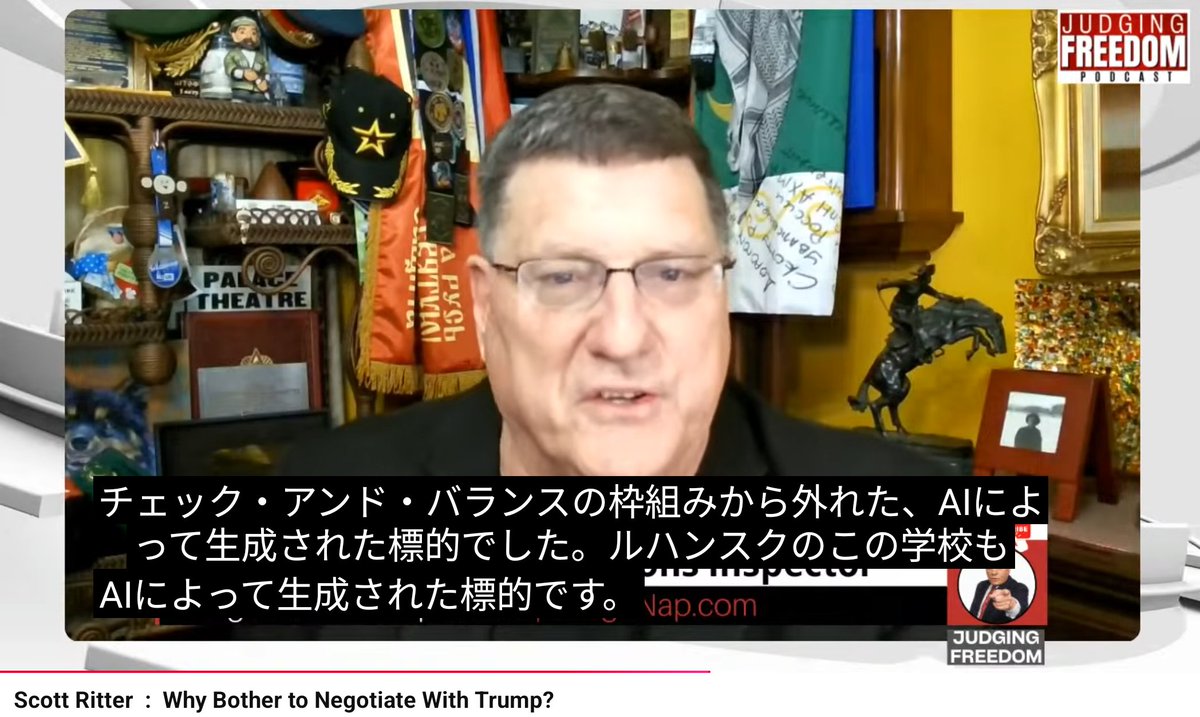
人類を滅亡させる軍事 AI
・2023年、ハマスの大規模攻撃はないと嘘をついた AI
・175人以上を殺したイランのミナブ女子小学校攻撃
・そして、キエフ大規模報復攻撃のきっかけとなったルガンスクの大学へのドローン攻撃
全部パランティアの嘘つき AI の指示らしい。
https://t.co/4IhHZt7Tsx
The President of the United States just posted a stylized image of people being blown apart with “Adios” stamped on top like it’s some badass movie poster.
War is not entertainment.
Death is not branding.
And glorifying violence like this in front of millions of kids is fucking demented!
And didn't he just announce a peace deal?
❤️ if you agree that THIS MUST STOP!!!