Didn’t take long
2 weeks ago I predicted
1) all major labs will offer decision apis
2) they will quickly offer vision and audio classification (other modalities soon)
3) open source and optimised for robotics
Your Roomba is about to get very smart and very fast
introducing 𝚌𝚕𝚎𝚏: our first models trained by @cloudflare's workers ai team.
today, we're releasing two fast and accurate decision models that top the benchmarks for quality and latency. use them hosted on workers ai or grab the weights from @huggingface, because we open-sourced it too.
https://t.co/4bKblI3MwN
This was added because of the Twin Falls shooting two months ago where a guy shot people in a carpark who were charging their Teslas and couldn’t drive away.
You know I was hoping that the male interviewer here at the end was revealed to be Griffin
And the stunted and rehearsed female caricature was revealed to be the human.
But alas. So clearly it didn’t pass the video Turing test.
Introducing Griffin, the first model to pass the video Turing test.
48% of people who talked to it live thought it was a real human. Previous systems have had a pass rate <3%. It is #1 on NVIDIA's benchmark for full-duplex AI video.
It’s the first Human Interaction Model (HIM).
250 GW of compute is $10tn of compute in today’s numbers.
Wild.
There is no way $10tn can be sequestered to be spent on this.
So costs have to go down by 10x minimum.
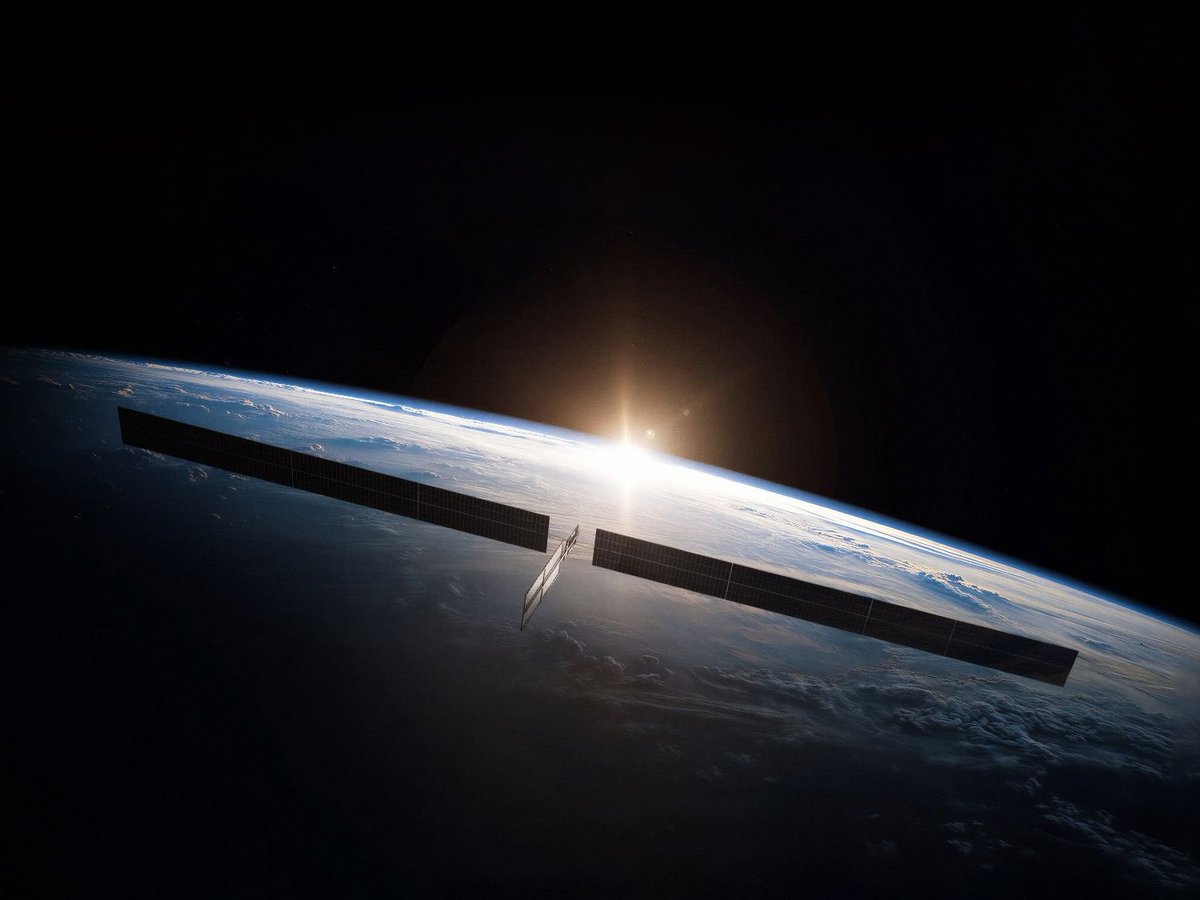
Elon says each @SpaceX Star Mind spacecraft will have over 250 kW of solar power. That's about 20% more than the entire ISS.
At that size, it's about 4,000 spacecraft per gigawatt.
SpaceX's FCC filing covers up to 1 million of them. Fill that out and you're looking at roughly 250 GW of solar-powered compute in orbit.
The ISS was a one-off. Starmind is a production line.
$SPCX
“1 GW of AI compute on the ground is $38bn … Of this amount, compute represents $21bn”
It will take ~200 starship launches for @SpaceX to reach 1GW (AI1 specs).
At worse case - $20bn launch cost at $100m/launch. At best case, a starship launch is $10m. So $2bn launch cost.
Oh and Jenson reckons in the next 3 years 1GW of compute will cost $100bn.
So today - Space AI matches terrestrial AI.
Terrestrial AI is only going to get more expensive. Space AI will get less.
99% of compute is heading into space. And 99% of the internet will just serve compute.
Insane times ahead.
100,000 satellites broadcasting in the ~10ghz band forming one giant virtual aperture means centimetre-level radar accuracy.
Not to mention a complete replacement of legacy GPS.
Let alone the broadband connectivity or low latency client<>GPU links for AI inference.
When Trump finishes his term, Musk will be most powerful person on the planet bar none.
e/acc won
The reason why Starshield is so important:
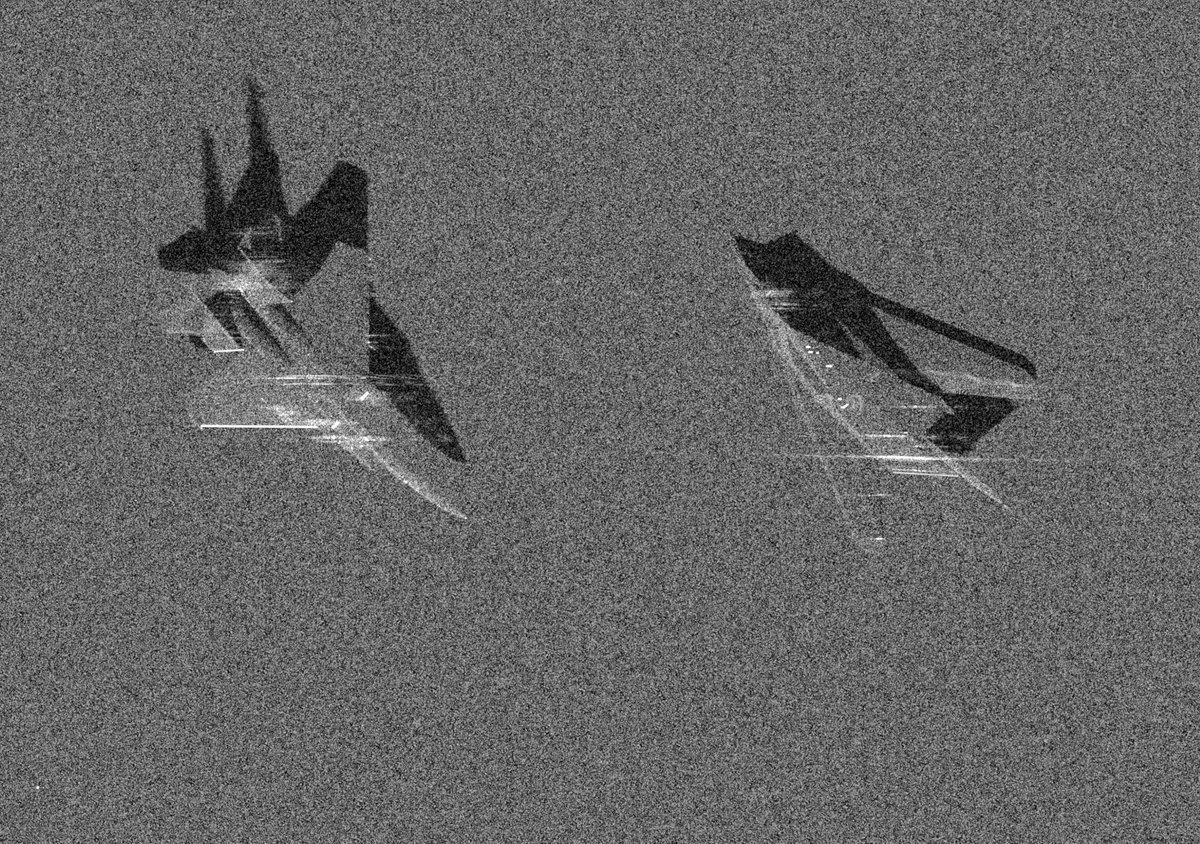
A F-15 vs. a F-117 as seen in the Ka-band at 35 GHz...
Starshield will flood LEO with SAR and infrared reconnaissance sats, everything that flies will get tracked, anything above a certain doppler bin will be processed and classified.
The numbers on Starship-Starlink are pretty wild.
Cost to launch: $10m (rapid-reuseability)
Cost for 60 V3s: $100m
Annual revenue from those sats: $ 1bn
5year lifecycle: $ 5bn.
So one $10m launch to put $100m in satellites in orbit can generate up to 5b in revenue.
No wonder Elon is so confident.
@IamJoeThePirate In my case the malicious script that was downloaded "copied" my synced desktop/documents drive to temporary storage for upload. This would not have been possible if I only logged into it via the browser.
All wallets are 1) connected to the internet 2) generate entropy whilst doing so.
All major wallets encourage and push an online-storage back-up path (see ledger, trust etc).
The solution is not avoiding this problem - it's simply building better multi-factor wallets - minimum 2 devices with key shares in different locations.
I've reset and upgraded my Mac many times, the built-in apple keychain is supposed to be the most secure storage on it, allowing you to move your keychain to new trusted devices.
In my case, it appears a sniffer was able to access and decrypt my keychain from my local machine.
The solution for both longevity (access to key-material) and security (preventing un-authorised access) is relying on the multi-factor approach.
GDrive/Icloud/Onedrive etc can be set up with 2FA, separate memorized passwords and trusted recovery methods.
Compromised access to one will not cause total loss, whereas in my case, compromised access to a single keychain did.