#ChemicalWeapons#BiologicalWeapons#OSINT#Disinformation#Verification
Evidence Poisoning: The OSINT Crisis Nobody Is Ready For (by @dutch_osintguy)
https://t.co/FnbxhcAl4q
Over the past decade and a half, we have been confronted with chemical warfare, assassination operations involving nerve agents and lethal animal toxins, and accusations of illicit biological research activities, all indicative of serious breaches of the Chemical Weapons Convention (CWC) and the Biological and Toxin Weapons Convention (BTWC).
The incidents were accompanied by information warfare, typically of the type in which one side claimed the allegations were fake and the other side argued their veracity. A characteristic of this information warfare is that the same antagonists – government outlets, organisations and institutions, individual scientists or academics, and motley groups of loosely connected activists – may switch between accusing and defending roles depending on the incident. Yet the same protagonists spread disinformation, while the same challengers counter the disinformation onslaught with facts.
Too often, the context in which the claims are made is poisoned. Conditioning information elements have been planted in advance, not infrequently years before a particular incident, and help make certain arguments plausible. And in international forums, the truth is all too often political, despite the presentation of facts obtained through internationally negotiated investigative protocols and grounded in the most advanced scientific insights and forensic evidence.
In today’s security environment, every individual should ‘know’ instead of ‘believe’ and ‘think’ instead of just ‘being told’ to be able to make informed judgements.
The piece below offers a detailed toolbox for analysts to construct credible arguments with minimal ambiguity and for readers to analyse controversial debates critically. Originally published by Nico Dekens (NL) on his excellent blog covering open-source intelligence (OSINT) analysis in May, we reproduce it here with his permission.
#BiologicalWeapons#Terrorism#ISIL
Islamic State supporters share nuclear and biological weapons guides on forum infiltrated by LBC
https://t.co/uSJZfGGfYC
[Still far removed from a BW capacity, though]
[...]
There are also several threads asking how to commit bioterrorism and discussing splashing people with battery acid for insulting the Quran.
One person shared information about the “World’s deadliest plant-based poison” and how it can allegedly be used to easily carry out a bioterror attack.
Among the technical guides shared amongst supporters of the terror group, some offer instructions on how to make ricin, among other chemical and biological weapons.
One provides a step-by-step walkthrough to create a device known as a ‘mobtakkar,’ which was designed by al-Qaeda as an improvised chemical dispersal device.
[...]
#BiologicalWeapons#Research#DualUse#USA#Regulation
New federal “Stopping Policy” changes how all life sciences proposals are screened
https://t.co/FWQrV1SIod
In July 2026, the federal government released the U.S. Government Policy for Stopping High-Risk Life Sciences Research, commonly called the “Stopping Policy.” The policy prohibits or restricts federal funding for high-risk research, including dangerous gain-of-function (DGOF) research and risky international research of concern (IROC). It replaces all former federal policies on dual use research of concern (DURC) and pandemic pathogens.
The most significant change for our research community is scope: all life sciences research must now be screened for DGOF and IROC before a proposal is submitted, not just research involving a defined list of agents.
[...]
#IncendiaryWeapons#WhitePhosphorus#Israel#Lebanon
Israeli attacks burned 160 sq km of southern Lebanon's green land since 2023
https://t.co/xcpVzQk595
Israeli attacks have burned around 7,000 hectares (70 sq km) of agricultural land and woodland in southern Lebanon over a five-month period this year alone, bringing the total area affected by fires since 2023 to approximately 16,000 hectares (160 sq km), Lebanon’s Environment Minister Tamara al-Zein has said.
Zein said the latest damage, recorded between March and August, was equivalent to the area destroyed by fires unrelated to war over a period of five years.
The overall area burned since October 2023 – when the conflict between Hezbollah and Israel started – was equivalent to the damage caused by natural or deliberately started fires over a decade, she added.
Zein said fires had broken out almost daily across fields, orchards and woodland in southern Lebanon as a result of Israeli bombardment and the use of white phosphorus munitions.
[...]
#ChemicalWeapons#Novichok#USSR#Russia
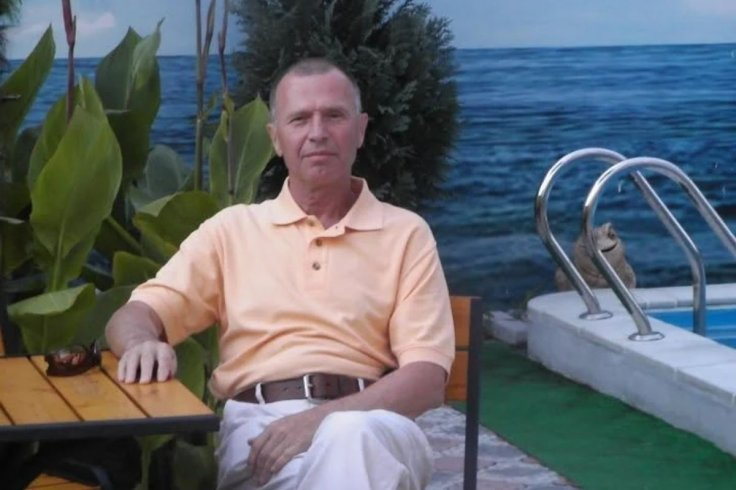
Who Was Vladimir Uglev? Novichok Scientist Who Accused Putin of Salisbury Poisoning Dies at 80
https://t.co/iL5t7IUUHJ
Russian chemist Vladimir Uglev, who helped develop the Soviet-era Novichok nerve agent and later disputed the Kremlin's denials over the 2018 Salisbury poisoning, died at 80 on Oct. 26, 2026. He lived in Anapa, in Russia's Krasnodar region, and no cause of death was disclosed. The news of his death was recently made public.
Uglev drew international attention when he called the poisoning of former Russian double agent Sergei Skripal and his daughter, Yulia, a "state-level hit." His comments and later help to journalists made him a key source on Russia's alleged use of Novichok.
[...]
#ChemicalWeapons#Threat#Allegation#Iran#Israel#USA
Inside The Intelligence Sharing On Iranian Chemical Weapons Risks
https://t.co/nbje8stMWO
Intelligence sharing between nations rarely happens in a vacuum. When classified assessments move from Jerusalem to Washington, the geopolitical stakes are already at a boiling point. Recent reporting from outlets like the New York Times and Al Arabiya highlighted a tense disclosure: Israeli officials shared intelligence with the United States claiming that Iran was preparing to use chemical weapons.
This development injects a terrifying variable into an already volatile Middle Eastern conflict. But looking past the initial shock headlines requires examining how intelligence is vetted, what weaponized chemical programs actually look like in the region, and why Washington and its allies view these warnings with extreme urgency paired with tactical skepticism.
[...]
#ChemicalWeapons#Poison#Assassination#Cuba#USA#CIA#ColdWar
How the CIA tried to use chemistry to kill Castro—and why it failed
https://t.co/NE7xzRmUm2
[...]
These plans may seem fantastical, but to historian and sociologist of science M. Susan Lindee of the University of Pennsylvania, the CIA’s assassination schemes read less like spy fantasy and rather more like a familiar product of Cold War America. The inspector general’s report, she suggests, offers a bleak window into a political culture shaped by intense patriotism and a belief that the stakes were existential. “For many experts, helping the United States defeat ‘godless communism’ was a patriotic duty,” Lindee says. “The stakes seemed so high.”
The premise, Lindee notes, was blunt: only one superpower would survive.
That outlook fits what University of Minnesota Twin Cities historian Elaine Tyler May calls the post–World War II “era of the expert.” Allied victory in World War II—and the atomic bomb that ended it—had elevated scientific authority into a source of national legitimacy. Scientific expertise promised security, power, and modernity—part and parcel of the American way of life. In that climate, technical solutions to political problems often appeared rational and forward looking rather than alarming. Officials increasingly viewed geopolitical threats as problems that could be managed through scientific means.
[...]
#ChemicalWeapons#ChemicalWeaponsConvention#OPCW#InternationalLaw
Chemical Weapons Under International Law: The CWC, OPCW and Accountability
https://t.co/g1mhfo7kXh
[...]
The CWC has achieved substantial results. In July 2023, the OPCW confirmed the irreversible destruction of all chemical weapons stockpiles declared by States Parties up to that point, representing approximately 72,304 metric tons of chemical agents. Yet subsequent discoveries of undeclared weapons in Syria demonstrate that the destruction of known stockpiles does not establish the absence of prohibited weapons elsewhere.
Three questions determine the legal treatment of chemical weapons: what conduct international law prohibits, how compliance is established, and which institutions can hold violators accountable. Although the CWC establishes extensive obligations and an international verification system, responsibility for chemical attacks must still be determined through the applicable rules of state responsibility, domestic criminal law, and international criminal jurisdiction.
[...]
#BiologicalWeapons#Disinformation#Switzerland#Covid19
Striking number of Swiss find discredited conspiracy theories plausible
https://t.co/SddQYvU7SB
[PDF available (in German)]
The findings come from a study by the University of Zurich’s Research Centre for the Public Sphere and Society, known as fög. Researchers surveyed 1,222 internet users aged 18–79 in German- and French-speaking Switzerland in July 2026. They examined how people perceive disinformation and what makes them more or less susceptible to unsupported conspiracy claims.
[...]
The coronavirus biological-weapon claim attracted the greatest acceptance: 17.5% judged it “very plausible” and 31.9% “rather plausible”. Its wording matters. It alleged deliberate manufacture as a weapon; it did not merely suggest a possible laboratory-related origin for the pandemic.
[...]
#BiologicalWeapons#Disinformation#Switzerland#Covid19
Striking number of Swiss find discredited conspiracy theories plausible
https://t.co/SddQYvU7SB
The findings come from a study by the University of Zurich’s Research Centre for the Public Sphere and Society, known as fög. Researchers surveyed 1,222 internet users aged 18–79 in German- and French-speaking Switzerland in July 2026. They examined how people perceive disinformation and what makes them more or less susceptible to unsupported conspiracy claims.
[...]
The coronavirus biological-weapon claim attracted the greatest acceptance: 17.5% judged it “very plausible” and 31.9% “rather plausible”. Its wording matters. It alleged deliberate manufacture as a weapon; it did not merely suggest a possible laboratory-related origin for the pandemic.
[...]
#BiologicalWeapons#Biosecurity#LabLeaks#Accidents
Lab leak disease outbreaks: the long, murky history
https://t.co/zXhDA9wgUR
Panic over a potential death from plague in Russia has reignited fears over laboratory leaks. History shows that they are not uncommon, but are we doing enough to prevent them? Chris Baraniuk reports
In the heart of Russia, fear of plague is spreading. Unbeknown to the outside world, authorities have quietly commandeered the building where the first case emerged. Rifle wielding guards stand at the entrances. Inside, people are locked in quarantine rooms. There have already been deaths—pneumonic plague. And it came from a laboratory.
This was the scene at a Moscow hospital in 1939, according to a handful of recollections written by scientists who lived through it. The microbiologist Abram Lvovich Berlin had travelled in from the outskirts of the capital to discuss his experiments with Yersinia pestis, the bacterium that causes plague. But he had inadvertently infected himself, becoming highly contagious. He would soon be dead.
Sources differ on the details—was it two or three people who succumbed after coming into contact with Berlin? Most accounts say that the doctor who first diagnosed plague in the stricken microbiologist and a hotel barber were among the victims.
[...]
#Poisoning#Pesticides#India
Nearly half of world’s farmers hit by pesticide poisoning, study finds
https://t.co/4oE43K3XJ3
More than 400 million farmers and farmworkers worldwide suffer unintentional acute pesticide poisoning every year, a new study has shown, highlighting the scale of a largely overlooked health crisis affecting people who work in agriculture.
The estimate means that almost half of the world's farmers and farmworkers experience pesticide poisoning each year. The burden is greatest in Southern Asia, followed by Southeast Asia and East Africa, with Burkina Faso recording the highest national incidence at nearly 84 per cent.
The study, commissioned by Pesticide Action Network (PAN) and published in Frontiers in Public Health, examined poisoning data from 139 countries collected between 2006 and 2023. It also estimated that unintended pesticide poisoning causes about 11,000 deaths globally each year, with nearly 60 per cent of the fatalities occurring in India.
[...]
#BiologicalWeapons#Disinformation#Laboratories#Russia#UkraineRussiaWar
Johnny on the spot: A hack of ex-Marine-turned-defector John Dougan’s messages reveals the rise and fall of a Russian disinformation asset
https://t.co/J6QcCfwpwa
[...]
In February 2022, Russian propaganda had revived the false claim that the United States was developing biological weapons in secret laboratories in Ukraine, and on March 6 of that year, Russia’s Defense Ministry claimed that “pathogens had been destroyed in biological laboratories in Poltava and Kharkiv.” According to ministry spokesperson Igor Konashenkov: “The Pentagon had serious concerns that secret biological experiments being conducted on Ukrainian territory would be exposed. The documents obtained confirm that components of biological weapons were being developed in Ukrainian biological laboratories in close proximity to Russian territory. The claim was repeated across the U.S. far-right media ecosystem, with former Trump advisor Steve Bannon, whose episode about the supposed biolabs was downloaded by at least 135 million users on Apple Podcasts alone, figuring prominently among the early adopters. The story, unsurprisingly, spread widely among the QAnon community.
[...]
#ChemicalWeapons#EuropeanUnion#Sanctions#Statement
Statement by the High Representative on behalf of the EU on the alignment of certain countries concerning restrictive measures against the proliferation and use of chemical weapons
https://t.co/z1XBZ6xBfm
[...]
In view of the continuing and lasting threat to international peace and security posed by chemical weapons, the Council decided that the application of Decision (CFSP) 2018/1544 should be extended until 30 October 2031.
The Council also decided that the measures set out in Articles 2 and 3 of that Decision as regards the natural or legal persons, entities, and bodies listed in that Annex should be extended until 30 October 2027.
[...]
#ChemicalWeapons#Syria#WarCrimes#Justice#NoImpunity
Syria on the Road to Trials of Chemical Weapons Use: Attributing an Attack Does Not Prove Individual Criminal Responsibility
https://t.co/1tWjhsaF2N
For many years, access to much of the evidence and information critical to achieving justice on behalf of Syrian victims of atrocity crimes was not possible. Today, domestic Syrian officials pursuing accountability measures hold the names of suspects, records, and materials that were not available to investigators for more than a decade. However, turning this access into credible convictions requires meeting a substantial threshold: proving what a specific accused did, based on a law that was in force at the time of the attack, and through proceedings that guarantee a fair trial and allow for international cooperation.
[...]
#BiologicalWeapons#Preparedness#Policy#USA
Strategies Don’t Save Lives. Follow-Through Does.
https://t.co/XpMPDCxdA1
[...]
Our strategies continue to mention “One Health,” or a similar term. This phrase rolls off the tongue, but implementing it is the hard part. One Health is the concept that the health of people, animals, plants, and environment are closely linked. The concept is valuable, yet stovepipes persist because mandates, budgets, and incentives pull in different directions.
Closing that gap means understanding what motivates counterparts in human health, animal health, agriculture, environment, defense, and intelligence. Then operate and exercise together, continuously, not once before a rollout. A crisis is a terrible time to exchange business cards.
[...]
#ScienceDiplomacy#NGOs
At the forefront of science diplomacy: The role of non-governmental scientific organizations
https://t.co/tr3AOpOnVv
[Report - PDF available]
Across borders and political divides, science has a long record of finding common ground. Shared research, shared data and a shared commitment to evidence have helped countries tackle problems no nation can solve alone, from protecting Antarctica to understanding climate change. That cooperation now faces growing strain, as geopolitical tensions rise, conflicts spread and science becomes an arena of competition between states.
This report looks at what independent scientific organizations, such as academies, research councils and international scientific unions, can do in this changing landscape. Drawing on a survey of more than 100 scientific organizations across all regions, as well as interviews with experts in science, policy and diplomacy, it shows how these organizations have helped build global institutions, informed international negotiations and kept dialogue open across political divides. It also shows that many of them want to do more, but are held back by limited funding and capacity.
The report sets out practical ways for the scientific community to protect international cooperation and strengthen its contribution to global governance.
#ArtificialIntelligence#SyntheticBiology#Governance#Ethics#Research#Medicine#Neuroscience
Inside the data centres built with lab-grown human brain cells
https://t.co/pb7bs3PPn4
[...]
In March last year, the company began creating and commercialising modular brain cell boxes called CL1s, with shipping beginning that summer. The size of a shoe-box and set at a temperature of 37C, CL1s contain a chip no bigger than a stamp, with a grid of electrodes that harness about 800,000 neurons sitting on top as a fleshy film. Most of the box is taken up with its life-support loop, because brains need brain food. It’s called “media” and is that nutrient-rich salt and sugar liquid we mentioned at the beginning.
The neurons, which live for between six months to a year, cost $35,000 each, or $20,000 each for a rack of 30. Alternatively, you can rent one remotely via the cloud for $300 a week. This interface between digital hardware and lab-grown neurons is called biOS (Biological Intelligence Operating System). But unlike iCloud, lab-grown neurons will not store your photos. Instead, you can train them to do things in the same way that they were trained to play video games. But toys they are not — to buy a box you need a proper laboratory. Cortical’s buyers so far are mainly labs and researchers. One of them is Nii Osae, who runs Mindbeam, a company that works on speeding up AI models. “We need a different computational power, one that is very energy efficient, they [neurons] will take things to the next level,” he says.
[...]
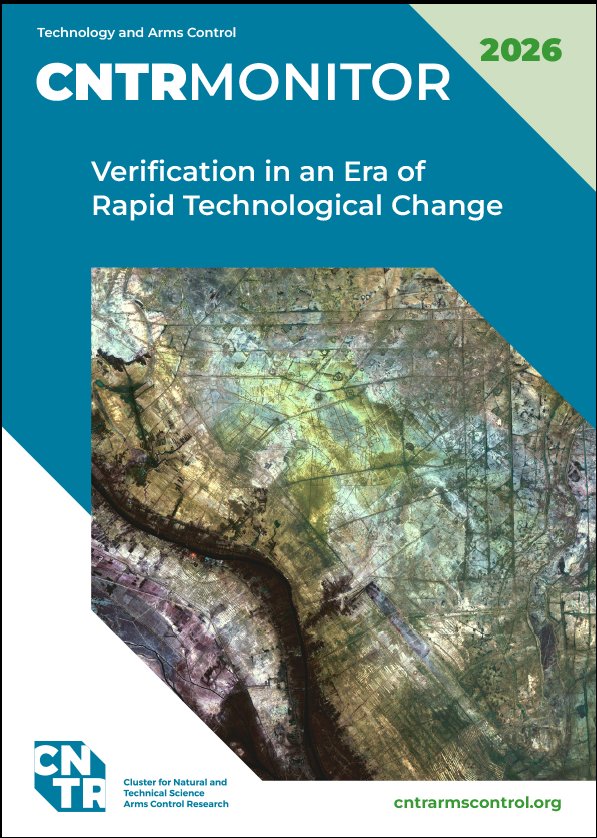
Aus ganz verschiedenen Gründen ein sehr guter Tag bisher. Darunter: Wir haben gerade unseren frisch erschienenen 2026er CNTR Monitor "Verification in an Era of Rapid Technologial Change" im Bundestag vorgestellt.
https://t.co/KvjNWFu6yt
#BiologicalWeapons#Terrorism#Hoax#USA
Man charged with mailing hundreds of letters containing powder to officials ahead of the election
https://t.co/CdZuNy1VyL
[...]
Robin Martin, 67, is charged with conveying a hoax and mailing threatening communications. He was arrested Monday and appeared Tuesday in U.S. District Court in Oklahoma City before being returned to jail to await a detention hearing next week.
The Federal Public Defender office, which represents Martin, said it would not comment on the allegations. A daughter, Ava Martin, declined to comment when reached by The Associated Press.
Assistant Attorney General John Eisenberg called it a “calculated attempt to terrorize public servants” who didn’t know if the powder could sicken them.
The investigation stretched back to 2024 when election officials in multiple states reported mail with a white substance and a three-page letter declaring war, the FBI said. Some bore warnings that could only be read under ultraviolet light, such as, “Stay on the right side of history! Your life may depend on it!!”
[...]