End of August 2026 portfolio update.
Since inception (2020): 15.5%
YTD: +29.8%
S&P500: +12%
Nasdaq: +2%
Here are my most recent buys YTD:
$AMZN +30.3%
$MSFT +25.8%
$MA +18.5%
$V +15.5%
$INTU +14.8%
$MELI +13.1%
$MCO +12.3%
$SPGI +5.9%
$META -4%
Most people won't trust a guy with a $20k portfolio, and I completely understand that.
I’m not here to sell you anything. I don't need nor want your money.
BUT...
If you find value in what I share, hit that follow button, it literally costs you nothing.
There are 100 ways to get rich in the market:
• Day trading
• Value investing
• Options trading
• Buy and hold
People have made millions doing all of them. But there is no "one-size-fits-all" strategy.
A 28-year-old with $50,000 is playing a completely different game than a 68-year-old with $1,000,000.
Here are 2 risks that are costing you:
1. Watching someone on X make 80% on options while you make a steady 15%.
2. Shifting from a long-term investor to a short-term speculator because of FOMO.
You don't need an opinion on Bitcoin, oil, or whatever company reports tonight.
@Mr_Derivatives If the +5% yields last long enough, more money will flood out of stocks and get into the bond market. There could be something going on though
@david_katunaric That's true. But remember that most people write or proofread with AI and AI just like to write "we" as a standard. That's what we do aswell with our portfolio we're running on X.
A strange paradox in modern personal finance I can't wrap my head around:
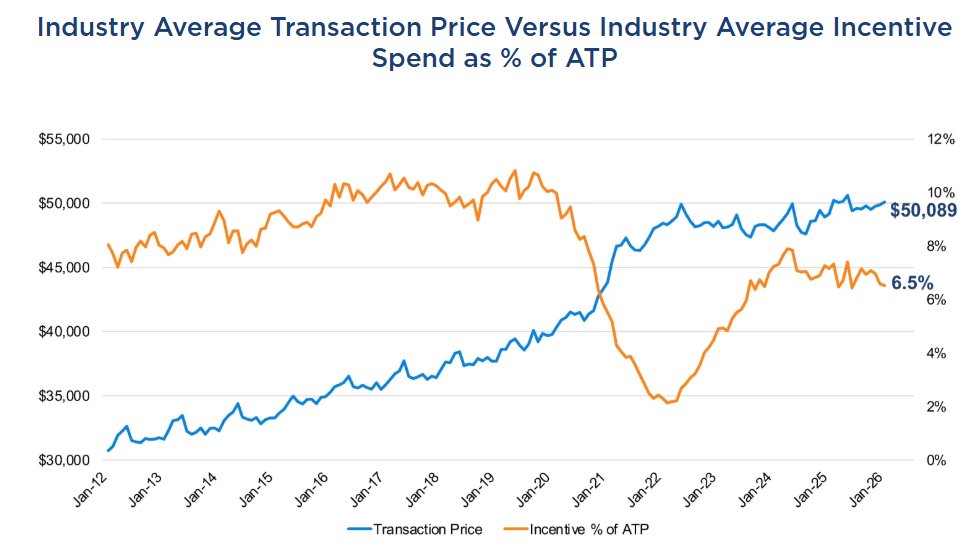
A retail consumer will happily sign a contract to go $50,089 into high-interest debt for a brand-new depreciating car, according to August 2026 data from Kelley Blue Book.
But, deploying $5,000 of cash into a dominant, high-quality compounding company with an elite moat is viewed as “too risky.”
20% of its value will be lost when you drive of the lot immediately. By year 5, it has bled roughly 50-60% of its initial worth, leaving you with an asset worth $12,000 while you paid thousands in interest.
A dominant monopoly compounding its cash flow at 15% annually turns that $5,000 into over $10,000. It pays you a dividend and probably expands its moat further.
The speed at which sentiment has shifted in the stock market is proof that retail investing is driven entirely by human psychology.
Just a few quarters ago, most people REFUSED to touch Mega-Cap giants like $AMZN $MSFT and $META . They all had the same panic over bloated AI CapEx spend and margin compression, which still holds true.
Those same investors are probably trampling over themselves to chase these stocks now that they've charged 30% or higher since the YTD lows.
Human nature never changes.
Congratulations to the disciplined investors who ignored the negative sentiment and made big money ❤️
Dominant monopolies like $AMZN and $META have effectively become the new consumer staples of the modern economy.
Half the connected world logs into a Meta app every single day. Amazon Web Services and their logistics network process the literal commerce and data of the globe.
How can you be bearish?
Because of bad sentiment around vantagescore and the possibility of a detoriating moat. The price hikes they made in the past are not welcomed by politicians and the huge amount of debt they took for buying back shares was also not received well. However, could a be a good entry point
@cadeinvests There is indeed a higher probability that the index will give lower returns to the market by the abnormal returns we already had on a 5 year and 10 year performance. Each gave us a 13% and 15% return. Considering the periods we faces is pretty good. Doesn't mean it's a guarantee
@anymanfitness@cadeinvests To be fair, 11% is not the benchmark average. It's more around the 10% mark if dividends are reinvested. The last 5 and 10 years were abnormal by returns of 13% and 15%. So Jason could be onto something here.
It is literally impossible to increase your stock portfolio's worth if your psychological timeline is measured in weeks instead of years.
Look at my long-term position in $V as a classic example:
Over a 5-year investment horizon:
• Two big drawdowns crushing the stock down by over 20%.
• Three near-miss pullbacks that, believe it or not, tested my nerves.
The end result of holding through is a phenomenal 23% CAGR.
If you can't stand your high-conviction assets dropping 20%, you shouldn't be buying individual equities.
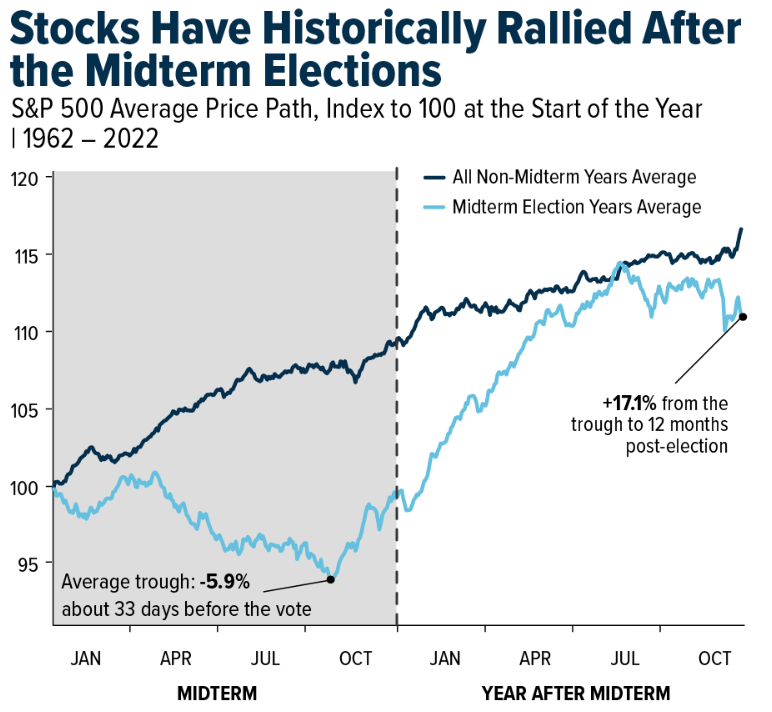
The typical midterm year spends late Q3 underwater, bottoms out right before Election Day, and then stages a massive multi-month relief rally.
Are you hoarding cash to buy the historical October midterm dip, or do you think the 2026 bull market ignores history completely? 👇
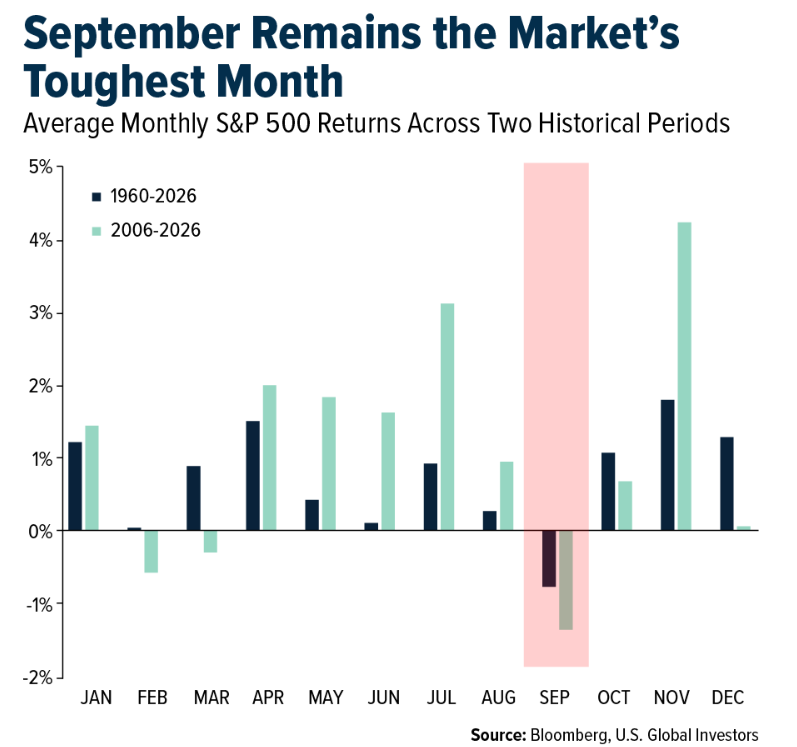
🚨 THE MIDTERM CURSE: The S&P 500 has not posted a single positive seasonal return between mid-August and Election Day in a midterm election year for 60 straight years.
Every single cycle has triggered a brutal autumn washout before the final bottom.
Look at the historical post-August maximum drawdowns during midterm cycles:
• 1962: -12.3% | 1966: -18.2%
• 1970: -7.1% | 1974: -28.6%
• 1978: -9.3% | 1982: -27.1%
• 1986: -8.4% | 1990: -18.2%
• 1994: -9.3% | 1998: -18.3%
• 2002: -21.1% | 2006: -6.9%
• 2010: -16.0% | 2014: -11.2%
• 2018: -21.2% | 2022: -16.9%
Will 2026 break the streak? 👇
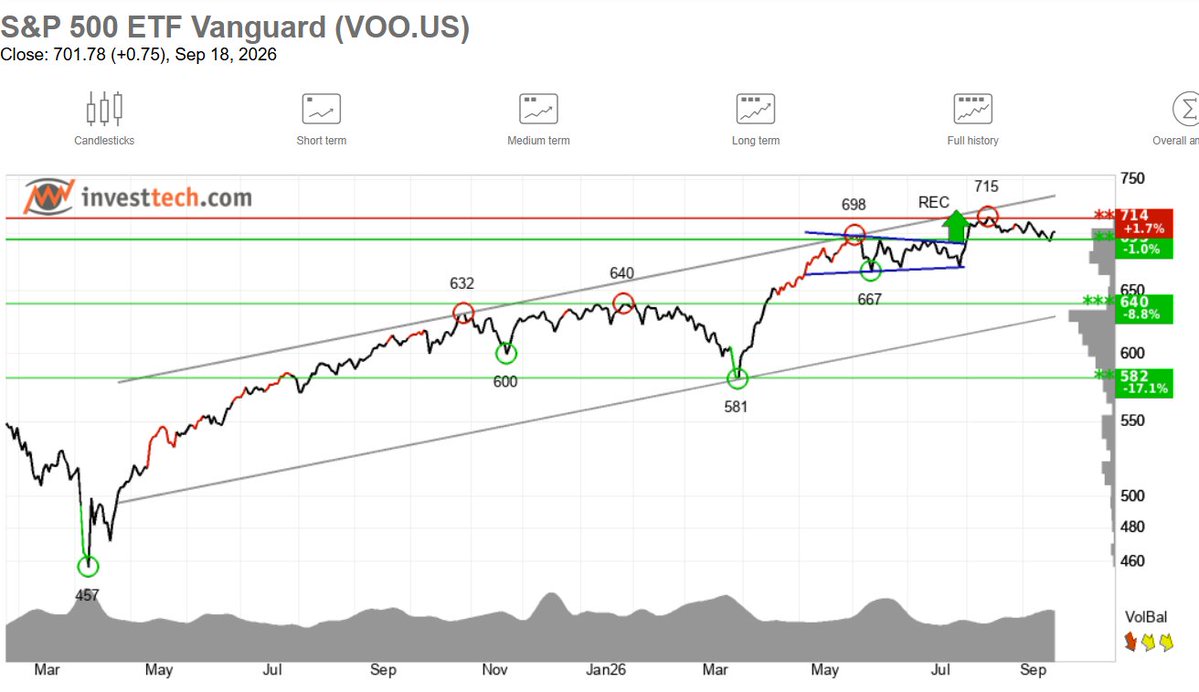
Right now, the market is completely fighting the historical trend. As of mid-September 2026, the S&P 500 is trading flat to slightly positive at +0.25% for the month.
Wall Street consensus is on a 15% corporate earnings growth stage.