Please join us in celebrating Audrey Coachman's Dean's Excellence Award for Staff! Audrey has been with the CNC as a Program Director since 2022, and the success of CNC programs and activities is due to the incredible support that Audrey provides.
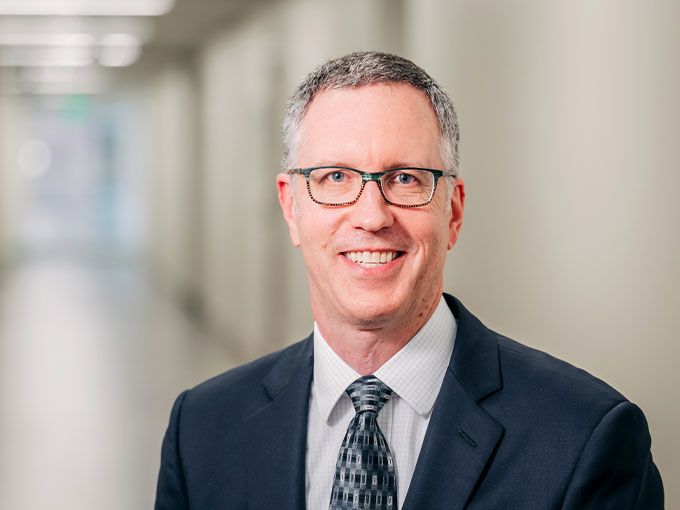
Erik Roberson, M.D., Ph.D., has been named interim chair of the @uabheersink Department of Neurology, effective Oct. 1, 2026. We look forward to his leadership!
Read more: https://t.co/cDfEJl2RK3
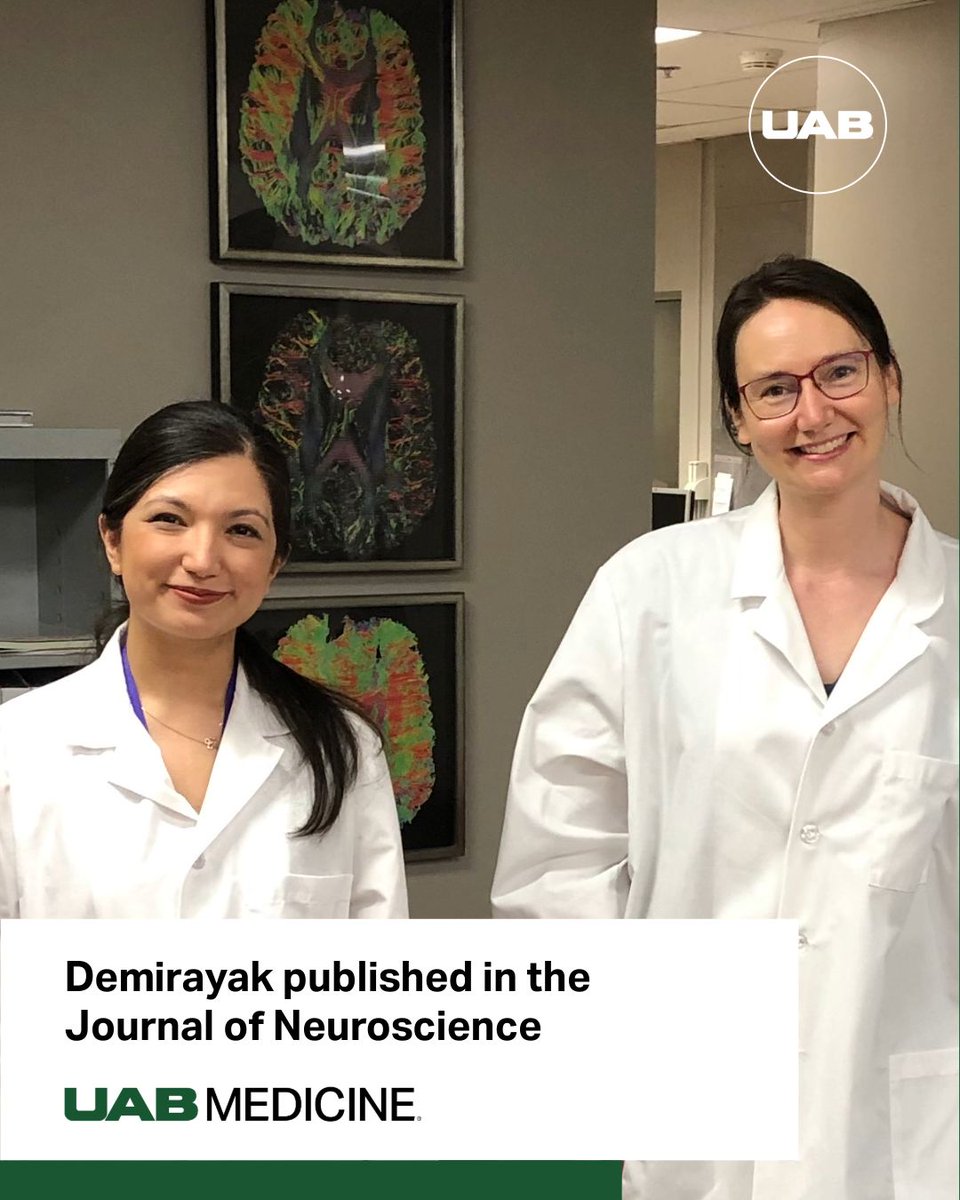
A study led by Pinar Demirayak, Ph.D., in the lab of Kristina Visscher, Ph.D., was published in the Journal of Neuroscience and explores how experience reshapes neural connections to fit the brain's networks to its environment.
Read more: https://t.co/NfYIaVDOpl
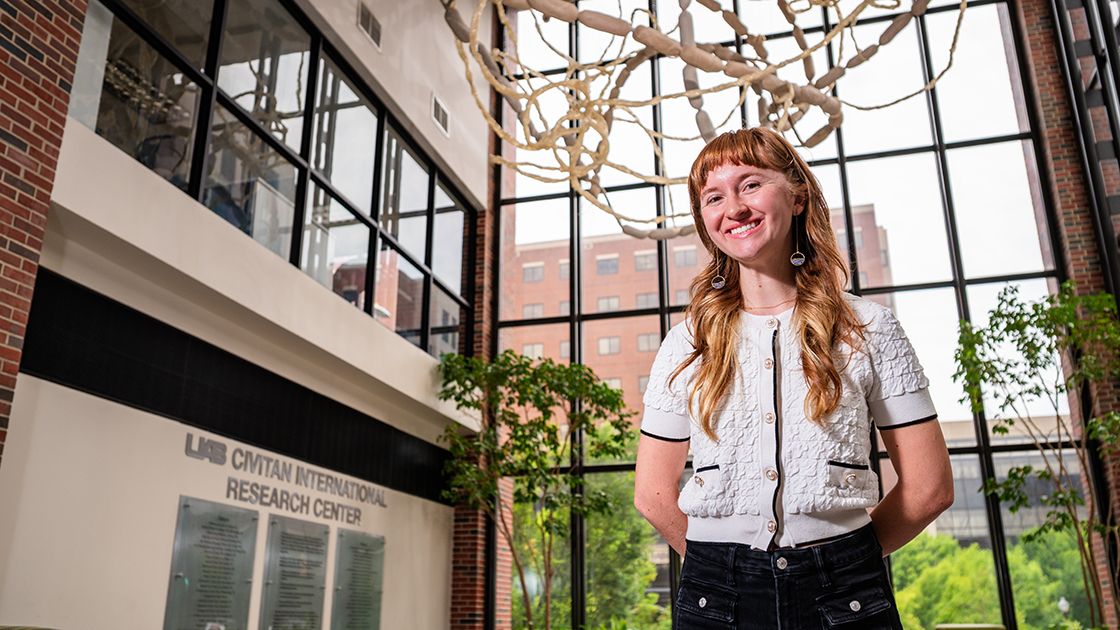
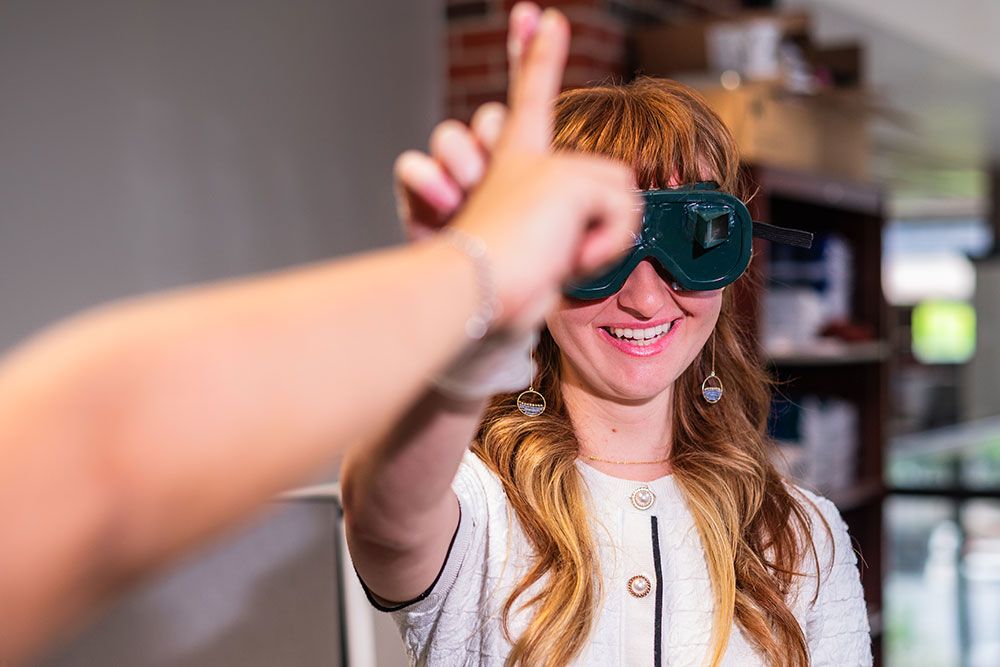
Ava Piper, a doctoral student in UAB's Behavioral Neuroscience program and director of Brain Snacks, demonstrates the PTC paper experiment, a favorite activity of the Neuroscience for All outreach program.
Read more: https://t.co/St8NExRDBZ
A study led by Dr. Jacques Wadiche and Dr. Linda Overstreet-Wadiche was published in Nature Neuroscience.
Their work is a testament to the power of collaboration — built on years of shared experiments and ideas between neighboring labs.
Read more: https://t.co/G0XFgwX6mW
MIT published a brutally honest report on what AI is doing to students.
A committee of professors and students spent five months studying how AI changed learning on campus, and the findings read like a warning to every university on the planet.
Study groups are disappearing. Office hours are emptying out. Problem sets and take-home exams no longer prove anything, because AI can produce credible solutions to almost any written assignment in the undergraduate curriculum. Students who lean on chatbots lose mastery and confidence, and some slip into what the report calls cognitive surrender, reaching for AI at the first hint of struggle.
The numbers are rough. 46 percent of surveyed MIT undergrads use LLMs daily. 90 percent worry about their own overreliance. Undergrads who feel AI makes them replaceable now outnumber those who feel it makes them capable.
The committee's answer surprised me. They refused to fight AI with surveillance. The report calls AI detectors unreliable, says lockdown browsers feel like spying, and warns that policing students builds a classroom atmosphere of mutual distrust.
Instead, MIT wants to rebuild education around the things AI can't replace. That means oral exams, semester portfolios, in-person project work, and a required social component in every subject. The report even floats the idea of rethinking grades entirely, since without a GPA to optimize, much of the incentive to cheat with AI evaporates.
The committee warns professors against replacing undergrad research assistants with AI agents just because they're cheaper, because a university exists to grow people, not output.
The most famous tech school on earth admitted the machines broke its way of teaching. Its answer is more humans, not more software.
Marissa Natelson Love, M.D., has been selected as a recipient of the Association of Academic Leaders of Neurology (AALN) Faculty Leadership Award. Congratulations, Dr. Natelson Love!
Read more: https://t.co/3NbVbQVznK
@UABHeersink
Congratulations to Dr. Kirstie Cummings and Dr. HaoSheng Sun (@UABCDIB) on receiving the 2026-2027 FCIDD McNulty Civitan Scientist Award!
Read more: https://t.co/tLxrWToOCf
@UABHeersink@UABNews@UABMedicine
A recent study on gene therapy for frontotemporal dementia, led by Erik Roberson, M.D., Ph.D., a professor in the @UABHeersink Department of Neurology, was featured in @alzforum! Congratulations, Dr. Roberson! 👏
Read here: https://t.co/uoU8ppZOfP
Erik D. Roberson, M.D., Ph.D., Shreya Kashyap, M.D., Ph.D., and Stephanie Fox, Ph.D., are exploring a way to improve gene therapy for frontotemporal dementia (FTD) at the @UABHeersink Dept. of Neurology.
Read more: https://t.co/lR938z5r0E
A two-in-one gene-therapy approach delivers a form of progranulin that blocks its interaction with a cell0sorting protein. It restores cell function in mice. @UABNews https://t.co/0K6xTdM5aB
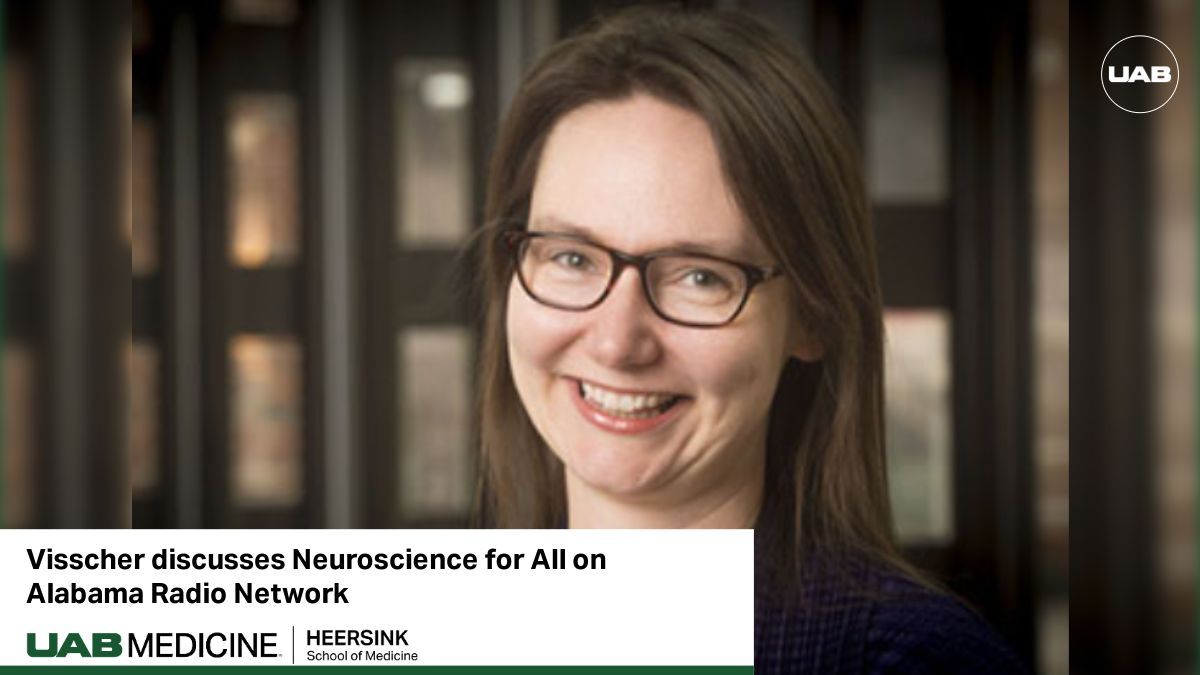
Dr. Kristina Visscher joined John Mountz of the Alabama Radio Network to discuss Neuroscience for All—a community-based initiative that combines hands-on learning with basic neuroscience concepts.
Listen to the full episode: https://t.co/uk1L6WL2hV
@UABHeersink@UABNews
New Phase 2 data from Biogen shows the drug diransersen reduced tau in the blood and brain and slowed cognitive decline in people with Alzheimer’s. The drug works by blocking tau formation, without the side effects sometimes seen with amyloid-targeting therapies.
Read about this and other Alzheimer’s news from #AAIC26: https://t.co/dbLEqlMBg3
Inspired by childhood visits to a science museum, UAB's Kristina Visscher, Ph.D., created Neuroscience for All to bring hands-on neuroscience experiences directly to the Birmingham community.
@UNeurobiology
https://t.co/6AqDAQX9p5
UAB neuroscientist Kristina Visscher leads Neuroscience for All, a community initiative bringing hands-on brain science education to Birmingham through outreach programs, partnerships and interactive learning experiences. https://t.co/qw2HbzDhxs
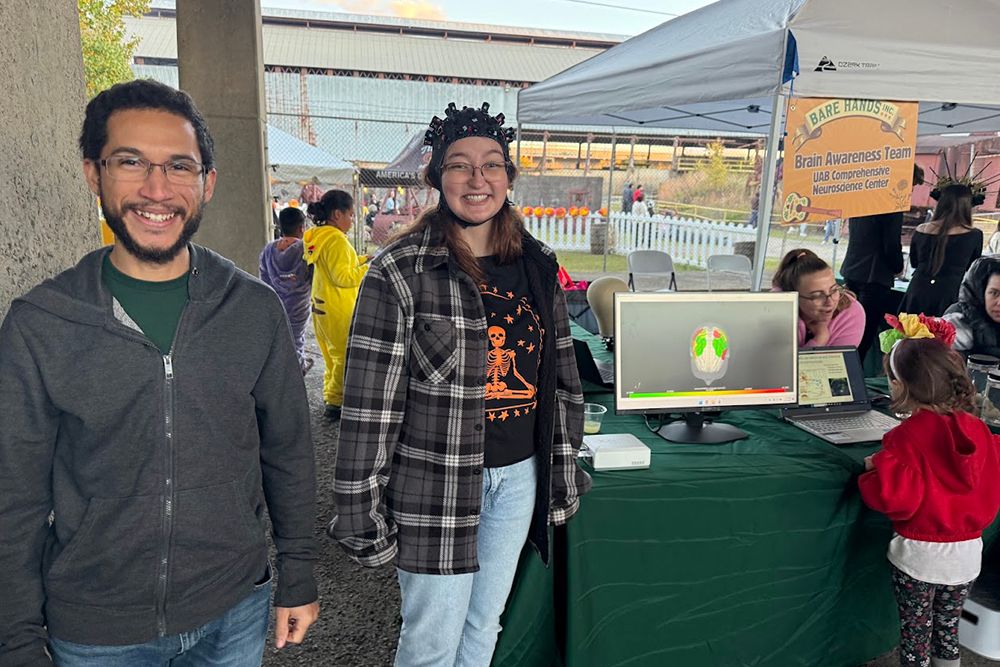
Better late than never - extremely excited to share that UAB's Brain Awareness Week with @Mcwane Science Center (and beyond!) was published! In it, we share a GitHub with activities and a forum to discuss them so that you can easily get them up and running wherever you are.
Science communication is an essential yet challenging part of research. This #JNeurosci Neuro & Beyond article offers guidance on effective communication & public engagement to improve basic neuroscience knowledge & strengthen trust in scientists.
https://t.co/xiTB8wbThR
Thanks to the leadership at UAB (especially @visscherlab) and McWane, our funding sources (including @IBROorg), the hundreds of volunteers (some on this paper), and the thousands of people who come to Brain Awareness week. This wouldn't be possible without everyone!