"Polls give the public a voice in politics, business and other areas... If we stop polling people and just assume AI knows the answer, we risk misunderstanding what’s actually happening in the public."
https://t.co/GLX1eg2Sgo
Two new posts from us at @pewresearch today (links in replies).
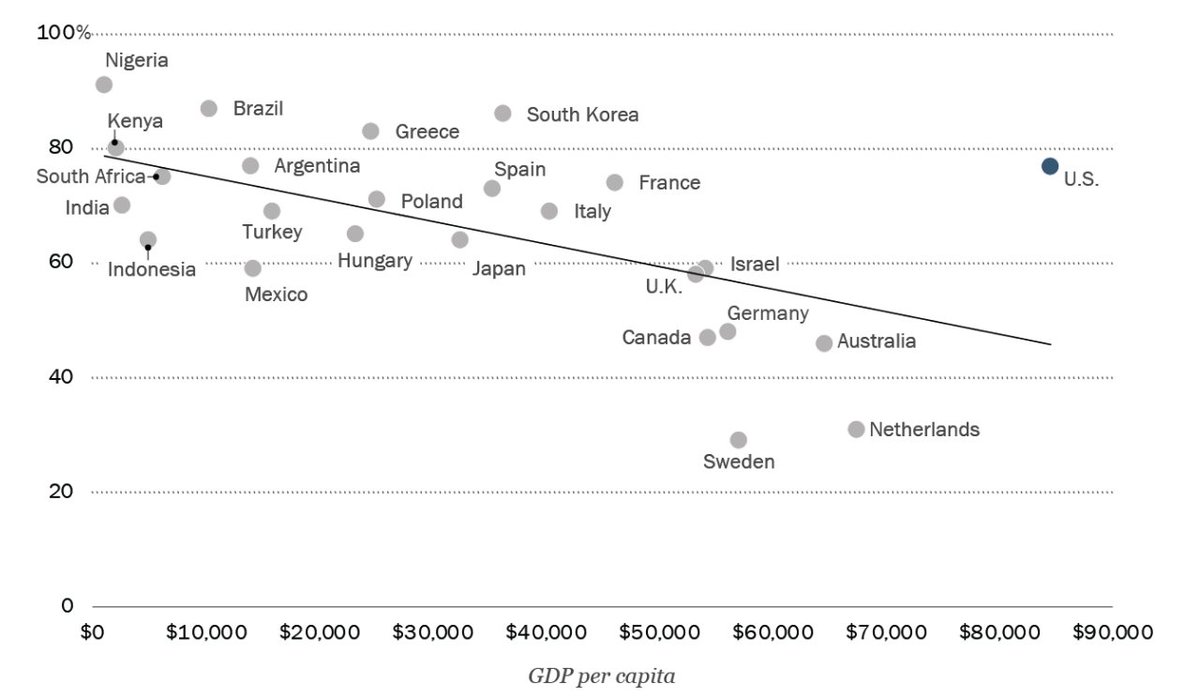
First, higher income countries tend to be less likely to say their political system needs big changes. But the U.S. is an exception.
This post shows how the U.S. both does and does not stand out on this measure.
The full dataset from Pew's 2025 Global Attitudes Survey is available for download!
A great resource for anyone interested in public opinion that contains rich data from 25 countries.
https://t.co/YGc4NuDAu9
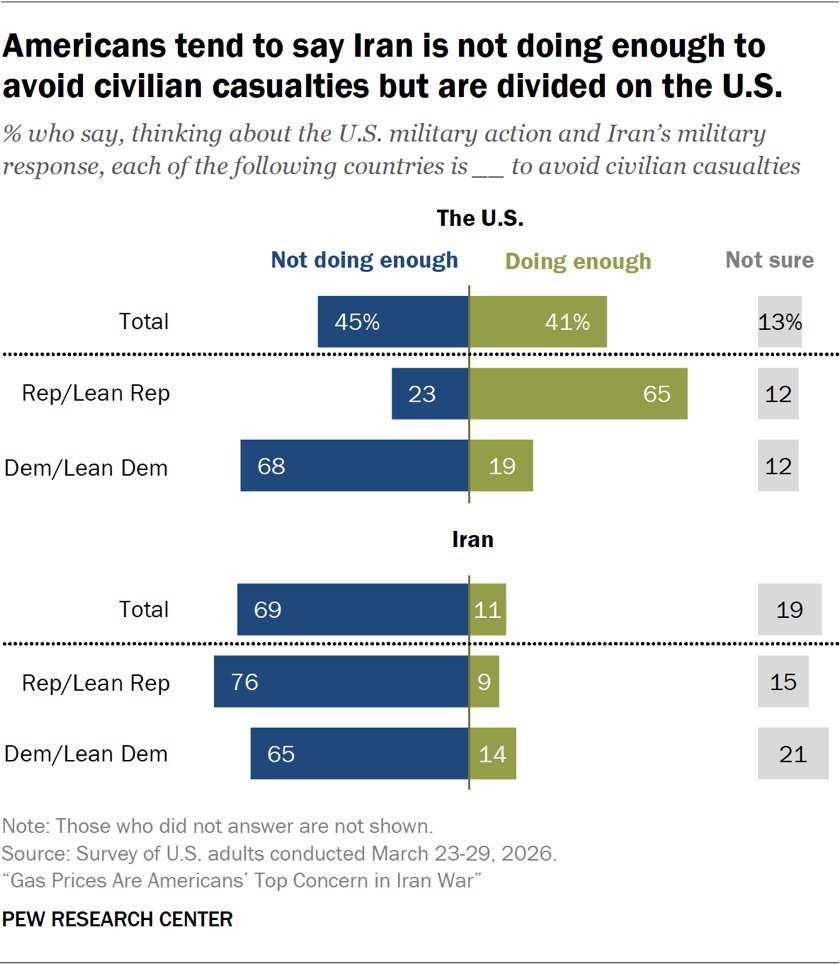
Majorities in both parties agree that Iran is not doing enough to avoid civilian casualties.
But Democrats are three times more likely than Republicans to say the U.S. is not doing enough to avoid civilian casualties.
Republicans are more likely than Democrats to say U.S. military action against Iran will make the Iranian people better off.
But within the GOP, there are big age divides. Republicans 65 and older are about twice as likely as those under 30 to say Iranians will be better off.
New from @pewresearch:
About a third of Americans have confidence in Trump to make good decisions when it comes to policy toward Iran.
That number has declined since he was a candidate for president in 2024, including by 18 points among Republicans.
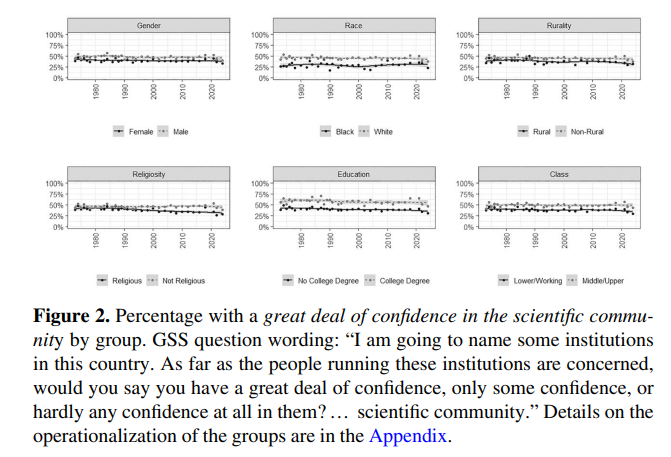
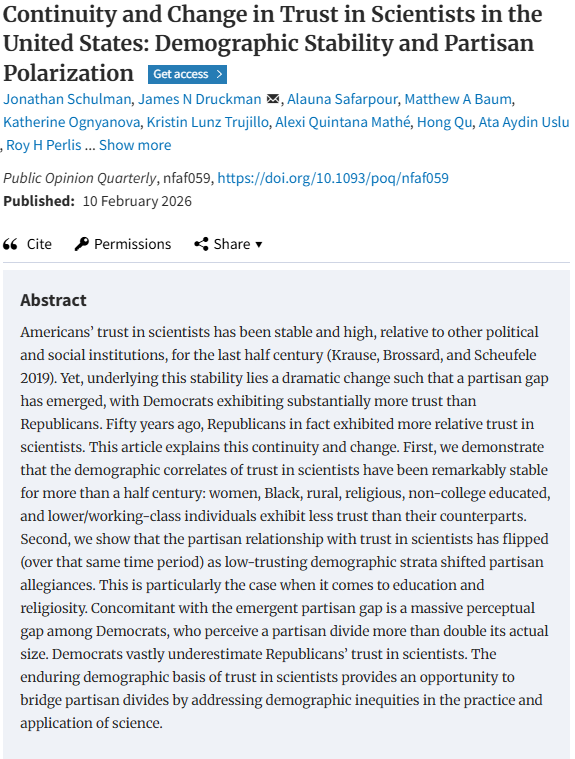
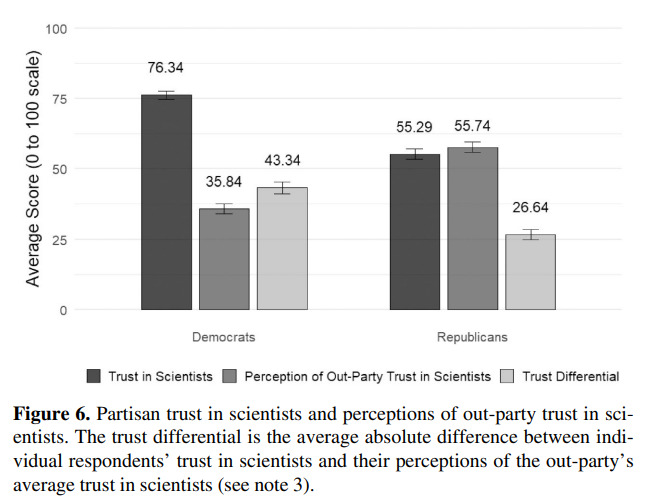
Really excited to see our article examining trends in public confidence in scientists over the last five decades in print.
Check it out here and let me know your thoughts:
In the past, Republicans had more trust in scientists than Democrats. This is no longer the case.
In POQ, Schulam et al. identify demographic changes in political parties as a source of polarized trust in the scientific community.
Read now: https://t.co/uzKD8H4qIw
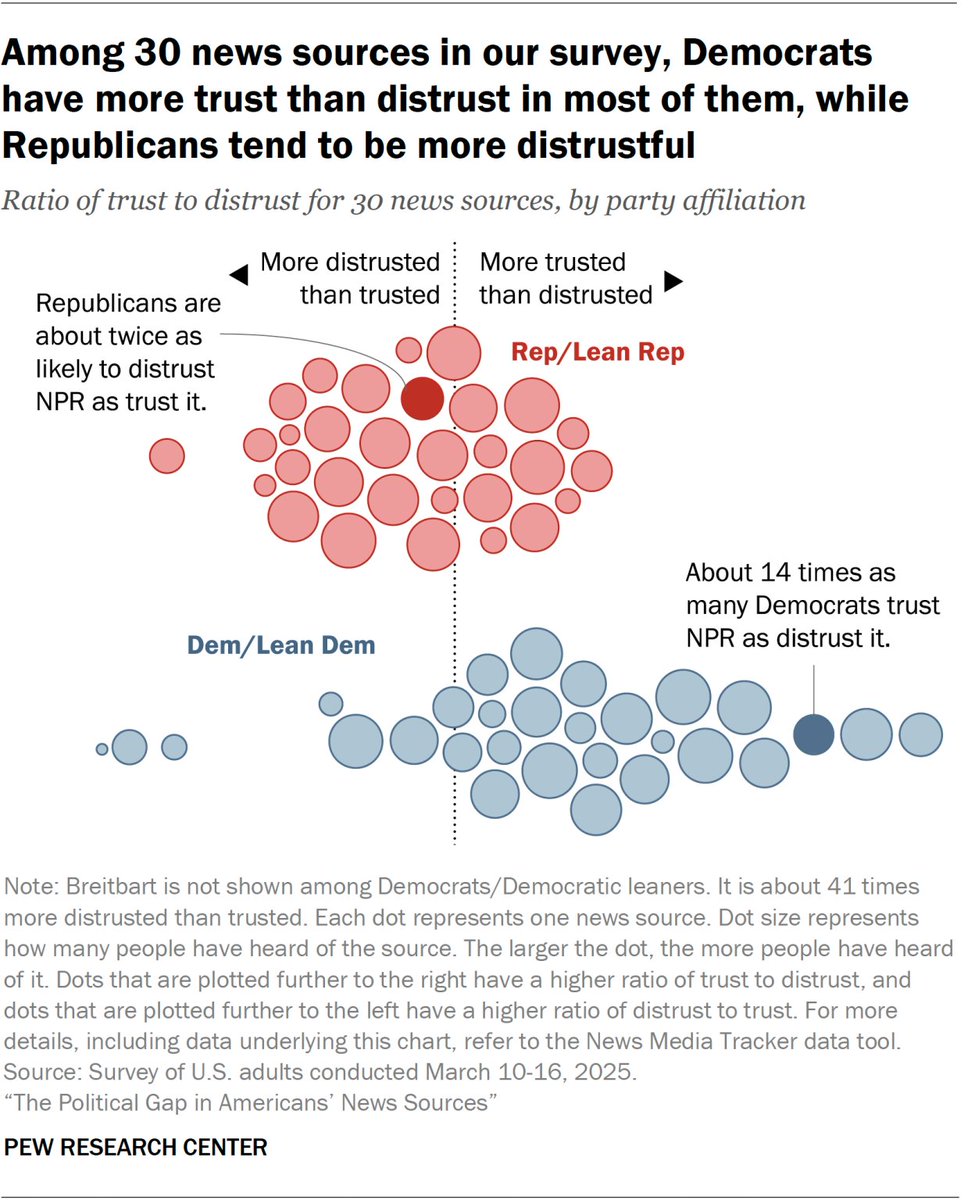
An extremely fun post from Pew today: Our graphics team's favorite data visualizations of 2025!
Including my personal favorite, a 'beeswarm plot' showing the partisan divide over trust in different news sources, with each dot representing a news source.
https://t.co/9YAcufVM1v
Our 2025 striking findings post is out now! Highlights include:
- Views of the U.S. are down, views of China up in many countries
- More Americans say higher education is going in the wrong direction
- Young men have grown more critical of sports betting
https://t.co/dNHh5gPmlM
In a new article out today in @NatureHumBehav, we find that members of demographic groups with lower trust in scientists increase their trust when presented with scientists who look like them. Not just on gender and race, but also rurality and class.
https://t.co/cfaIE8nsl7
Americans aren’t following the news as closely as they were a decade ago. And that’s true for older and younger Americans and Republicans and Democrats alike.
New today from Pew: https://t.co/GhkCH6qoxA
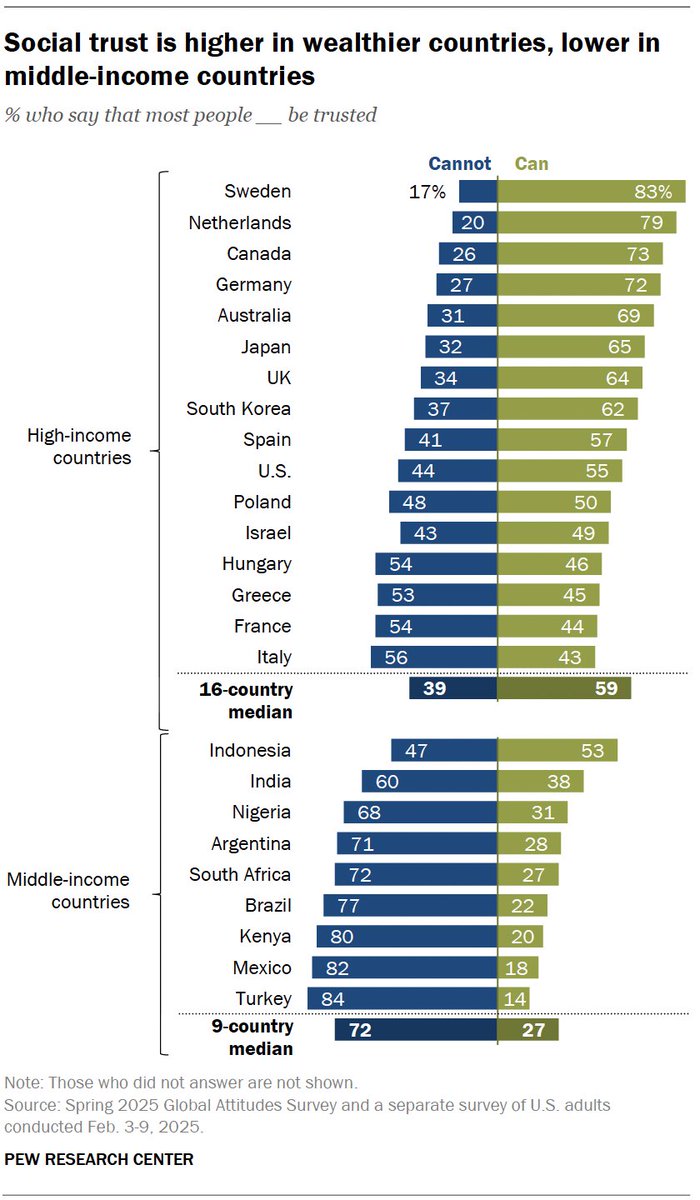
Across 25 countries we surveyed earlier this year, trust in others varies widely. But it tends to be higher in high-income countries than in middle-income ones.
We have previously found that trusting others is associated with things like higher confidence in public school principals & greater life satisfaction.
In a new post out today, we find that whether people trust others also relates to how they think about international affairs.