I don’t think Europeans fully appreciate what is happening to the European Union right now.
The EU is under an extraordinary, multi-front assault, both from outside and from within. And I struggle to think of another period in its history when so many powerful actors had an interest in weakening it simultaneously.
Russia has spent years waging hybrid warfare against Europe. Weaponised migration, sabotage, cyberattacks, coordinated disinformation campaigns, bot networks and political interference. The objective is clear: undermine trust in democratic institutions, deepen social divisions and weaken European unity.
China has different motivations, primarily economic and geopolitical. A fragmented Europe is easier to pressure, easier to negotiate with individually and less capable of defending its economic interests.
And then there is the United States. Perhaps the most disturbing development of all.
Under Trump and MAGA, a country that helped rebuild the old continent and then spent decades supporting European integration now has an administration openly hostile to much of what the EU represents. Its own National Security Strategy even calls for cultivating resistance to Europe’s current political direction.
Think about that for a moment.
Meanwhile, within Europe, parts of the far right and far left amplify these divisions, whether through ideological alignment, political opportunism or outright sympathy for authoritarian regimes.
This doesn’t mean Russia, China and MAGA are all following some jointly coordinated master plan. They don’t have to. Their interests increasingly overlap, and Europe’s internal divisions make their work considerably easier.
What makes this particularly alarming is what is actually at stake.
For all its flaws, the EU remains one of the world’s most consequential projects built around liberal democracy, the rule of law, individual freedoms and cooperation between nations.
At a time when authoritarianism is gaining ground and even longstanding democracies are showing disturbing tendencies, that matters enormously.
Europe is far from perfect. Its bureaucracy, indecision and inability to act decisively are real problems. But the answer cannot be to retreat into 27 competing nation-states, each too small to meaningfully influence a world increasingly dominated by continental powers.
Quite the opposite.
Europe needs deeper integration, stronger common institutions, genuine strategic autonomy and the political courage to defend its interests and values.
Because fragmentation is precisely what so many external actors want.
And perhaps that’s the central irony of our time: people are being deliberately manipulated into believing that the reverse is true — that national identity and sovereignty can only be protected by weakening European cooperation. In reality, a divided Europe is less sovereign, less secure and far easier for outside powers to pressure. Therefore the very thing that will make Europe stronger is the thing its adversaries are working hardest to prevent.
A united Europe is a geopolitical power. A divided Europe is a collection of countries waiting to be played against one another.
💙 Há coisas que não podem falhar no verão: os amigos, a família e os momentos para guardar.
Da foto na ilha à videochamada para casa, a MEO acompanha-te com uma rede sem falhas📱
Consulta condições da campanha https://t.co/Cj5jjZKefa
#MEO#VerãoSemFalha
Seria demasiado pedir ao Estado Português @govportugal que comunique de forma clara com os cidadãos? Uma iniciativa de "Falar Claro", evitando frases de 3 linhas e 3 negativas como (1/2)
"Informa-se V.Ex.a que não haverá lugar à atribuição do subsídio de doença, referente ao período acima indicado, se, no prazo de 10 dias úteis a contar da data da recepção deste ofício, não der entrada nestes serviços, resposta por escrito, da qual constem elementos que possam...
El apagón un año después: mucho análisis inútil; la luz más cara; las reformas no han llegado (solo cambios técnicos); no hay responsables administrativos ni políticos (solo indicios) y la CNMC enmaraña la situación. En fin.
https://t.co/hBW6Ewgjbu
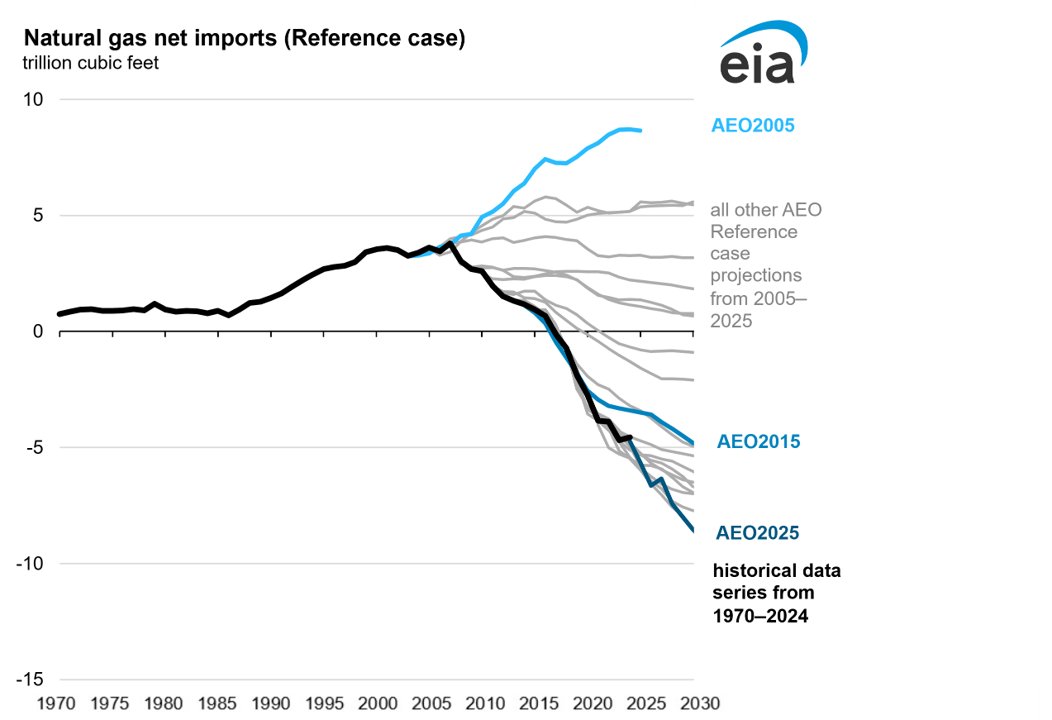
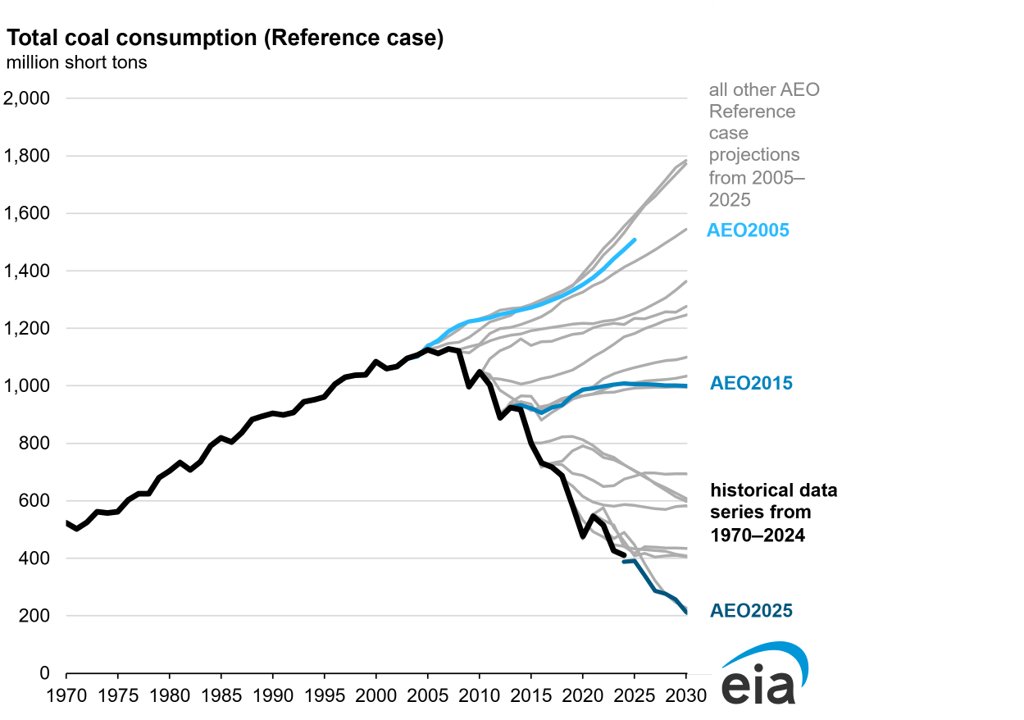
Wild figures in two decades of EIA retrospective data.
Solar getting it wrong gets all the airplay. But the consistent underestimation of natural gas exports and the speed of coal's collapse are just as striking, even at 3-5 year horizons.
Tenemos ya los informes del Gobierno, CNMC y Entso-e. La conclusión: la culpa del apagón es como la lotería de Navidad... muy repartida. Todos cumplieron la ley. La legislación además permitía que no hubiera sucedido, eso sí, hay una ristra de recomendaciones de cambio.
🌀 Storm Leonardo brought heavy rain to 🇵🇹 Portugal in early Feb 2026, worsening floods after Storm Kristin. 🛰️
@CopernicusEMS was activated, mapping flooded areas along the Tagus River - over 64,000 ha affected.
🔗 https://t.co/gnPGKRstlj
#CopernicusEU#ImageOfTheDay
🌩️ Late Jan, Storm Kristin hit 🇵🇹 Portugal, causing casualties, flooding & heavy coastal swell. @CopernicusEMS Rapid Mapping was activated.
🛰️ This #CopernicusEU Sentinel-2 #ImageOfTheDay (31 Jan) shows flooding near Ferrel & strong waves off Peniche.
🔗 https://t.co/2cj1I5m8bT
I don’t think most of Europe is aware that Portugal quite literally experienced one of its worst storms in recorded history just a few days ago. The scale of destruction in some parts of the country is unlike anything people have seen, and this is a place many have moved to seeking beautiful blue skies and sunny days. Is that reality disappearing?
Whether or not you believe in climate change… 2026 has gotten off to an extremely dangerous start for some of us. Kristin showed us what the atmosphere is capable of, even in places you would never expect it.
Let’s start with the facts.
The European Union is the world’s largest trading bloc. Membership means access to a single market of hundreds of millions of people, shared standards, and collective negotiating power. That matters for jobs, investment, and growth.
When you are inside the EU, you help shape the rules that govern trade, data, workers’ rights and environmental standards. When you are outside, those rules still affect you — but you no longer have a seat at the table.
Freedom of movement was not an abstract principle. It was a practical benefit. It allowed people to work, study, collaborate and contribute across borders with fewer barriers and less bureaucracy. That supported businesses, universities, and families alike.
The EU is not perfect. No serious person claims it is. But cooperation delivers results where isolation does not. Stability attracts investment. Shared frameworks reduce friction. Partnership strengthens influence.
This is not about ideology or nostalgia.
It is about pragmatism, opportunity, and Britain’s place in the world.
And the evidence is clear: countries do better when they work together.
Change to #ThwaitesGlacier, #Antarctica constitutes the largest uncertainty in #sealevel rise forecasts. The Science Coordination Office of the International Thwaites Glacier Collaboration recently summarised some key findings in a briefing document - https://t.co/jAjLsl1Hog
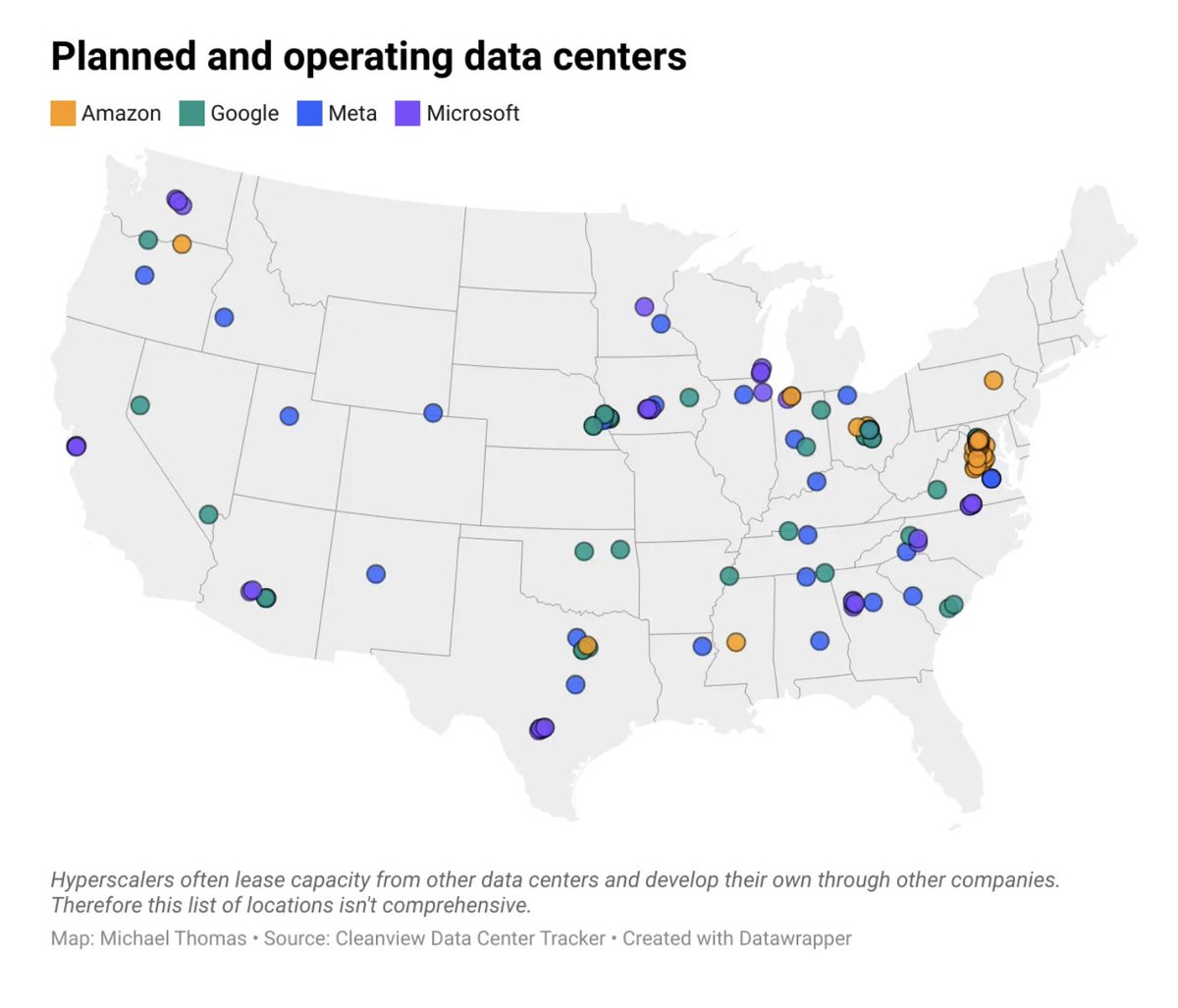
For the last few months I've been going through public documents, permits, and satellite images to track the largest data centers in the US.
Today I published the first story about what I've learned.
🧵