🚨🚨My book "Fragmented Policy Change" is forthcoming in 2026 with @CambridgeUP! 🚨 🚨
Find a preview of the cover below. You can also check out the book description here: https://t.co/08R4W1jK7s
Stay tuned! 🥳
@DFinanciero Sería relevante que mostrara la metodología para concluir que bajando impuestos en Chile aumentarían los ingresos. Como asesor del gobernador de Kansas el 2012 propuso lo mismo y el resultado fue un déficit fiscal importante y el 2017 hubo que revertir la rebaja de impuestos
Greedflation meets the China shock: Can Europe's car industry be saved without feeding the cost of living crisis?
One of the things that drives me nuts is when critical discourses succeed each other without logical connection. This chartbook tries to bridge two of recent vintage.
Framing AI as the next "Manhattan Project" functions more as corporate PR than a genuine analysis of technical change. As our podcast of the week argues, this rhetoric elides the real issue of how material processes shape our lives.
With @DEHEdgerton
https://t.co/BQoaBG7tf6
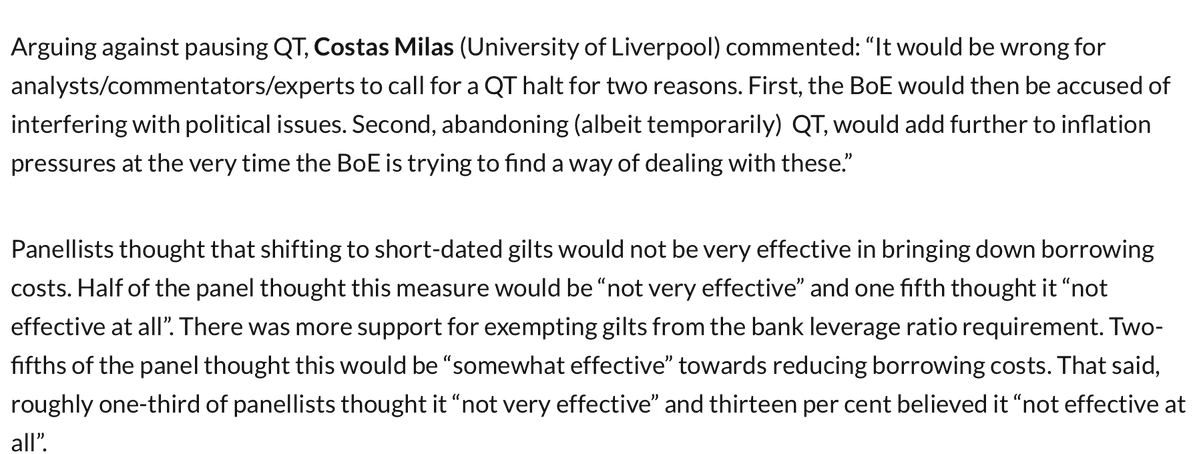
yes @adam_tooze and the manufacturing of silence around the Bank's actions to shrink fiscal space deliberately is astounding:
here one alarmist claim that halting gilt sales would trigger inflation!
@DanielaGabor We seem to never learn. It is, of course, not the first time that the Bank deliberately attempts to demarcate fiscal space. E.g., post GFC (if by very different means): https://t.co/pj6GwUrYGF
🚨🚨My book "Fragmented Policy Change" is forthcoming in 2026 with @CambridgeUP! 🚨 🚨
Find a preview of the cover below. You can also check out the book description here: https://t.co/08R4W1jK7s
Stay tuned! 🥳
Applications are invited for a 3-year, non-renewable, Academic Career Development Fellow in the global politics/international relations of the Middle East and North Africa, or of South Asia.
For more information and to apply: https://t.co/TdckdAaY9C
New paper in New Political Economy! With @IngaRademacher, we study central bank strategic politicisation management in the aftermath of the Global Financial Crisis. Focusing on the Bank of England, we find that it devised 3 tactics to curb politicisation. https://t.co/acRrktypRW
New paper in New Political Economy! With @IngaRademacher, we study central bank strategic politicisation management in the aftermath of the Global Financial Crisis. Focusing on the Bank of England, we find that it devised 3 tactics to curb politicisation. https://t.co/acRrktypRW
Third, in response to concerns about QE’s purpose – inflation targeting vs monetary financing – central bankers engaged in overreaching. They enlisted the fiscal sphere as a subordinate policy field and requested aggressive fiscal consolidation.
New paper out! Before algorithms and quants dominated finance, the UK gilt-edged market was being built through struggles over expertise, calculation, and the “right” way to value government debt, from actuaries to financial economists.
Check it out:
https://t.co/1mPP18ARLV
Qué sugiero retener de este ejercicio? Que el sistema actual equivale a un régimen desintegrado de tasa corporativa 9,45% y tasa personal efectiva máxima de 35%, total 44,45%, con un delta de IDPC de 17,55% que genera un problema de caja y ahorro en UF a tasa 0 con el Fisco.
Chile’s President José Antonio Kast went on TV this week and warned the nation it couldn’t keep racking up debts like it was — then outlined a series of tax cuts and subsidies that may widen the deficit in the near term. https://t.co/eXRiRq48J6