PhD, Visiting Professor, and VC Founder.
I’ve invested in hundreds of companies across AI, embodied intelligence, robotics, biotech, advanced manufacturing, and semiconductors. My research covers frontier tech—from aerospace and quantum computing to new energy, advanced materials, and biopharma.
Beyond deep tech, I closely track geopolitics, global conflicts, macro trends, and global capital markets.
My core lens: I cut through the tech hype, stress-test commercial viability, and analyze how geopolitics and macro shape valuations, supply chains, and venture returns. I separate what’s actually technically feasible from overblown market BS.
Always open to sharp debates with founders, researchers, and fellow investors.
Note: To avoid spam and scams, I don't take cold calls, and I only engage in DMs after basic verification. Thanks for understanding.
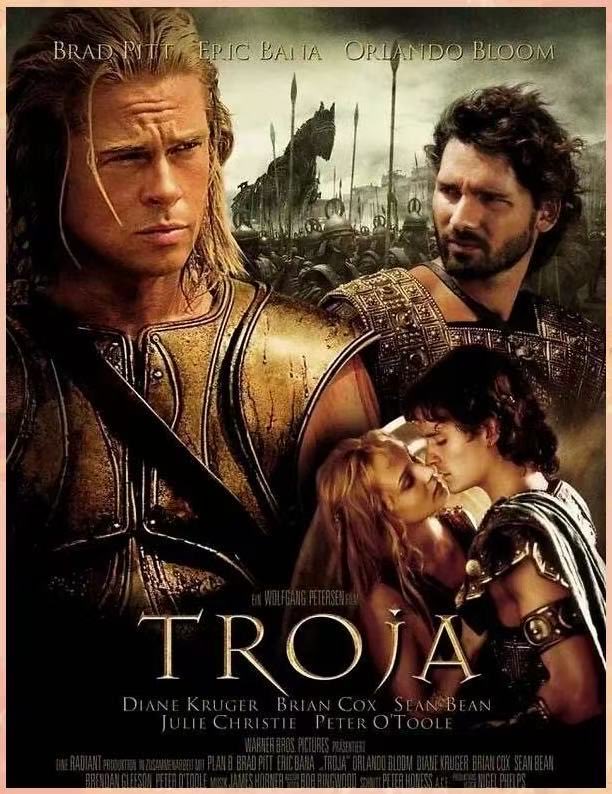
Helen lit Troy’s decade‑long war. Now this reported scandal hands Nvidia its very own Trojan‑horse moment. Inside: the board’s rumored leadership shake‑up. The market hauled it right in, and the stock got walloped. Nothing’s set in stone. Just my take — not investment advice.
Disclaimer: This is personal commentary and humor only. It does not constitute investment advice of any kind.
Let me be upfront: I'm a loyal NVIDIA investor. I hold the stock, I believe in the company, and it's made me money. So I'm not writing this to rubberneck — I'm writing it because it genuinely hurts.
The U.S. market's approach boils down to one sentence: Do whatever you want in your private life — just don't drag the company into a ditch.
1. The U.S. market doesn't judge character — it judges "contagion."
You cheat, you flirt, you text at midnight — the market has zero interest in playing morality police. It asks one question: will this screw shareholders, blow up, or create new risk? If yes, it investigates. If no, carry on. But I'm a shareholder. I don't care about the morality — I care about where that line of "will it contaminate the company" actually gets drawn.
2. Private conflicts of interest? Put them all in the sunlight.
Executives don't rely on self-discipline; they rely on hard rules. Personal relationships, hidden connections, potential conflicts — all disclosed. Want an exemption? Say it publicly and let the whole market watch. No backroom deals. I bought a company, not a mystery box.
3. When something breaks, management steps aside.
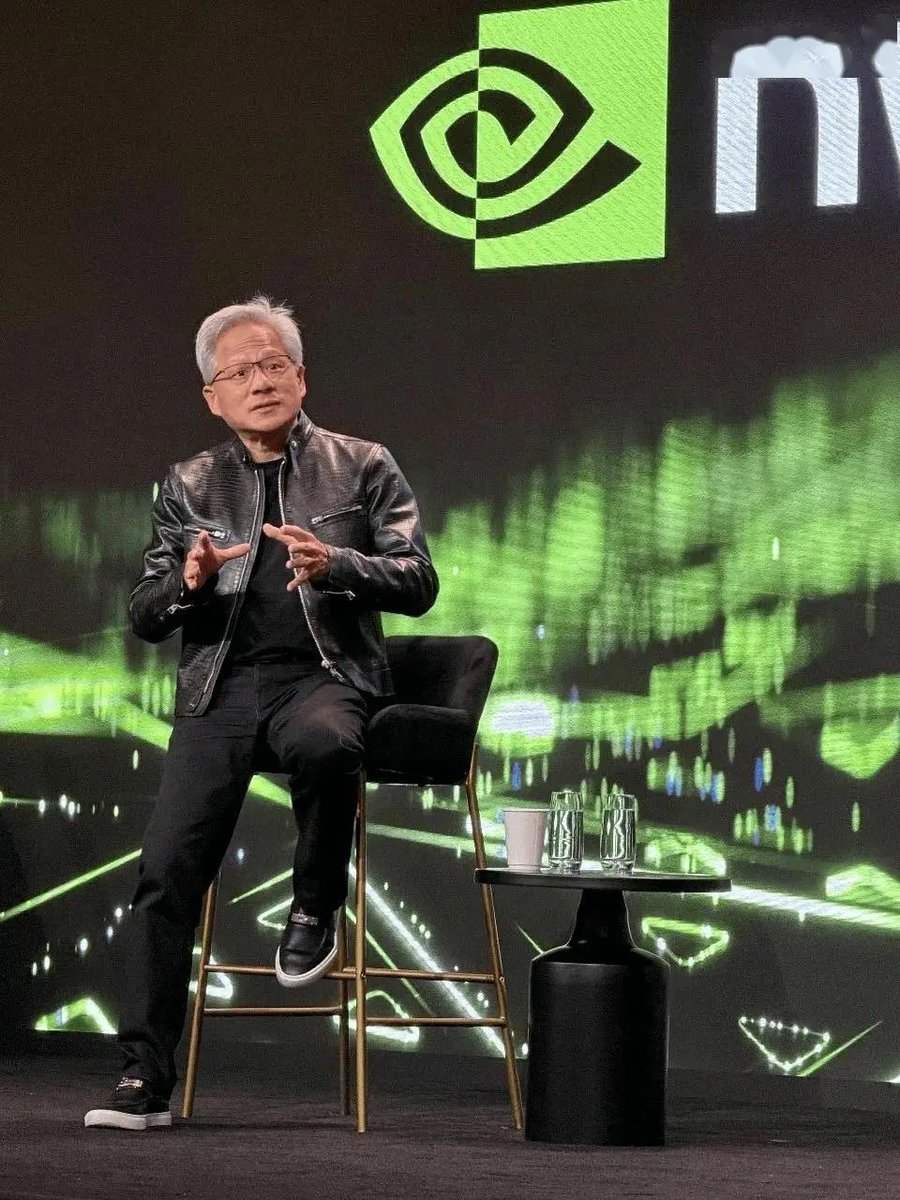
This Huang investigation isn't "insiders investigating insiders." It's outside independent directors only, plus brand-new outside counsel, with their own budget and full authority. The CEO can't touch it and can't bury it. The investigation is as neutral as the neighbor auditing your books. As an investor, I'd rather they investigate hard than feed me a snow job.
4. Directors don't slack off — because they're genuinely afraid of paying out of pocket.
U.S. directors aren't just ceremonial titles. See a risk signal and ignore it? Shareholders can sue you personally for damages. So the board has to do its job proactively instead of waiting for regulators to nag them. I'm all for this — I'm one of those shareholders who can sue.
5. The constraints are a three-dimensional siege, not a single pressure point.
SEC oversight, class actions, shareholder accountability, internal whistleblowers, exchange rules — locked down layer by layer. Anyone trying to fudge or cover up gets hit from multiple angles at once, like whack-a-mole.
6. A-shares' biggest problem: insiders investigating insiders.
When something goes wrong, it's basically this: management self-audits, its own law firm reviews, its own people judge its own people. Independent directors mostly have no real power, no independent counsel, and no independent budget. Check on the controlling shareholder? Mostly through eye contact.
7. Domestic regulators only chase violations, not "hidden risk spillover."
A-shares currently punishes crimes, violations, and pledge blowups — the obvious stuff. Executives' personal relationships, foreign connections, hidden benefit transfers, confidentiality risks — institutionally, these are blank spots. Nobody systematically checks. It's a blind spot under the lamp.
8. The core lesson worth learning: regulators should mind their boundaries and focus on the essence.
Good capital market governance doesn't act as a morality cop — it acts as a risk firewall. No administrative crackdowns; instead, institutional design that makes companies proactively self-audit and self-correct, plugging risks before they blow. You do your thing — just don't blow up my position. I'm a shareholder. That's not a joke. I mean it.
Friends, stop forcing a link between party politics and tech stock moves. That's reversing cause and effect.
The cleanest proof: the internet bubble under Clinton, the mobile internet bull run under Obama, the AI capex cycle under Biden—three tech rallies under Democratic administrations. None of them rallied because of Democratic policy. They rallied because technology penetration inflected and liquidity loosened. Flip it around: tech stocks fell under Bush, and tech stocks rallied just fine under Trump's first term. Party affiliation explains close to zero of tech stock pricing.
Wall Street banks do have an incentive to fan the flames here. Political narrative is the best panic amplifier—simple, emotional, easy to sell, far easier to market than hard variables like capex slope and the rate path.
The only stable rule in this market: tech rallies happen when technology penetration inflects and liquidity loosens. Who's in power is background noise.
What investors should watch now isn't who controls Congress. It's two hard variables: the slope of AI capex and the Fed's rate path. When those two turn, tech turns. Party rotation doesn't change that pricing anchor.
The above represents my personal views only and does not constitute any investment advice.
Adding to optical connectivity, optical chips, and Nvidia. That's my personal play.
Optical got absolutely hammered this week. Lumentum down 30% in two sessions. Coherent down 6% in a day. Corning down 6%. Marvell down 30% in three days. The trigger is clear: Marvell's all-stock acquisition of Lumentum, $115 billion, with closing not until 2028. Both shareholder bases voted with their feet.
But here's the thing—what's getting sold is the deal structure, not the thesis.
Top five cloud providers' 2026E capex is approaching $800 billion, with 2027 guidance still moving higher. So where does the optical interconnect demand gap get filled from?
NVDA Q3 revenue came in at $57 billion, up 62% YoY. Data center $51.2 billion, up 66%. Blackwell's shipment slope is steepening, not flattening. The top five buyers have already deployed $556 billion, and guidance is still going up. You call that a bubble?
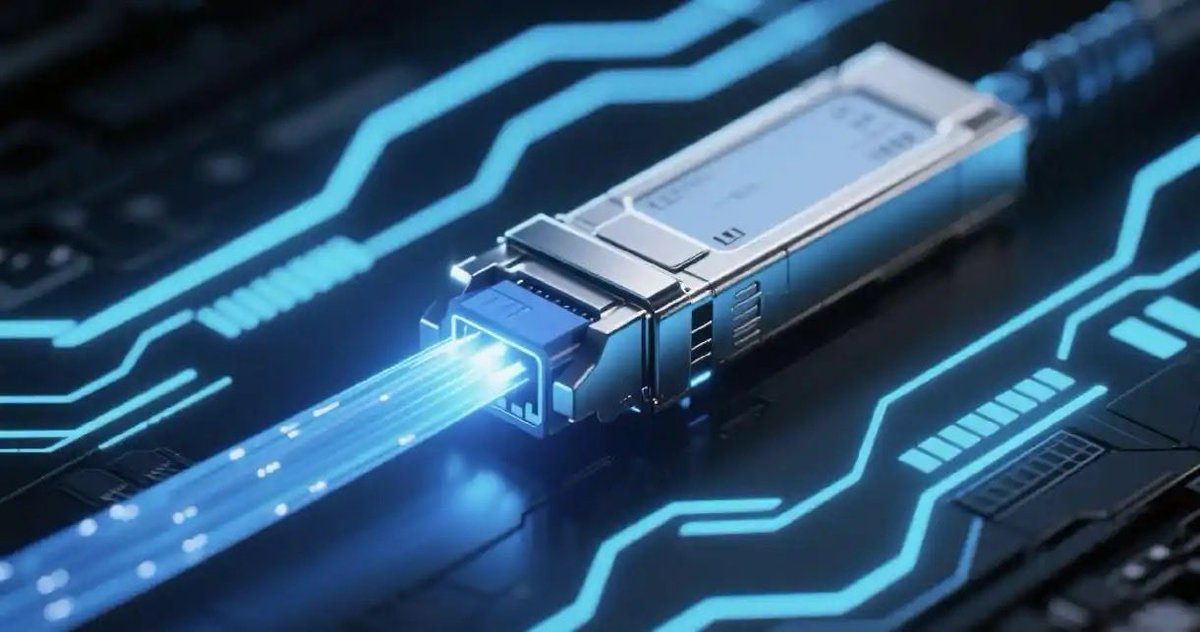
The optical interconnect logic is more rigid than GPU. GPUs can wait. Optical interconnect cannot. 800G is ramping, 1.6T is climbing, 3.2T validation is done. Every rate step-up drives non-linear expansion in optical chip volume and ASP. Lumentum shipments are running 25–30% below demand. EML, CW light sources, indium phosphide substrates—long expansion cycles, narrow windows.
NVDA at 35x TTM. Revenue growth 65%, DC 66%, GM 73%+. 35x. Expensive? That's a definitional question. NVDA defines the architecture: scale-out penetrating into scale-up, CPO/NPO/OIO converging. Copper-to-optics is irreversible. Optical chip value content moves monotonically higher.
My personal play is simple: short-term noise prices panic, long-term certainty provides the chips. Cloud providers' FCF pressure is real. Financing structure changes are real. Alphabet's CFO said it verbatim: 2027 capex will increase significantly. You can disagree with my call, but you have to respect their budget. There's no brake option in the 2027 arms race.
Optical connectivity sits at the most rigid bottleneck: slow supply expansion, high barriers, slow qualification, demand queuing up. That mismatch is where excess returns come from.
NVDA held. Optical chips added. That's my personal play. I can live with the volatility—the anchor is the physical limit of AI infrastructure over the next three years.
On valuation: the selloff is done, and it's cheap. That's math, not feeling.
Lumentum at $680, 26x forward versus a five-year average of 30x. Mean reversion implies roughly 17% of repair. CEO said it verbatim: products are essentially sold out through early 2029, EML gap exceeding 30% of demand. Orders locked in, 30% shortfall, 26x forward—you call that expensive?
Coherent at $195, down by half from $440. Forward P/E compressed from 57x to around 24x, hugging the five-year average of 23.6x. Analyst mean target $387.8, implying roughly 100% upside. Scale-up CPO ramps in 2H 2027, with optical content value per system at $15,000. The ramp hasn't changed—the stock just broke first.
Corning at 28.5x forward, PEG 0.96. Mean target $180 versus $118 now, implying 51% upside. Marvell was cut by BofA from $400 to $225—what got cut was the deal structure and regulatory uncertainty, not the optical interconnect fundamentals.
The valuation compression is over. What got sold was sentiment and deal structure, not orders. Lumentum's 30% gap, Coherent's order book locked through 2028, Corning tied to AI data centers. The valuation anchor has moved from AI narrative premium back to a reasonable manufacturing range, while the fundamental slope hasn't been revised down.
Nvidia at 35x TTM actually looks like the most "expensive" name in this basket. But it defines the architecture; it isn't defined by it. The valuation optical chips have sold off to is my direct reason for adding.
My personal play: panic pricing gives you chips, the valuation anchor gives you conviction.
Personal trading record. Not investment advice.
@EdwardCassas "Love the old-school hustle, Edward! That’s a great throwback. 💯 Times have definitely changed though—the internet is wild these days, so a little extra verification just helps me filter out the actual scammers. Appreciate you reaching out. Cheers!"
PhD, Visiting Professor, and VC Founder.
I’ve invested in hundreds of companies across AI, embodied intelligence, robotics, biotech, advanced manufacturing, and semiconductors. My research covers frontier tech—from aerospace and quantum computing to new energy, advanced materials, and biopharma.
Beyond deep tech, I closely track geopolitics, global conflicts, macro trends, and global capital markets.
My core lens: I cut through the tech hype, stress-test commercial viability, and analyze how geopolitics and macro shape valuations, supply chains, and venture returns. I separate what’s actually technically feasible from overblown market BS.
Always open to sharp debates with founders, researchers, and fellow investors.
Note: To avoid spam and scams, I don't take cold calls, and I only engage in DMs after basic verification. Thanks for understanding.
The U.S. stock market operates under a curious double standard when it comes to capex.
When cloud capex guidance softens at the margin, Marvell, Lumentum, Coherent and Corning are instantly repriced as cyclical losers. Their heavy R&D and capacity spending is treated almost entirely as cycle risk.
Meanwhile, Tesla and SpaceX maintain years of massive capital outlays, with far longer and more uncertain commercialization timelines. Investors award them lasting option premiums, framing every dollar spent as moat building.
This is not a prediction about which businesses will succeed. It points to Wall Street’s ingrained narrative bias: terminal platforms get patience; irreplaceable hardware infrastructure gets almost no room for temporary rhythm shifts.
Sentiment can misprice cycles. Over time, genuine demand and technical barriers tend to prevail.
Disclaimer: This is my personal market observation, not investment advice. All views draw only from publicly available information. For full details, please see my article on Substack. https://t.co/crRTy2B7Ev
Optical Communications Didn't Crash. The Way It's Being Paid For Did.
The market is in a panic. Chinese-language commentary is saturated with the intuition that "someone is systematically shorting this sector." But if you break down the decline logic of the four core names, the conclusion is harder to swallow: not a single one of them was killed by an outside force. Each one walked into a pit of its own making—they just happened to fall in at the same time.
Marvell + Lumentum: A self-inflicted squeeze via all-stock acquisition. Lumentum shareholders receive 4.5 Marvell shares per share, implying a deal value of roughly $1,132 at announcement. After Marvell fell to $196.40, those same 4.5 shares were worth only about $884—a 20% haircut. The buyer falls on dilution, the seller falls because "the money it's receiving is depreciating." One mechanism drives both directions. This isn't a short-selling campaign; it's a structural flaw of all-stock deals in a volatile market.
Coherent: Dragged down by its paymasters' cash-flow anxiety. No structural flaw in its own operations—what's falling is its customers. Three of the five largest tech giants reported negative free cash flow in their latest quarter, and Alphabet plunged 12.6% in a single day. Optical communications revenue is highly dependent on cloud giants' capex. When the "paymasters" go cash-flow negative, the market is repricing "the people paying may no longer be able to afford it," not "the product isn't selling."
Corning: One leg running fast, three legs dragging. Enterprise optical grew 84%, but the solar business posted a net loss and glass revenue and profit both declined. The earnings beat rests almost entirely on one optical leg. When sector valuations compress, a single-leg earnings structure is the most fragile. Short interest is just 2.22%—what's falling is structural imbalance, not a broken story. The repair window is 2027.
These three death paths converge on the same macro variable: AI infrastructure expansion is shifting from a "technical feasibility" problem to a "financing sustainability" problem. Google and Oracle have both turned free-cash-flow negative, and optical communications is the most sensitive link in the chain—revenue is recognized when orders land, but valuation is anchored to expectations of how much longer customers can keep burning cash.
Investors should stop treating these four as one sector. Marvell/Lumentum hinge on whether Marvell's stock can stabilize—the all-stock consideration is floating, the deal doesn't close until 2028, and there's plenty of time for repricing in between. Coherent tracks hyperscaler cash-flow expectations; no structural flaw of its own. Corning has the clearest repair path, but it needs solar capacity ramp-up to play out—2027 is the observation window.
The industry logic of optical communications isn't broken. What's broken is the "paying with stock" deal structure, the "paymasters' cash-flow crunch" financing anxiety, and the "one leg running fast" earnings structure. The short-selling forces are market-driven and structural, not conspiratorial. Treating them as a sector that rises and falls together is itself the mistake.
Optical Communications Didn't Crash. The Way It's Being Paid For Did.
The market is in a panic. Chinese-language commentary is saturated with the intuition that "someone is systematically shorting this sector." But if you break down the decline logic of the four core names, the conclusion is harder to swallow: not a single one of them was killed by an outside force. Each one walked into a pit of its own making—they just happened to fall in at the same time.
Marvell + Lumentum: A self-inflicted squeeze via all-stock acquisition. Lumentum shareholders receive 4.5 Marvell shares per share, implying a deal value of roughly $1,132 at announcement. After Marvell fell to $196.40, those same 4.5 shares were worth only about $884—a 20% haircut. The buyer falls on dilution, the seller falls because "the money it's receiving is depreciating." One mechanism drives both directions. This isn't a short-selling campaign; it's a structural flaw of all-stock deals in a volatile market.
Coherent: Dragged down by its paymasters' cash-flow anxiety. No structural flaw in its own operations—what's falling is its customers. Three of the five largest tech giants reported negative free cash flow in their latest quarter, and Alphabet plunged 12.6% in a single day. Optical communications revenue is highly dependent on cloud giants' capex. When the "paymasters" go cash-flow negative, the market is repricing "the people paying may no longer be able to afford it," not "the product isn't selling."
Corning: One leg running fast, three legs dragging. Enterprise optical grew 84%, but the solar business posted a net loss and glass revenue and profit both declined. The earnings beat rests almost entirely on one optical leg. When sector valuations compress, a single-leg earnings structure is the most fragile. Short interest is just 2.22%—what's falling is structural imbalance, not a broken story. The repair window is 2027.
These three death paths converge on the same macro variable: AI infrastructure expansion is shifting from a "technical feasibility" problem to a "financing sustainability" problem. Google and Oracle have both turned free-cash-flow negative, and optical communications is the most sensitive link in the chain—revenue is recognized when orders land, but valuation is anchored to expectations of how much longer customers can keep burning cash.
Investors should stop treating these four as one sector. Marvell/Lumentum hinge on whether Marvell's stock can stabilize—the all-stock consideration is floating, the deal doesn't close until 2028, and there's plenty of time for repricing in between. Coherent tracks hyperscaler cash-flow expectations; no structural flaw of its own. Corning has the clearest repair path, but it needs solar capacity ramp-up to play out—2027 is the observation window.
The industry logic of optical communications isn't broken. What's broken is the "paying with stock" deal structure, the "paymasters' cash-flow crunch" financing anxiety, and the "one leg running fast" earnings structure. The short-selling forces are market-driven and structural, not conspiratorial. Treating them as a sector that rises and falls together is itself the mistake.