🔍 Navigating Prostate Cancer Decisions
An editorial highlights a new tool to support patient-centered treatment choices in localized prostate cancer care.
🧪 Evidence - Considers financial and medical toxicity for informed decisions
⚠️ Caution - Avoid broad application of new therapy data
💡 Impact - Guides future decision-making tool development
#ProstateCancer #PatientCare #Innovation https://t.co/d66knzYrMu
🔬 Self-Administering Bladder Treatments: A New Frontier?
A study examines patient perspectives on self-administered intravesical therapy for Interstitial Cystitis/Bladder Pain Syndrome (IC/BPS).
🕒 Time Saver - Self-administering saves time vs. office visits
🏡 Autonomy Boost - Increases patient control over their treatment
💬 Concerns - Fear of improper self-administration holds some back
#ICBPS #PatientCenteredCare DOI: https://t.co/OwXwzmbKiK
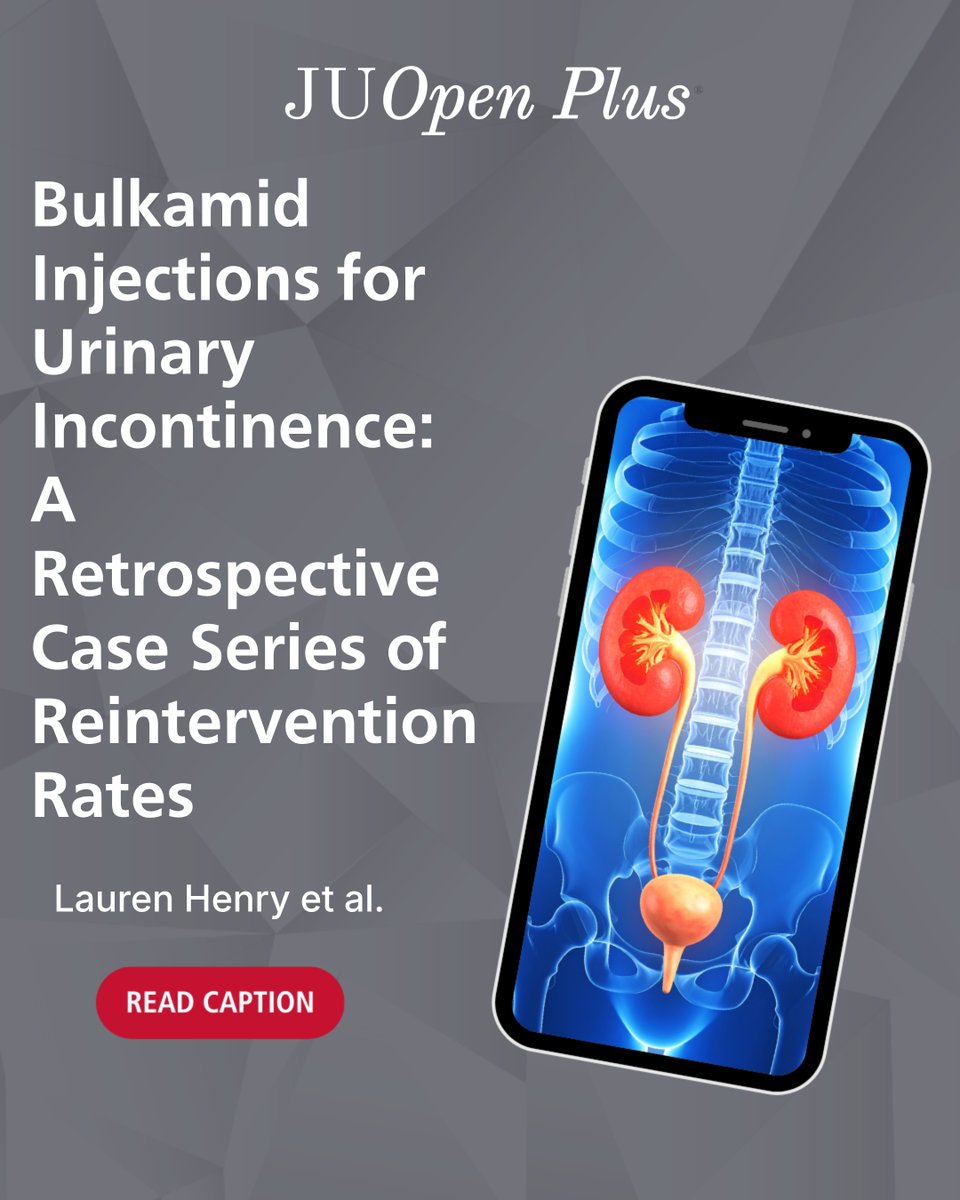
💉 Bulkamid Injections for Urinary Incontinence: What Do the Numbers Say?
A study reviews the reintervention rates of Bulkamid for SUI, highlighting its impact on symptom improvement.
📉 Reinterventions - 35.7% needed multiple injections
🔄 Symptom Relief - 65.2% reported better outcomes post-injection
💊 Comorbid Impact - Mixed incontinence improved more than pure SUI
#UrinaryIncontinence #Bulkamid #SUI https://t.co/YDsdDYeiyK
🚀 Are Urologists Shaping Prostate Cancer Treatment?
A study examines variations in how urologists intensify androgen deprivation therapy in metastatic hormone-sensitive prostate cancer patients.
🔍 Practice Variations - Significant differences found in treatment intensification among urologists
📈 Rising Trends - Intensification surged from 6% (2014) to 59% (2022)
🔬 Patient Factors - Most treatment decisions were influenced by patient characteristics
#ProstateCancer #Urology #CancerResearch
https://t.co/kZTVysVbGa
🌊 Is D-mannose the Solution for UTIs?
Despite mixed findings, D-mannose sparks debate on its role in preventing recurrent UTIs.
🧪 Evidence - Studies show inconclusive efficacy results
⚠️ Caution - Don't dismiss; more research needed
💡 Impact - Can inform personalized medicine approaches
#UTI #DMannose #ClinicalResearch
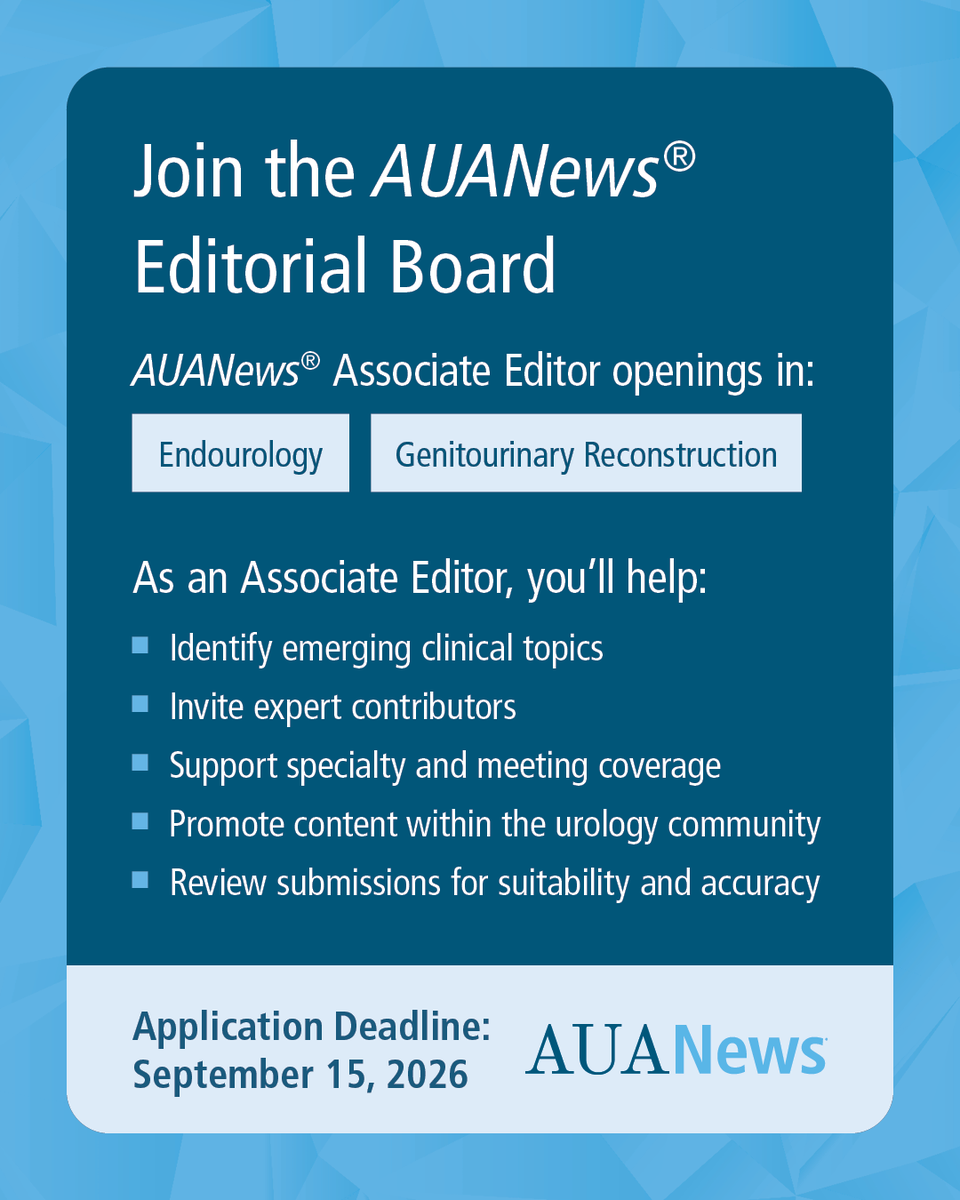
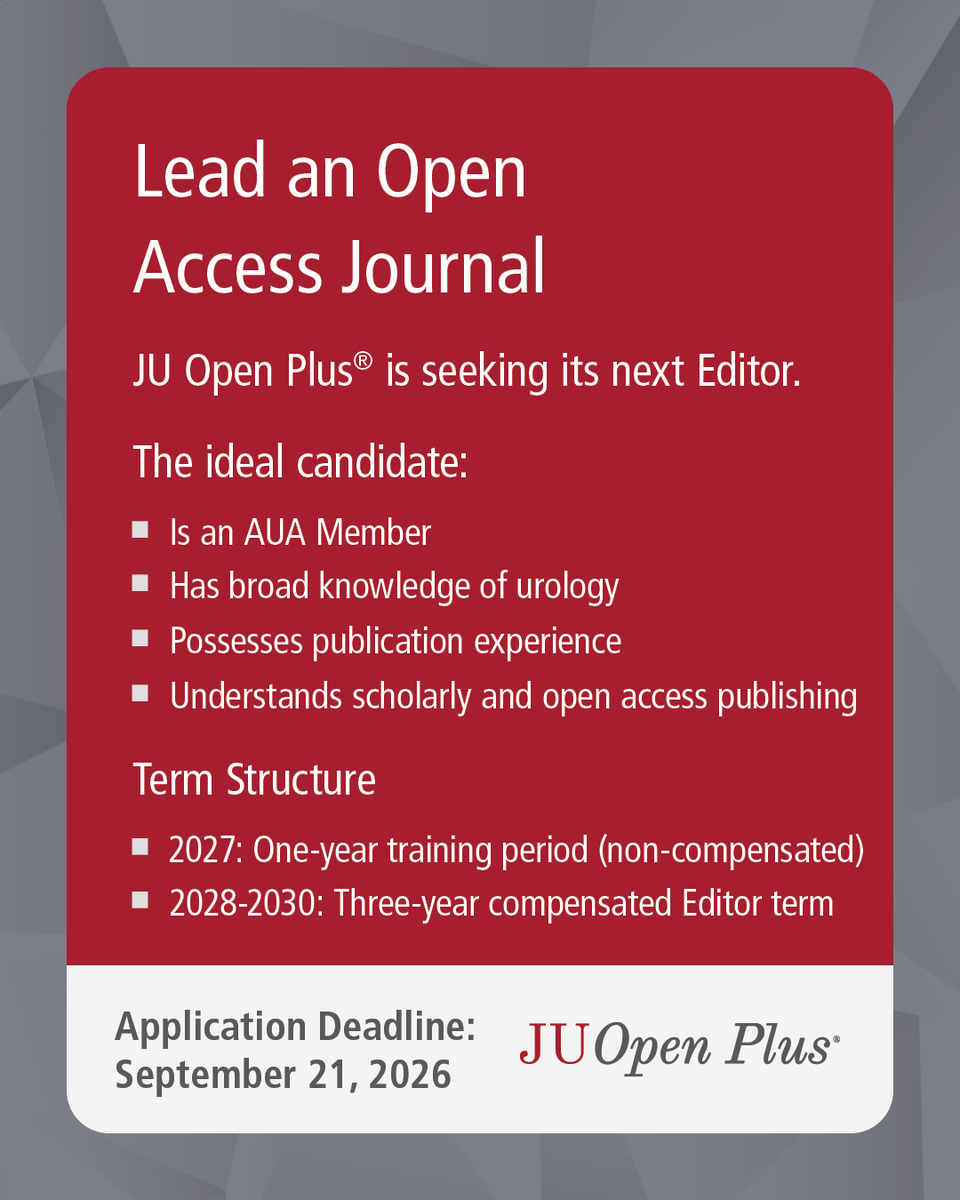
📑 Ready to make your mark on urologic publishing?
AUA Publications is recruiting for editorial leadership opportunities with #AUANews and @JUOpenPlus. Join a network of experts helping shape content, spotlight emerging topics, and advance the field of urology.
👉 Swipe through to learn more about each opportunity and application deadlines, then visit the link below to apply!
🔗 https://t.co/FBoBBnN9P3
🚶♂️ What Delays Ambulation After Prostate Surgery?
A study investigates factors linked to delayed ambulation post-radical prostatectomy in outpatient surgery settings, crucial for improving recovery.
🔍 Key Focus - Analyses BMI and PONV risk for their roles in ambulation delays
🔢 BMI Insight - Higher BMI minimally impacts same-day ambulation
🤢 PONV Risk - High PONV scores significantly double the chance of next-day ambulation
#ProstateSurgery #AmbulatoryCare #ERAS
https://t.co/BqV7i1kUWk
🌐 Digital Equality for Prostate Cancer Survivors?
An editorial finds digital cancer programs like PC-PEP can equitably bridge rural-urban gaps in care access and mental health outcomes.
🧪 Evidence - PC-PEP shows no rural-urban differences
⚠️ Caution - Real-world access still varies
💡 Impact - Equitable reach may redefine oncology care
#ProstateCancer #DigitalHealth #Equity
🔍 "How Biden's Diagnosis Boosted Prostate Cancer Awareness?"
Biden's high-grade prostate cancer diagnosis amplified public curiosity, as revealed by a spike in Google searches for prostate cancer info.
📈 Search Surge - Interest in prostate cancer search terms rose 72-165%
🧠 Public Awareness - Elevated interest underscores need for health education
🔄 No State Pattern - State-level differences did not influence search volume
#PublicHealth #ProstateCancerAwareness #HealthInfoSeeking
https://t.co/Ln3cL4oVOU
🩺 Can We Stimulate Bladder Function Directly?
An editorial comment explores a novel bladder stimulation device in canines, questioning its future clinical potential.
🧪 Evidence - Device boosts voiding more than sham in canines
⚠️ Caution - Yet to be tested in impaired bladder models
💡 Impact - Could reshape treatment for underactive bladder
#BladderHealth #NeuroUrology #MedicalInnovation
🩺 Canine Bladder Stimulation: A New Solution?
A novel study evaluates the safety and efficacy of bladder wall stimulation in canines to tackle underactive bladder-related dysfunctions.
🐾 Effective Results - Active stimulation led to higher voiding rates (44.1%) vs. sham (9.3%)
⚙️ Surgical Safety - Implantation tolerated with minimal complications
🔬 Promising Insights - Suggests future potential in human trials
#BladderHealth #Urology #DBWS
https://t.co/QC9ynSVSlD
🔬 What Influences Ureteral Reimplantation Success?
A study investigates how patient and surgical factors affect ureteral reimplantation success, focusing on outcomes and risks.
🔻 Radiation Risk - History of pelvic radiation linked to a 63% success rate vs. 91% for non-radiated patients
🤖 Robot's Advantage - Robotic surgeries reduce hospital stay by ~3.37 days
👵 Age & Frailty - Both increase hospital stay and complication rates
#Urology #SurgeryOutcomes #PatientCare https://t.co/LcoOEsHPTz
🚨 New issue alert!
The July edition of JU Open Plus is here, featuring "Transitions: A New Academic Year Begins" and a diverse collection of articles examining everything from D-mannose and bladder health innovations to prostate cancer care, urinary incontinence, and patient-centered research.
Dive into the latest findings and expert commentary today! https://t.co/yHxF3kHaa0
📢 Call for Papers: New Techniques in Urology
JU Open Plus is looking for cutting-edge research and practical innovations that are transforming urologic care.
✨ 50% APC discount
✨ Rapid review process
✨ Open access reach
✨ Increased visibility through Special Issue promotion
📅 Deadline: October 23, 2026
Ready to share your work with a global audience? Click to learn more! https://t.co/QhuC01jHUk
🩺 Can Surgery Techniques Reduce Prostate's Post-Op Complications?
A study compares vesicourethral anastomotic stenosis (VUAS) outcomes after different robotic-assisted radical prostatectomy (#RARP) techniques.
🔬 No Stenosis - Retzius-sparing RARP showed zero cases of VUAS
📉 Lower Risk - This technique linked with lower odds of stenosis
📈 Risk Factors - Diabetes tripled VUAS risk
#ProstateSurgery #Urology https://t.co/TNFzoiFEv6
🔍 Is Confirmatory Biopsy in Prostate MRI Era Outdated?
A study investigates if biopsy after multiparametric MRI (mp-MRI) is necessary in detecting prostate cancer among patients diagnosed with atypical small acinar proliferation (ASAP).
🔢 Significant Findings - mp-MRI PI-RADs ≥3 increases the likelihood of detecting significant cancer
🎯 Targeted Approach - mp-MRI and PSAD can stratify which patients may avoid unnecessary biopsies
#ProstateCancer #MRI #Urology #ASAP #HealthcareResearch https://t.co/gJ2T0OFMqW
🎯 Same Target, Different Tools: Revolutionizing Prostate Cancer Detection?
A multicenter study compares 3 MRI-targeted transperineal biopsy techniques for detecting prostate cancer, impacting diagnosis accuracy.
🔬 Enhanced Detection - Local-anesthetic CF TPPB shows higher detection rates of csPCa than other methods
🏥 Practical Implications - Office-based biopsies under local anesthesia offer cost efficiency and convenience
🌐 International Insights - Study spans New Zealand, Australia, Switzerland, highlighting global techniques
#ProstateCancer #Biopsy #HealthcareAdvancement #MRI
https://t.co/WSDWQk0c8e