Scottie Scheffler on his immediate celebration after winning: "There was an open bar inside and I'm like, alright, I'm grabbing a beer. It tasted great. I don't really drink very often. My wife and my manager were like, wow, I haven't seen you have a beer in a long time. Well, season's over now. I'm going to have a beer. Well-earned beer."
Nov 30, 1995. Grizzlies up 9 on the Bulls with 3 minutes left.
Phil Jackson thinks it's over and keeps Michael Jordan resting on the bench.
Then Darrick Martin walks past the Bulls bench, decides to "Poke The GOAT" and somehow leaves that game with a loss.
True Story
Around 5 million children in the U.S. now compete on travel teams. Parents find themselves trapped. They know the benefits of sports and want that for their children, yet giving it to them often means buying into a sports ecosystem that’s inherently flawed.
The modern-day hydra of youth sports can partly be traced to the pandemic. While many public programs were put on pause, privately owned sports leagues had the capital to get back up and running soon after lockdown. Parents who could afford the fees were more than willing to pay if it meant returning their children to some semblance of normalcy. Investors saw an opportunity. Private investment firms began buying up teams, facilities, software, camps, apparel, and media streaming in a roll-up strategy that allows them to profit from almost every aspect of a family’s participation.
In 2024, families spent 46 percent more on a primary youth sport than they did just five years prior, according to Project Play. It estimated that youth sports generate up to $40 billion in annual revenue — nearly twice as much as the NFL. Meanwhile, profits for investors in youth-sports companies are growing significantly.
One reason parents accept these expensive and hypercompetitive conditions is they’re anxious about what will happen if they don’t. In a time of justified concern for children’s mental health and unease about the future, parents have latched on to sports as a lifeline. And in their pursuit of a competitive edge for their children, parents can inadvertently take the positive effects of sports and turn them inside out.
“Every day, it was soccer, soccer, soccer,” said London, who joined a travel team at age 9. “It could be so bad that I would start playing soccer and then start hyperventilating and have to sit down. I was so scared that I wasn’t doing good.”
Caitlin Moscatello reports on the increasingly commercial world of travel sports: https://t.co/r1qvlr29S0
If everyone's a select, nobody's a select.
Parents inability to say no + rose-colored glasses = easy money for many.
Do what Gretzky said. Put the gear away when the (traditional) season is over and play other shit.
Also, the cream rises to the top. If your kid has D1/pro potential, they'll find him without you having to rack up Days Inn points.
30 years ago when you heard this song, you grabbed yourself an ice cold 7up and raced back to the couch because it meant Michael Jordan was about to whoop some ass
“I make good money, but I don’t have money” is the new income bracket in America.
You’re not poor or missing meals.
You can pay the mortgage and make the car payment.
You can keep the lights on.
But the check engine light comes on and suddenly you need two paychecks to deal with it.
A medical bill arrives and you’re asking about payment plans.
A full tank of gas becomes something you think about.
You make more money than you ever thought you would.
And somehow you’re still broke.
Just a much more convenient version of broke.
If history is any indication, the WNBA should already be preparing to suspend Angel Reese and Paige Bueckers immediately while it conducts a full investigation.
We now have a video admission... and separate footage appearing to show cash changing hands over a wager involving their own game.
Historically, conduct of this nature has resulted in an immediate suspension for the remainder of the season, followed by a one-year ban.
Calvin Ridley suffered a similar fate when the NFL suspended him for an entire season, costing him his $11.1 million salary for that year. His conduct was arguably less severe because he was not active on his team’s roster when the gambling occurred and did not participate in the games involved.
So the WNBA has a very simple choice:
Enforce the integrity standards applied throughout professional sports... or explain why its preferred stars are somehow exempt.
The league cannot protect its way out of this one.
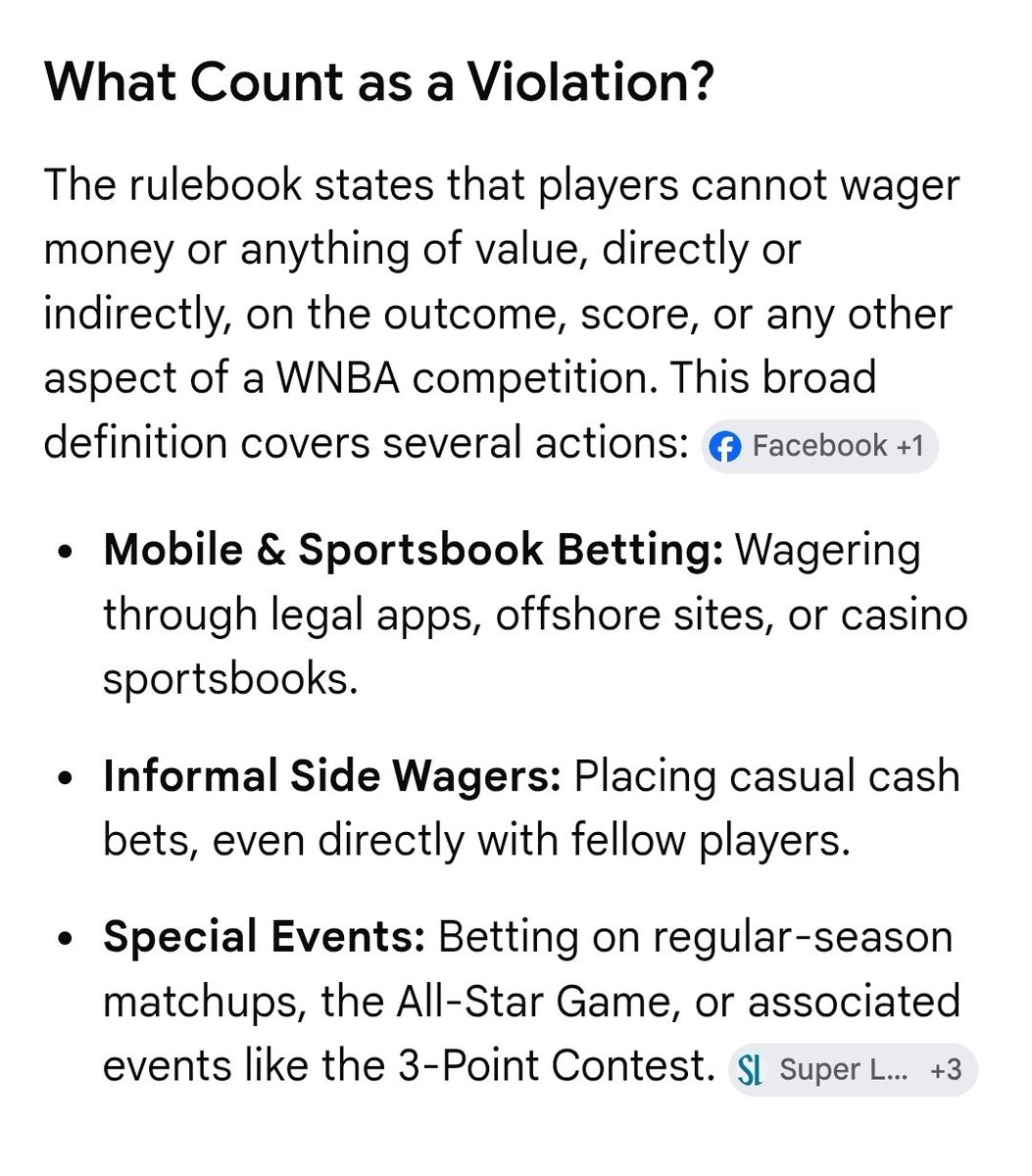
The WNBA posted a video of Angel Reese and Paige Bueckers betting $400 on which woman’s team would win.
They deleted it after realizing this violates league rules.
I’m fascinated by the fact that nobody plays Monopoly by the printed rules in the rulebook — which allegedly make the game much faster. Talked to some Monopoly heads about it and played a round myself to see if we’ve been treating the world’s most hated board game unfairly.
🚨Pau Cubarsí was asked who he believes is the better player between Lionel Messi and Cristiano Ronaldo.
🎙️ Reporter: “Pau, you’ve now faced both Lionel Messi and Cristiano Ronaldo. Who gave you the tougher game?”
🗣️ Pau Cubarsí: “They’re two completely different players, but based on my experience, Cristiano Ronaldo gave me the toughest game.
“When we played against Cristiano, there was always the feeling that one moment could change everything. Even if he wasn’t involved for long periods, you knew he only needed one chance to score.
“I remember one occasion when he beat me, created space from a very difficult angle and still managed to get an incredibly powerful shot away. It reminded me why he’s one of the greatest goalscorers football has ever seen.
“Against Messi, our team defended very well collectively and managed to limit his influence. We stayed compact, worked together, and made it difficult for him to find the spaces he usually exploits.
“If you’re asking me who caused me more problems personally in those matches, I’d say Cristiano Ronaldo. Based on what I experienced on the pitch, he was the more difficult opponent to defend.”