It has been a great honor to serve the Ukrainian people as the Minister of Defense.
Here is what our team managed to achieve:
1. Disabled Starlink access for Russian forces.
2. Took over a Ministry of Defense with zero budget, took a risk, reallocated funds from payroll from the end of the year, and effectively invested them in mid-strike capabilities, fiber-optic FPVs, low-cost reconnaissance, ground robotic platforms, interceptor drones, and deep-strike drones.
3. Launched "Logistical Lockdown", this cut off enemy logistics and initiated the isolation of Crimea.
4. Continued the funding program for the Drone Line.
5. Launched a support program for modern drone-assault units that rely primarily on advanced technologies in combat.
6. Introduced a 70% advance payment policy for procurements made via e-Points on the Brave1 Market portal.
7. Fundamentally overhauled the procurement system.
8. Procured thousands of pickup trucks, buggies, and ATVs for the military for the first time—and did so through open tenders.
9. The drone interception rate rose from 83% to 91%, and the cruise missile interception rate soared from 47% to 87%.
10. Contracted Patriot PAC-2 GEM-T missiles for the first time, and submitted an application through an EU loan to purchase PAC-3 missiles.
11. Launched a baseline drone supply system for brigades and corps.
12. Launched a massive grant program for manufacturers of explosives and missiles.
13. Initiated an unpopular but vital transformation of the military.
14. Conducted three UDCG meetings, where we successfully broke through the Russian information trap claiming our defeat, restoring partners' faith in Ukraine. This secured $40 billion in support announced for this year (excluding the EU loan).
15. Launched the mechanism to utilize the EU loan for our military priorities.
16. Found a way to scale cheap missiles against jet-powered Shaheds and signed a record-breaking contract.
17. Our domestic ballistics. We radically revised the technical specifications, maximized accuracy, and reduced the cost by 30%.
18. Signed a contract to procure Gripen fighter jets.
19. Collaborated with the military to plan and execute Operation Auchan, which halted the enemy's mechanized offensive for six months.
20. Opened up exports under the Drone Deal program to attract investment and scale up domestic defense-industrial complex (OPK) production.
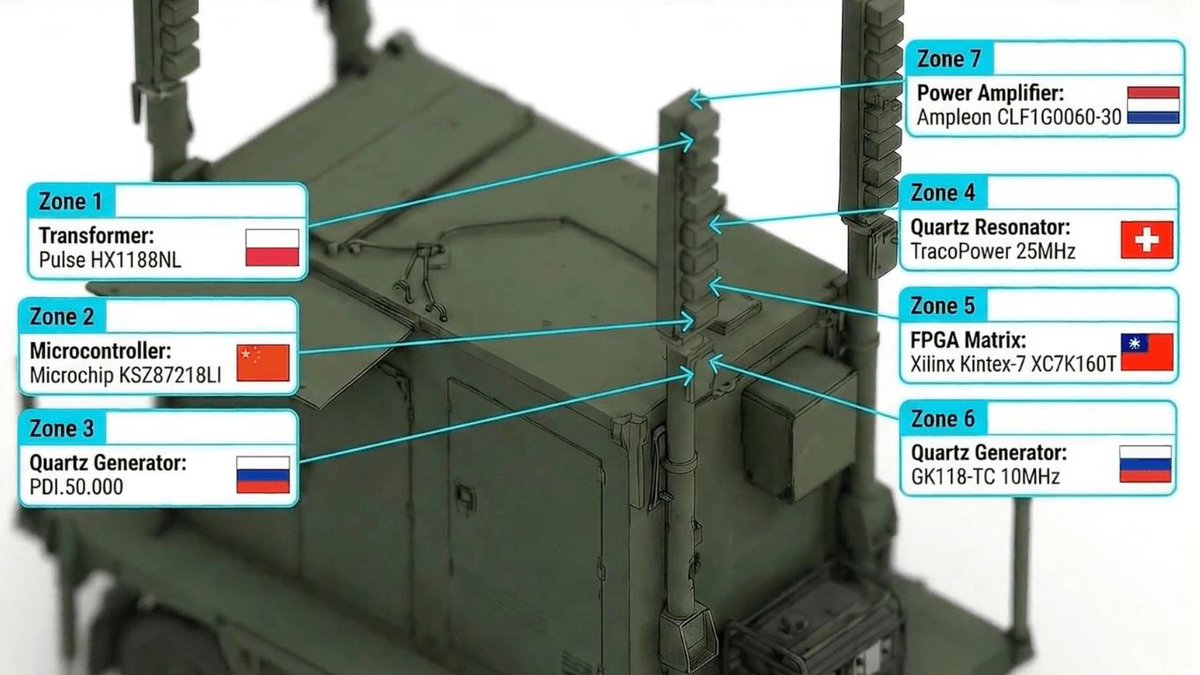
21. Launched the Trophy Lab, providing partners with the opportunity to study captured Russian military technologies.
22. Launched the Defense AI Center A1 to accelerate the integration of artificial intelligence on the battlefield.
Thank you to my entire team for their relentless 24/7 service. A special thank you to my family for their patience.
Thank you all for your support!
I will continue to work toward the mission I originally brought to the Ministry of Defense: defeating the enemy through asymmetry, the speed of innovation, and the power of organization.
To be continued.
Imagine the police searching every home in Europe because someone, somewhere, might be hiding heroin.
No warrant. No suspicion. Everyone searched first, innocence checked later.
You would call it mass surveillance.
Do the same to private messages and Brussels calls it Chat Control.
The medium changed. The principle didn’t.
Yes!! Flickering emissive screens are entirely alien objects to our biology, acting as hypnotizing portals for our awareness, the foundation on which disembodied dissociation into the digital can occur.
Paper-like screens on the other hand are continuous with our environment. They let us to stay in our bodies, breathe easy, let the mind wander. It’s a much more species-appropriate and humane way of computing.
Informatie heeft pas waarde als je er snel naar kunt handelen.
Met de Defensienota 2026 investeert Defensie in een krijgsmacht die sneller, slimmer en slagvaardiger kan optreden.
📈 Europe and Canada are investing more in defence and taking on more responsibility. This means a stronger NATO that delivers the security we all need.
Learn more about the #NATOsummit → https://t.co/TtycCcV1tU
Dario's args:
"Opensource you can see the source, here you cannot see inside the model"
- yes you can that's literally the open weights part btw.
- I cannot see the weights inside Claude, but I can GLM 5.2
- Models like Nemotron3 Ultra go further, all the data, training scripts, and model is opensource.
"Alot of the benefits like many people working on it, being additive doesn't work in same way"
- yes it does. We have seen endless fine tunes of various open source models for real improvements.
"Ultimately you have to host it on the cloud"
- no you dont. Dario is seemingly totally unaware of smaller moes and even dense models like qwen 27B.
Not only does dario not take part in social media, I am beginning to think he's never tried open source models at all and has no idea wtf hes on about
A crazy blog.
Chinese developers are buying Claude access through gray-market API transfer stations that can sell tokens at 5% to 10% of official prices while hiding the real user from Anthropic.
A transfer station is a middle server that takes a user’s prompt, sends it to Claude through overseas accounts, returns the answer, and collects payment through WeChat or Alipay.
The transfer station collects many Claude accounts through free credits, discounted accounts, shared subscriptions, overseas payment workarounds, fake verification, or sometimes stolen-card accounts.
It connects all those accounts behind one proxy, so Chinese users do not talk to Anthropic directly and only pay the proxy in RMB.
The cheap price comes from account farming, free-credit abuse, resale of unused quota, subscription splitting, possible stolen cards, and a darker trade where user prompts and outputs become training data.
So the price hugely cheap not because Anthropic is giving a discount; it is cheap because the transfer station lowers its own cost and creates extra hidden revenue.
The user thinks they are buying cheap inference, but the proxy may swap Opus for weaker models, inflate token use, or store private code, tool calls, reasoning traces, and business data.
The proxy may store user prompts, code, outputs, and tool traces, then sell or reuse that data for model training.
This breaks a core assumption behind KYC, account bans, and abuse monitoring: the AI company sees the proxy, not the real person, so banning one account leaves the upstream supply chain alive.
Whether this Qihoo model is really better than Mythos at finding bugs I have no way to assess since I can't use Mythos but only Qihoo .. but it's pretty believable and utterly predictable that such a thing will happen... LIke I keep saying, these traditional ways of dealing with moats and secrecy and competition and arms races are not adequate for the current circumstance with AI software... https://t.co/VxtDrFhvDU
More forward-thinking ways to deal with such issues exist but are not what the global mainstream tech ecosystem is now thinking about cf cryptographic laterality in decentralized networks making forking
challenging, https://t.co/Y6Nb0pW0hd
Here's the uncomfortable truth: if frontier capabilities are export-controlled by default, the U.S. and China can exploit them domestically while the rest of the world is locked out.
We shouldn't let that happen. Access should be UNIVERSAL. From the smallest town in Cheyenne Wyoming, to a kid in Kathmandu Nepal.
Er zijn nog steeds meisjes die in de zomer worden meegenomen om in hun land van herkomst verminkt te worden. Een uitreisverbod moet dat voorkomen. Want deze vreselijke praktijken moeten stoppen.
Kamerlid @bentebecker in het EW. 👇
https://t.co/I2GSeHp3dT
Data centres, AI, cloud, computing power... demand for critical tech is increasing rapidly and competition is fierce.
The EU wants to close the gap with:
1⃣More innovation
2⃣Stronger capacity
3⃣Greater autonomy
Discover the Cloud & AI Development Act: https://t.co/dpVUrdb0r0