Why would I ever expect the people and party that has spent years spray painting vulgarities on walls, tearing down statues, setting buildings on fire and attacking the cops would ever be able to build a stable, beautiful and prosperous society?
What’s even more worrisome is all the people who see the constant ugliness and conflict and destruction and keep voluntarily giving political and cultural power to these same vulgar low lifes.
You’re not gonna wind up with a more equitable society- you’re gonna wind up with a dysfunctional impoverished and dangerous one.
My Students Can't Read | Tyler Jagt, The Chronicle of Higher Education
The generational collapse in literacy is measurable, persistent, and likely to get worse.
Six weeks into the term, I assigned my rhetoric and writing students a 20-page article. It was the same length I had assigned for five years and the same length I had read without complaint as an undergraduate a decade ago. Not one student finished it.
When I asked why, a student answered honestly: It was too long, and she kept losing track of what the paper was about. This was not a remedial class: These were students who had cleared the admissions process and written essays good enough to get them here. Yet a routine academic reading assignment had defeated them.
Every generation of professors has complained that their students cannot read. The lament is usually overblown, but data have caught up to anecdote, and what I am seeing in my classroom is no longer a hunch. There is a measurable, generational collapse in sustained reading and writing, and the academy is responding to it with improvisation and exhaustion rather than the structural overhaul it requires.
In February 2024, Adam Kotsko, who teaches in the Shimer Great Books School at North Central College, wrote in Slate that students who once handled 30 pages of reading per class meeting now seem “intimidated by anything over 10 pages and seem to walk away from readings of as little as 20 pages with no real understanding.” Crucially, he added that this is “not a matter of laziness on the part of the students” but of underlying skills they were never given a chance to build.
The Chronicle of Higher Education’s 2024 investigation found the same pattern across institutions as different as the Stevens Institute of Technology and Wellesley College, where the average SAT exceeds 1400. Nicholaus Gutierrez, an assistant professor at Wellesley, told The Chronicle that the baseline for what students consider a reasonable amount of work has dropped so noticeably that he has cut his readings accordingly; a 750-word essay now strikes many students as long. At Stevens, the science and technology studies associate professor Theresa MacPhail described following the mantra of “meet your students where they are” for so long that she has begun to feel “like a cruise director organizing games of shuffleboard.”
Worse, the national data tell the same story in colder language. On the 2011 National Assessment of Educational Progress (NAEP) writing assessment, which is the most recent comprehensive writing benchmark, only 24 percent of 12th graders reached the Proficient level, and just 3 percent reached Advanced; another 21 percent scored below Basic. The reading side of the ledger is worse, and getting worse fast: The 2024 NAEP results released in September 2025 show 12th-grade reading scores at the lowest level recorded since the assessment began in 1992. Thirty-two percent of 12th graders now score below NAEP Basic in reading, meaning that, in the assessment’s own language, they likely “cannot draw general conclusions based on concepts presented explicitly in a text.” And yet more than half of these same seniors reported being accepted to a four-year college. That last sentence is the whole problem in one line: We are admitting a cohort that cannot read at a college level and are pretending otherwise.
Every generation of professors has complained that their students cannot read. The lament is usually overblown, but data have caught up to anecdote.
Why is this happening? One reason, of course, is smartphones.
I came into teaching as a skeptic of the anti-smartphone argument: I had a phone in my pocket throughout high school and college in the 2010s, and I read long books anyway. I now think I was wrong, because the neuroscience has caught up. In a 2017 paper, Adrian F. Ward and colleagues at the University of Texas at Austin’s McCombs School of Business showed that the mere presence of a participant’s smartphone — whether that be face down, powered off, untouched, or across the desk out of vision — measurably reduces available working memory and fluid intelligence on cognitive tests, with the largest effects on the most phone-dependent users. A 2022 study by Motoyasu Honma and colleagues at Japan’s Showa University used near-infrared spectroscopy to compare reading on a smartphone with reading the same passage on paper, and found that smartphone reading produced overactivity in the prefrontal cortex, suppressed sigh generation, and led to general lower comprehension scores; the authors argued that the sigh inhibition and prefrontal overload were causally linked to the comprehension decline.
So when a student tells me they “kept losing track” of a 20-page article, I have to acknowledge that they may be describing a measurable neurological condition. The neural pathways that support sustained attention are built by use, and they atrophy without it. Your body is a use-it-or-lose-it system, and the brain is no exception.
Another reason for the decline in student reading capability is increasing reliance on generative AI. In June 2025, Nataliya Kosmyna and colleagues at the MIT Media Lab released a preprint titled “Your Brain on ChatGPT.” They divided 54 participants into three groups writing SAT-style essays — one using ChatGPT, the second group using a search engine, the last group using nothing — and monitored brain activity with a 32-channel EEG. The ChatGPT group showed the lowest neural connectivity of the three, with up to 55 percent reduced connectivity compared with the brain-only group, and “consistently underperformed at neural, linguistic, and behavioral levels.” Eighty-three percent of LLM users could not quote a single line from essays they had written minutes earlier. When the LLM group was forced to write without AI in a follow-up session, their brain activity did not bounce back to baseline; the researchers coined the term “cognitive debt” for the lingering deficit.
The neural pathways that support sustained attention are built by use, and they atrophy without it. Your body is a use-it-or-lose-it system, and the brain is no exception.
This is the first neurophysiological evidence that early reliance on LLMs measurably alters the brain’s engagement with writing tasks, and it is consistent with what those of us in front of classrooms are watching happen in real time. When I assign analysis, I am not trying to extract a polished product; I am trying to put the student’s mind through resistance in order to make it stronger. Offloading the struggle to a chatbot does not “free students up for higher-order work.” It deprives them of building the strength to do any substantial cognitive work at all.
There is a final factor that is contributing to this decline in reading skills, and that is that the students arriving in my classroom today are the first cohort to have experienced Common Core-influenced reading instruction across the entirety of their K–12 schooling. Whatever the standards’ original intent, the on-the-ground implementation in many districts replaced sustained reading with the practice of pulling “evidence” from disconnected short passages, the same format used on the standardized tests that increasingly determine school funding. The education scholar Natalie Wexler, among others, has documented this pivot in detail: Students drilled on “finding the main idea” in two-paragraph excerpts never build the stamina or background knowledge that longform reading requires. The pandemic then added fuel to a fire that was already burning. NAEP scores for 13-year-olds dropped sharply in 2022 and have not recovered. A 2023 EdWeek survey found that 24 percent of secondary-school administrators described pandemic learning loss in English and language arts as “severe or very severe.”
In July 2025, the journalist Mary Harrington argued in The New York Times that “thinking is becoming a luxury good.” The ability to read deeply and reason at length is fragmenting along class lines as ultra-processed digital media replaces text in everyday life, much as ultra-processed food has replaced cooking. Her longer treatment of the subject in First Things makes the more provocative case that we are witnessing the end of print culture itself, and with it the end of the cognitive substrate on which modern liberal democracy was built.
I see this stratification in the classroom and on the page every week. My students from districts that protected sustained reading through small class sizes, strict phone policies, and faculty who refused to teach to the test all arrive with their attention relatively intact. My students from districts that surrendered to devices and standardized testing arrive cognitively winded. A democracy that requires a literate electorate is now training one fraction of that electorate out of literacy while marketing to the other a “deep work” lifestyle as a luxury good. The students who cannot read a 20-page article today are the voters who will not be able to read a bill, or the jurors who cannot follow a closing argument, tomorrow.
Offloading tasks to a chatbot does not “free students up for higher-order work.” It deprives them of building the strength to do any substantial cognitive work at all.
I do what I can in my own classroom to address the problems. I break 20-page articles into two halves and assign the first half with explicit analytical tasks. I require exploratory writing before formal drafts. I model (visibly, on the board) how to track an argument across pages or distinguish a source’s claim from my own analysis. I make structured peer review explicit, because the workshop format I used to take for granted now collapses into “this is good” and “maybe add more details” the moment I step back.
But I want to be plain about the limits of what an individual instructor can do, and all of these solutions have costs. Scaffolding a 20-page article into halves compromises the integrity of the argument I am asking students to engage, just as modeling note-taking in a credit-bearing rhetoric course is using a college slot to teach a middle-school skill. None of the syllabi I teach are designed to deliver this type of cognitive rehabilitation, and pretending otherwise has produced credential inflation. We cannot keep conferring degrees on students who cannot do what the degree is supposed to certify.
I’m afraid I don’t have answers. I do, however, have some questions that may point us in the right direction. If higher education is going to respond to the reading crisis as a structural problem rather than a private burden carried by composition instructors and adjuncts, it has to stop avoiding the following questions: If a majority of incoming students cannot read at a level the curriculum requires, are we admitting students we cannot serve, or offering a curriculum we cannot provide?
Why are first-year writing and reading-intensive general-education courses still the most adjunctified, lowest-paid, highest-load corner of the university, at the precise moment when their work has become the most important work the institution does? What is the responsible institutional response for AI usage: Is it a syllabus statement, or a sequencing principle that requires students to demonstrate the cognitive work themselves before AI assistance is permitted?
Why are most college classrooms still phone-permissive by default? K–12 districts from Florida to California are now banning phones bell to bell; higher education has somehow lagged behind the public schools. Universities benefit from a pipeline they did not build and refuse to repair. What would it mean for a university system to invest seriously in the reading instruction happening in the high schools that feed it, rather than treating remediation as something to be quietly outsourced to first-year composition instructors?
The thing I am no longer willing to do is pretend this is a temporary adjustment period, or that “students will adapt.” They will not adapt on their own. The conditions that produced this collapse are still in place: the phones, the algorithmic feeds, the test-prep excerpts, staffing models that load the reading-intensive work onto the most precarious faculty, and now the chatbots that finish students’ sentences before they’ve even begun to think of them. If we want literate citizens, we will have to rebuild the conditions for literacy deliberately, against the grain of every incentive currently pointed the other way. I know the academy has the will to do that. It also has the obligation.
https://t.co/2dYdkPlrIA
Since the 1980s, the Sahara has shrunk by roughly 8%. Satellite data show widespread greening, a pattern that is playing out across the planet.
Around 50% of Earth's vegetated land has become significantly greener, an area roughly three times the size of the United States.
The dominant driver is not rainfall or land use change, it is rising atmospheric CO2.
Higher CO2 lets plants photosynthesize more efficiently, they lose less water, they tolerate heat and dryness better.
The effect is strongest along desert margins, across the Sahel, the Middle East, Australia's interior and the southern edge of the Sahara.
Rising CO2 is making the deserts, and the planet as a whole, greener.
🚨Brand New Virginia Crime Data Released🚨
What happened since Soros DAs in Arlington (Parisa Dehghani-Tafti) and Fairfax (Steve Descano) legalized crime?
It went up! A LOT!
Crimes vs Persons
+72% Arlington
+18% Fairfax
But it fell everywhere else...
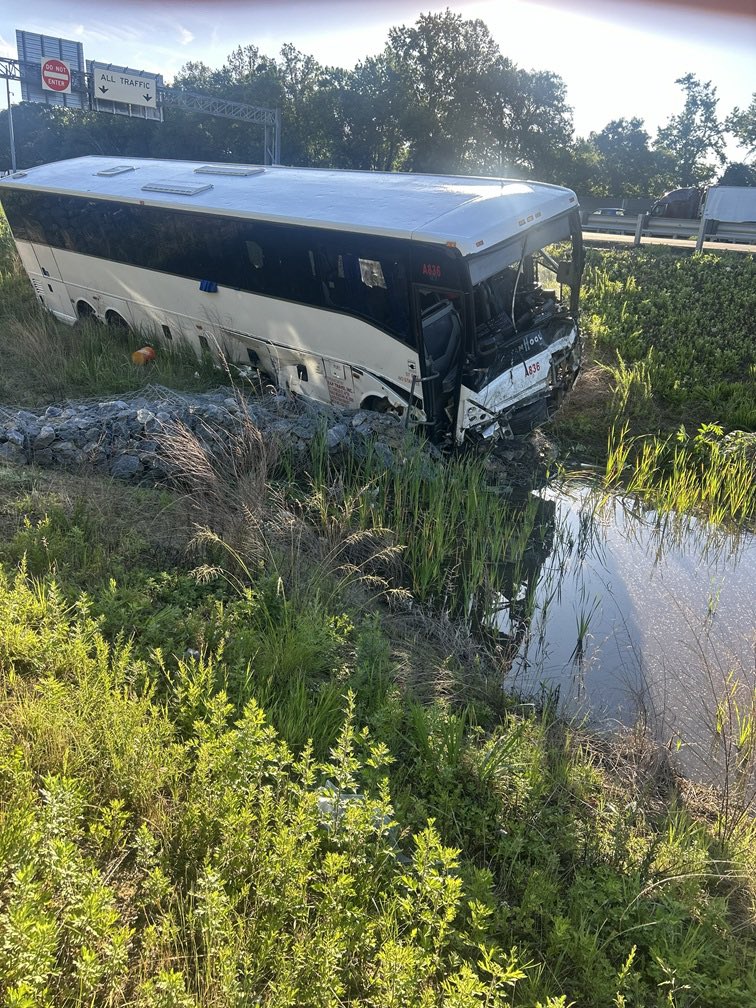
Five innocent people are dead in Virginia.
Among them a 13 year old girl. A 7 year old boy.
They were killed when a bus slammed into stopped traffic.
The driver was an immigrant from China who does not speak English.
Can't read road signs. Can't communicate with law enforcement.
New York State gave him a commercial license anyway.
Democrat-run states handing out CDLs to unqualified drivers need to be held accountable.
The federal government is now investigating New York's licensing records.
It's long overdue.
Praying for the victims and their families. 🙏🏻🇺🇸
“Sexist” gatekeepers are not keeping females out of tech fields or preventing them from founding companies. The VC world is desperate to back female entrepreneurs—if it could only find them.
The leaders of AI and other tech ventures remain overwhelmingly male not because of “the patriarchy” but because males on average are driven to take risks, to compete, and to expand the boundaries of knowledge through obsessive exploration and work—far more than the average female.
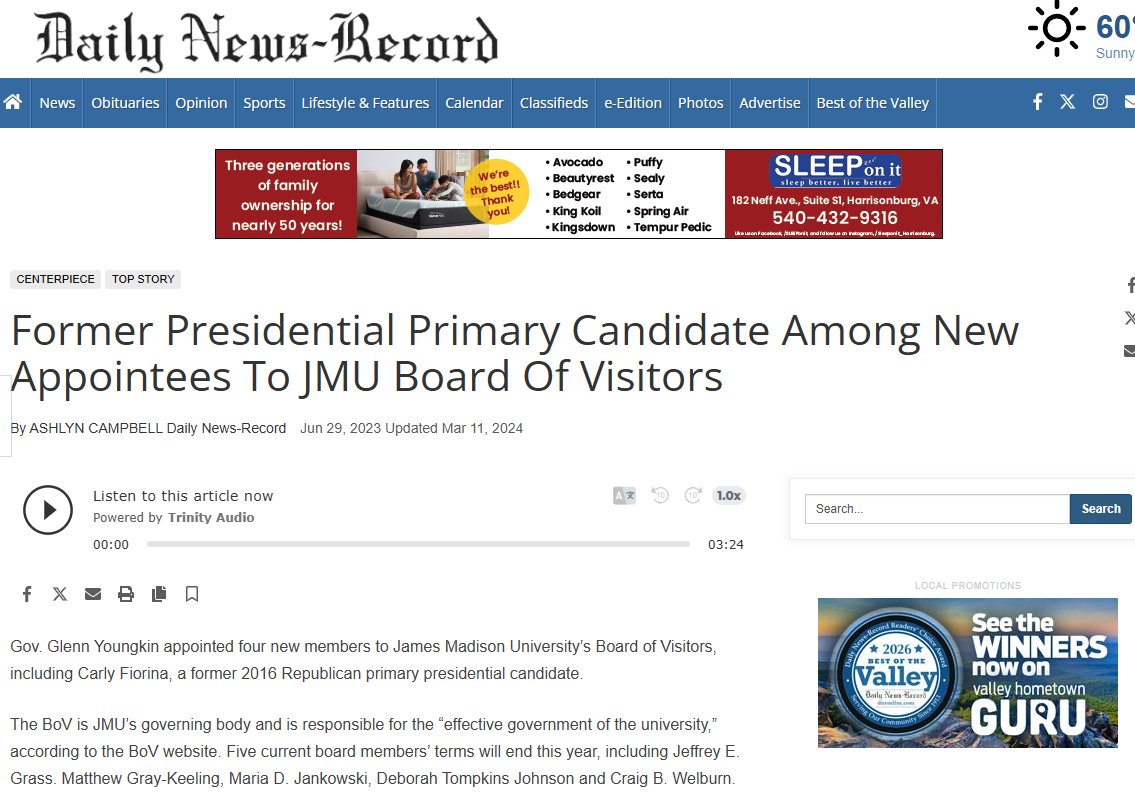
What do you consider "ramming" someone through the appointment process? Youngkin submitted his nominations, and they served until the following General Assembly session when then the Senate either confirmed or rejected them.... h\as has always been done. Youngkin didn't fire anyone (other than Bert Ellis at UVA, one of his own appointees, for allegedly iintemperate language), and he didn't demand anyone's resignation. Youngkin played by Marquis of Queensbury rules. You're living in LaLa land, dude.
Oh, some (not all) of his appointees were donors. Well, yeah. That's the Virginia way (sadly). How many of Spanberger's appointments are donors?
Youngkin literally tried to ram donors and political allies as picks onto almost every Board of Visitors for every Virginia-based university throughout his term, especially the final year.
what are you talking about?
Youngkin literally tried to ram donors and political allies as picks onto almost every Board of Visitors for every Virginia-based university throughout his term, especially the final year.
what are you talking about?
From an unidentified "whistle blower" about flawed priorities at Virginia Public Media -- funding administrative bloat over news coverage. Given the leftward tilt of the news staff, this might be a sin that many conservatives will be willing to overlook. From the press release:
VPM, central Virginia's PBS and NPR member, is spending $80 million of the public's (FCC spectrum auction) money on a shiny new downtown campus when most of downtown Richmond, including the vacated Richmond Times-Dispatch newsroom, is available for cheap. We already have too much unused square footage here in No. Chesterfield. As an insider, I know you will hear no shortage of PR this year about investing in downtown and the public, etc. I remind you still that this is as much as $80 million blown, without a second thought, during the worst funding crisis in PBS+NPR history.VPM is laying off reporters and starving journalism. Ben Paviour, Focal Point VA, forcing out Craig Carper, EP Roberta Oster and others who call bullshit on management. Docking unused vacation days. Reducing full-time-equivalents, to fund management spending and ridiculous https://t.co/vVwaikcoR3 you will see in its 990 public filings, VPM is paying its top two executives, J.Swain and S.Humble, a half a million dollars each. They live big, town and country. On the public's money.This same management is asking Richmond to help it plug a $1.8 million funding gap from the CPB endgame. This is a supposed gap; VPM spends a tiny bit of the $9 or $10 million a year it can afford to on news. The real estate, debt and salary numbers are all there for anyone to see in VPM's public financial statements.What you won't find in those statements is financial mismanagement, including writing down at least $600,000 on the postponed 2020 Menuhin international music festival. We didn't buy insurance. We also paid exorbitant kill fees to documentaries by Katie Couric and Nick Kristof and wife. And other insider projects. Millions just down the https://t.co/sXnjADTRMu have more than enough money to make polished video. But the stuff you put out there, including the commercial in front of the new building, looks made by high schoolers.
Where is our board? Where is the community? The donors? Philanthropic malpractice all around.
Thank you for your tipsA whistleblower
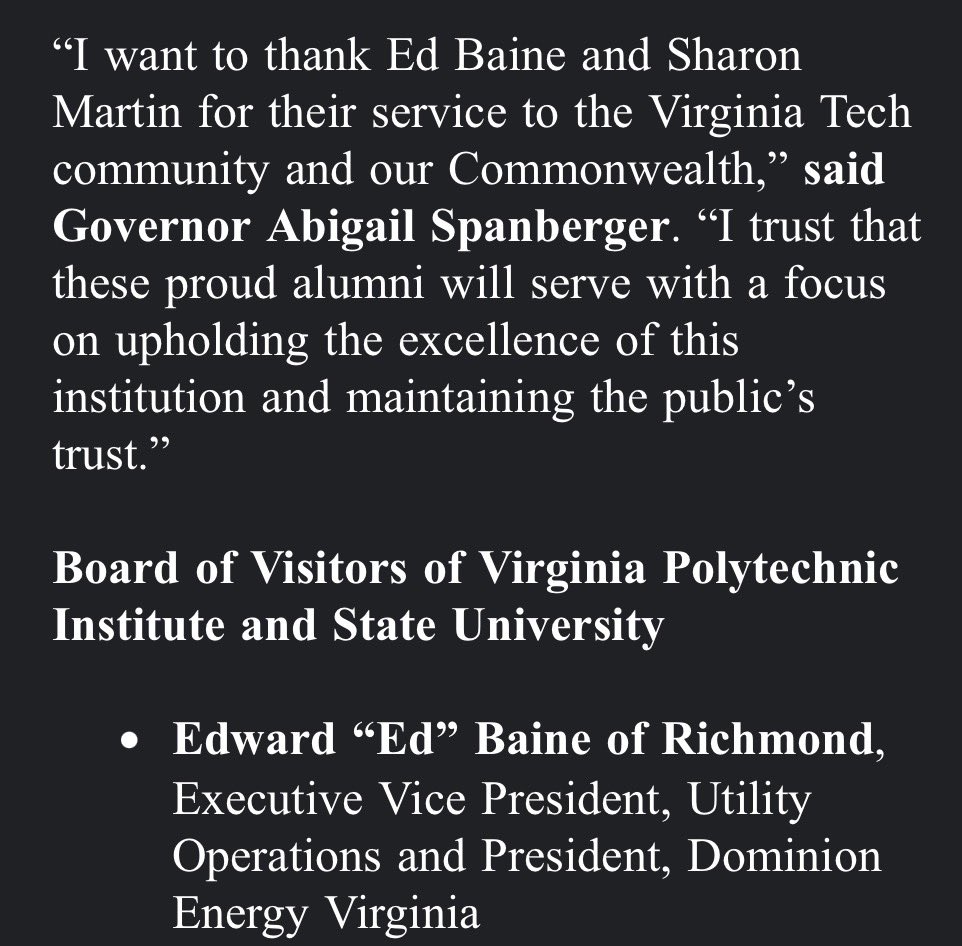
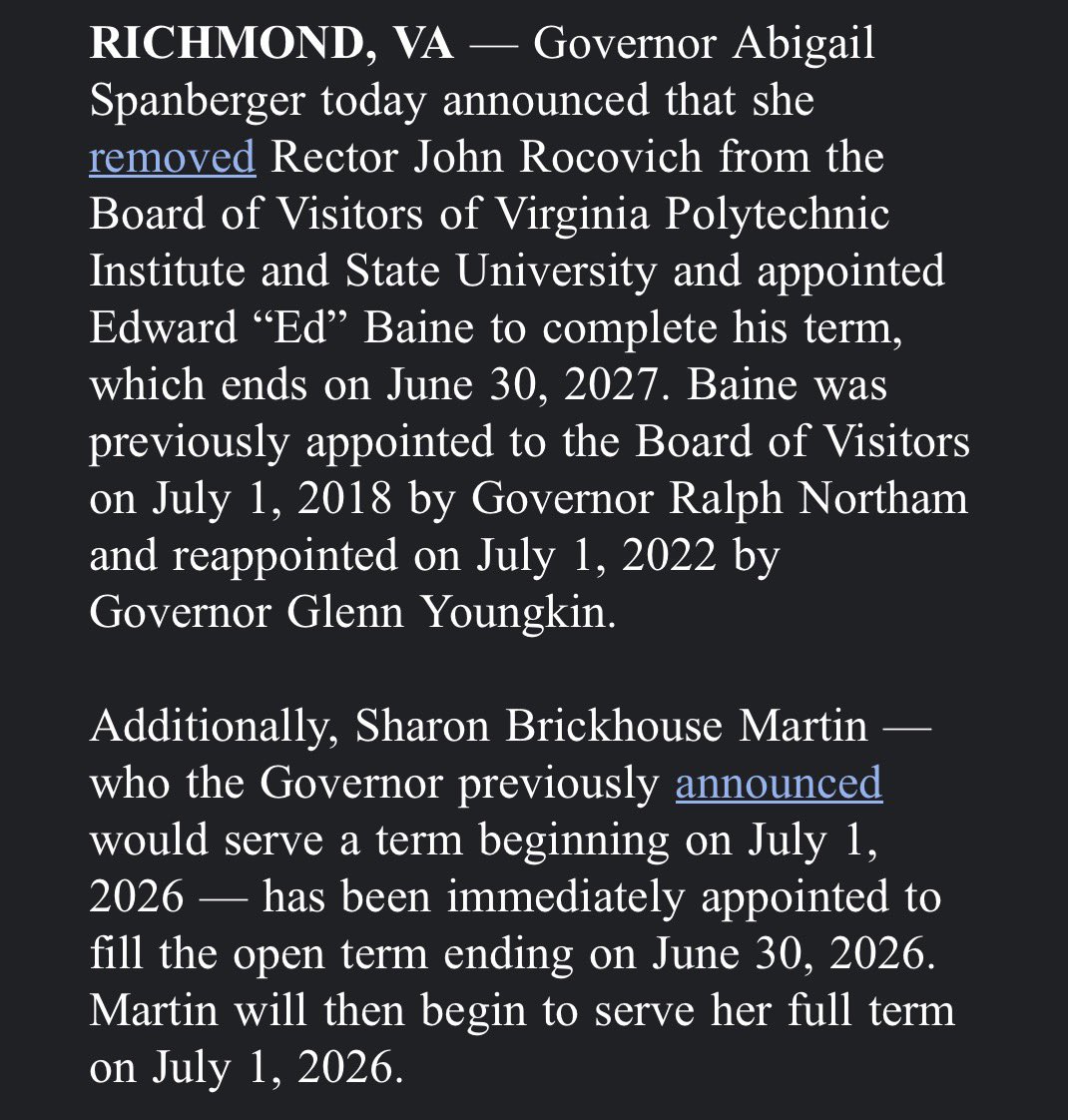
Unprecedented... in a bad way. Never in the history of Virginia has a governor taken such a heavy hand in shaking up leadership at state university boards of visitors -- UVA, Virginia Tech, George Mason, and VMI. The contrast with Gov. Youngkin couldn't be more marked. He played by the established rules... and as a consequence allowed universities to be run by Northam holdovers until his last year.
Mind-blowing hypocrisy. Do FCPS publish anything like this for Christianity or Judaism?
From CoPilot AI: "Fairfax County Public Schools (FCPS) does not publish openly celebratory announcements for Christmas or Easter in its official public channels.
"The district’s current alerts page and other public communications focus on academic notices, program updates, and holiday closures, but they do not feature overtly festive or religiously themed messaging for these holidays Fairfax County Public Schools. The official 2025–26 FCPS calendar lists Christmas (Dec. 25) and Chanukah (Dec. 14–22) as religious/cultural observances and Winter Break (Dec. 22–Jan. 2) as a holiday break, but it does not include any celebratory announcements or events content.govdelivery.com+1.
"In contrast, FCPS does include other religious and cultural observances in its calendar, such as Rosh Hashanah, Yom Kippur, Diwali, Chanukah, and Orthodox Christmas, but these are noted as “religious and cultural observance” days rather than as days with public celebrations."
Finnish scientists trucked in real forest dirt and grass and laid it over the gravel at four daycare yards. They let the kids dig around in it for a month. The blood tests came back with changes the researchers hadn’t expected to see so fast or so clear.
The study ran at ten daycares in two Finnish cities with 75 kids aged three to five. Four of the yards got the forest treatment: about a tennis court worth of soil and grass laid over the gravel, plus planters and peat blocks the kids could dig and climb on. Three others stuck with their normal gravel yards. The last three were daycares where the kids were already visiting real forests every day.
After one month, the variety of bacteria living on the kids’ skin shot up, and the kind that helps train the skin’s immune defenses jumped the most. Their gut bacteria started to look like the gut bacteria of the forest-visiting kids. Their blood showed more of the immune cells whose job is to keep the body from freaking out at harmless stuff like pollen and peanuts, and overall inflammation dropped. The kids on the plain gravel yards showed none of this.
Childhood asthma in the US doubled between 1980 and 1995. Food allergies in kids jumped 50 percent between 1997 and 2011, then jumped another 50 percent between 2007 and 2021. And peanut allergies in one-year-olds tripled between 2001 and 2017.
The Finnish researchers think one of the reasons is simple: kids today don’t get dirty enough. 37 percent of American preschoolers now spend an hour or less outside on a normal weekday. Their immune systems are getting trained in environments stripped of the bacteria humans have always lived around.
Aki Sinkkonen, who led the study, put it in plain words: “It would be best if children could play in puddles and everyone could dig organic soil.” The Finnish government is now helping pay for daycares across the country to make the same changes.
Many conservative commentators are saying Spanberger is no "moderate" -- just look at the bills she passed. But look at the bills she vetoed. By the standards of the Democratic majority in the General Assembly, which has moved so far left, she IS moderate.
Gov. Spanberger talks to @DwayneYancey on her 31 vetoes:
"if I bowed to pressure and people trying to push me this way or that way, I wouldn’t be governor"
https://t.co/xtzTYuq90q
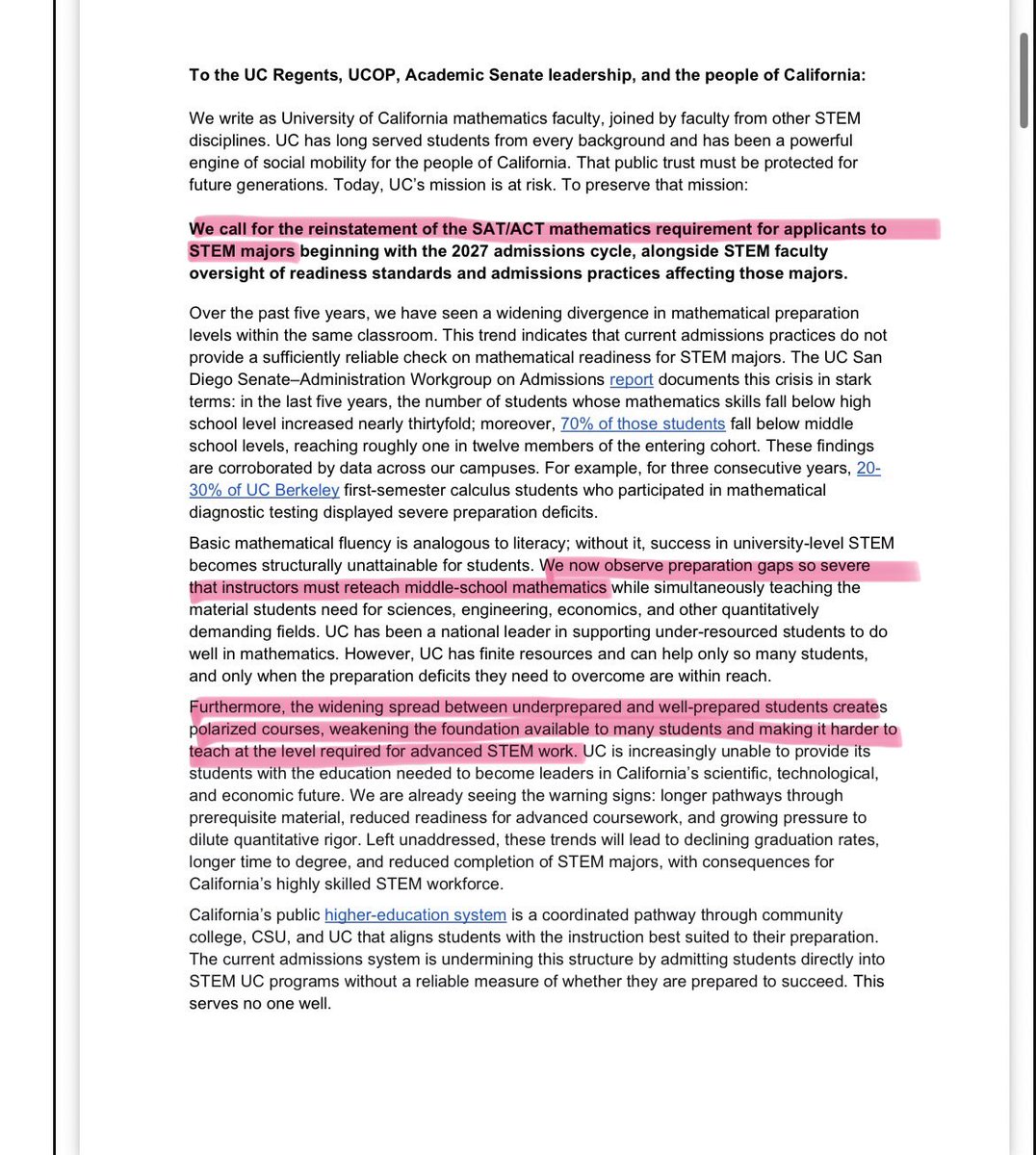
University of California STEM professors want standardized tests back due to severe math deficiencies among students:
“We now observe preparation gaps so severe that instructors must reteach middle school mathematics”
“The current admissions metric, based primarily on GPA & essays, can no longer reliably distinguish readiness for university-level STEM majors in an era of severe grade inflation & AI assisted application essays”
🚨 WOW! WH anti-fraud task force cochair Andrew Ferguson just broke it down PERFECTLY on fraud:
"Our whole society was designed for a high trust people."
Then we imported the 3rd world.
"The American people rightly expects that their fellow citizens will deal with them and with the government, honestly and fairly."
"That's why for up until the last decade or so shelves in our grocery stores and our pharmacies were open and readily accessible. We weren't accustomed to seeing security guards outside of banks or jewelry stores."
"We didn't have to worry about organized retail theft or industrial scale scammers or the type you all protect your citizens from every day. Nor did we have to worry about fraudsters raiding our benefits program. But sadly, that is no longer true."
"It's become clear that huge groups of people in this country are taking advantage of our longstanding culture of trust to enrich themselves at the expense of the American people. I think a brief example would be illustrative. Just this weekend, I was shopping at a big home improvement store to buy a drill to do some home improvement."
"And I had a call button and wait 15 minutes for a sales associate to come unlock a steel cage and a steel padlock to get access to a drill. It's why deodorant is now locked behind plastic windows at pharmacies. It's why security guards are seen at every store in America."
"The social trust is evaporated and people are taking advantage of it and the same is true with our federal benefits programs."
"Huge segments of the population have decided to take advantage of this generosity and trust of American citizens through deception and fraud and billions and billions of dollars each year."
"Leave our programs into the hands of pirates, fraudsters, scammers and gangs who treat American generosity as little more than a get quick rich scheme."
"We shouldn't have to live this way."
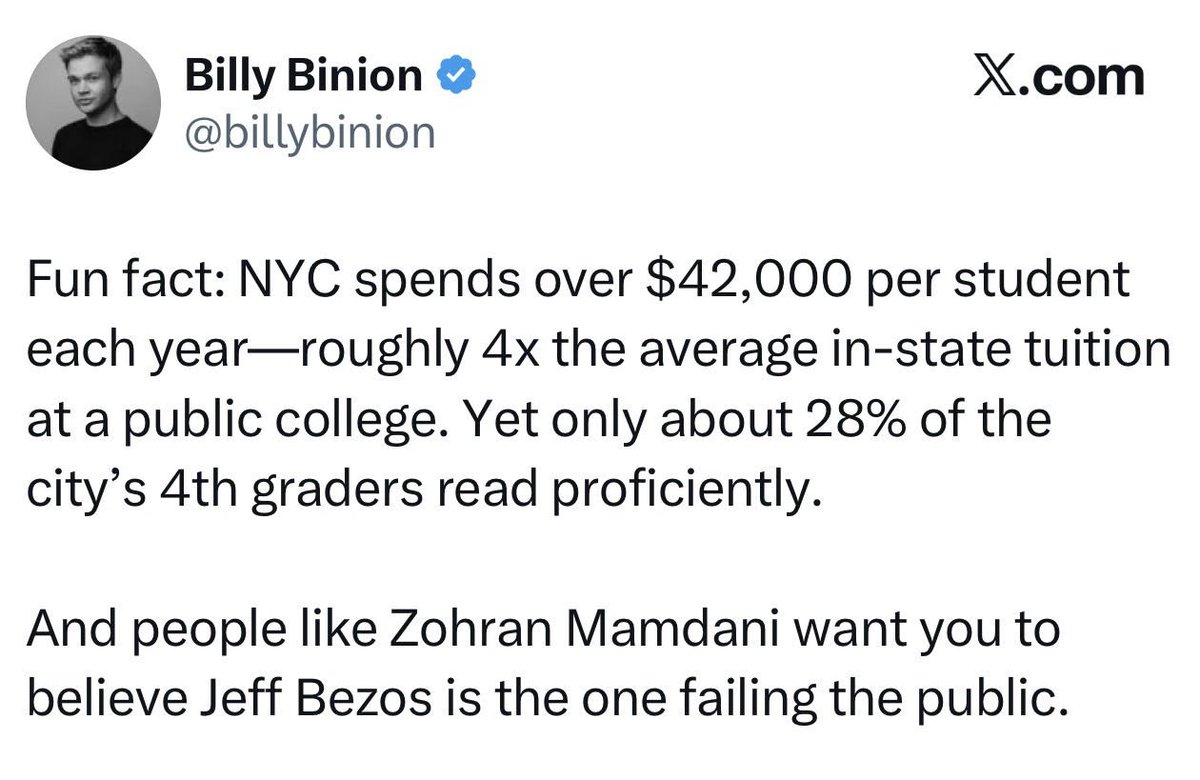
By 1900, the United States had achieved a 90% literacy rate largely by using McGuffey Readers in one-room schoolhouses. But, yeah, NYC’s problem is it’s not spending enough money.
Films and shows keep getting worse because art has turned into propaganda.
As Tolkien noted, evil cannot create. It can only mock, distort, and corrupt what someone already made.
They take the stories we love and drive them into the dirt to serve their politics.