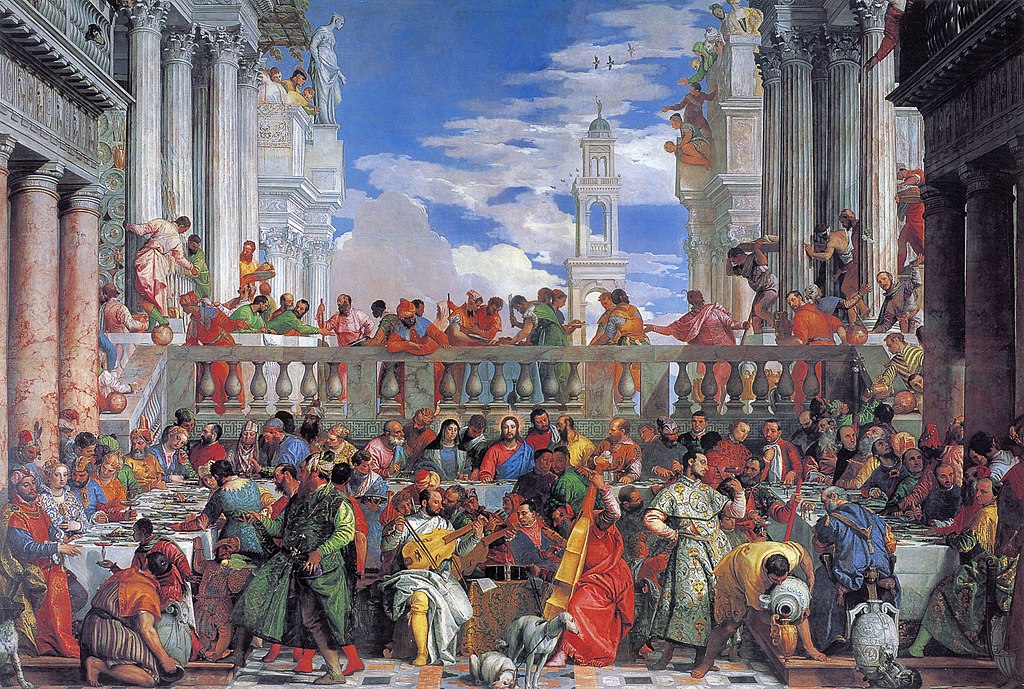
The Wedding at Cana is not merely a wedding feast. It is a deeply theological account, described by John (John 2:11) as the "beginning of signs" rather than a simple miracle, in which Jesus reveals His glory and inaugurates a new era.
#OurLadyofSorrows
I. The profound meaning: The wedding of God and humanity
In the Old Testament, betrothal and marriage serve as metaphors for the Covenant between God and His people.
The lack of wine:
Wine symbolizes joy, love, and the Holy Spirit. The lack of wine signifies that the Old Covenant (also symbolized by the six stone jars intended for Jewish purification rites) is exhausted and barren; it no longer suffices to provide the joy of salvation.
The new wine:
By transforming water into excellent and abundant wine (approximately 600 liters), Jesus reveals Himself as the true Bridegroom of humanity.
He brings the New Covenant, the fullness of joy and grace.
II. The roles of the key figures
A. Mary: The figure of the Church and of intercessory faith
Mary does not play the role of a mere guest or a solicitous relative. She is the driving force behind the sign.
The one who initiates the miracle:
It is she who perceives the lack ("They have no wine") and presents it to her Son. She embodies intercession.
The "Woman":
When Jesus replies, "Woman, what does this have to do with me? My hour has not yet come," He is not being rude.
He uses a solemn title that points back to Eve (the mother of the living) and foreshadows Mary at the foot of the Cross (John 19:26), where Jesus' "Hour" will have fully arrived.
The instruction of faith:
Her words to the servants—"Do whatever he tells you"—are the last words of hers recorded in the Gospel of John.
This is Mary's spiritual testament, directing all eyes toward Christ.
B. Jesus: The Messiah and the true Bridegroom
Jesus is the unseen architect who transforms reality. The Master of Time:
- He acts according to the divine timetable ("My hour has not yet come"). Yet, at his mother's request, he quietly anticipates this messianic gift.
The Divine Giver:
- The text notes that the master of the feast (the steward) calls upon the bridegroom to congratulate him on saving the good wine for last. In reality, the bridegroom had nothing to do with it.
- Through this misunderstanding, John conveys to the reader that the true Bridegroom offering the feast's fine wine is Jesus.
C. The Disciples: Witnesses of Faith
At the beginning of the narrative, the disciples are merely observers.
The Transition to Faith:
They do nothing in particular during the meal, yet they are the spiritual beneficiaries of the sign.
- The text concludes: "He revealed his glory, and his disciples believed in him" (John 2:11).
Cana marks the birth of the Christian community:
the disciples move from mere curiosity to authentic faith in Jesus' divinity.
D. The Servants:
Co-workers in the Miracle
Though secondary figures, they play a powerful symbolic role.
They obey absurd orders blindly (filling purification jars with water to serve to the master of the feast).
They represent the human cooperation necessary for the action of divine grace.
Cana is a vivid proclamation of the Kingdom of God. This earthly wedding feast lifts the veil on the great heavenly banquet.
Here, Jesus shows that he has come to transfigure the water of our human lives and ancient laws into the wine of eternal joy—sustained by Mary's absolute trust and shared with his disciples.
@kay_mahapa@iDeserveABells Template
Email to send to [email protected]
Subject: Comments on the Consultation Paper on the Eskom Retail Tariff Structural Adjustment (ERTSA) Application for Standard Tariffs for the 2027/28 Financial Year
Email body can be found here.
https://t.co/2Pa9vXHQ9I