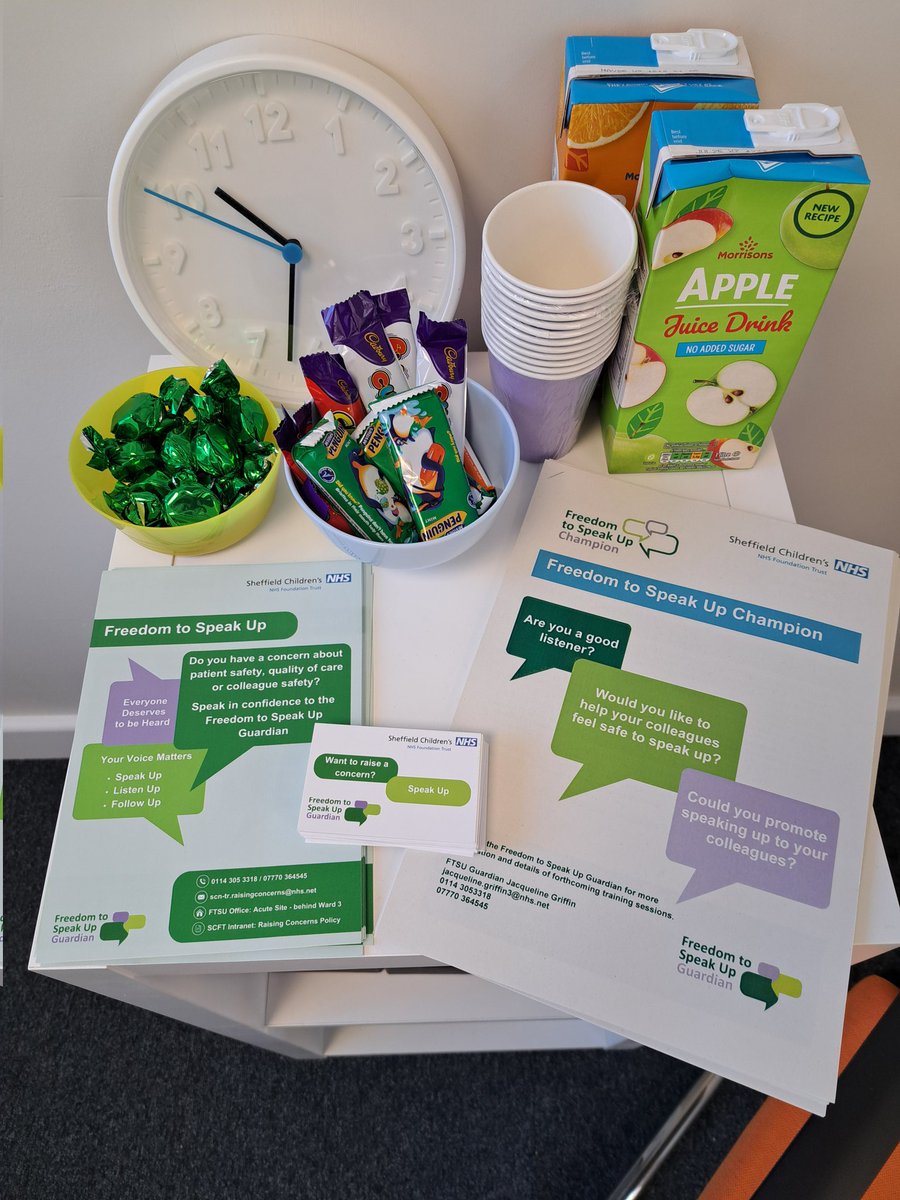
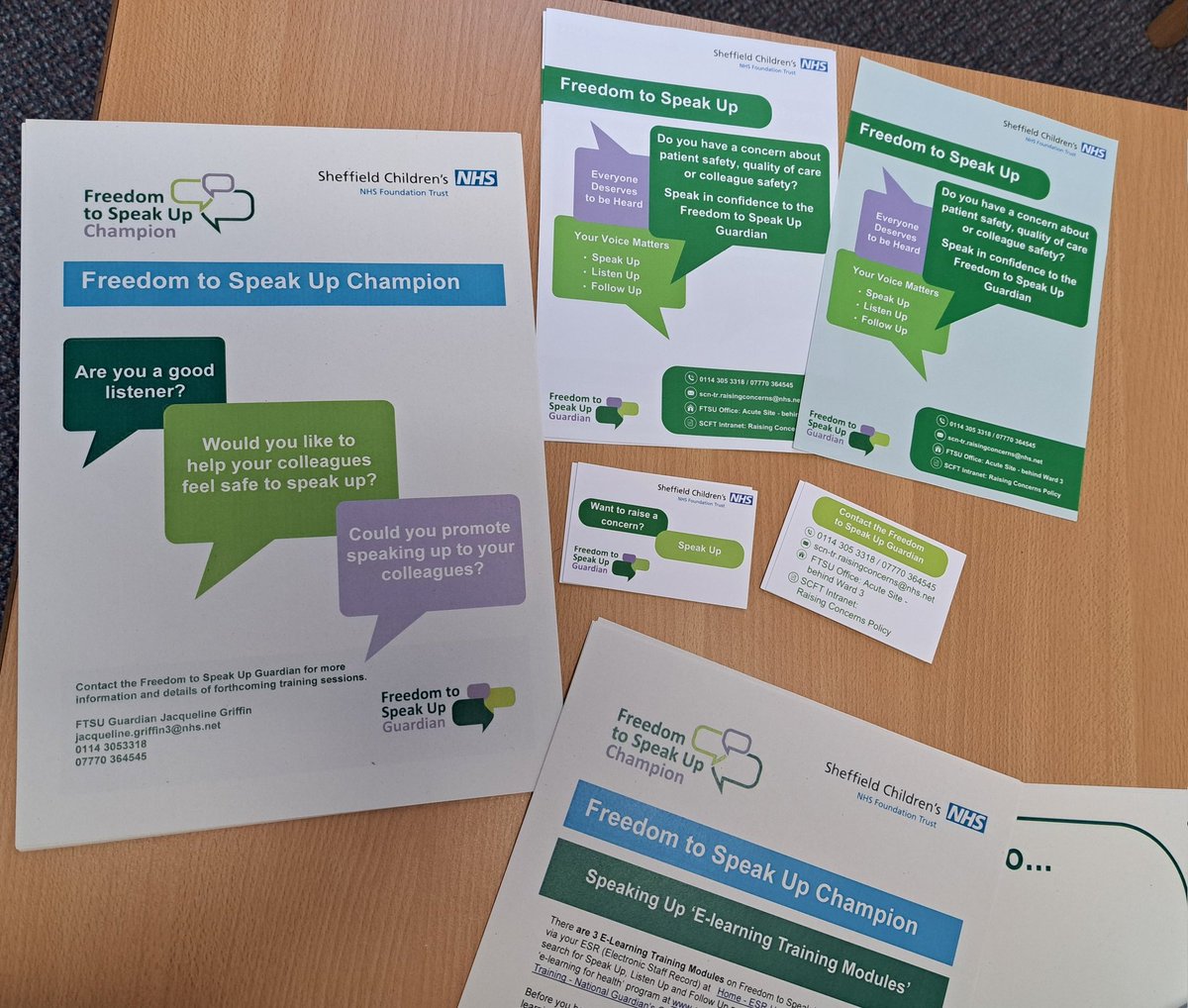
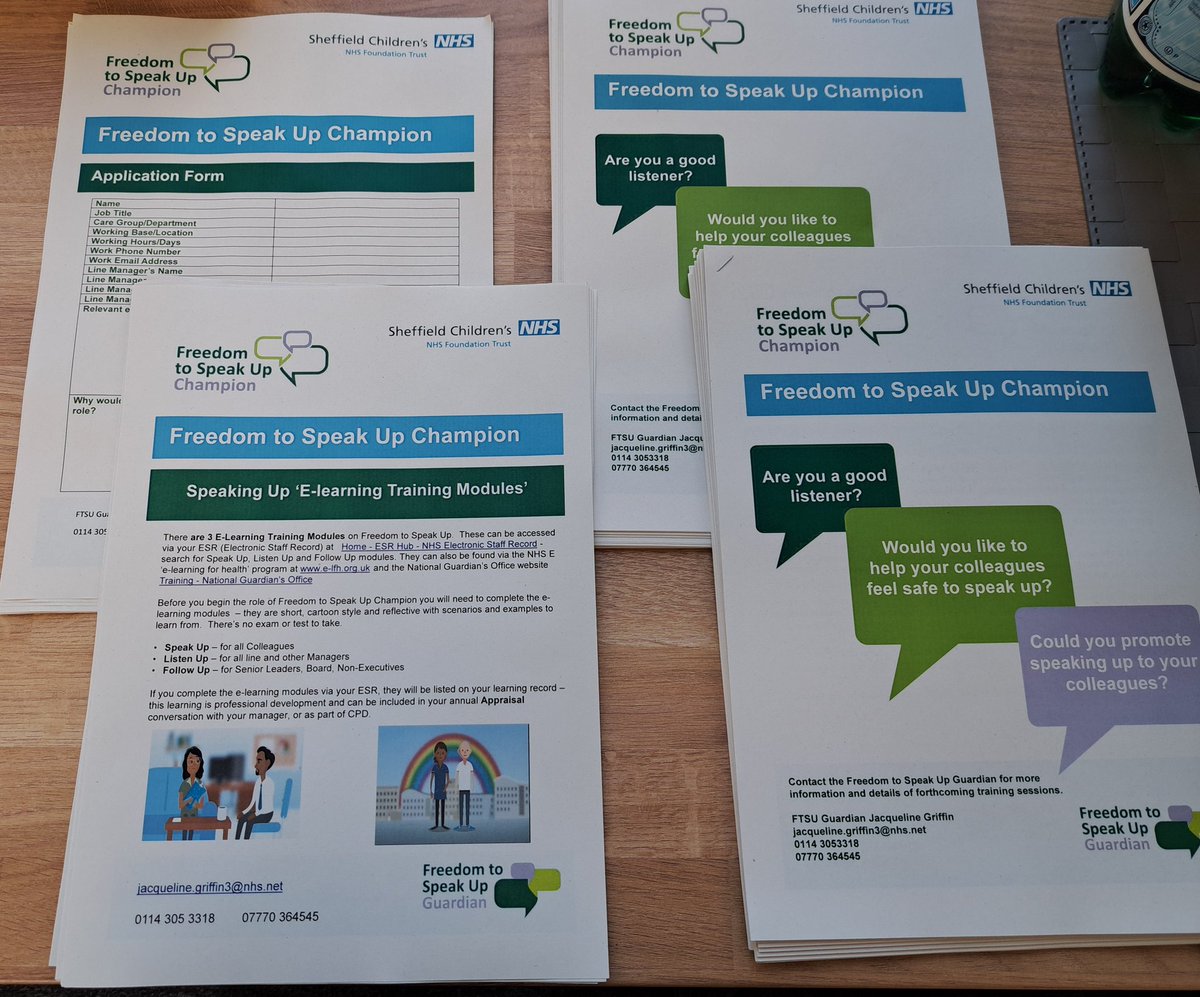
Morning Becton, I'm here 'til 2pm - drop in to Therapy Room 1. Come and have a chat, tell me your work worries. You can sign up to be a #FTSU Champion and learn more about the FTSU online training modules. Be good to see you! @SheffChildrens@NatGuardianFTSU@ruthbrown71
Morning Becton @SheffChildrens How are you? Speak Up Drop In session underway. I'm in Therapy Rm 1 on Community until 2pm. Pop in and say hello, tell me your work worry. Feel free to come in and use the space to complete your NHS Staff Survey 🙂 @ruthbrown71@NatGuardianFTSU
Becton, hello! #FTSU Drop In Session underway on Community in Therapy Room 1. Here 'til 2pm. I'm here to hear. Come and sign up to be a FTSU Champion and support your colleagues to speak up. Collect new posters/cards for your team @SheffChildrens@ruthbrown71@NatGuardianFTSU
Speak Up Month 'Drop In' session now open - FTSU office, C floor, behind Ward 3. #HereToListen until 4pm @SheffChildrens Come on in, find out more about becoming a FTSU Champion for your team/area, collect some new poster and contact cards or just say hello 🙂 @NatGuardianFTSU
A busy day here for #FTSU@SheffChildrens in Speak Up Month. Concern raised by a colleague #ListenUp Then an introduction to new colleagues at the Doctors Forum. Finishing with education/audit session in Radiology. Drop In session tomorrow 10-4! 🙂 @NatGuardianFTSU@ruthbrown71
We welcome the review into the safety of the health and care landscape that @DHSCgovuk have asked Dr Penny Dash to lead.
Improving the safety and quality of care that patients receive is at the heart of #FreedomtoSpeakUp.
Read our full response:
https://t.co/WmJmmJB4Db
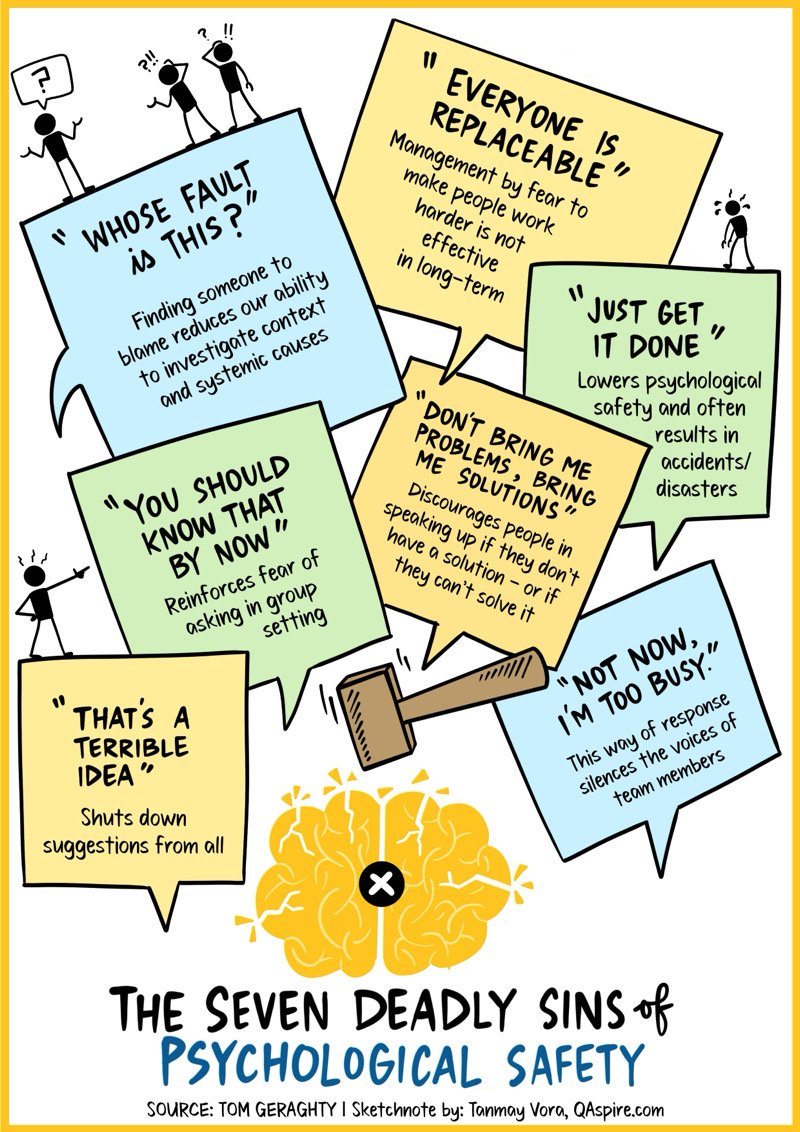
The language we use as leaders shapes workplace culture. It plays a critical role in psychological safety. Our words (& the way we communicate) can encourage the experimentation & risk-taking we want our teams to demonstrate for innovation & improvement. It can also stifle initiative. @tom_geraghty sets out "seven deadly sins of psychological safety" - the most common/damaging things leaders say that crush psychological safety in the workplace:
1) “That’s a terrible idea.”
2) “You should know that by now.”
3) “Whose fault is this?”
4)“Everyone is replaceable.”
5)“Don’t bring me problems, bring me solutions.”
6)“Just get it done.”
7) “Not now, I’m too busy.”
https://t.co/vvre3VOAY0.
@tnvora has translated them into a brilliant graphic: https://t.co/rU7QLzznIg.
♿ Have a #disability? Want to become an NHS non-executive director (NED)?
Join our free #BoardDev course, delivered with @NHS_DNDN to learn the role, gain practical tips and connect with experienced NEDs. No prior NHS experience needed!
Sign up🔗 https://t.co/K3wblceAVh
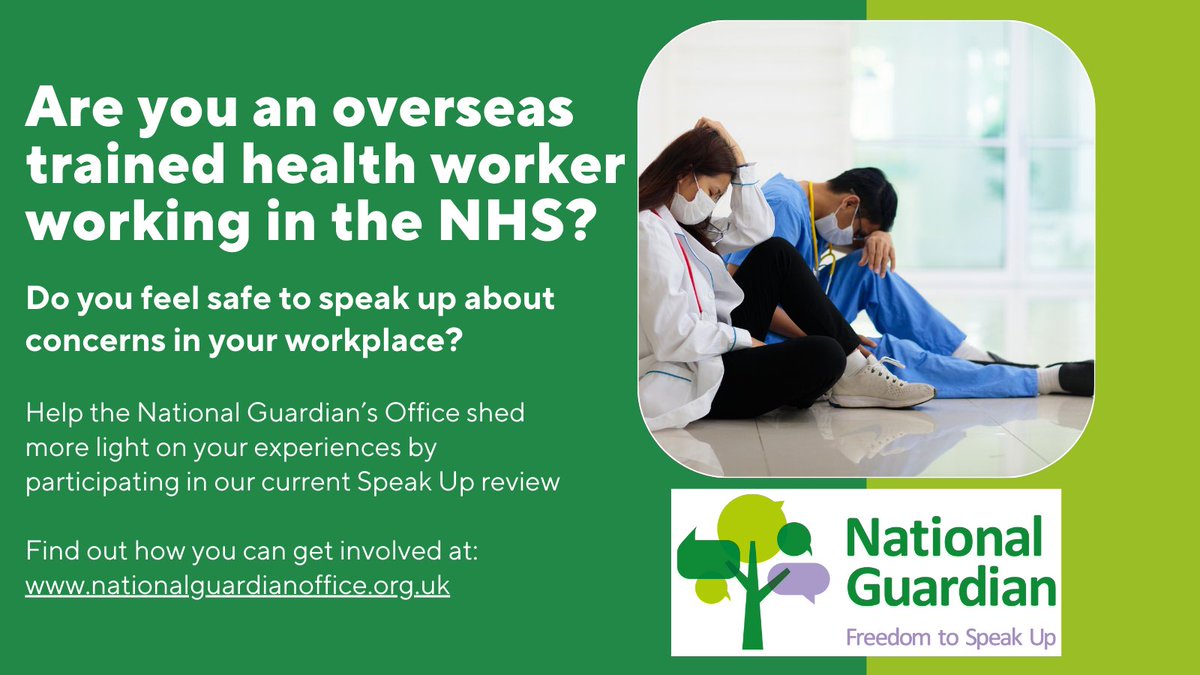
Are you an overseas-trained NHS worker?
Help us shed more light on your experience of speaking up by participating in our Speak Up review.
You can get involved in three ways: an anonymous survey, focus groups or interview.
Find out more: https://t.co/moBNDOXVuX
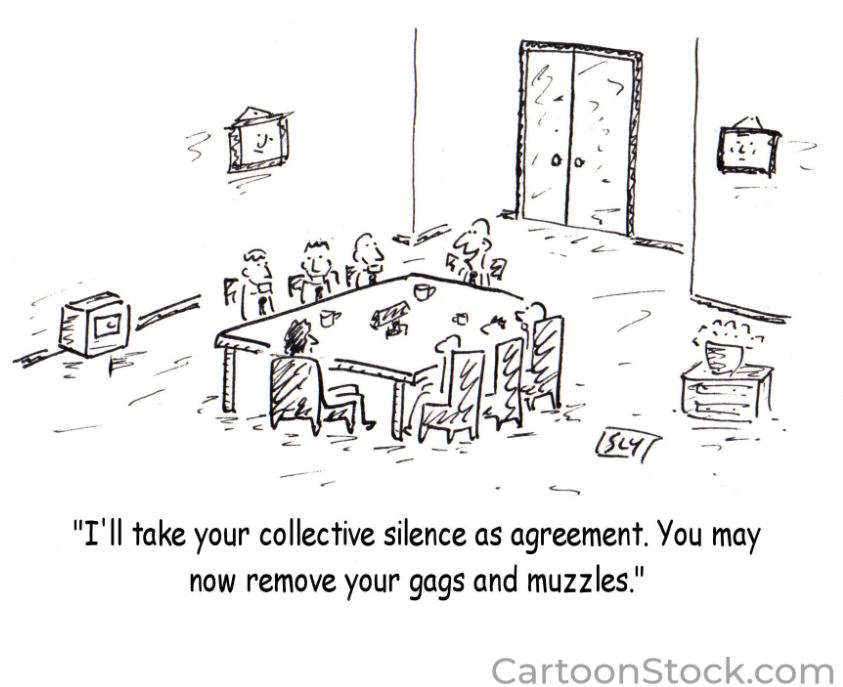
There's a big difference between "speaking up" & "calling out". This is so relevant in the context of building psychological safety & addressing issues & concerns within teams. ‘Speak up’ cultures enable people to get under the surface of issues; to feel & be heard. ‘Call out’ cultures shut down open & honest communication, breeding fear & discontent. When things go wrong, there's often a knee jerk reaction towards fault finding. Stepping back from this & instead focusing on finding solutions supports growth & development of people & systems.
https://t.co/Jwncd2W19r. By @drbrockbastian. Graphic: Mays W. on LinkedIn. Via @tom_geraghty & Jayne Cheswick.
For many NHS staff, the recent racist violence in this country will leave them feeling afraid and unwelcome. To those colleagues, our message is simple: you are welcome and you are valuable members of our community. Reach out for support if you need it.
https://t.co/S2mWJOex6F
@RutlandArmsChef@mrmarksteel Use 'The Coriander Test' as a yardstick for the Lentil Belt boundary in any city...Within 20mins walk of your front door, can you purchase an unpackaged bunch of fresh coriander? There you go.
Today we have published the latest annual speaking up data report, which summarises the themes and learning from cases which Freedom to Speak Up guardians have shared with us.
https://t.co/06JArPYUmX
#SpeakUpListenUpFollowUp
The National Guardian for the NHS has today announced her refreshed vision for the work of the National Guardian’s Office, to improve workplace cultures, ensuring workers are confident to speak up, by providing expert support, guidance and challenge.
#FTSUforEveryone
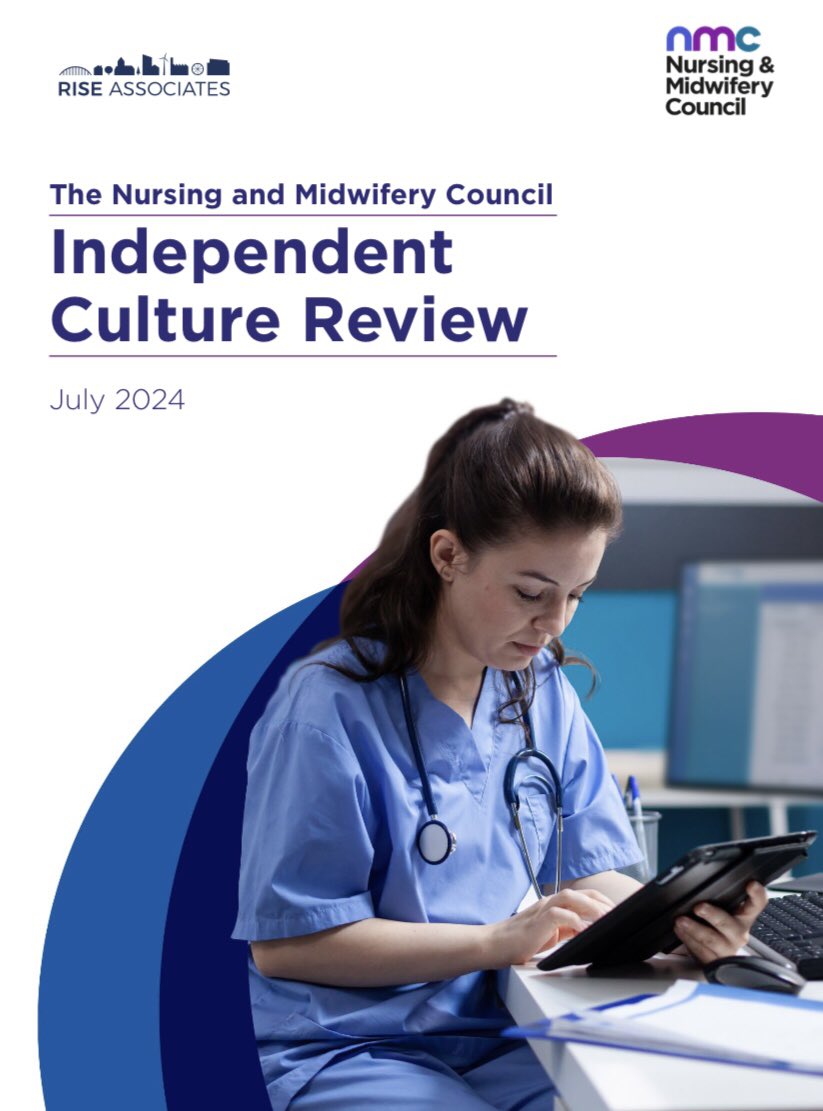
My independent report into the culture of the Nursing & Midwifery Council, arguably the worlds largest health regulator - 808,000 nurses & midwives - will be published on Tues 9th July 2024
Thank you to everyone that has contributed
Your voices will be heard, loud & clear
Today I launch my independent report into the Nursing & Midwifery Council - the body that regulates the 808,000 registrants
It’s not a happy read
Thank you to all who shared their stories
I am confident that a lot of good will result
You can read it here:https://t.co/ByKkfHUz1U
@Donna_Lou Going once home from work, as cannot go without the 12yr old.... Miss C comes along to do her usual verbal protest at how unfair it is that children still cannot vote 😀 I'm very proud of her.
Back in the FTSU office after yesterdays Caring Together event @SheffChildrens My conversation starter was a dolls head covered in #FTSU flags...EVERYONE commented on it 😃 then I got colleagues talking about raising concerns! Quality Promise is go! @NatGuardianFTSU@ruthbrown71
@mancunianmedic Listen to 'Polaroid Picture' by Frank Turner. Proper sums up how life changes and the need to capture a moment in time. We went thru uni, then life gave us "matches, hatches and now dispatches"
Psychological safety: how to get members of our teams to actually speak up.
It's a common leadership misconception that just by encouraging team members to voice opinions we create a culture of openness. We need to address the issues (individual & systemic) that prevent people from speaking up. Five actions:
1) Express intent (but only ask for the level of candour you’re ready & able to receive)
2) Use standard questions like "what are the pros & cons of this idea?" ("What do you think?” can feel like a trap)
3) Discuss communication preferences & use the mediums that play to their preferences rather than yours
4) Lend social capital to people who are in the minority in your organisation (& less likely to speak up) - disrupt biases by giving them the floor
5) Attribute credit fairly to the people who did the work
https://t.co/eZYVlwwYoW. By @elainelinhering