This one is so good. Weston and Jonathan have a talent for going both broad and deep.
Highly relevant content well outside of defense tech for founders:
Capital isn't necessarily the competitive advantage in defense, the ability to attract it and scale is, per @westonmoyer.
Look at the last 20-30 years: maybe only Tesla and SpaceX actually figured out how to scale as startups. That's the real moat.
@Saronic is a great example: going after a 100x increase in US shipbuilding capacity and raised a $1.75B round to do it.
The amount of times I've played with guys who just pick up and give themselves these putts is mind-blowing.
Tour pros make this distance look automatic, but I promise you'd miss a ton of them if you forced yourself to putt everything out.
It also does you no favors if your ultimate goal is to become a better putter.
All the mechanical errors get exposed from this distance. Don't hide it. Embrace it.
NEW POD: Weston Moyer (@westonmoyer) and Jonathan Rue from MVP Ventures (@MVP_Ventures) joined The Drone Ultimatum.
We talked defense tech investing, why scale matters, the government sales maze, and the need for the next generation of defense companies to become serious industrial powerhouses.
00:00:00 — Intro
00:02:13 — Anthropic, AI governance, and Pentagon supply chain risk
00:07:16 — Saronic, defense manufacturing scale, and shipbuilding capacity
00:08:46 — Guam, Pacific logistics, and missile defense strategy
00:12:25 — Shahed drones and the economics of counter-UAS
00:14:04 — Government contracts, appropriations, and how defense sales actually work
00:16:02 — SBIRs, defense competitions, and startup opportunities
00:17:35 — Valinor Industries and building defense companies around Washington expertise
00:29:38 — Anduril, Lattice, and software-defined warfare
00:31:10 — Why the U.S. needs far more defense manufacturing capacity
00:33:12 — Freeform and the future of advanced manufacturing
00:41:28 — Why overcapitalization can hurt defense startups
00:43:43 — Ukraine lessons, real-world combat testing, and preparing for China
00:52:09 — AI, robotics, and what a Taiwan conflict could look like
00:53:19 — Industrial mobilization and converting American industry for wartime production
00:54:21 — Apple, China, and the risks of manufacturing dependency
00:56:40 — Friday Night Lights, military culture, and leadership psychology
01:04:33 — SpaceX, launch dominance, and the future of American industrial power
Record all your podcast episodes exclusively in person, full stop.
The moment the recording stops is when the real conversation starts and the connections are made. That short window of time is the most interesting part of a guest's visit, every time, without fail.
Tristan Thompson explains how he invested in Anthropic
“It was a buddy of mine in Silicon Valley… just going to a couple of these dinners they were doing with the NBA, sitting there talking to these guys and really picking their brains”
“They were telling me about the future of AI and technology… I was like hey man, I like what you’re talking about”
“It was a bunch of SF guys and everyone kept telling me, so I was like alright man, here’s a check. I wanna get in the game”
“From there they just opened up so much for me. I was able to get in early through SPVs and bring in my other buddies to make a bigger check”
NEW POD with Nick LaRovere, co-founder & CEO of @Pryzm_Dynamics.
Pryzm is building the AI-powered OS for defense business development and procurement.
We covered a ton about defense sales & procurement reform, startup culture, the changing nature of defense.
Also live on YouTube, Spotify, and Apple Podcasts.
Timestamps:
00:00 - Intro
01:19 - AI coding, “vibe coding,” and hiring engineers
04:27 - What Pryzm does and the future of defense procurement
10:35 - AI, CRMs, and the changing defense sales process
18:00 - Raising from Andreessen Horowitz and building Pryzm
24:36 - Scaling manufacturing in defense tech
27:12 - “Every company becomes a defense company”
32:28 - Startup culture, engineers, and product building
35:01 - “Startups are war”
40:13 - Palantir culture, Alex Karp, and defense tech talent
48:11 - How defense procurement is changing
59:49 - Anthropic, AI companies, and defense partnerships
01:02:18 - Closing thoughts
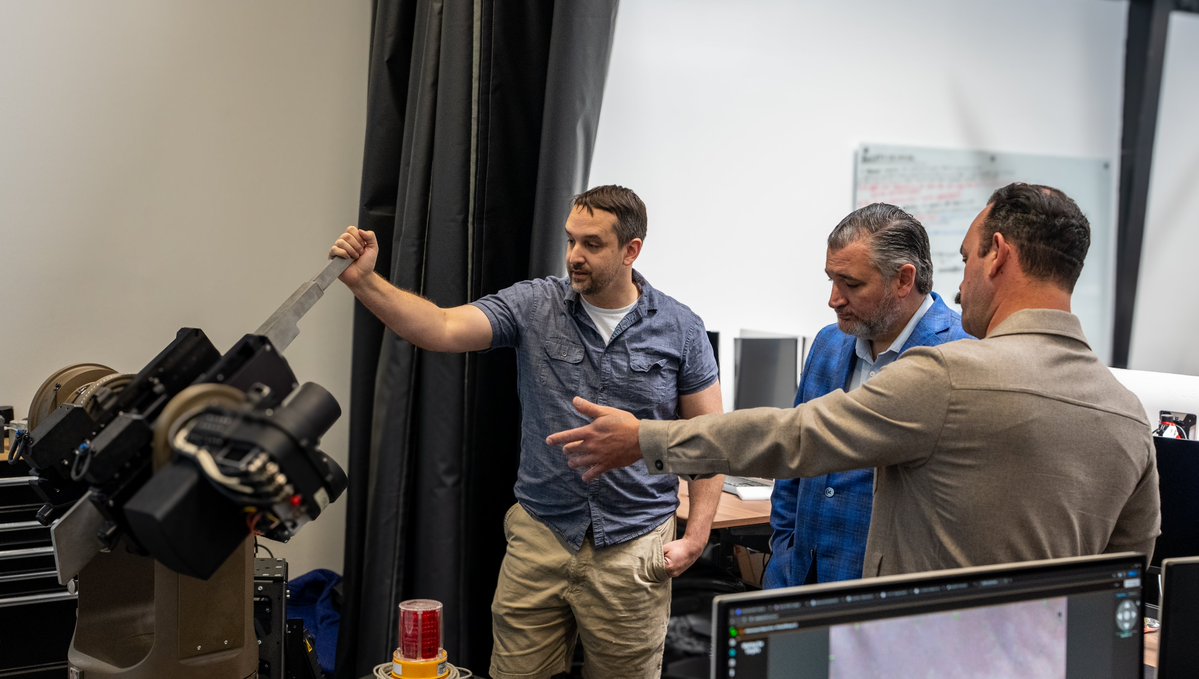
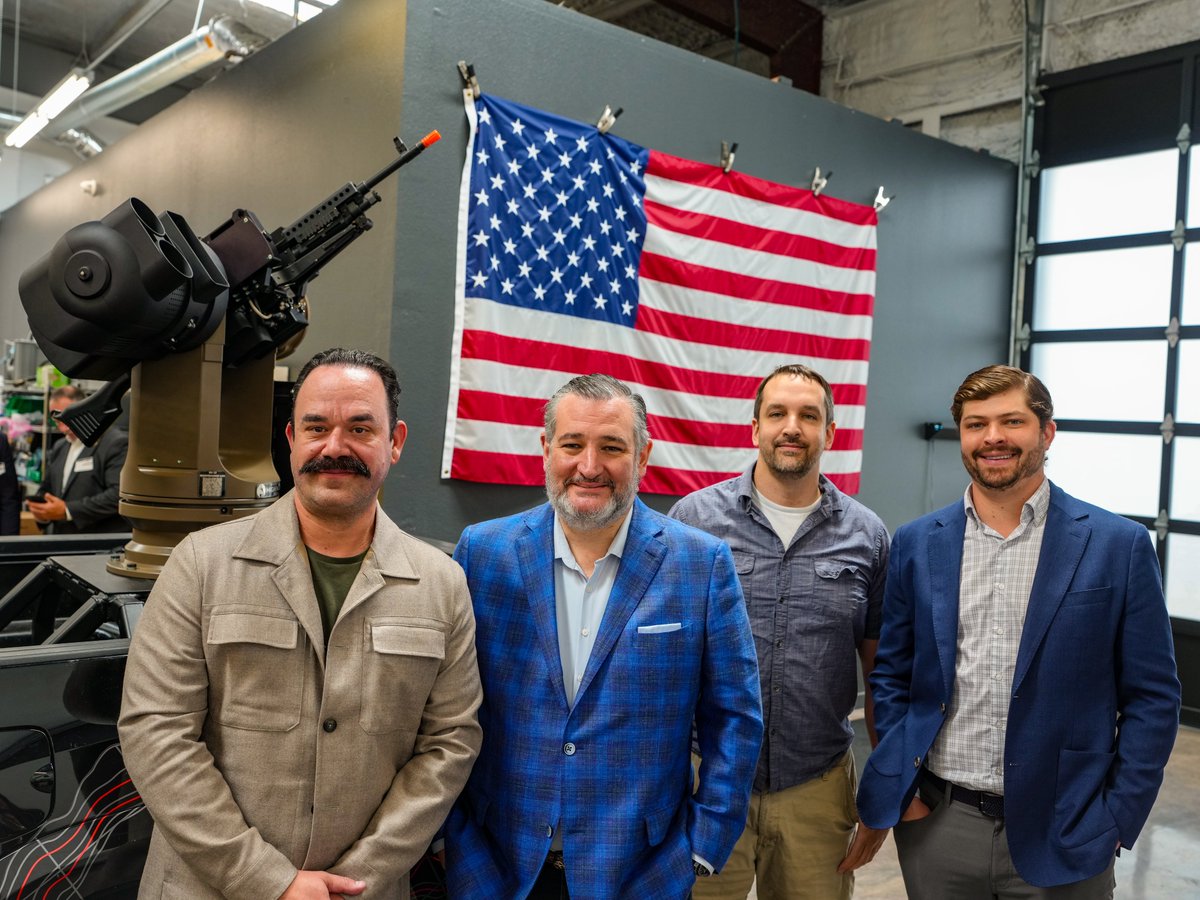
It was an honor to host @SenTedCruz at our Austin headquarters yesterday.
As drones continue to transform the battlefield, we’re rapidly expanding production of autonomous systems to safeguard U.S. and allied forces while helping strengthen America’s defense industrial base.
American manufacturing still has an image problem.
Most people still picture dirty, dangerous, dimly lit shops with low wages. That's not what it looks like anymore.
Jamie Goettler has been in hundreds of machine shops as CRO of a manufacturing org:
"It looks like you're in the future. Robots and computers are everywhere. There's a satisfaction to manufacturing and making something.
It's not just button pushing. It's engaging, it's technological. We're not talking enough about that."
The average manufacturing worker in America makes $95,000 a year with benefits. For young people trying to find a great opportunity, this is a real path that's not getting much airtime.
I did extemporaneous speaking in high school for three years. Didn't really want to, but eventually caved to the persistent encouragement of my English teacher (who was also the speech & debate coach).
Every week on Tuesdays after school, the three of us in extemp would draw questions out of a hat. The questions were all current events related. For example, "Will there be peace in the Middle East?"
You got one notecard to use during the speech. 7 minutes max. The only source materials allowed were stacks of magazines and newspapers from recent days and weeks. No internet.
Once the thirty minutes was up, we all gave our speeches in front of each other + our coach. We critiqued and encouraged each other after every speech.
It was the highest ROI activity I ever did in school, no question. I reap the benefits of that training every day.
It permanently killed my fear of getting up and speaking in front of people with little or no notice. It's a superpower.
In the era of all writing converging on “pretty good” with the help of AI, there is huge alpha in extemporaneous oratory
Being able to speak off the cuff, powerfully and persuasively, can’t be faked and there’s no replacement for it
New pod with David Michelson. He's the Drones Thesis Leader at Re:Build Manufacturing and the former Director of Autonomy at DIU.
All sorts of discussion about manufacturing, evolution of drone warfare, major mistakes of defense companies trying to make it, and more.
https://t.co/sZnG0Q4uFM
There's not a lot of great counter-systems for FPV drones. "Kinetic solutions are what we have to have."
Former Army Ranger Jim Lechner was in Ukraine for almost two straight years. His rule of thumb: EW could disable 60-70% of drones, but you'd have to deal with the remainder.