Everyone knows that the Supreme Court’s gutting of the VRA means fewer Black legislators. Our research shows what else it means: Black voters in the South losing the one mechanism that made Congress actually vote their way. With Zoli Hajnal @markarian_g@lovkh#VotingRights
Millions of voters of color will no longer be able to elect a representative of their choice. But what’s at stake is far bigger: whether voters of color can elect legislators whose votes actually reflect their policy preferences. https://t.co/GPCVSKQudD
Everyone knows that the Supreme Court’s gutting of the VRA means fewer Black legislators. Our research shows what else it means: Black voters in the South losing the one mechanism that made Congress actually vote their way. With Zoli Hajnal @markarian_g@lovkh#VotingRights
Millions of voters of color will no longer be able to elect a representative of their choice. But what’s at stake is far bigger: whether voters of color can elect legislators whose votes actually reflect their policy preferences. https://t.co/GPCVSKQudD
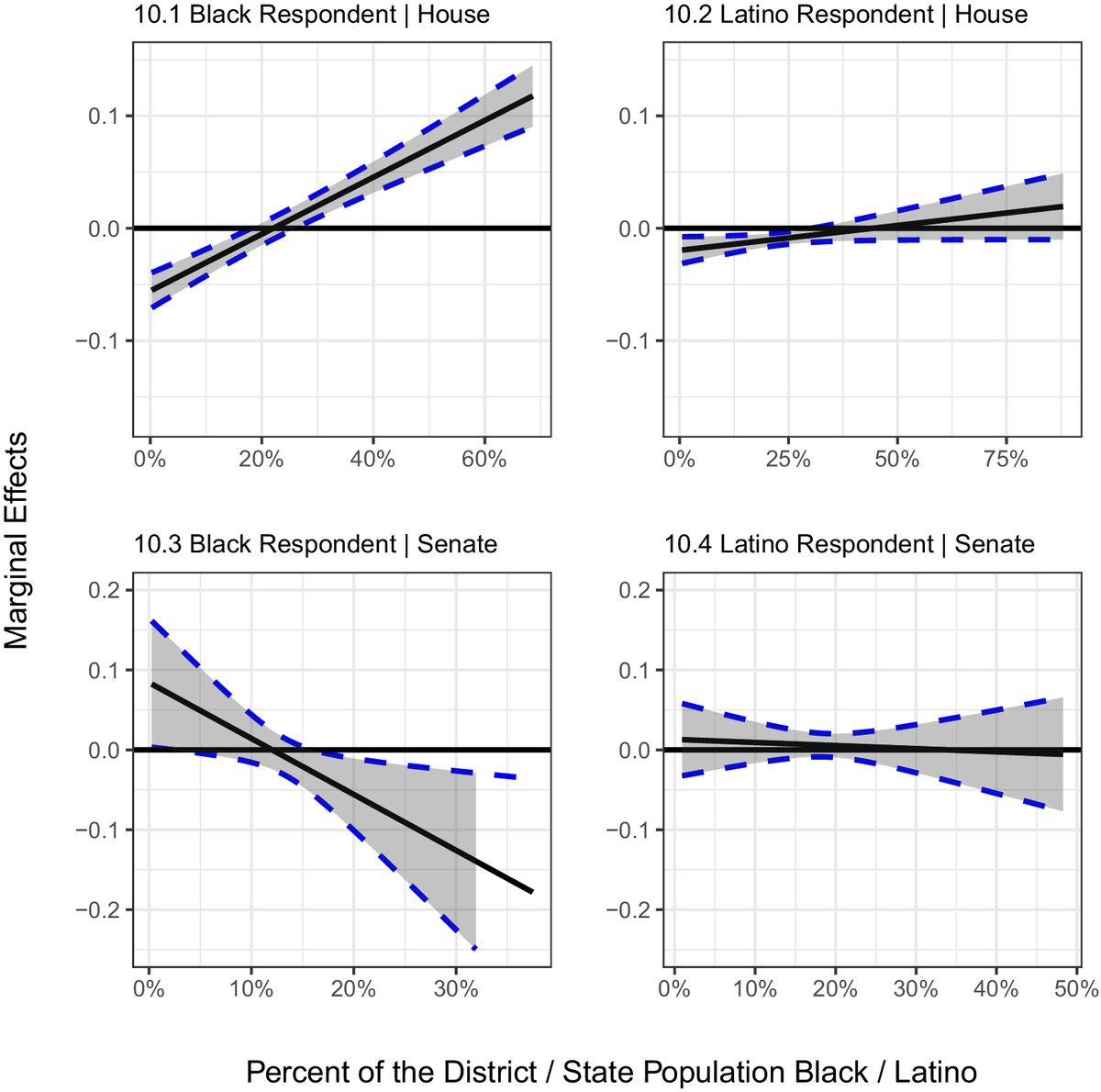
We tracked the preferences of 500,000+ voters against their members’ votes. Outside the South, Black voters need to make up 7% of a district to get equal representation. In the South: 40%. The South is gerrymandering Black voters into districts where they’re small minorities.
Here is the empirical case against Callais. We studied 20 years of congressional votes and half a million survey responses, and found that in the South, Black representation in the House relies on a near-majority of Black voters in a district.
https://t.co/mFilBzmVfE
Is national policy more responsive to the preferences of white Americans than to those of people of color? When Republicans control the federal government, yes. White voters are more likely to see bills they support become law than are Black, Latino, or Asian American voters. 1/5
Perhaps most striking, we find an inverse relationship between a state's Black population share and how well represented Black constituents are by Senators -- the opposite of expectations. This seems to reflect white racial resentment in these states. 4/5
6/ The key is organized efforts focused on getting and keeping the unpopular parts of the bill -- especially the Medicaid cuts -- on the agenda and mobilizing voters against them. While this will be harder today than in 2017-18, our survey suggests voters will be VERY receptive.
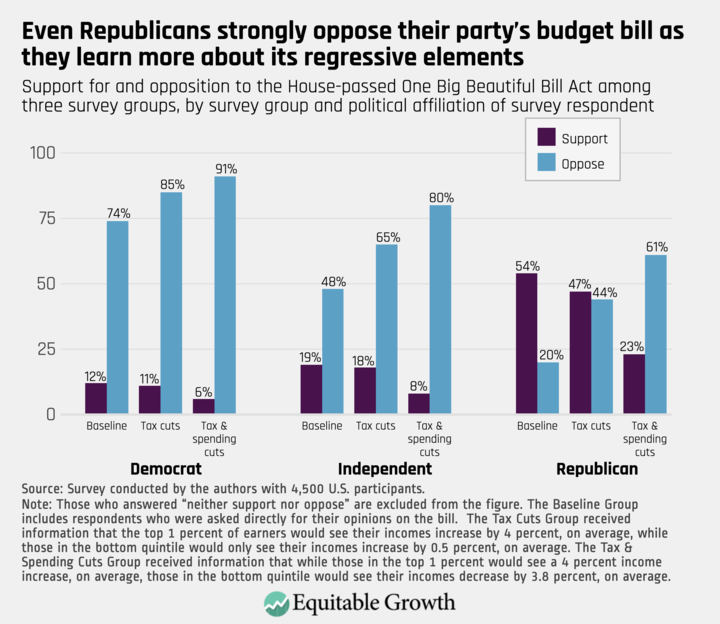
Republicans' hugely unpopular bill is law; will they pay the electoral price for it they should? My research with @sullosaurus for @equitablegrowth has good news and bad news. The good: voters informed about the bill's effects overwhelmingly oppose it. https://t.co/ZRfcfns95u
5/ But big unpopular policies can break through -- even without going into effect. Think the failed ACA repeal and replace effort in 2017, which devastated Republicans in 2018. And our survey shows Senators who voted for this bill are vulnerable:
“Legislation speaks louder than words.”
Excellent analysis by @Jacob_S_Hacker & @sullosaurus of the bill before the Senate today that is “the most regressive, least populist policy package in memory.” It’s terrible on tax equity, heath care & hunger.
Why are Republicans working nights on a holiday week to ram thru an unvetted bill?
Maybe b/c the more American people learn abt the bill, particularly the lopsided costs & benefits, the less they like it.
Even true among Rs' own voters.
h/t @Jacob_S_Hacker@equitablegrowth
As the House moves to reconcile its dreadful bill with the Senate’s even more onerous “Big Beautiful Bill,” we speak with Patrick Sullivan about his NYT article with @Jacob_S_Hacker, “How Awful Is the Republican Megabill? Here Are Four of the Worst Parts.” https://t.co/n1NMCzfDsX