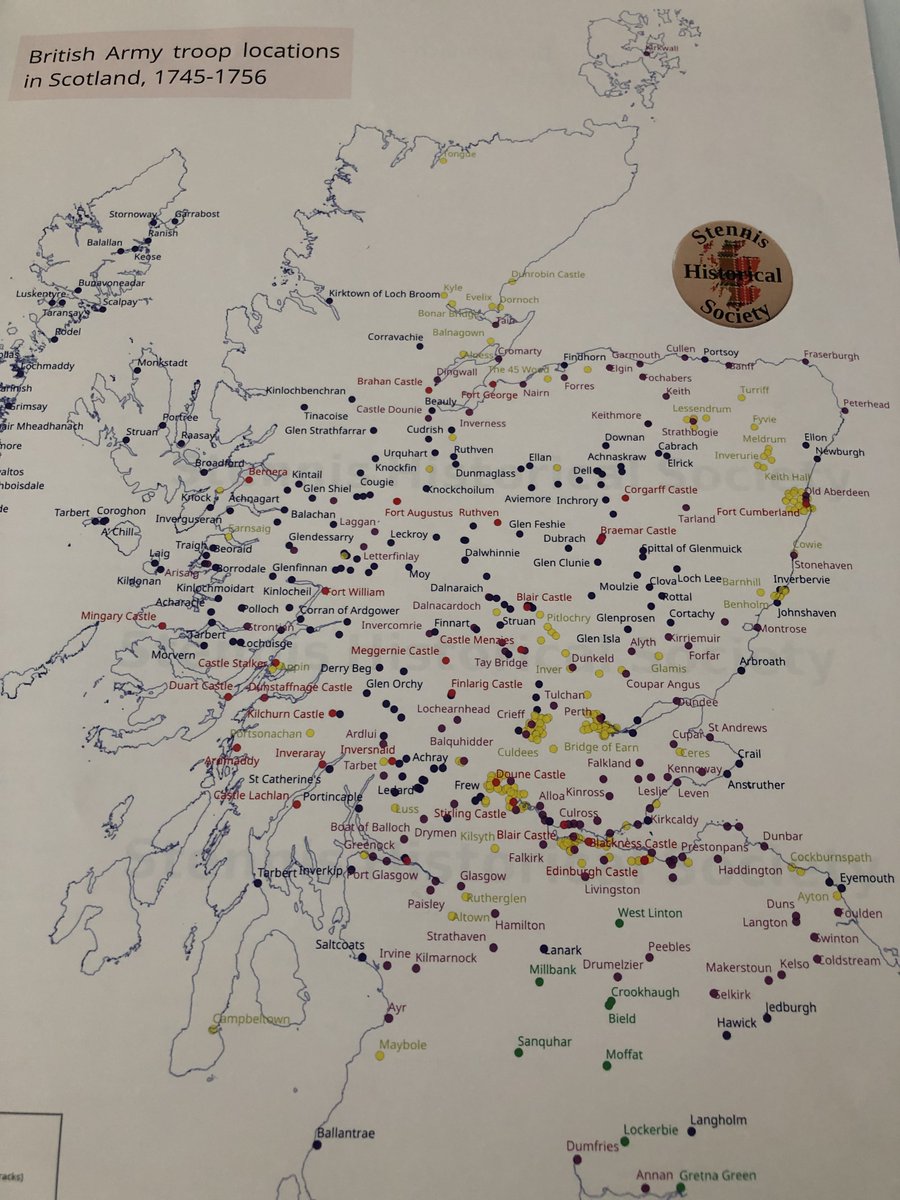
On our YouTube channel https://t.co/5bSrLegjYc, is an updated video, describing how & why we made various British Army cantonment maps. Revised narration describes latest yearly maps, explaining the changing geographical distribution with more emphasis on the 1750s.
MONTROSE
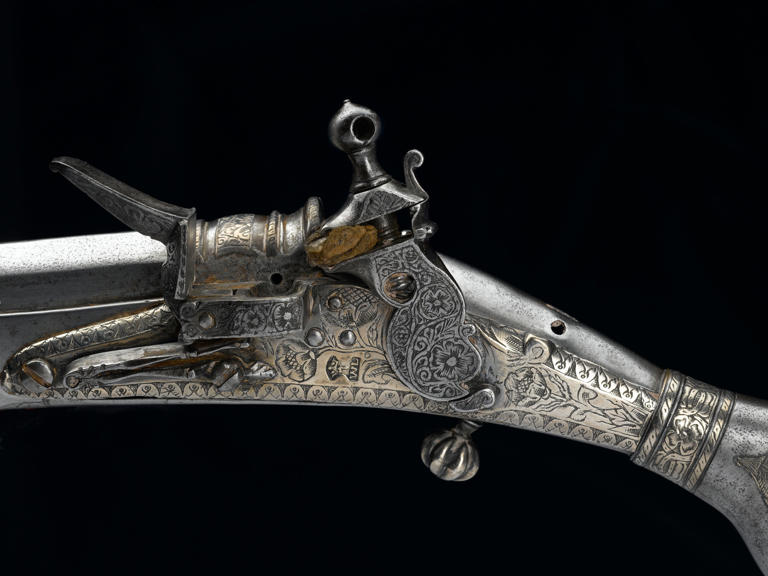
Ornate Jacobite pistols on display
Two rare Jacobite era pistols are to be reunited for the first time in more than 30 years in a new exhibition in Montrose Museum from 17 July to 23 November.
Dating to the late 17th century, the weapons are rare surviving examples of work by the gunmaker and goldsmith William Lyndsay the Elder of Montrose in Angus.
Experts said they are likely to have belonged to a wealthy and influential local family at a time when the town was renowned as a place where “men of the highest wisdom in Scotland” could be found. It was a Jacobite stronghold, known to England's naval chiefs as “that most rebellious town” given local efforts to provide military and logistical support to the cause.
It is believed the pistols were taken to France following the failed Jacobite uprising of 1715 and remained there for more than 200 years. They came to light in France in 1993, when up for sale and were acquired by National Museums Scotland (NMS) and Montrose Museum.
They are now being reunited for the first time in more than 30 years in 'Tartan & Turmoil': The Angus Jacobite Story where the pistol on loan from NMS will be displayed alongside its pair.
Ella Paul, curator, Renaissance and Early Modern History at NMS, said: “These finely crafted pistols are extremely rare and I’m delighted we have the opportunity to reunite them.
“They represent a tumultuous period of Scottish history and the experiences of the Jacobite families forced into exile across Europe.
The steel heart butt pistols are richly decorated with intricate floral engravings and silver mounts, and are stamped with Lyndsay’s mark.
The exhibition, 'Tartan & Turmoil', will explore the pivotal role Angus played in Jacobite efforts to restore the Stuart dynasty to the throne”.
The pistols go on show alongside items such as treasures once owned by Stuart kings, intimate letters and everyday objects that illustrate stories of the Jacobite rebellion throughout Angus.
Emma Gilliland, Museums and Galleries Collections, said, “Everyone has heard about the Jacobites and Bonnie Prince Charlie, but the vital role that Angus played in the risings is not known.
“Some Jacobite objects from our collection are being exhibited for the very first time, and we will also be showcasing significant objects on loan from leading national institutions.
Professor Chris Duffy, the late scholar and author of The ‘45, The Untold Story of The Jacobite Rising, wrote: “Montrose was of the first importance to the cause of the Prince, for he had a large and active following there and it was the main port of ingress for supplies and reinforcements from France.”
As the rising unfolded, men and supplies arrived in Montrose from France at rapid pace, with 800 men from the Ecossais Royal, Lord John Drummond’s own French regiment, and piquets from six French Irish regiments.
Many local soldiers served with the Forfarshire regiment, led by 20-year-old David, Lord Ogilvy, heir to the House of Airlie, which still holds Cortachy Castle and Airlie Castle in the Angus Glens in its fold.
Those who signed up came from Ogilvy lands across Angus and the glens, with the muster roll of more than 800 men loaded with journeymen , weavers, ploughmen and workmen who signed up to their laird’s call.
30 years this month since 1st edition of this was published: still selling a good number of copies every year.Thanks to everyone who read its reframing of the '45's national quality by showing the scale of Lowland recruitment & opposition to Union @JacobiteTruth@ScotHistNetwork
@Free_to_leave@BjCruickshank Richard, the latest cantonment/camp related material is at https://t.co/7khmagUZaN (see menu at top left). Stennis itself is no longer functioning, but older material is archived at https://t.co/OQqPJ9G8By (no capitals).
The Scotland Channel has re-published historical author Stuart McHardy's video on The Military Occupation of Scotland: https://t.co/1B9layzuvc - the transcribed Cantonment Register, cantonment maps and more are at https://t.co/1TFPGWnX8C
The valuable Internet Archive is back following a cyber attack. The recently updated research document for the British Army Cantonments in Scotland 1745-56 is now archived there: https://t.co/v5s33taYQE as well as at https://t.co/y6EZJLbwQO
Research document for cantonments updated to V3.0 - added extra cantonments, extra dates of occupation, extra source doc, updated maps. Detailed records best viewed on a wide screen or tv. https://t.co/y6EZJLbwQO
Due to technical issues, the Stennis website address has changed slightly. It can be accessed via the new short link https://t.co/OQqPJ9G8By (no longer capitalised), or via a link on the home page of https://t.co/7khmagUZaN
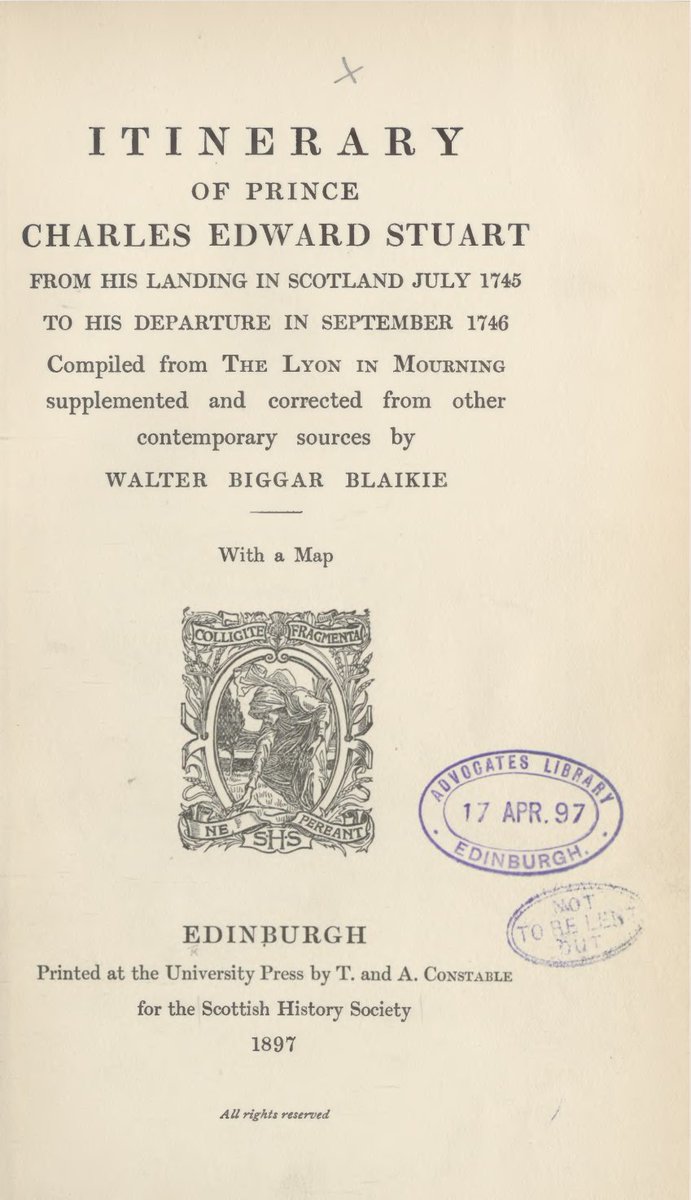
"The army drawn up in line of battle at Bannockburn awaiting an attack". This was 1746 not 1314, and would have involved Bonnie Prince Charlie not Robert the Bruce. In the end the attack took place at Falkirk, so not Bannockburn II. Source: Supplement to Lyon in Mourning, P36.
A bad night for the Duke of Cumberland, cheated of 7 shillings and had his valuable sword stolen. The Lyon in Mourning, Vol2 P226 https://t.co/mglSVXTECD
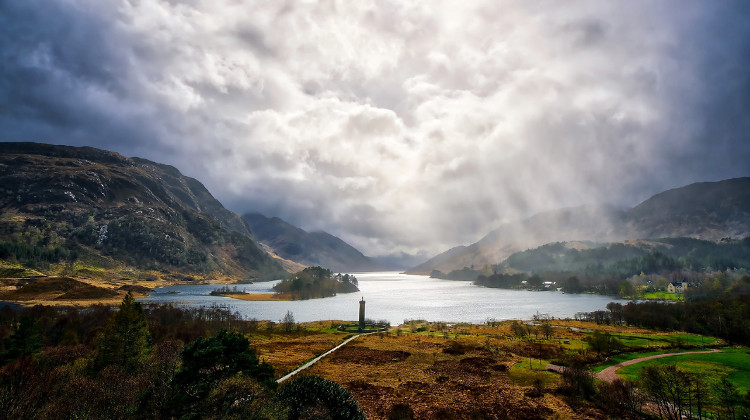
#otd On 19 August, 1745, Prince Charles Edward Stuart raised his standard at Glenfinnan.
The #Jacobite Rising had begun.
But it could all have gone very differently.
For Historia, @_FrancesOwen writes about the story behind the event at https://t.co/BizMtuxVSM
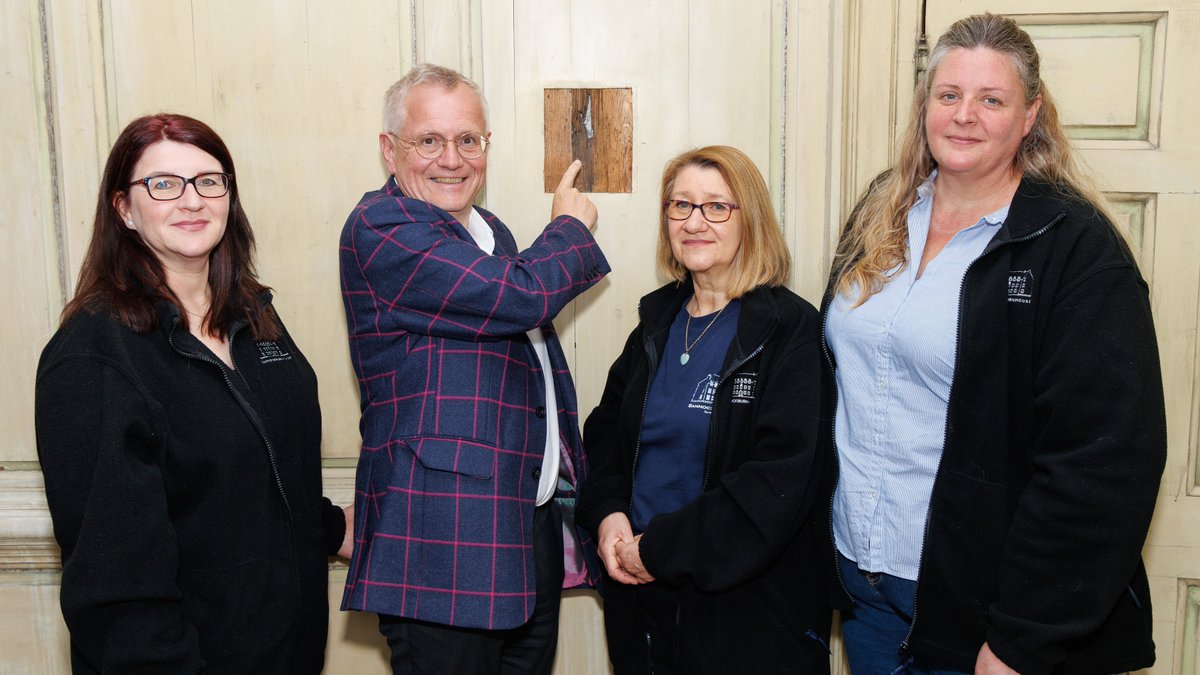
The fascinating discovery of a musket ball hole at
@BannockburnHSE could change what we know about an attempted assassination on 'Bonnie Prince Charlie'.
The bullet hole was found by volunteers and authenticated by @P14Murray & @murrayJamescoo1.
More: https://t.co/6MkNy49mUB
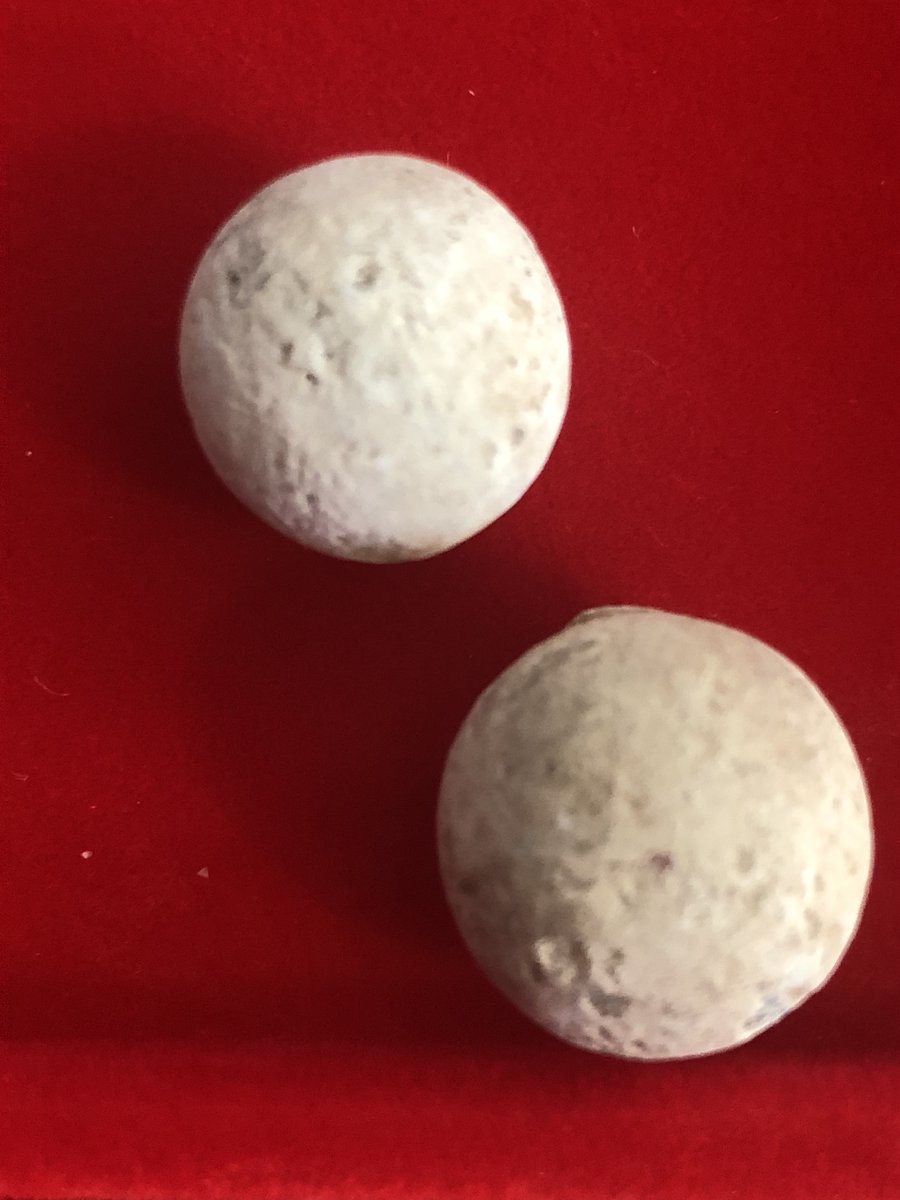
Have just signed contract with @OUPHistory for 'The British Army, Scotland and Imperial Policy After Culloden'- Plenty of very new material which will change our view of Scotland after 1746 @LauraEWebsterr@JacobiteTruth map below & two pistol balls from Prince's command post
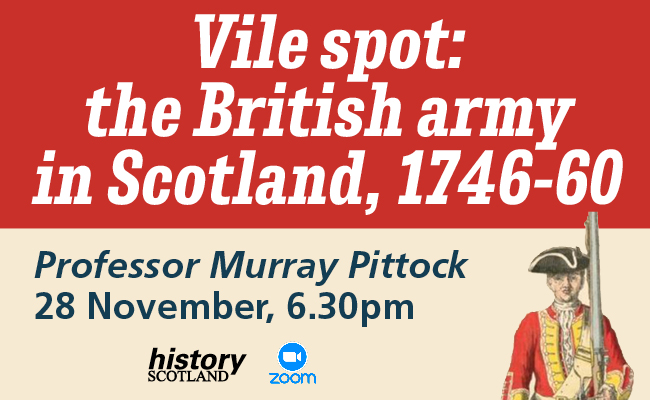
Vile spot: the British army in Scotland, 1746-60
The atrocities carried out on the Duke of Cumberland’s orders after Culloden are well known. In our special lecture, Professor Murray Pittock shares new information based on primary research... Book at https://t.co/Ymo1bKLGh6
@P14Murray@N_T_S Further evidence of the ban on wearing tartan is in Situation Reports of the British Army on Highland Service, Summer 1751 which we transcribed https://t.co/qupFfQMRV4. John McPherson was "taken up for wearing the phillibeg or little Kilt" and "Committed... to [Killin] prison".
Historical author Stuart McHardy's new video on the British Army's Cantonment Register, recording the locations & nos of troops in the years after Culloden. Also mentions the corresponding maps developed by Stennis Historical Society. https://t.co/ZbquyFLRfu












![JacobiteTruth's tweet photo. @P14Murray @N_T_S Further evidence of the ban on wearing tartan is in Situation Reports of the British Army on Highland Service, Summer 1751 which we transcribed https://t.co/qupFfQMRV4. John McPherson was "taken up for wearing the phillibeg or little Kilt" and "Committed... to [Killin] prison". https://t.co/Wd5HdaEtzz](https://pbs.twimg.com/media/F68-4yoW8AEw6CB.png)


