The Steak Bake Battalions
I have said it for years.
The men who will save this country can be found every morning, from six until half past eight, at almost every Greggs in the land.
They are there before the office lights come on. Before the besuited pen-pushers arrive for their lattes. Before the morning fills with pushchairs, school runs and meetings about meetings.
They are already awake. Already moving. Already at work.
You will know them.
Men in high-vis and cargo shorts. In battered work trousers and steel toe-capped boots. Sometimes in hard hats. Paint-spattered. Plaster-caked. Oil beneath their fingernails. Bags beneath their eyes.
They queue for coffee, bacon rolls and Steak Bakes.
The banter is merciless. The humour is dark. The language is occasionally appalling. But the fellowship is real.
They are the grafters.
Tradesmen. Engineers. Drivers. Fitters. Welders. Bricklayers. Scaffolders. Electricians. Plumbers. Mechanics. Machine operators. Small businessmen. Employers and employees.
Working-class men. Middle-class men. Englishmen, Scotsmen, Welshmen and Northern Irishmen.
British men.
While much of the country still sleeps, they are leaving their wives, their children and their warm homes. They climb into cold vans. They drive through darkness and rain. They go where the work is.
They build Britain.
They keep the lights on and the water flowing. They repair the roads. Raise the scaffolding. Lay the bricks. Weld the steel. Fix the boilers. Clear the drains. Restore the roofs. Mend what is broken.
They rarely appear on television.
Nobody invites them onto fashionable panels. Nobody asks what they think. Nobody in Whitehall seems particularly interested in whether they can afford another van, another apprentice or another year of taxes, regulations and rising costs.
Yet without them, the country stops.
Completely.
These are the descendants of the men of Agincourt and Waterloo. Of the Somme and Dunkirk. Of D-Day, Korea, the Falklands, Iraq and Afghanistan.
Not trained soldiers, most of them. But recognisably of the same temper.
The same stubbornness. The same humour in adversity. The same refusal to make a song and dance of hardship. The same instinct to shoulder the load, finish the job and look after the man beside them.
They carry an inheritance shaped across centuries. Celt and Pict. Roman and Saxon. Viking and Norman. Generations forged by cold seas, hard ground, long winters, dangerous work and war.
Their forebears built ships, railways, bridges, factories and cities. They crossed oceans. They defeated Napoleon, Hitler and Galtieri. They created an empire of extraordinary reach and consequence, and then spent British blood and treasure destroying the slave trade across much of the world.
They were not flawless men. No nation is flawless.
But they were formidable.
And these men are formidable still.
They are not extremists. They are not fanatics. They do not spend their days raging online. Most ask for very little.
A fair wage. A decent home. Safe streets. A future for their children. The freedom to speak plainly. And a country that remembers who built it.
But beneath the dust, the laughter and the apparent indifference, something remains.
A deep attachment to home.
A quiet patriotism.
A line that can be pushed only so far.
When this country finally decides that mass immigration must end, that integration must mean something, that borders must be real and that Britain must remain recognisably British, it will not be delivered by consultants, commentators or career politicians.
It will be delivered by the people who already carry Britain on their backs.
They are out there every morning.
Millions of them.
Waiting patiently in the half-light. Vans lined along the kerb. Engines ticking. Reflective jackets catching the first grey light of dawn.
Coffee in one hand. Steak Bake in the other.
The backbone of Britain.
The Steak Bake Battalions.
No wheels on those suitcases.
No mobile phones to speak into.
No-one carrying a machete.
No-one looking for trouble.
No-one vaping strawberry-flavoured chemicals.
No transgender issues.
No woke nonsense being spoken.
No-one wishing for diversity.
And that's how it was!
In 1943, Danish farmer Søren Poulsen was working near Klejtrup Lake when he came across an unusual stone. Its shape reminded him of Jutland, the peninsula that forms mainland Denmark.
That small discovery gave him an idea that would occupy the next quarter of a century.
In 1944, Poulsen began building a miniature map of the entire world along the edge of the lake. He shaped continents from soil and grass, outlining their coastlines with thousands of stones.
Some of the rocks weighed more than two tonnes.
Moving them required patience and a little ingenuity. During Denmark's cold winters, Poulsen waited for the lake to freeze, then dragged the heavy stones across the ice on sledges. He positioned them where they were needed and continued shaping the continents when the ice disappeared.
Year after year, the world slowly took shape.
By 1969, his handmade map measured around 45 by 90 metres and covered more than 4,000 square metres. Poulsen had spent roughly 25 years creating it, continuing the work until the year he died.
More than half a century later, his world is still there.
Known today as Verdenskortet ved Klejtrup Sø, visitors can walk across its miniature continents, cross between countries and even take small boats onto the water surrounding parts of the map.
It all began with one strangely shaped stone that Søren Poulsen thought looked a little like Denmark.
When Jonathan Pearce started working with Bobby Moore at Capital Gold in the early 1990s, he expected to be slightly in awe of him.
This was England’s World Cup-winning captain.
But Moore never really allowed Pearce to treat him like that.
For three years they travelled around Europe together covering football, and Moore would insist on doing the driving to domestic games because Pearce had the preparation to concentrate on.
“You do all the real work, Pearco.”
“You need to be fresh.”
By the end of it, Moore was not really Pearce’s hero anymore.
He was one of his closest friends.
What Pearce did not know was that for much of that friendship, Moore was seriously ill.
He had undergone surgery in 1991 after being diagnosed with bowel cancer, but kept the true extent of it largely private.
Even as the cancer spread, Moore carried on working.
“He knew the doctors could not cure the cancer that had started to destroy him.”
“But he never told me.”
Early in 1993, it was Pearce who suddenly thought he might have cancer.
The person who helped him through it was Bobby Moore.
“Speaking to me every day, reassuring my wife, telling me everything would be okay.”
Night after night, Moore would ring him.
Pearce would talk about his fears and Moore would calm him down.
“He never once let on about his own illness, even though he knew that it was terminal.”
Pearce eventually got the all-clear.
Moore already knew he would not.
On the 13th of February, Pearce was leaving to cover an FA Cup game when Daily Mirror journalist Nigel Clarke pulled him aside.
The Sunday newspapers were about to reveal that Bobby Moore was dying.
Pearce rang Moore’s home in Putney.
This time Moore told him the truth.
Pearce was devastated.
Moore was much calmer.
Two days later, Pearce went to his house to record an interview so Moore could speak publicly about his illness himself.
Even then, Moore did not want to sound defeated.
“He didn’t want people to give in if they had cancer.”
“He wanted people to fight against it.”
On the 17th of February, England played San Marino at Wembley.
Moore sat alongside Pearce in the Capital Gold commentary box, visibly thinner by then, and worked the game at the stadium where he had lifted the World Cup 27 years earlier.
It would be his final public appearance.
There was still another commentary scheduled.
West Ham against Newcastle at Upton Park.
Moore wanted to do it.
His wife Stephanie did not think he should.
By then everybody knew how ill he was, and she feared his return to West Ham would turn into a media circus when he was barely strong enough to cope with it.
She asked Pearce to stop him going.
Pearce agreed.
So he had to tell Bobby Moore that he could not commentate at his own club again.
“I respect you, JP.”
“I always will.”
“I accept your decision.”
“But you’ve disappointed me.”
They were the last words Bobby Moore ever said to Jonathan Pearce.
Moore died the following Wednesday morning, the 24th of February 1993.
He was 51 years old.
Pearce later admitted that stopping him from going back to West Ham would stay with him for the rest of his life.
Pearce had spent the previous weeks frightened that he might have cancer, with a terminally ill man ringing every day to help him through it.
"He knew the doctors could not cure the cancer that had started to destroy him."
"But he never told me."
“I will never replace him as a friend.”
“The game will never know his like again.”
#football
7. "Empieza a vivir ya, y cuenta cada día como una vida entera."
No esperes a tenerlo todo resuelto para vivir. Nunca lo tendrás del todo.
Vive el día que tienes delante como si fuera lo único que hay. Porque, en el fondo, lo es.
6. "No es pobre el que tiene poco, sino el que ansía más."
La paz no llega cuando consigues más. Llega cuando dejas de necesitar tanto.
Persigues una cifra que, cuando llegue, ya se habrá movido.
La última frase ataca el motor de casi todo tu estrés:
5. "Actúas como mortal en todo lo que temes, y como inmortal en todo lo que deseas."
Vives con miedo, como si todo fuera a acabar mañana. Pero pospones lo que importa, como si tuvieras siglos.
Le tienes miedo a lo pequeño y aplazas lo grande.
4. "El mayor remedio para la ira es la demora."
Cuando algo te enciende, no reacciones. Espera.
La emoción baja sola con el tiempo, y desde la calma decides mucho mejor que desde el impulso.
3. "Mientras esperamos vivir, la vida pasa."
Aplazas todo para "cuando llegue el momento": el proyecto, el viaje, el cambio.
Ese momento perfecto no va a llegar. Solo tienes este.
Después viene un remedio muy concreto:
2. "No es que tengamos poco tiempo, es que perdemos mucho."
No te falta vida. Te falta dejar de regalarla en lo que no importa.
Tratas tu tiempo como si fuera infinito, y es lo único que no vuelve.
1. "Sufrimos más en la imaginación que en la realidad."
La mayoría de tus problemas nunca llegan a pasar. Los vives igual, una y otra vez, dentro de tu cabeza.
Casi toda tu ansiedad es futuro inventado que tomas por real.
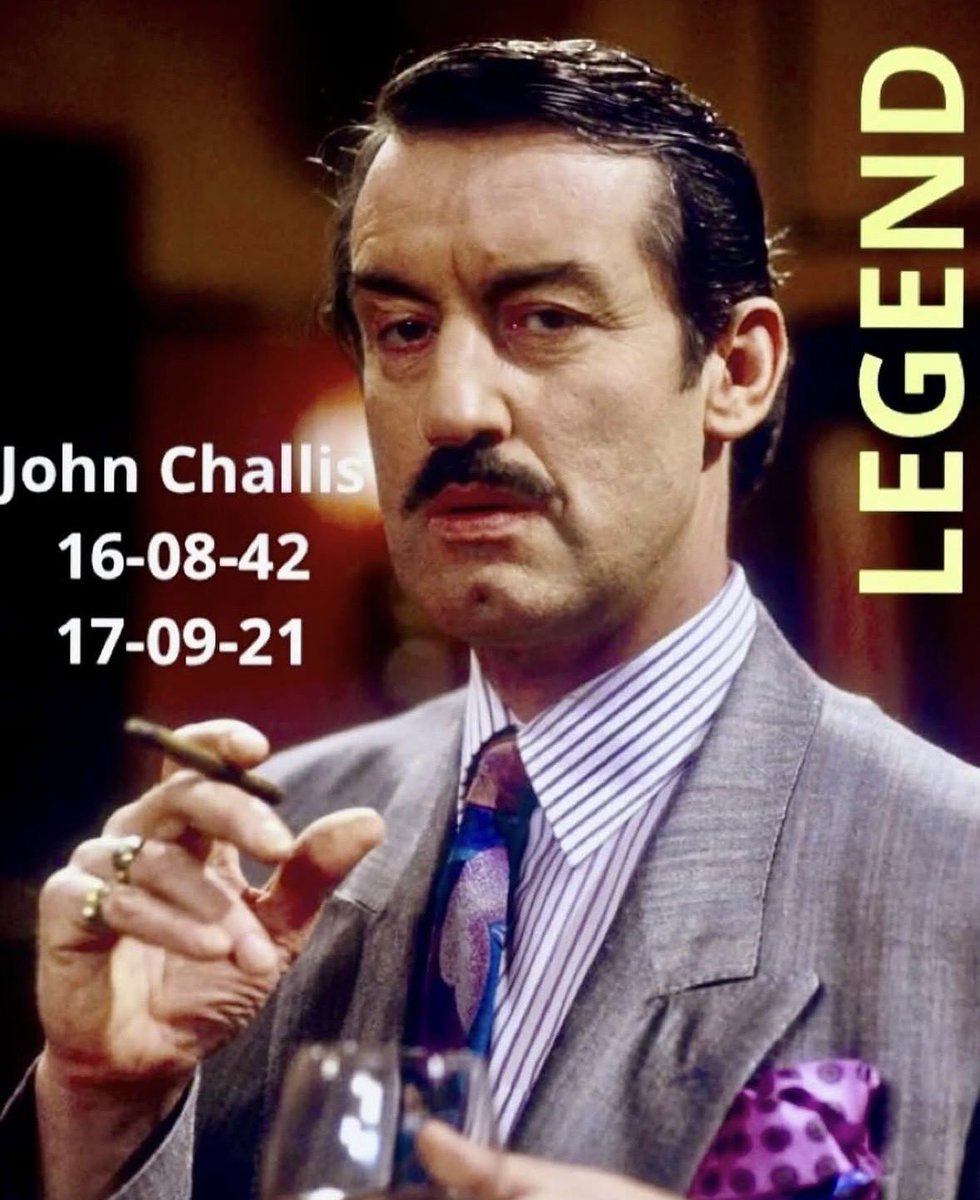
Today we remember our much missed friend, the irreplaceable John Challis on his birthday
There are many many things we could say.. the easiest and most honest is.. Thank You for being you!