CLIPT lab video #5 available for your viewing pleasure! It's always challenging to weigh large amounts of sediment into fragile tin capsules--here I show you some tips
https://t.co/3395dxjW3U
Episode 4 of the CLIPT lab video series leads users through the process of encapsulating samples for bulk C and N stable isotope analysis
https://t.co/JBkLZeiyrV
Ever wonder what goes on inside a stable isotope mass spectrometer? Check out the CLIPT lab video Episode 3: How a Stable Isotope Ratio Mass Spectrometer works! https://t.co/db6Y95izi0
@HopeJahren Breaking out of twitter hiatus to send you something that will always cheer you up-- Scrounged lab equipment!! Ain't it a beauty? I have big plans for it
Open #Postdoc Position! (please share)
Come work with us to study past climate using modern and fossil wood.
Members of all underrepresented groups are encouraged to apply.
https://t.co/pYHsnbAQXF
Check out the original announcement for the launching of our CLIPT lab video series. It was a fun and timely project that we began when we had to shutdown in April. We hope you enjoy them!
What happens in a stable isotope lab? Bill Hagopian from UiO's @JahrenLab CLIPT (CLimate Interpretation of Plant Tissues) Lab provides an introduction
🌱🌄⏰ @HopeJahren @biovitenskap Episode 1: https://t.co/yEqXfiLW68
Until that break, though, I will be working on our modified Elemental Analyzer Stable Isotope Mass Spectrometer system #Science#ProTip label everything!
One of our favorite places just outside of Oslo--Sognsvann! Need a break? Hop on the light rail and in a few minutes you are surrounded by woods and lakes...
Meanwhile...back at the UiO Phytron, all systems are operational (this is actually a vintage photo of the original greenhouse environmental controls ca. 1970's!)
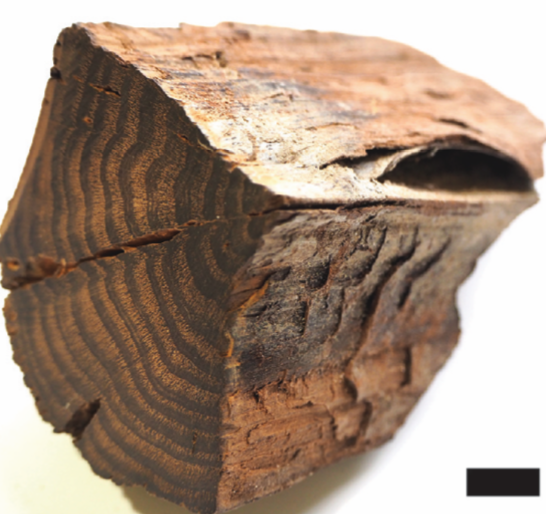
Another image of Paleocene/Eocene age permineralized wood. Image taken with a DSLR and image stacked using ZereneStacker. Still learning how to use it.
Check out this photo of permineralized Eocene age (~45 million years old!) wood from Svalbard, Norway. We dissolved away the calcium carbonate with 1 M HCl to reveal nicely preserved intact organic cell structure! (from the UiO Natural History Museum collection)