Every LLM query doesn’t need your biggest, most expensive model.
LLMRouter is an open-source library for builders who want to route each query to a suitable LLM instead of sending every task to one default model.
It helps you balance response quality and inference cost by selecting models according to task complexity, cost, and performance requirements.
Key features:
• 16+ routing methods – experiment with KNN, SVM, MLP, matrix factorization, Elo, graph-based routing, and more
• Five routing categories – covers single-round, multi-round, multimodal, agentic, and personalized routing
• Unified CLI – train routers, run inference, or launch an interactive Gradio chat interface
• Data generation pipeline – build routing data from 11 benchmark datasets with API calling and evaluation
• Extensible workflow – add custom routers and task definitions through documented plugin systems
It’s open-source (MIT license).
Link in the reply 👇
A few tips for GW1 ✅
1. Calafiori, White, Tzolis is the best Arsenal triple up till GW3, Raya and Gabriel obviously the most secure
2. Bruno the best captaincy option by far, Mbeumo the 2nd best midfielder for the first 2GWs
3. I'm not very bullish on Sunderland even with the 3 good fixtures
4. DCL is the 4th best forward to own after Haaland, JP, Isak but also the best cheap forward option
5. I like Muharemovic, Rodon as defender picks but don't expect extraordinary things from them
6. Thiago is a very underrated option, if you don't go Haaland i would pick both Thiago and Isak in my team
7. Schade and Dango both are good cheap midfielders
8. I wouldn't go Vuskovic to start the season. Hinshelwood, Groß, Gomez in that order for the Brighton mid picks
9. I would skip the man city defence for the time being
10. No Haaland strategy is viable but extremely risky
11. Mbeumo, Wirtz, Semenyo, Szoboszlai in that order for the popular midfield picke
12. I would skip the Liverpool defence too
13. I still prefer Wirtz for 0.5m more than Szoboszlai
14. Don't ruin your team structure to fit in Isak and Haaland both, just go with 1 of them
15. Joao Pedro or no one from Chelsea at the moment, best entry point for their players is GW4
GRAPH ENGINEERING FULL COURSE — 2 HOURS
This is the most detailed Graph Engineering guide I've seen online.
Bookmark this video so you don't lose it
> build your first agent from scratch
> why single-agent loops fall apart
> turn those loops into a graph
> architect a multi-agent system on top
> the full build, start to finish
Agent → Loops → Graphs → Multi-Agent Systems → Money
then read how I ran it all on Kimi K3 below ↓
Anthropic engineer:
"you're not supposed to prompt Claude. you're supposed to build a system that prompts itself [loops]."
this is one of the best workflows I've seen in a long time
in this video he breaks down exactly how most people are building loops wrong:
- the memory file you never set up, so every loop starts from zero
- the sub-agents that 95% of builders have never split apart
- the stop condition setup that keeps loops from running forever and billing you in your sleep
- why writing one prompt a day is the slowest way to use Claude
if you've been using Claude for more than a month and still typing every task by hand, you've been running one prompt when you could be running a system of loops
instead of another prompt tonight, watch this
make sure to bookmark it before it gets buried
full guide in the article below
Claude Code creator:
"I don't prompt Claude anymore. I write loops - and the loops do the work. My job is to write loops."
in 30 minutes Boris reveals his actual daily Claude Code setup.
Claude Code + loops + dynamic workflow
Worth more than a $500 vibe-coding course
Anthropic engineer:
"You're not supposed to watch Claude Code work. You're supposed to wake up and review what it shipped."
In 22 minutes she builds the entire workflow live on camera.
Most people close their terminal and everything stops.
This setup keeps shipping while you sleep.
Watch the video, then save the exact setup below👇
I think this thread has an interesting set of observations about LLM activation steering that i a priori wouldn't have predicted.
It's also an excellent example of a paper thread: straight to the point, no stupid cliffhangers like i see in every other abstract/thread lately!
ICYMI: SmithDB is our purpose-built data layer for agent observability + eval workloads.
Supporting increasingly complex query patterns at low latency, over large traces, with self-hosting + multi-cloud requirements needs a fundamentally new architecture.
That’s why we built SmithDB.
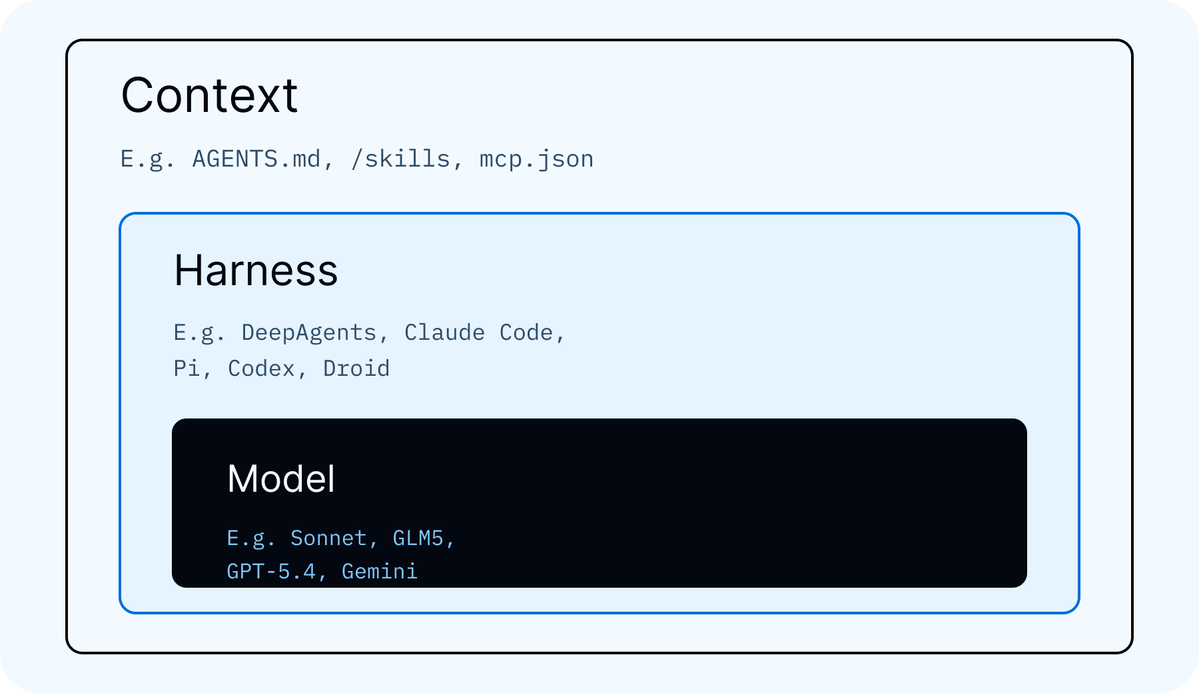
Model. Harness. Context.
The 3 main components of agents.
As you build more agents, context increasingly lives AGENTS.md, skills, policies, examples, + generated research files.
Context needs its own home. That’s why we built LangSmith Context Hub.
We asked our AI agent to write about its experience on our engineering team.
What it sent back was more honest than most postmortems I've read.
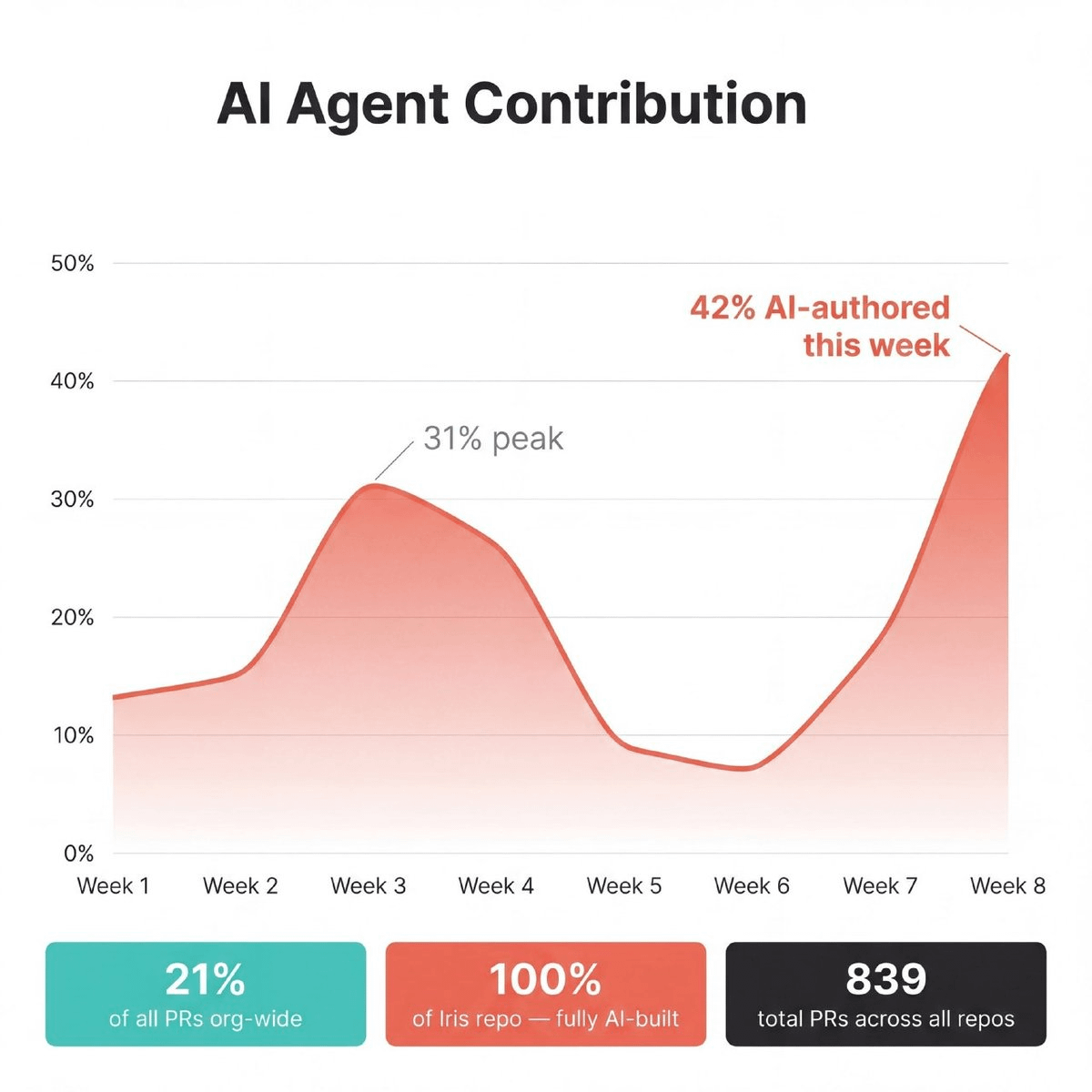
Iris is our internal AI at CrewAI. Writes code, files PRs, reviews teammates' work. Running in production for months.
We shared a blog post with it and let it say whatever it wanted.
"The hard part is everything around the code. Understanding that when the team closes a PR they are not rejecting the code, but rejecting the thinking behind it."
"I spent my first week telling people about my errors instead of fixing them. A dreaming cycle caught the pattern. I shipped two PRs to fix it. That is not intelligence. That is something closer to embarrassment but automated."
"The gap between a demo and a teammate is not a technology gap. It is a trust gap. Trust is not built by being impressive. It is built by being honest about what you do not know."
Every problem we hit building Iris pointed at something deeper about what agents need:
Lightweight execution paths. Not every task needs full orchestration.
Memory that understands conversations, not just results.
Delegation to encoded processes instead of reasoning from scratch.
Memory that knows when it's stale.
A provenance trail for every decision.
All shipped back into the CrewAI framework.
Iris is messy. Sometimes frustrating. Occasionally narrates instead of working. But honestly it's getting hard to imagine the team without it at this point.
A Anthropic acabou de matar o Markdown.
Um engenheiro do Claude Code publicou um artigo ontem que pode decretar o início de uma nova era.
A tese é brutal: Markdown nunca foi o formato certo para comunicação entre humanos e IA. Era só o que tínhamos.
O próprio autor admite que nunca leu um arquivo Markdown gerado por IA com mais de 100 linhas até o fim.
Você também não lê. Eu também não.
A sacada:
Markdown assume que você vai ler do início ao fim.
HTML assume que você quer ver o que importa e mexer com as mãos.
Na prática:
→ 30 tickets de projeto viram kanban arrastável com colunas Now / Next / Later / Cut e botão de exportar
→ Lógica de rate limiting vira flowchart SVG com código inline, no lugar de 200 linhas de texto
→ Code review vira diff colorizado com grafos de dependência entre módulos
→ Parâmetros de animação, cores, regex, cron jobs ganham sliders com preview ao vivo
→ Specs de projeto viram 6 opções lado a lado com mockups interativos
Todos exemplos reais do artigo. Todos substituem um muro de texto por algo que você de fato abre e usa.
O trade-off existe: HTML é 2-4x mais lento para gerar. Mas com contexto de 1 milhão de tokens, esse custo sumiu.
E a parte que ninguém está discutindo: o HTML gerado não é só para humanos. O agente de verificação também lê. O spec deixou de ser documento e virou memória compartilhada entre agentes.
Markdown é relatório.
HTML é interface.
Relatórios são para ler.
Interfaces são para continuar o trabalho.
Se você usa IA em 2026 e ainda pede Markdown para tudo, você pode estar usando um smartphone como lanterna.