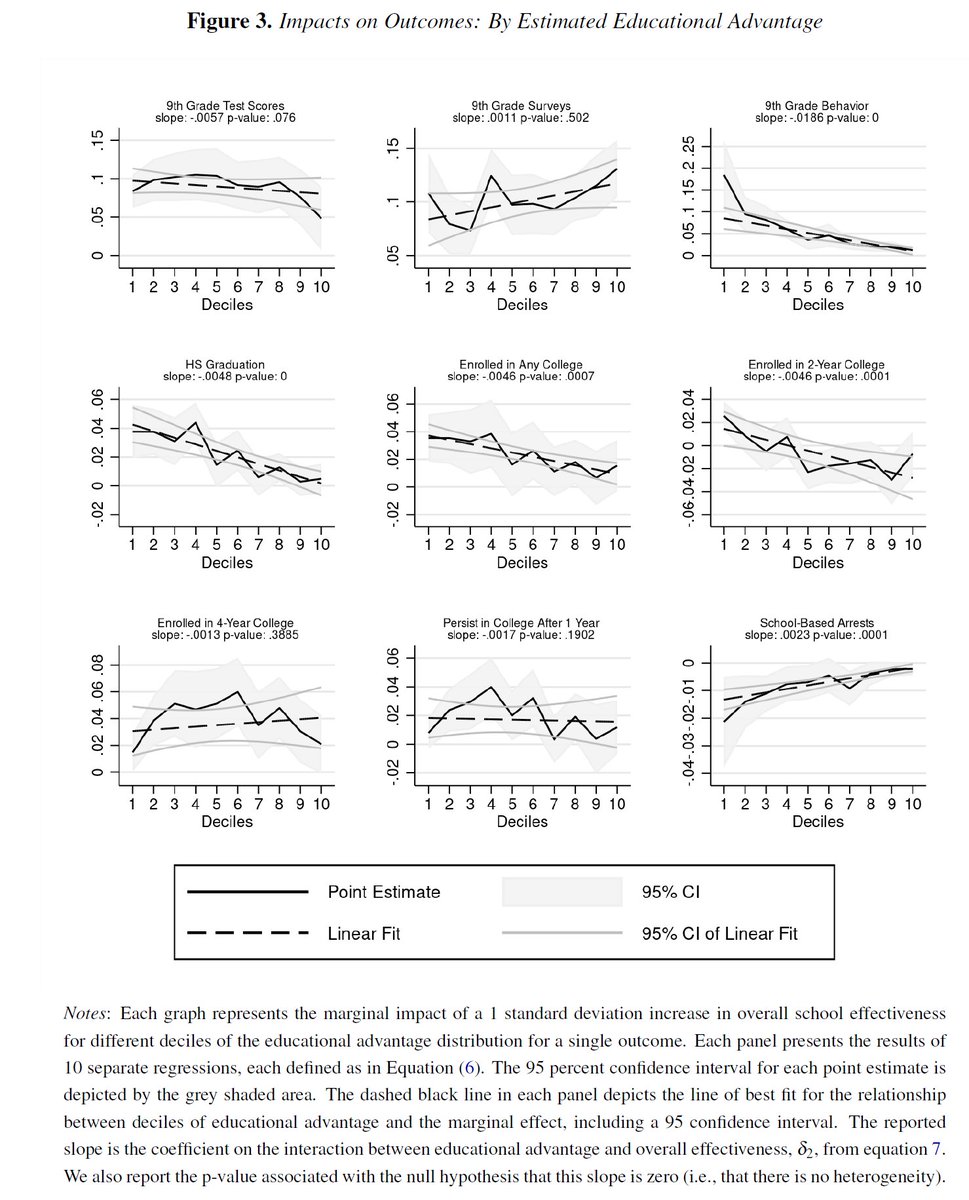
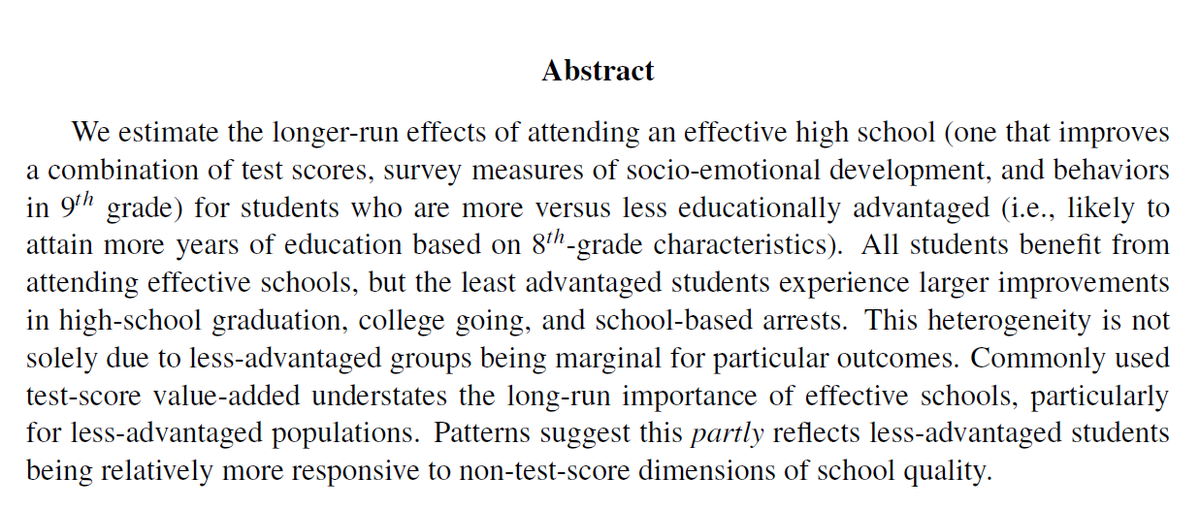
Delighted that "Who Benefits From Attending Effective High Schools?" with Sebastian Kiguel, Shanette C Porter, John Q Easton has just been accepted for publication in the Journal of Labor Economics.
WP version: https://t.co/S0E3iRTdhl
"Quantifying school quality has the unintended consequence of increasing the geographical concentration of advantage, potentially entrenching inequalities." https://t.co/TPIsmMg1W8
"In districts that need to stagger start times, it may be advisable for elementary schools to start earlier to accommodate later secondary school start times." https://t.co/RLiYFMZWw4
U.S. Score Gaps Widen Consistently, Pattern Not Mirrored in Other Education Systems https://t.co/QqQl7ehwj9
Changes Between 2011 and 2019 in Achievement Gaps Between High- and Low-Performing Students in Mathematics and Science: International Results From TIMSS
🚨🚨Check out this new #EdWorkingPaper from @edu_tuan, Chanh Lam, and @Paul__Bruno:
Is there a national teacher shortage? A systematic examination of reports of teacher shortages in the United States
https://t.co/jFYPRifhqq
Diversifying Neighborhoods, Diversifying Schools? The Relationship Between Neighborhood Racial Change and School Segregation in New York City - Kfir Mordechay, Jennifer B. Ayscue, 2022 https://t.co/5kx4zphZSm
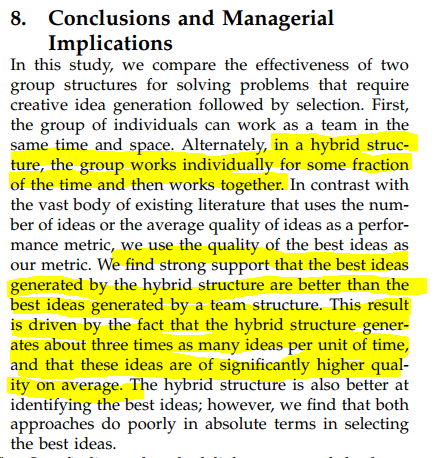
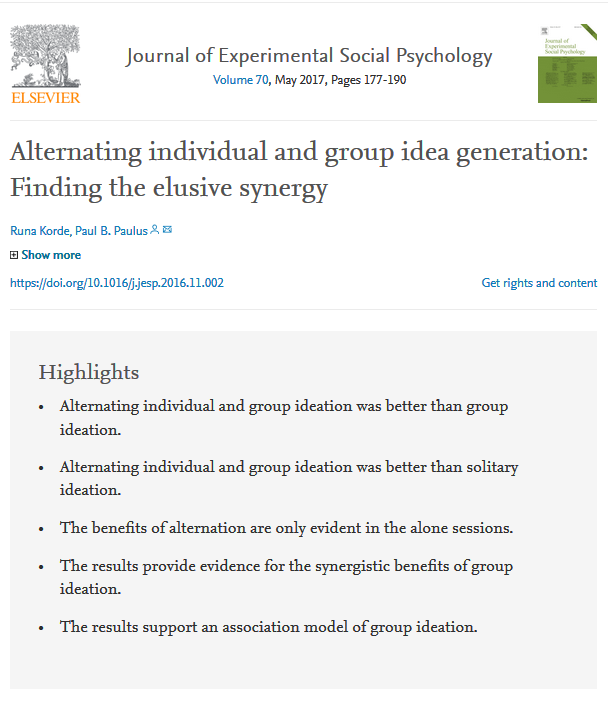
With few exceptions, you should NEVER start generating new ideas in a group - always start with people writing ideas alone and only then move to a group setting. (We've known starting with groups is worse for 50 years, but people still keep doing it since it feels more creative)
Start your meetings on time! This paper finds that meetings which start late don't just annoy participants, they are also much less productive and creative.
And making a habit of lateness hurts. Just the anticipation of a late meeting has similar effects https://t.co/W7SqLU0BJC
MA legislature cutting the estate tax when lower income people in Massachusetts already pay 10% of their income in taxes whereas the top 1% of earners pay 6.8% #FairShare https://t.co/pSdfL5Ljgo
Economic and racial integration, and school choice in NYC: District that set ambitious prioritization targets and eliminated academic screens lowered economic segregation by 55% and racial segregation by 38% https://t.co/vGHcSAe7x8
Better funded public schools have widespread benefits:
🧑🏫For every $19.85 spent per student in a public school, one crime was averted. https://t.co/wAqmaThswC
🧑🏫“Increased per pupil spending... helped reduce the inter-generational transmission of poverty.” https://t.co/Q0KNMie9lA
@emollick Not sure how 'work-life balance' is defined. But these findings seems to not align with trends of the higher earners working longer hours (https://t.co/PmNCoZeQsx, https://t.co/EqRMnZ4p7U, etc)
Between 1997-2008, voters in Los Angeles approved a series of bonds dedicating around $20 billion in funding to the construction, expansion, and renovation of hundreds of schools. What was the impact of this massive investment in public goods? Julien Lafortune and I investigated.
NEW REPORT:
Segregation and School Funding: How Housing Discrimination Reproduces Unequal Opportunity
(w/@schlfinance101 and @drprestongreen)
https://t.co/h8Axhy2cfb