New paper from my lab out in NAR. We found that young L1 elements are controlled by SETDB1 and H3K9me3 in human neural progenitor cells via a mechanism independent of HUSH and TRIM28/KZNFs.
https://t.co/uo0QhFVm17
New preprint from our lab: ‘Retroviral insertions contributed to the divergence of human and chimpanzee brains’. Very proud of this piece which took almost a decade to finish.
https://t.co/Pu9m6zceA6
Our work provides a new genetic mechanism that influenced potentially both speciation and development of the human and chimpanzee brains. Big shoutout to all our collaborators! This project was truly a fantastic collaborative effort.
New preprint from our lab: ‘Retroviral insertions contributed to the divergence of human and chimpanzee brains’. Very proud of this piece which took almost a decade to finish.
https://t.co/Pu9m6zceA6
In this manuscript we describe how an ancient retroviral pandemic likely played a significant role in primate evolution, potentially through a population bottleneck early in ape evolution.
LINE-1 retrotransposons mediate cis-acting transcriptional control in human pluripotent stem cells and regulate early brain development. A study by @JakobssonLab & co-workers in @CellGenomics#SfN2025 https://t.co/psbu0WYxWt
Updated version of our preprint on how SETDB1-mediated H3K9me3 controls the expression of L1 elements in human neural progenitor cells. The new analysis in this revised version supports a role for active DNA demethylation of L1s in the absence of H3K9me3.
https://t.co/q7pXxtcEjb
LINE-1 retrotransposons mediate cis-acting transcriptional control in human pluripotent stem cells and regulate early brain development https://t.co/OQC1s8DPkq
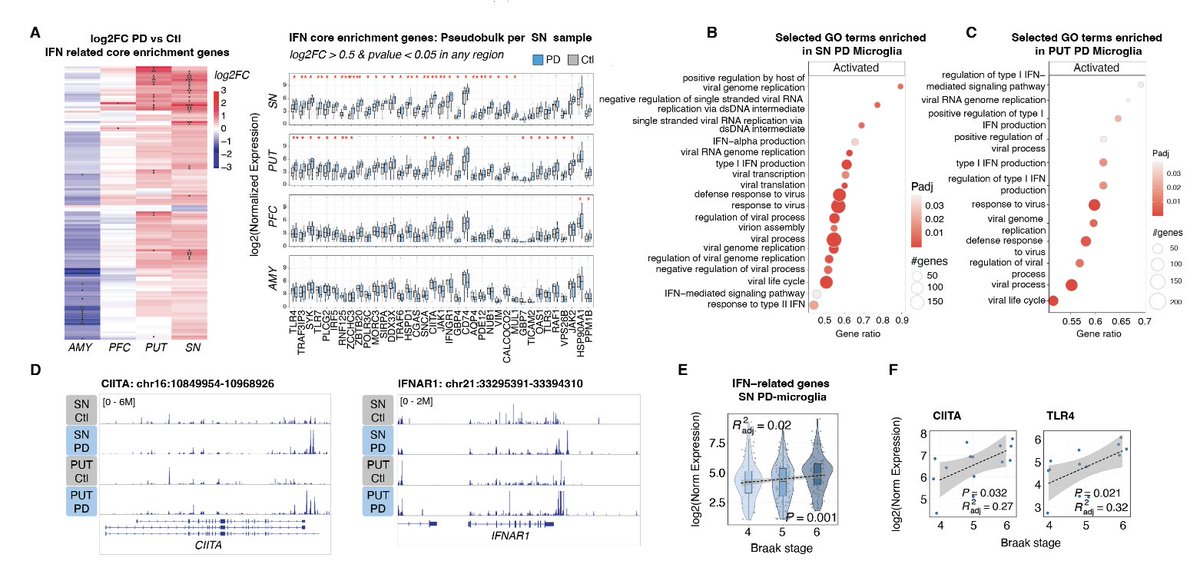
New preprint from my lab! We describe how transposable elements are activated in Parkinson’s disease, which is linked to an interferon response. We believe this study significantly advances our understanding of transposons in the human brain.
https://t.co/nG67CJSVuO
LINE-1 retrotransposons mediate cis-acting transcriptional control in human pluripotent stem cells and regulate early brain development https://t.co/jBy0rG3FFp
#TransposonDay2025
New manuscript from our center to which we contributed. Provides a mechanistic explanation for how L1s are silenced during early human development.
https://t.co/CjHMa2MBr8
New preprint from our lab! Why is not everyone working on Transposons?
Loss of H3K9me3 maintenance in human neural progenitor cells leads to transcriptional activation of L1 retrotransposons
https://t.co/eROIUMKtae
New preprint from our lab! Why is not everyone working on Transposons?
Loss of H3K9me3 maintenance in human neural progenitor cells leads to transcriptional activation of L1 retrotransposons
https://t.co/eROIUMKtae
In our latest preprint, we introduce the first human cell-type-specific brain aging clocks from high-precision postmortem samples. Using single-cell transcriptomics, we uncover distinct aging patterns and new insights into neurodegeneration. #BrainAging
https://t.co/dQzo7VK0KT