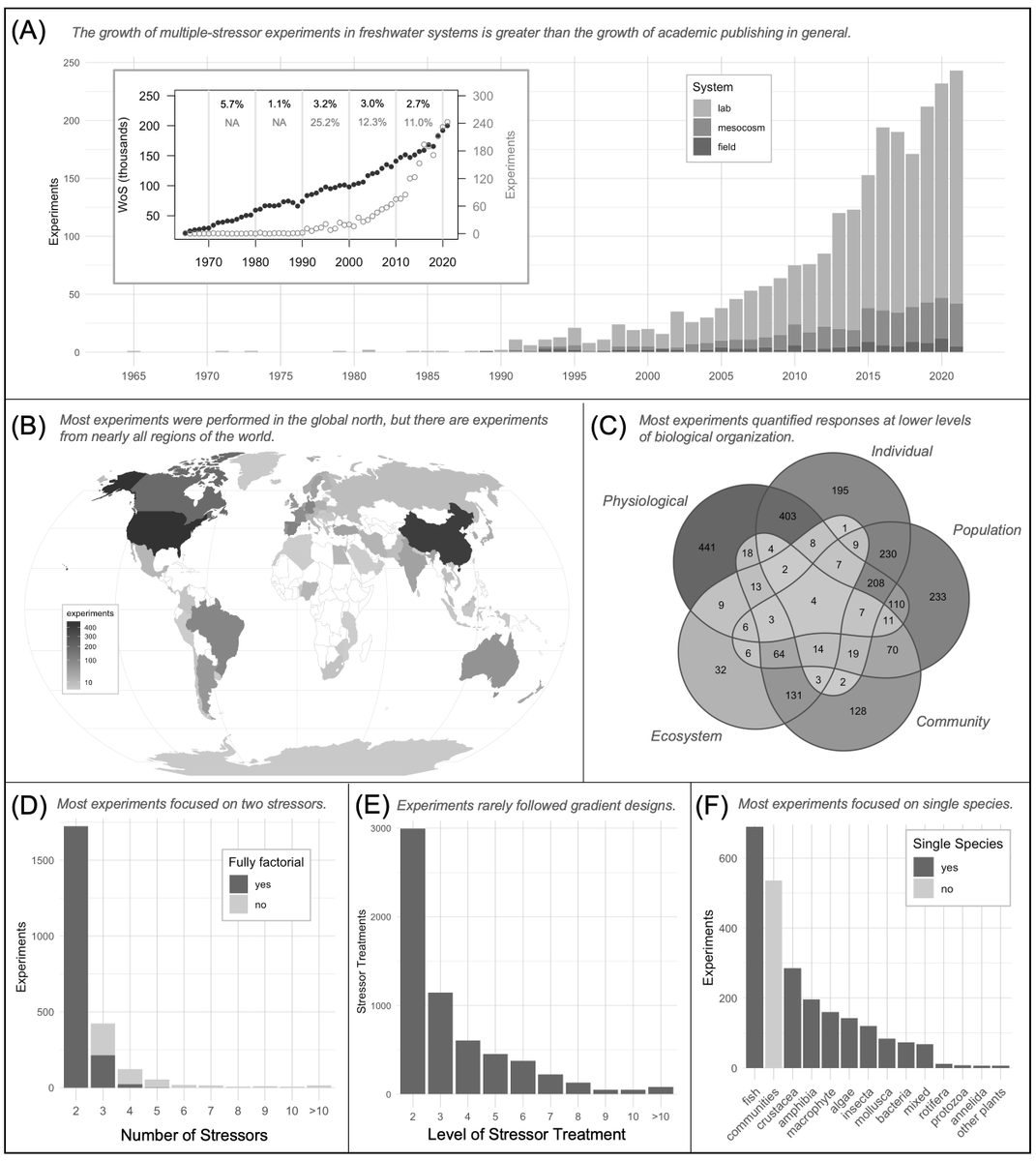
I’m really excited to share our new synthesis of 2,396 (!) multiple-stressor experiments conducted in freshwater ecosystems that’s just been published in @Ecology_Letters: https://t.co/y5PRcJxHX0
Thrilled to share that the first article from my MSc thesis research has been published in Chemosphere! Using a mesocosm experiment, I explored how microplastics impact lake ecosystems.
For the next month, you can access the full article for free here:
https://t.co/6ujUDxY3Go
Thinking about doing a postdoc? Wondering what we do all day?? @chris_zie @sofiavanmoorsel and I tracked over 19 months (!) of work & compared it to our junior postdoc data from 6 yrs ago - check out our article! #AcademicChatter#AcademicTwitter#phdchat https://t.co/1kkI43ost3
Super excited to have received @LeverhulmeTrust funding with @stefanako71 to explore how environmental DNA analysis can turbo-boost the reconstruction of aquatic food webs across habitat types and over multiple time scales. Watch this space for 2 x 3-year post doc opportunities.
To say this was a labour-of-love is an understatement - credit to @KatMarSci introducing 'QIMS - Quantifying the Impacts of Multiple Stressors - a new experimental platform for robust #multifactorial experiments in #benthic ecosystems' @TCD_NatSci
https://t.co/fWzDBFdzos
In this work we looked at the effect of specific antibiotic resistance mutations on the ability of Pseudomonas to invade bacteria from the respiratory microbiome 🦠
But how did we do this?
📢 A short methods explanation thread on our assay 🧵: https://t.co/lWSoxJVgZx (1/10)
I’m really excited to share our new synthesis of 2,396 (!) multiple-stressor experiments conducted in freshwater ecosystems that’s just been published in @Ecology_Letters: https://t.co/y5PRcJxHX0
There are lots more details in the paper (https://t.co/y5PRcJxHX0), so feel free to reach out if you have any questions or if you’re interested in using the dataset for your own research (e.g., to do a cool meta-analysis)!
Thanks to funding from the @BritishEcolSoc, we were able to make an interactive version of the dataset that can be used to quickly find publications relevant to your work, to identify knowledge gaps, and to contribute additional information to future versions of the dataset.
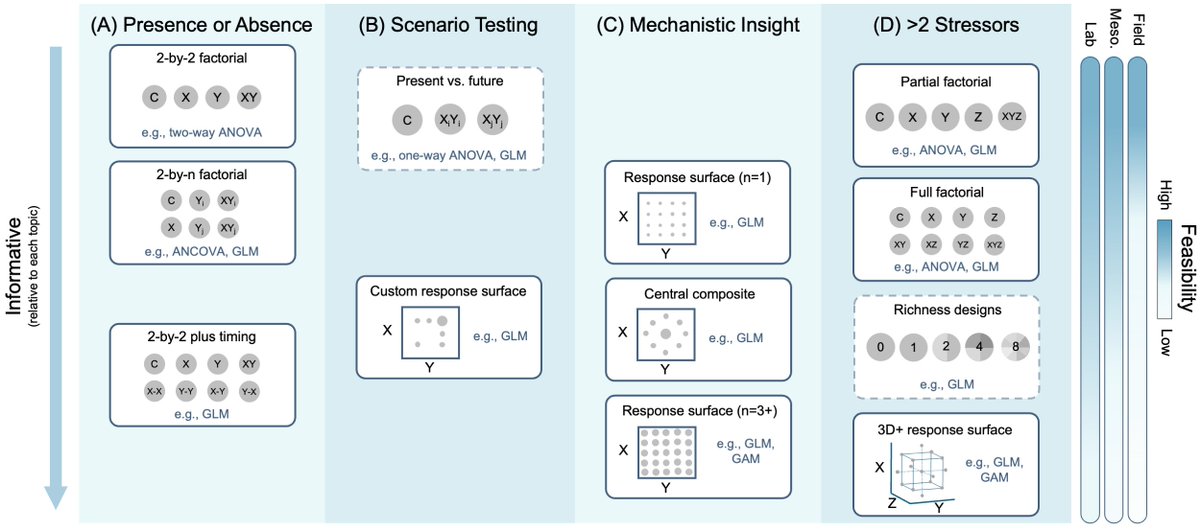
We also ask if there is an “ideal” multiple-stressor experiment by comparing different experimental designs based on how informative and feasible they are.
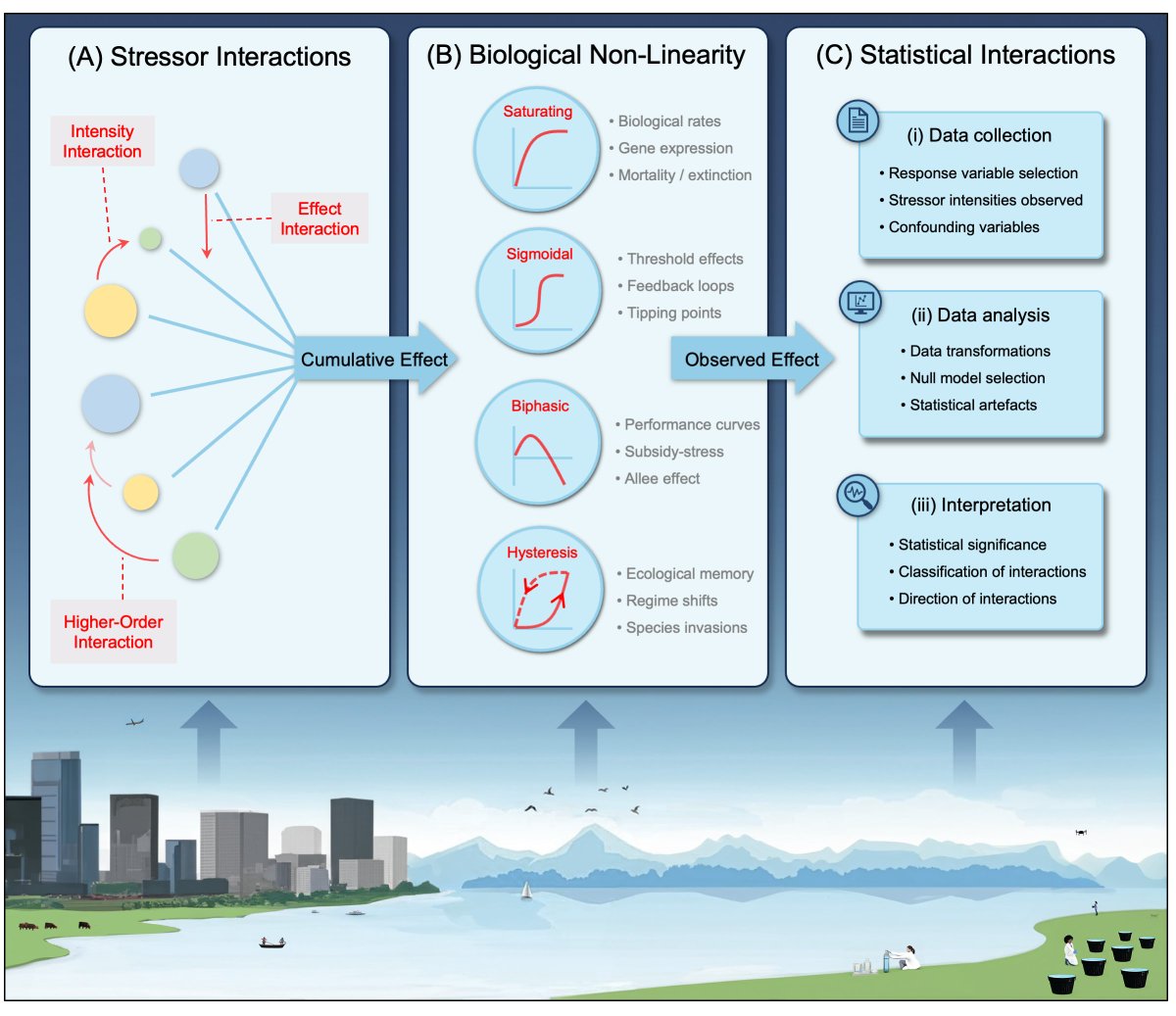
In our synthesis we explore whether or not the statistical interactions observed by these experiments actually reflect the stressor interactions that researchers are interested in, and we propose a framework (below) to help understand this.
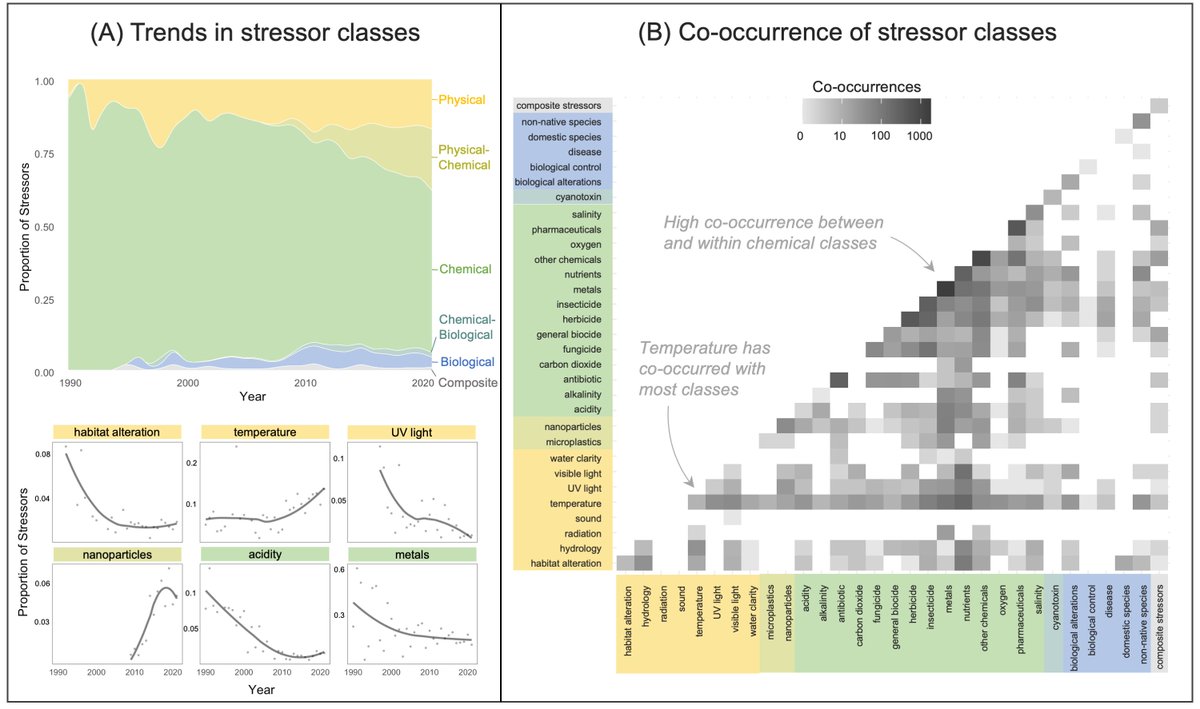
The relative interest in different stressors has fluctuated over time and some combinations of stressors are far more likely to be studied than others. Temperature has become more popular in the past decade and has been paired with virtually all other types of stressors.
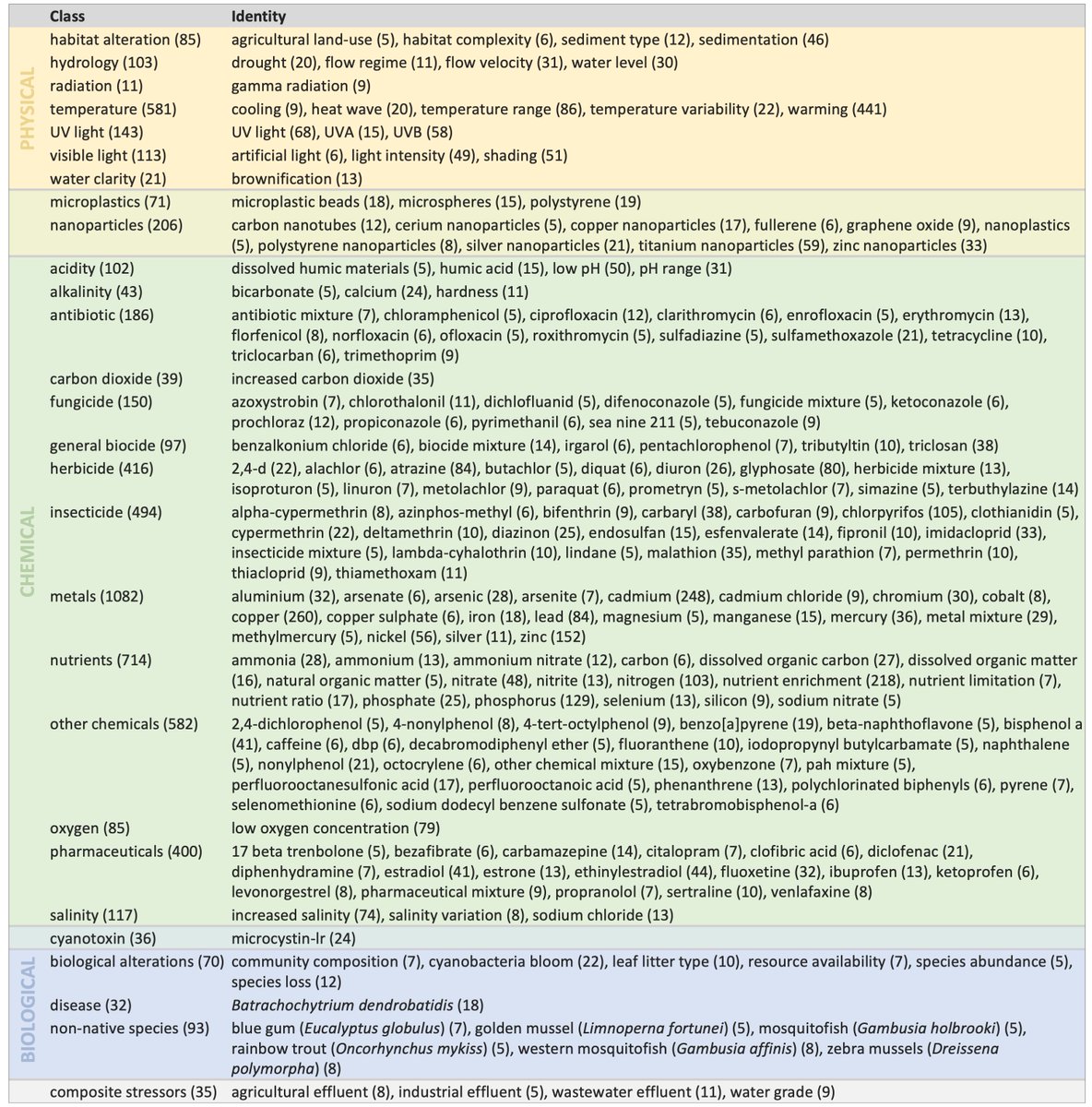
There’s been a lot of work done on stressor interactions – about four or five studies (from freshwater systems alone) are currently being published every week. These experiments have studied the effects of over 900 stressors (>80% of these being different chemicals).
Multiple-stressor research is very diverse, so doing comprehensive reviews with traditional tools is almost impossible. We used a machine-learning approach to screen one quarter of a million abstracts and found >2300 studies – an order of magnitude higher than previous reviews!