Psychology researcher at The University of Queensland, Australia. I investigate reasons for low empathy between people of different political beliefs. he/him
Ever wondered how people with opposing politics start or maintain loving relationships? This podcast episode (This American Life) tells 3 stories of people trying to navigate this dynamic. The 1st story about navigating biases in the news gets me thinking
https://t.co/WUtXQW8g2Q
Can we...just accept that we suck at this?
I want to tell you a story that has made me kinda hopeless about Twitter's ability to affect positive things happening, and it starts with this tweet from Hillary Clinton.
https://t.co/CCWzdwPSUu
High-quality listening can be a valuable tool for bridging attitudinal and ideological divides https://t.co/Ft0lg7Zny6
Quality listening (attention, understanding, & positive intentions) makes people will feel more connected and less defensive, which reduces polarization.
We just secured a huge grant to help fund our new study on the impact of social media around the globe!
We now have funds to subsidize data collection in nations that have been understudied in the past.
To learn more or join our international team: https://t.co/5pIduQ8bY1
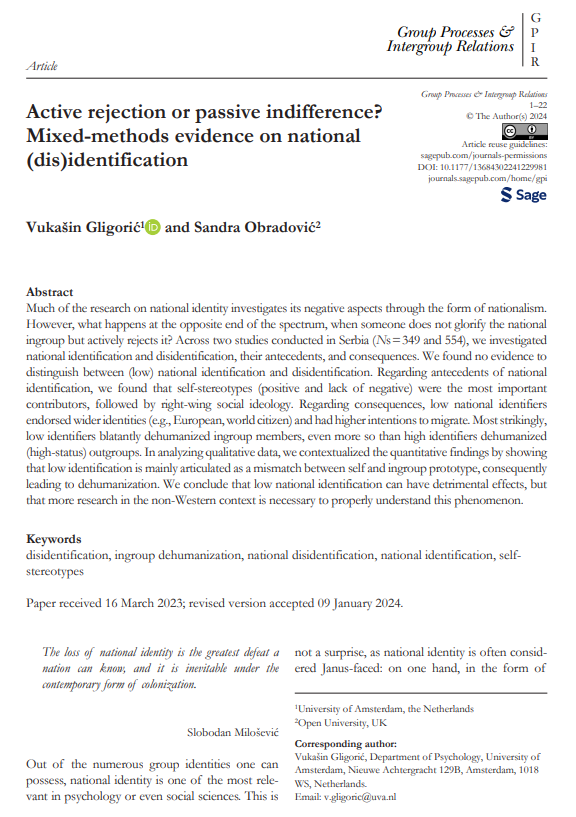
Our research on national (dis)identification is published in GPIR!🤩
We have been working on it since 2021😱 @DrS_Obradovic
In the paper, we quote Slobodan Milošević, cite Mao Zedong, discover❗️INGROUP❗️dehumanization, and make other controversial maneuvers
What we found:
1/3
NEW: an ideological divide is emerging between young men and women in many countries around the world.
I think this one of the most important social trends unfolding today, and provides the answer to several puzzles.
🚨 New Publication Alert 🚨@kurtjgray and my chapter on the role of victimhood in morality and politics was recently accepted at AESP. We review a wide range of literature to understand how victimization shapes our most divisive conflicts. A 🧵 1/8
https://t.co/LK2uULlWJG
We are hiring! Looking for a Level B/C continuing position in Social Psychology and/or Research Methods at the School of Psychology, The University of Queensland.
For full details see: https://t.co/RMeoTuv1d7
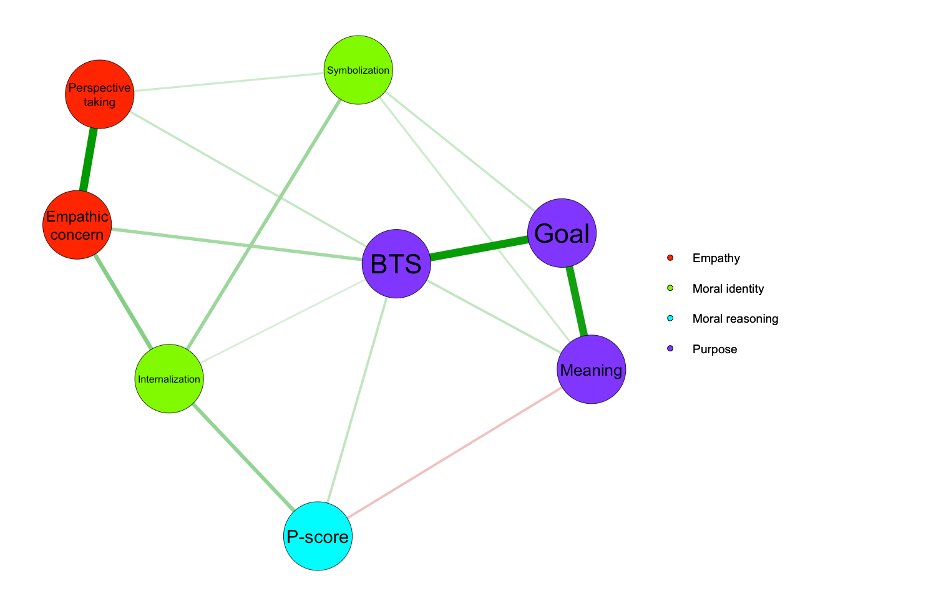
My paper about moral functioning network (between reasoning, empathy, identity, and purpose) will be published in Personality and Individual Differences in 2024! Preprint @PsyArXiv https://t.co/twgK5t98d8 See replies for details. @UAESPRMC @UA_EDU_ (1/3)
Correcting misperceptions of the other political party does not robustly reduce support for undemocratic practices or partisan violence
https://t.co/MbtgNlPjBd
@RogertheGS Thanks for the fascinating perspective, Roger. Over the past few years, I've had to grapple with the idea that empathy is not always ideal and that moral judgment may be justified. It seems like a natural progression to question whether polarisation is even the real problem!
My take: Both liberals and conservatives seem to let moral judgment get in the way of empathy, but that doesn't mean both sides are equal. To reduce polarisation and improve partisan relations, we need to address the moral judgment AND the reasons for those differences. [14/14]
I’m proud to announce that my article, “Empathic Conservatives and Moralizing Liberals” has been published in Personality and Social Psychology Bulletin. https://t.co/77g5BWkiCR This is my first first-author paper, in collaboration with @socialneuro and @FionaKateBarlow. [1/14]
If there’s good news here, it’s that the average person on either side DOES feel empathy for the sufferings of their opponents and would help if asked. People are just less sure of that decision when it’s an opponent in need vs. a political ally or neutral target. [13/14]