American Catholicism is largely just intellectual Catholicism. Heavily influenced by Protestant converts and the American Protestant culture they converted from. It’s why the videos of Holy Week in Spain get so much traction on this site. The American convert looks on and says look how beautiful Catholicism is while failing to produce our own unique Catholic culture. Im not knocking converts. Just making an observation. I think outfits like Catholic Answers are great for answering Protestant objections to Catholicism, but they’ve also created a Protestant ethos where Catholicism becomes something like faith alone plus the sacraments. It’s still mainly based on what you believe rather than how the faith is embodied. It’s quote mining certain scriptures to combat the quote mining of other scriptures. The closest thing we get to a genuine Catholic culture is at ethnic parishes that have a remnant preserved from their European heritage. A polish parish, or Italian parish will still do processions but there’s nothing that is unique to America. We should work towards changing this.
If you want to revitalize a Roman Catholic parish, here’s what you have to do:
Priests (and when applicable, deacons):
1) Offer frequent times for Confession, and no, not just “by appointment”.
“But why would I offer more confession times when people barely come to our Saturday half hour slot?” Just offer it. I can’t tell you how many times I’ve seen priests increase the opportunities for Confession even when it wasn’t in response to a demand, and somehow, people not only started filling up the Saturday time slot, but the others, as well!
2) Offer the traditional Latin Mass, if possible. If not, offer the Novus Ordo as reverently as possible, by following the GIRM and infusing within it any traditional elements, as allowed. The Mass is the most important part of a priest’s life, and its worthy celebration will pay dividends for the life of your local parish. Move away from the 4-hymn sandwich. Prioritize a schola cantorum and the organ. If you can’t yet sing the Propers in Latin, sing them in English!
3) Offer perpetual Eucharistic adoration, if possible. If not, offer Eucharistic adoration frequently. Many people think that the key to fixing a parish is by implementing programs, doing all sorts of activities. There is no pastoral plan greater than the worship and praise of the LORD in the Blessed Sacrament. Put that first, and watch everything fall into place.
4) Preach brief, often, and well. The brevity of homilies allows for people to grasp 1-2 concepts clearly. Info-dumping everything you learned in seminary is not going to result in a successful take-home message. But preach whenever possible: at baptisms, funerals, daily Mass, parish Vespers. Work on your Sunday homily throughout the week. Pray on it. Consult secondary literature, such as biblical commentaries. Don’t avoid preaching on controversial topics.
5) Offer opportunities for parish fellowship. In between Sunday Masses, have coffee and social time. Be present for it. Promote it! In an era dominated by the digital, these sorts of in-person experiences allow authentic community to develop. Young adult (18-30) groups are great. Think also of marriage & family apostolates.
For laity:
1) Show up. Obviously, go to Sunday Mass. But as your schedule allows, attend parish lectures, Bible study, Lauds/Vespers, bazaars and festivals, etc. The American Catholic’s social life was once dominated by the parish. I think it’s time we bring that back.
2) Tithe, donate money, time, and your talents. As appropriate to your current situation, make financial sacrifices to allow the parish to continue its work. Don’t just throw $5 in the basket if you’re driving a Tesla Model X. A good rule of thumb: if you’re spending more money on fast food every month than you are in the collection basket, it’s time to reevaluate your discretionary income.
3) Join parish organizations, like the Knights of Columbus, choir, CCD/Faith formation. Many of the Millennial generation grew up thinking “eh that’s the stuff for the older people.” That’s how these things die (also, we’re starting to become those “older people”). Ask your pastor where your talents meet the parish’s needs.
4) Love your priest (even if you don’t like him!) Do not treat your priest like a sacramental dispenser. Find out his birthday, interests, favorite food. Invite him over for a family dinner or take him out to lunch. While respecting proper boundaries, invite him into your life as an important person. Thank him, and pray for him!
5) Invite someone to Mass with you: a friend, coworker, or even a stranger. You are the primary agent by which the parish engages the world. “Come and see”
___
Certainly, there are more ways to revitalize a Roman Catholic parish, so feel free to list them below. But in every healthy parish I’ve seen, these elements were present. As our Western culture continues to decline and fragment, the parish might be one of the few places we can rebuild it.
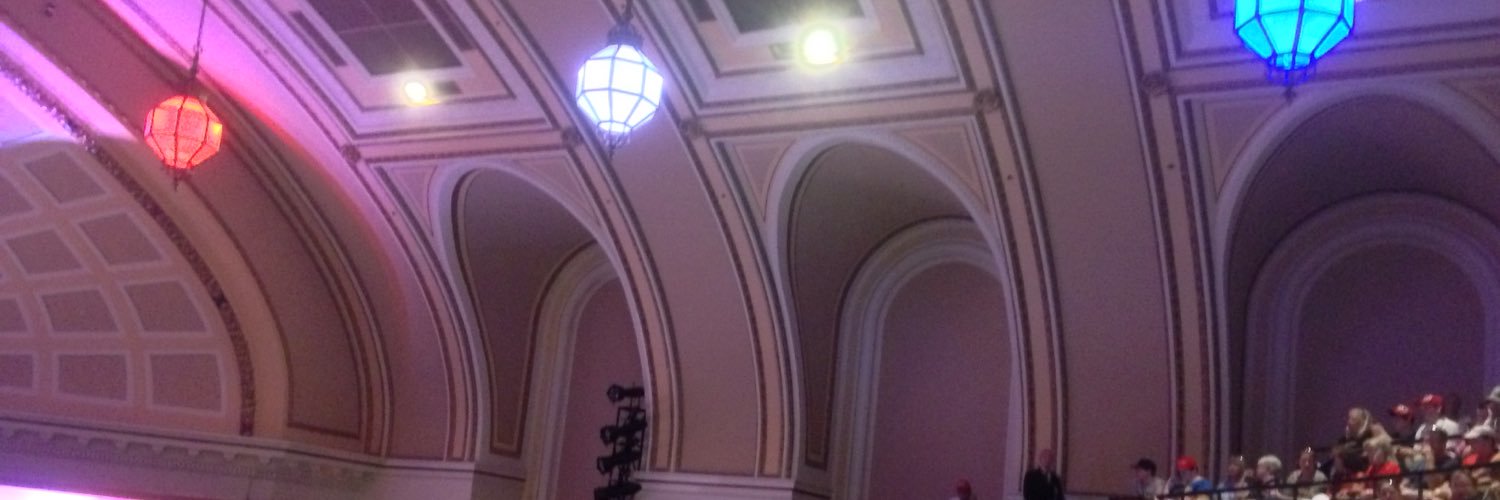
📍 Mission San Rafael Arcángel, California
A grammar book walks into a bar
* An Oxford comma walks into a bar, where it spends the evening watching the television, getting drunk, and smoking cigars.
* A dangling participle walks into a bar. Enjoying a cocktail and chatting with the bartender, the evening passes pleasantly.
* A bar was walked into by the passive voice.
* An oxymoron walked into a bar, and the silence was deafening.
* Two quotation marks walk into a “bar.”
* A malapropism walks into a bar, looking for all intents and purposes like a wolf in cheap clothing, muttering epitaphs and casting dispersions on his magnificent other, who takes him for granite.
* Hyperbole totally rips into this insane bar and absolutely destroys everything.
* A question mark walks into a bar?
* A non sequitur walks into a bar.
In a strong wind, even turkeys can fly.
* Papyrus and Comic Sans walk into a bar. The bartender says, "Get out -- we don't serve your type."
* A mixed metaphor walks into a bar, seeing the handwriting on the wall but hoping to nip it in the bud.
* A comma splice walks into a bar, it has a drink and then leaves.
* Three intransitive verbs walk into a bar. They sit. They converse. They depart.
* A synonym strolls into a tavern.
* At the end of the day, a cliché walks into a bar -- fresh as a daisy, cute as a button, and sharp as a tack.
* A run-on sentence walks into a bar it starts flirting. With a cute little sentence fragment.
* Falling slowly, softly falling, the chiasmus collapses to the bar floor.
* A figure of speech literally walks into a bar and ends up getting figuratively hammered.
* An allusion walks into a bar, despite the fact that alcohol is its Achilles heel.
* The subjunctive would have walked into a bar, had it only known.
* A misplaced modifier walks into a bar owned by a man with a glass eye named Ralph.
* The past, present, and future walked into a bar. It was tense.
* A dyslexic walks into a bra.
* A verb walks into a bar, sees a beautiful noun, and suggests they conjugate. The noun declines.
* A simile walks into a bar, as parched as a desert.
* A gerund and an infinitive walk into a bar, drinking to forget.
* A hyphenated word and a non-hyphenated word walk into a bar and the bartender nearly chokes on the irony .
– Jill Thomas Doyle
Josh Shapiro said he couldn't find one PA business to join the Great American State Fair.
3 days later: "Crayola, the Pennsylvania Coal Alliance, Core Natural Resources, Quandel Construction, Schlouch Construction, Utz, Orvis Hill Country, GNC, MSA, The Safety Company, Vitro Glass, the Marcellus Shale Coalition, the Neighbor Helping Neighbor Food Bank, and Camp Susque are all donating displays, manpower, carpentry expertise, or donations." https://t.co/l7I0cwBLo5
Recently, a fairly prominent editor of a “Catholic” publication decided to project publicly his disdain for the St. Michael prayer. It light of that and since it is now fair game, I will equally tell you my own disdain for the worthless drivel he espoused in that post🇻🇦
In 1949, a 13-year-old Lutheran boy started hearing devils scratching inside the walls of his house.
Three months later, St. Michael the Archangel spoke through his mouth and cast the demons into hell.
This is the true story that inspired The Exorcist. And almost none of it made the movie.
It started with a Ouija board.
His aunt was deep into séances and the occult. She taught him to use it. Then she died. And whatever answered through that board did not leave with her.
The scratching turned into pounding. Then words began appearing on the boy's skin, clawed in from the inside. HELL. EVIL. SPITE.
His parents called a spiritualist. Then two Lutheran pastors. Nothing worked. It only got worse.
As a last resort, they called a Catholic priest: Fr. William Bowdern, a WWII combat veteran turned Jesuit. He watched the boy himself. He was convinced. His archbishop granted permission for the full Rite of Exorcism.
That's when the real war began.
The boy became so violent it took five grown men to hold him down. He recoiled from holy water like it burned. He screamed in Latin, a language he had never learned. A six-inch image of the devil appeared in red on his leg. And he knew things no child could possibly know.
A priest named Fr. Raymond Bishop kept a daily diary of all of it. That diary is why this is one of the most documented exorcisms in history. Decades later, a man named William Peter Blatty read about the case and wrote The Exorcist.
But Hollywood left out the ending.
For weeks the priests fought. Some were losing hope. Then, on Easter Monday, a voice that was not the boy's roared out of him:
"Satan! Satan! I am St. Michael! I command you and the other evil spirits to leave this body, in the name of Dominus. Now. Now. NOW!"
The boy later described what he saw.
A blinding white light. A man in robes like scales, his hair moving in a wind no one else could feel. A fiery sword in his right hand. His left hand pointing down, to a pit of fire where the devil stood.
The devil fought. He resisted. Until St. Michael spoke one word: Dominus. The Lord.
At that, the demons were driven out screaming. The boy went still and said, "He's gone."
It was over. He was never tormented again.
And here's the part the movie would never tell you.
After it ended, the boy was received into the Catholic Church, and his family was won over too. A demon sent to devour one soul handed it straight to Christ instead. He even named his son Michael.
Michael's name is not a title. It's a question which means: "Who is like unto God?"
Lucifer said, "I will be like God." Michael answered with one act of humility, and that humility is what casts pride into hell. It's what he did at the dawn of time. It's what he still does today.
Where sin abounds, grace abounds all the more.
God permits evil for one reason: to draw a greater good out of it. That boy's possession may be the only reason he and his family ever met Christ. The enemy overplayed his hand. He always does.
St. Michael the Archangel, defend us in battle.
The boy was meant to be destroyed. Instead he was delivered, and his whole family with him. That's how God works.
Share this with a friend who loves St. Michael, or one who needs to be reminded the war is real.
If you want to read the real account: the primary source is the daily diary kept by Fr. Raymond Bishop, S.J., one of the priests present during the rite. The most thorough book is Thomas B. Allen's "Possessed: The True Story of an Exorcism," built from that diary and from interviews with Fr. Walter Halloran, one of the last living eyewitnesses.
you've all seen the feel-good videos of forigners coming to the US for world cup and not wanting to leave, but have you seen the videos of americans wanting the foreigners to stay?
boston wants the scots back.
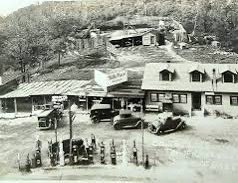
For most American midwesterners heading towards Washington D.C., the shores of Maryland, Virginia Beach, the Carolinas, or further south, if you were piled in your family station wagon or minivan with your parents and a sibling or two, you had to pass through this unincorporated town in Bedford County.
If it was before 1940, you were on the infamous Lincoln Highway – that glorious picturesque American highway constructed in 1913 that stretched from Times Square to the Pacific Ocean. After the Turnpike opened in 1940, Breezewood began to take a shape as a modern-day crossroads.
By the 1960s, when two major interstate highways (the Turnpike and Interstate 70) were set to connect with each other, budgets and politics forced travelers from one highway to the other via a strip of land which swiftly became a place filled with nothing but things to cajole you to spend money. And it also forced people to stop at two red-lights instead of mindlessly speeding along.
Breezewood has always been this honky-tonk symbol of American determination. It has defied its definition (it is still an unincorporated town), it has outsized political power (it is rural, it is nowhere, and literally no one lives there), and it is not particularly attractive. And yet, it just is.
It also has a colorful history. For ages, Native Americans traversed through here on an ancient trail. Before the Revolutionary War, fur traders and frontiersmen followed that same trail due west. Gen. John Forbes cut the along that same path to make the first permanent trail here during the French and Indian War. And as the new country began to form, a railroad made plans, dug tunnels, and cut mountains for a line that never came to fruition, all through this town.
When the turnpike was built, they used those very railroad tunnels and mountain cuts as part of their infrastructure. And when the traffic outgrew their size, they abandoned them and built newer tunnels and a bypass. You can still access those miles of abandoned turnpike for a day of biking and exploring right off the highway at the Breezewood exit.
In a culture divided along stark lines about everything from politics to entertainment to language to regionalism, it wasn’t really a surprise that a casual mention of Breezewood on Twitter launched strongly worded opinions of the town. It was certainly fascinating to see how so many people could see and feel such a mundane experience so differently.
For many it was why? For a lot more, it was why not?
#America250
https://t.co/oorpkemeEM