Sharon Yellowfly has been preserving and expanding the Blackfoot language by translating the announcements of LIGO’s universe-bending discoveries.
https://t.co/Q4aCSca6hl
Get a glimpse of our spacious, beautifully lit New Early American Galleries—a highlight of the museum’s extensive renovation project. https://t.co/unjhc4ffFH
This vial contained some of the first known COVID-19 vaccine doses administered in the U.S. Our @amhistorymuseum has added it to their collection.
How else can the Smithsonian help us understand our current moment? Follow along for more stories on disease and public health.⤵️
Happy Provenance Day!
Provenance is the record of ownership of an object. It helps us have a deeper understanding of an artwork—who was interested in it, how much it cost, where it was displayed, and all the people and places that can be connected by one object.
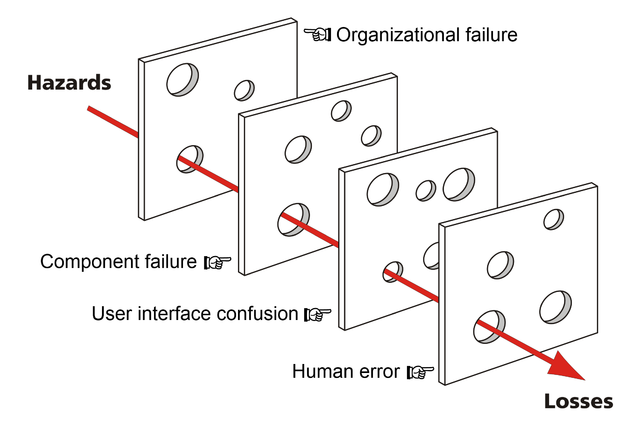
the swiss cheese model likens processes or organizations to a stack of swiss cheese slices. each layer the thing has — e.g., 'leadership' or 'policies' — is a slice, and each slice has holes (weak spots). when the holes in the slices line up, that's when an accident can happen.
Clara Barnhart reviews Anne Monahan’s book Horace Pippin, American Modern, which uncovers history’s many misunderstandings of the painter. Read the full review at #caareviews. https://t.co/BMuhgeC59n
Tune in now! Click below to join Dr. Jessica Marie Johnson (@jmjafrx) & Dr. Cécile Fromont (@CecileFromont) as they discuss "Reading, Writing, and Teaching Black Life and Anti-Black Violence in the Early Modern World" for our next #FolgerCRC https://t.co/GuZWS1orun
“Nobody ever recommended or even suggested that I be a novelist—in fact, some tried to stop me. I simply had the idea to be one, and that’s what I did,” Haruki Murakami writes. “People become runners because they’re meant to.” https://t.co/FpYLxY3ywU
To kick off our celebration of #BlackHistoryMonth, we are sharing our Guide to the Papers of African American Artists and Related Resources. Visit https://t.co/kEkt4HVyzq and you’ll find links to finding aids and digitized collections to further explore our holdings.
In a new book of literary criticism, Romance languages and literatures associate professor Carolyn Wolfenzon Niego explores how eight contemporary Mexican authors adhere to a tradition of writing about ghosts—but with a catch. https://t.co/DPyRKm67XQ
The AHA submitted a comment encouraging Microsoft Word to enable commenting on footnotes. “Adding the ability to comment on footnotes,” explained @JimGrossmanAHA, “would be of tremendous benefit to historians across the world.”https://t.co/tHdINV3vLe
Congratulations to Gwendolyn DuBois Shaw, named Class of 1940 Bicentennial Term Chair in History of Art. She is an expert in art and visual culture of the 19th and 20th centuries in the U.S., Latin America, and the Caribbean. https://t.co/a10ioV1NcH @Penn@PennArtHistory
(1/1)In a pioneering 1971 essay, art historian #LindaNochlin posed the question: “why have there been no great women artists?” In anticipation of the 50th anniv. of this essay, this year’s Wyeth Art Symposium focuses on #Feminism in American art history 👉https://t.co/Y13AqxmBB2
#AuctionUpdate Lucas Cranach the Elder’s “Lucretia” sold for $5,070,000, nearly 5x its estimate and achieved the top price of the Old Masters auction in New York. https://t.co/eAUUDsP9LE
My latest.
As America hits 200,000 deaths from coronavirus, Africa has managed to avoid the human catastrophe that everyone predicted.
Yet the media continues to overlook the continent's successes with the virus.
https://t.co/sPbmuFivPJ