Re latest Revenue 2024 Corp Tax (CT) data (31/12/23). If you look at P7 in link, you will see some disturbing data - of the 214k Co’s who filed CT returns, on average 57% filed a CT loss, 32% filed a CT liability < €5k, implying 89% < €5k. Interesting to see the trend when 2025 (31/12/24) data published this summer.
https://t.co/agGEc7Ytro
We do understand the unicorn theory around Schramm’s Law, but we disagree around how we set-out to achieve that. Irish enterprise policy is based on State Agencies picking winners ie let’s pick the following sectors, job done. The difficulty is that if you’re outside these winner sectors, related enterprise policy is badly designed & its default position discourages scale, which is indefensible. Have a look at our indigenous policy doc, P5-6 details the tax disincentives, P6-7 details the dangerously low profitability (productivity) of all 214k Co’s that filed Corp Tax (CT) returns in 2024 (31/12/23), where 89% paid CT < €5k, subject to Close Co impact.
Thought provoking & intelligent piece by @SineadOS1 who has pulled together some datapoints. Ireland has not done an “independent” strategic review of its Industrial Policy for over 20 years (Culliton 1982, Telesis 1992, O’Driscoll 2004), and it shows? Perhaps Ireland also needs a strategic review of its civil service & political governance systems, including a review of the Minister and Secretaries Act 1924.
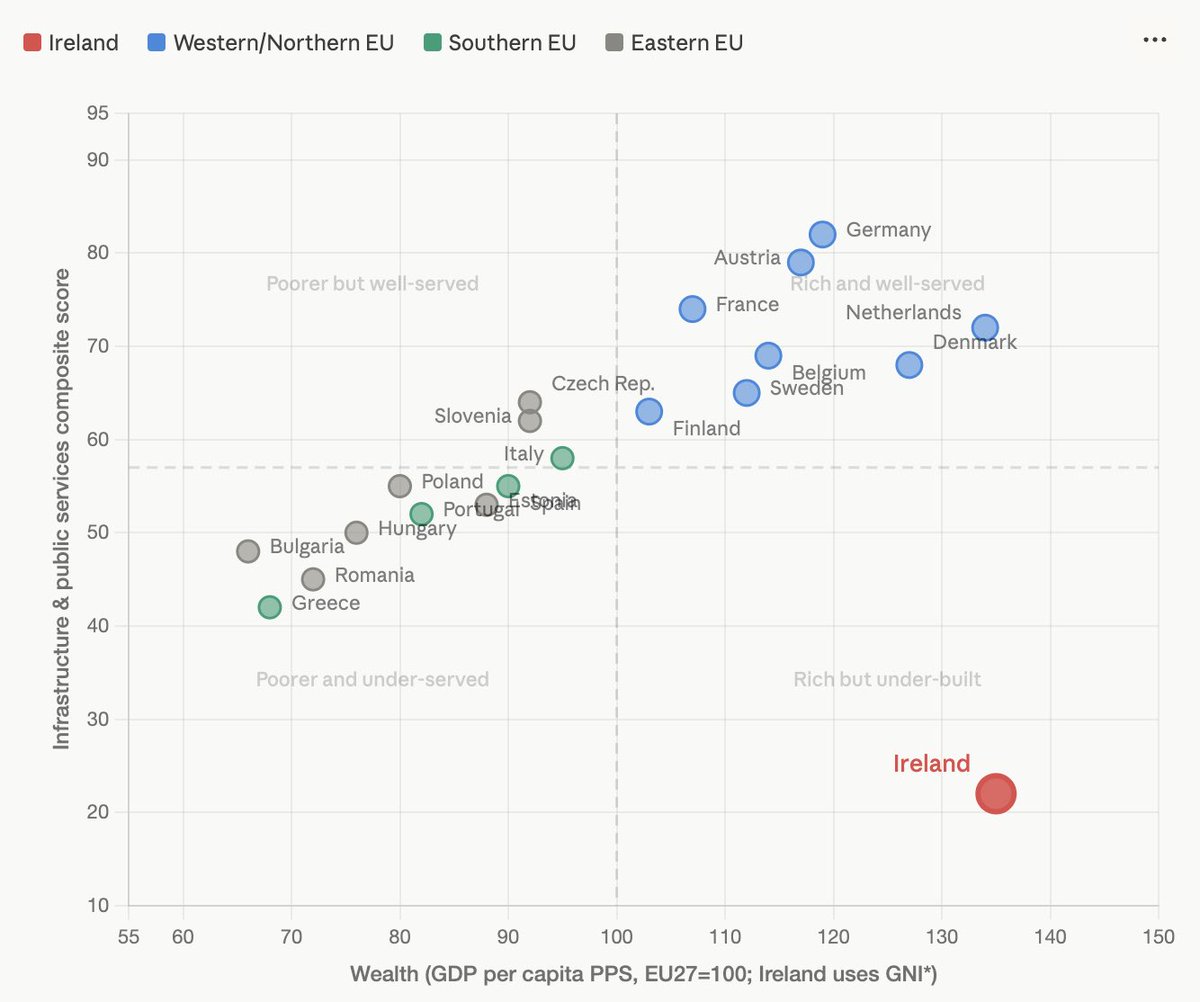
The protests in Ireland are not about just fuel! They are about the distance between Ireland on this graph and every other modern and developed economy. Ireland is second wealthiest but gets waaaaay less than any other country for that wealth. By a golden mile.
That visual gap in this graph? That’s what people are protesting. It’s a lack of infrastructure and the everyday enshittification of services, the economy, and the additional difficulty of trying to live, relative to peers in any other country. It also highlights why people don’t get uniformly listened to! - because there is no government architecture to engage meaningfully across this huge gap.
That gap is a three hour drive to work in traffic, a 14 month wait for an MRI, buses that don’t arrive, trains that don’t exist, schools that have no places for your kids, houses that are unaffordable, pubs that close before midnight, €12 sandwiches, expensive fuel.
People feel this gap, even if they can’t explain it precisely. And that builds into resentment, and ultimately protest. Fuel just happened to be the next thing that could be pointed to, today.
We’re trying to politely sell this to the powers that be Joe. We don’t fully understand why they can’t see what we see but:
1. LEEF (Lab Employer Econ Forum) - SME reps are excluded, it’s Govt, ICTU, Ibec, Chambers & CIF (relatively new invitee due to housing crisis). Yet ISME has a board member on the SME Utd board, who are partnered with ETUC & Business Europe at EU level. It makes no sense to exclude ISME for example from LEEF, this exclusion results in policy error after policy error.
2. Dept of Finance - senior officials have told us off the record that the culture in DoF has & continues to be to regard SME owners as a bunch of “tax & expense fiddlers”. I joke you not.
3. Dept of Finance wield the most power and they can over-rule Enterprise et al for example, Enterprise could recommend enterprise policy change, but if it involves potential cost, DoF could either block it or design a relief that will likely fail. DoF would benefit from a behavioural economist eg reduce CGT rate & increase yield vs the current view which calculates a linear tax loss, which is the wrong answer. It’s a carry-over defense mechanism from the GFC, to keep power in the centre, but it’s simply penny wise pound foolish. Most MNC decision-makers are close to market, being sales/marketing or engineering, it’s not the role of the back-office Finance Dept to set strategy methinks!
4. It’s why I think the relationship between the Minister and Secretary General & officials must be changed ie reform the Minister & Secretaries Act 1924.
It’s pretty frustrating…
It is to an extent @joehas but why should the sole focus be on State Agency or Twch hand-picked sectors (Fintech, MedTech, AgriTech, ICT, Food & Beverage etc). Our biggest MNC’s like CRH, Smurfit, Flutter, Ryanair, Kingspan etc did not emerge from the tech space. Surely we should encourage all enterprise with competitive enterpise & tax policy, and back ambition. Of course, we can place special emphasis on certain sectors, but all enterpise should benefit from enterprise led tax policy, not vice versa as it is in Ireland? What is your view of the following paper?
https://t.co/agGEc7Ytro
Great substack piece by @SineadOS1 on a sort of socio-economic comparative of Ireland vs Pakistan, potentially helpful to a debate around an “independent” strategic review of Irish industrial policy (none in over 20 Years, since O’Driscoll 2004, Telesis 1992, Culliton 1982) & political governance (eg Minister & Secretaties Act 1924).
Good Economy, Bad Economy? https://t.co/4C3a3qr4VZ
@isme_ie's CEO Neil McDonnell joined @cooper_m on The Last Word to discuss ISME’s Indigenous Enterprise Policy launched last week. This paper urges the Government to improve the business environment for Ireland’s “Everyday Entrepreneurs” Click https://t.co/9PJTaliVAL listen.
@isme_ie CEO Neil McDonnell joined @ConallOM's Great Business Show podcast to discuss how Ireland’s reliance on a tiny number of multinational companies to deliver most corporation is not an economic policy, but a massive gamble. Click https://t.co/Lonrb3ygHA to listen to podcast
Supporting the Everyday Entrepreneur is critical for Ireland’s Future. @isme_ie has called for a fundamental shift in Ireland’s economic strategy to better support indigenous businesses and reduce the State’s reliance on FDI corporations. Read Policy Paper https://t.co/L3TlQq8wIv
Insightful piece by Simon Kuper, well worth a read. “Europe’s elite tribe under unprecedented pressure from Russia, China, climate change, AI and Trump. The elite hope to ward off multiple catastrophes by waiting until adversaries act, then responding feebly. “
There is a funded scheme in place the last 20 years. However, the scheme has been beset by difficulties with fresh water mussels & planning (scheme aesthetics, if you don’t mind). The bridge design is also poor as suggested, funnelling flood water that cannot go underneath to go around, causing town-centre flooding on both sides. Hopefully the Accelarating Infrastructure Report recommendations will be actioned quickly to deal with these debilitating infrastructure delays.
https://t.co/0XyqGXTTeg
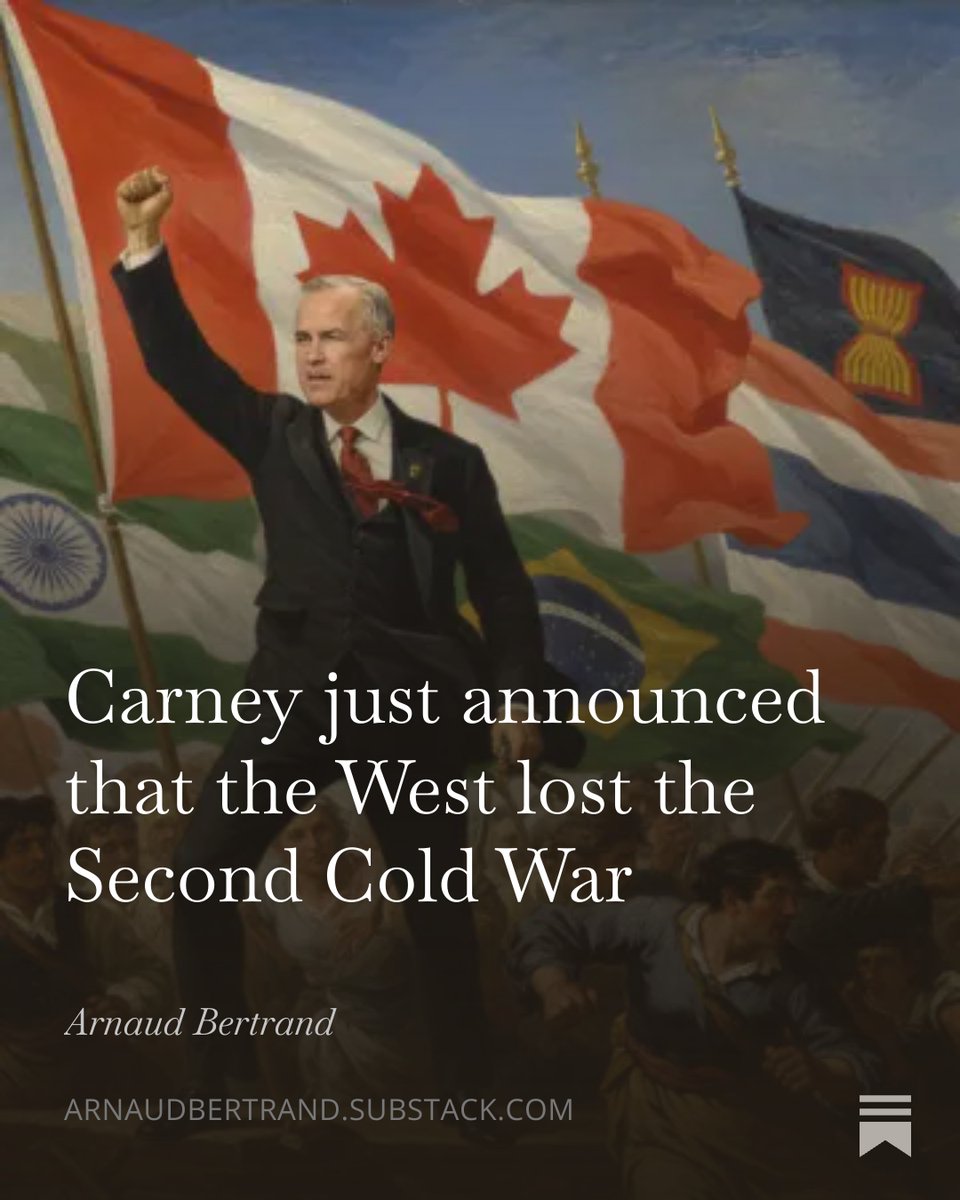
Who could have expected Mark Carney, a liberal establishment figure if there ever was one, to be the flag-bearer for the end of the US-led order? And from a podium at Davos, of all places?
The more you think about it, though, the more it makes sense.
Carney is, at heart, a central banker. As such he understands the power of words and beliefs better than anyone: when you strip things down to their core, a world order - like trust in a currency or a financial system - fundamentally relies on the maintenance of belief. Systems of power exist because participants act as if they exist. That's pretty much it: perception is reality.
Once participants acknowledge the fiction as Carney just did (he literally started his speech announcing he'd "end the pleasant fiction" of the US-led order), the system itself unravels. This is incidentally a formal concept in game theory: the shift from private knowledge to common knowledge is what triggers cascades.
Carney, with his background, ought to have known this was his most potent weapon facing Trump's America: "Trump has the economic and military might. But I have something his power rests upon: I can shatter the collective belief that sustains it."
He's even explicit about this being his thinking: his entire speech revolves around Vaclav Havel’s famous shopkeeper analogy and the fact that the power of the Soviet Union rested on "everyone’s willingness to perform as if it were true," on "living within a lie."
As Carney puts it, "when even one person stops performing, the illusion begins to crack" and the entire "system’s power" starts to crumble.
Today, that "one person" was him.
Make no mistake, Carney’s speech at Davos may prove to be one of THE most important speeches made by any global leader over the past 30 years. This is genuinely epochal stuff.
More than anything, what it means is that, to the extent it even existed at all, the West irremediably lost the Second Cold War: a Cold War requires two competing systems. Carney just announced that one of them simply no longer exists.
This is the topic of my latest article: an in-depth analysis of Carney's speech and its immensely consequential implications for what comes next.
Enjoy the read here: https://t.co/Vf5heHU1OV
It's New Year, so time to look back and forward. These are 10 things I think we need to recognise in 2026. It’s a response to what I think are profoundly damaging mistaken assumptions I’ve heard and read from practitioners, journalists, and analysts in 2025. Warning: very long🧵
Re Public Spending, its important that spending is split between Current & Capital a/c, by Region, and historically, how far back can we go? Time for Ireland to start using accruals accounting, like most OECD countries?
Re Benefacts, one can only wonder why it was closed down circa 2022, particularly given that CSO found its data extremely helpful? Maybe @albertdolan_ can resurrect it - it’s 2015-21 data from 20k non-profits?
https://t.co/hrhVz1tdrR
https://t.co/XMu5taj1Fm
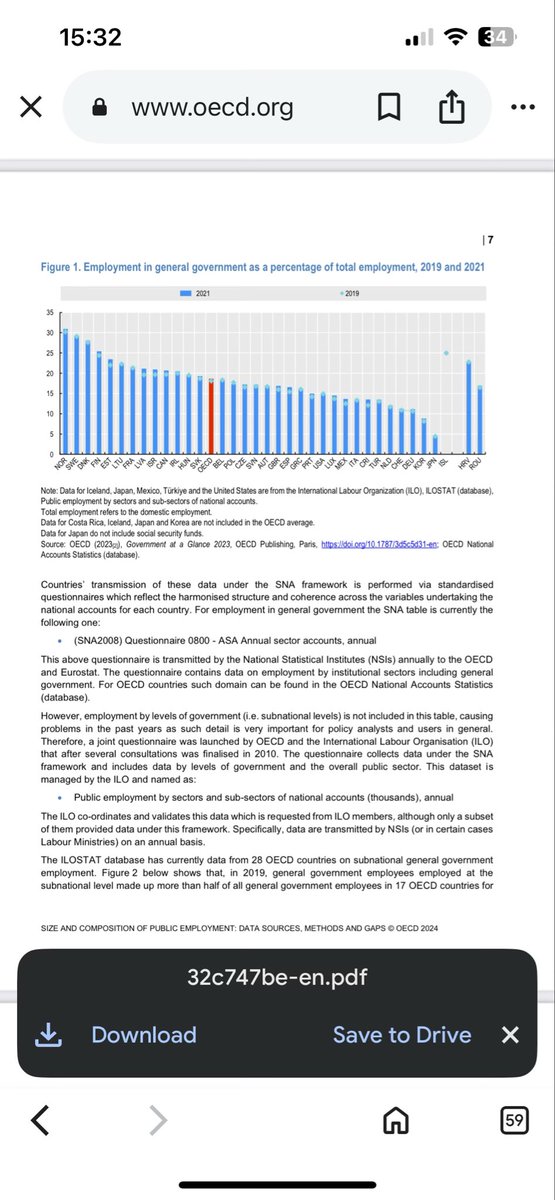
@mcmnorris Ireland has neither highest nor lowest public as % of total employees, but it is above average. Before there is any talk of more, let’s 1st optimise ICT. For example, most OECD countries have had digital patient records in their Health Service for years, we’ve just started.