The rarest object type in the universe isn't black holes. It's us. Conscious matter. The flame of life.
We have a duty to expand it in scope and scale in order to preserve it.
Gilles, je vais démonter ta prémisse de départ, parce que tout le reste de ton argument s'effondre avec elle.
Tu pars du principe qu'il faut une « sensibilité de gauche » pour ne pas laisser créver les gens de faim. C'est l'inverse total de ce que dit l'histoire économique des 50 dernières années.
Les chiffres bruts.
1990 : 2,3 milliards de personnes en pauvreté extrême. 38% de l'humanité.
2025 : 831 millions. Environ 10%.
1,5 milliard d'êtres humains sortis de la misère absolue en 35 ans. La plus grande réduction de souffrance humaine de toute l'histoire de l'espèce.
Qui a fait ça ?
Pas l'aide internationale. Pas les ONG. Pas les programmes de redistribution. Pas la « sensibilité de gauche ».
Le marché. L'ouverture commerciale. La Chine de Deng en 1978 qui abandonne le maoisme. L'Inde en 1991 qui libéralise. Le Vietnam, l'Indonésie, le Bangladesh qui s'ouvrent au capitalisme.
Les seuls endroits où l'extrême pauvreté a EXPLOSÉ sur la même période ? Le Vénézuela socialiste : de 27% de pauvres en 2008 à plus de 80% en 2018, avec une inflation de 130 000% et un Vénézuélien moyen qui a perdu 11 kilos par dénutrition. La Corée du Nord. Cuba. Le Zimbabwe de Mugabe.
La gauche ne nourrit pas les pauvres. Elle les fabrique.
Le capitalisme produit tellement de richesse que même ses « perdants » américains vivent mieux que la classe moyenne soviétique. Un pauvre US a un frigo, une voiture, un téléphone, l'air conditionné, internet. Un pauvre cubain attend du riz.
Ton argument selon lequel « le social aux USA est un désastre » repète une légende française. La réalité : le PIB par habitant américain est de 80 000$. Français : 45 000$. Un Mississippien — l'État US le plus pauvre — a un revenu médian supérieur au Français moyen.
La vérité que la gauche française refuse de regarder : dans un système libéral, il y a plus de richesse créée, plus largement distribuée, et beaucoup moins de pauvres. Partout. Sans exception. Sur toutes les périodes mesurées.
ÊTRE de gauche en 2026 face à ces données, ce n'est pas avoir de la « sensibilité ». C'est ignorer 35 ans de preuves accablantes. C'est préférer la posture morale au résultat.
La compassion sans résultats, ça s'appelle de la vanité.
Winston Churchill fought his depression with bricks. He'd lay them for hours at his country home in Kent. He joined the bricklayers' union. And in 1921 he wrote about why it worked. It took psychology another 75 years to catch up.
He called his depression the "Black Dog." It followed him for decades. His method for fighting it back was as basic as it sounds: laying brick after brick, hour after hour.
Churchill spelled out his theory in a long essay for The Strand Magazine. People who think for a living, he wrote, can't fix a tired brain just by resting it. They have to use a different part of themselves. The part that moves the eyes and the hands. Woodworking, chemistry, bookbinding, bricklaying, painting. Anything that drags the body into a problem the mind can't solve by itself.
Modern psychology now calls this behavioral activation. It's one of the most-studied depression treatments out there. Depression sets a behavior trap. You feel bad, so you stop doing things, and doing less means less to feel good about. Feeling worse makes you do even less. The loop tightens until you can't breathe inside it.
Behavioral activation breaks the loop from the action side. You schedule the activity first, even when every part of you doesn't want to. Doing it produces small rewards: a wall gets straighter, a painting fills in, a messy room gets clean. Those small rewards slowly rewire the brain. Action comes first, and the feeling follows.
Researchers at the University of Washington put this to the test in 2006. They studied 241 adults with major depression and compared three treatments: behavioral activation, regular talk therapy, and antidepressants. For the people who were most severely depressed, behavioral activation matched the drugs. It beat the talk therapy. A 2014 review of more than 1,500 patients across 26 trials backed up the result.
Physical work like bricklaying does something extra on top of this. It crowds out rumination, the looping bad thoughts that grind people down during the worst stretches of depression. Bricklaying needs both hands and gives feedback brick by brick: each one is straight or crooked. After an hour you can see exactly how much wall you built. No room left for the mental chewing.
The line George Mack used in his post, "depression hates a moving target," is good poetry. The science behind it is sharper. Depression hates a brain that has somewhere else to be.
6 coisas que os filhos fazem só por um tempo... e depois desaparecem para sempre 😞
1. Um dia eles param de correr até você assim que acordam.
Aquele barulho de pezinhos no corredor, o abraço na cama... aos poucos dá lugar ao silêncio e à porta fechada do quarto.
2. Eles param de dizer: "Mamãe, papai, olha!"
Já não correm mais para te mostrar cada pedrinha ou cada desenho.
Pouco a pouco, o mundo deles fica mais silencioso... e mais deles.
3. Um dia eles param de segurar sua mão enquanto caminham.
E de repente você sente o vazio.
Não porque o amor acabou... mas porque eles estão crescendo.
4. Um dia eles param de dormir nos seus braços.
Aquele apoio no seu ombro, a respiração ficando calma...
são momentos que, sem aviso, acabam.
5. Em algum momento, eles deixam de acreditar que o seu beijo resolve tudo.
Antes bastava um curativo.
Depois, as feridas mais profundas começam a se esconder na música e no silêncio... não mais nos seus braços.
6. Eles param de te trazer seus "tesouros".
Folhas, papéis, pequenas descobertas.
Aquele amor puro e espontâneo... simplesmente diminui.
A infância não é um ensaio. Acontece agora e, enquanto ainda pedem colo e chamam você o dia inteiro, aproveite cada momento. ❤️
@isabelleboemeke Some of the best analysis and practical ideas I've heard addressing our current dysfunctional situation for working parents from @SarahTheHaider.
After this moment, these men will statistically earn more, live longer, nearly halve their substance use, commit far less crime, and have their brains literally rewired for protection.
Men need children.
Children need fathers.
Society needs both.
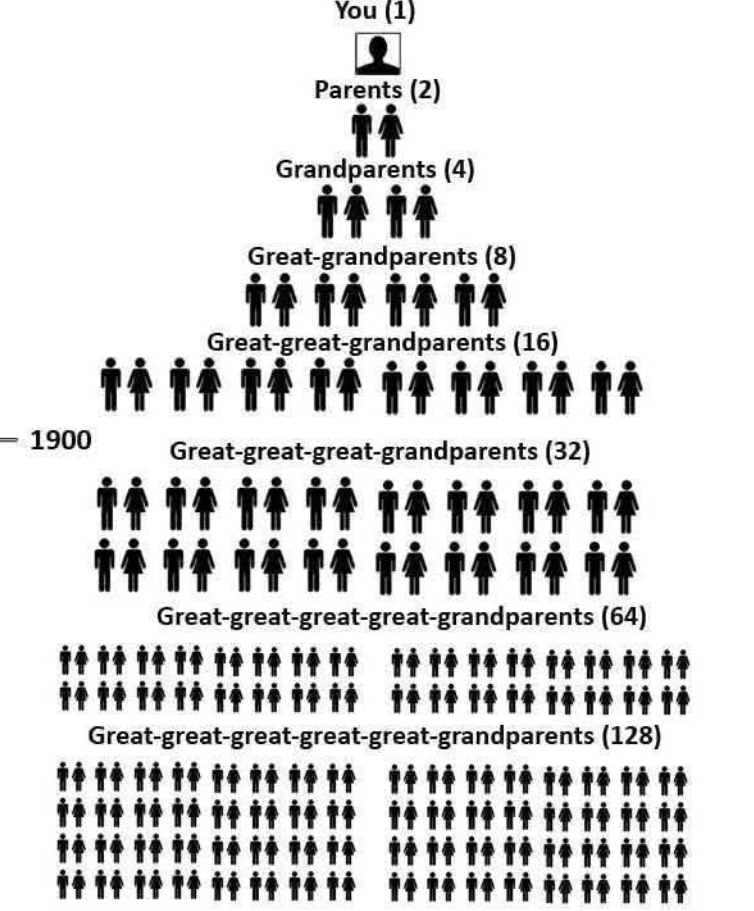
In order to be born, you needed:
2 parents
4 grandparents
8 great-grandparents
16 second great-grandparents
32 third great-grandparents
64 fourth great-grandparents
128 fifth great-grandparents
256 sixth great-grandparents
512 seventh great-grandparents
1,024 eighth great-grandparents
2,048 ninth great-grandparents
For you to be born today from 12 previous generations, you needed a total of 4.094 ancestors over the last 400 years
Pause for a second and really think about this…
How many hardships did they survive?
How many silent battles did they fight?
How many tears did they wipe away?
How many moments of joy did they celebrate?
How many love stories began so that yours could one day exist?
How many dreams for a better future were whispered into the dark?
All of it…
just so you could be here, alive, in this moment