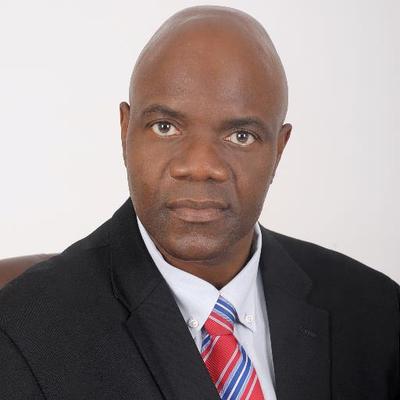
ZIMBABWE MUST TURN ITS DEBT CRISIS INTO AN OPPORTUNITY FOR ECONOMIC RENEWAL
I welcome the ongoing Zimbabwe–EU engagement on debt, trade and mineral resources. But we must confront reality: Zimbabwe cannot clear its accumulated external debt arrears in the short term through conventional repayments and austerity alone.
We need an innovative, development-oriented strategy.
Our Structured Dialogue Platform should explicitly explore debt-for-equity swaps, debt-for-climate swaps and investment-linked debt conversions, particularly with participating Paris Club creditors.
These are established international instruments. The opportunity lies in adapting them to Zimbabwe's circumstances.
First, mineral beneficiation. Eligible debt could, with creditor agreement, be converted into equity investments in mineral processing, refineries, battery production and related infrastructure. This must create jobs, transfer technology and expand exports, not become a disguised disposal of our mineral wealth.
Second, clean energy. Debt conversions could finance solar generation, electricity transmission, energy storage and climate-resilient infrastructure, strengthening our productive economy.
Third, climate finance. Verified carbon credits from renewable energy, forestry and sustainable land management could generate additional revenues for negotiated debt-reduction arrangements, subject to credible verification, market demand and community safeguards.
Fourth, and fundamentally, GOOD GOVERNANCE.
No responsible bank finances a company without examining how it is governed and managed. Why should sovereign lending be different?
Bilateral creditors and multilateral financial institutions ignore good governance at their peril.
Zimbabwe's debt crisis cannot be separated from constitutionalism, the rule of law, transparency, sound public financial management and institutional accountability.
Creditors must assess not only our capacity to repay, but also how public resources are managed. Citizens deserve to know how debts were incurred, how the money was spent and what benefits were delivered.
Debt restructuring without governance reform risks recreating the very conditions that produced the crisis.
I therefore propose that these innovative financing mechanisms be formally considered within Zimbabwe's existing debt-resolution dialogue and EU engagements, alongside conventional restructuring and arrears-clearance arrangements.
All transactions must be transparent, independently valued, subject to appropriate parliamentary oversight and protective of our national interests.
Our mineral wealth must not merely service yesterday's debts. It must build tomorrow's economy.
Zimbabwe cannot repay its way to prosperity through austerity alone. We must negotiate, invest, produce and grow our way out of debt.
Ultimately, our debt crisis is not merely about how much we owe. It is about how we govern, how we manage what we have and how responsibly we prepare for the future.
#Zimbabwe #DebtResolution #GoodGovernance #EconomicRenewal
FROM ADDIS ABABA: BUILDING A STRONGER DEMOCRATIC Future gtg FOR AFRICA
By Senator Jameson Timba
8/11/26
Follow the Change News channel on WhatsApp: https://t.co/SAvSUMuYOc
Change the News. Change the Narrative. Change the World.
I had the opportunity to address fellow African political leaders at the African Political Parties Summit in Addis Ababa, Ethiopia.
Africa's democratic future requires more than strong political parties. It requires political parties that are democratic within themselves, accountable to the people, guided by principle and committed to building institutions stronger than the individuals who lead them.
Our continent's challenge is not simply how political parties acquire power, but how they exercise that power, how they remain accountable and how they contribute to the welfare and dignity of our people.
I believe Africa's renewal must begin with a fundamental understanding: Political power belongs to the people. Political parties are merely instruments through which the people organise to exercise that power.
The future of Africa will not be secured by strongmen, but by strong institutions, democratic leadership and citizens empowered to shape their own destiny.
I share this brief video from my contribution to the Summit.
Africa must not merely change its leaders. It must transform the way it is governed.
#AfricanDemocracy #PoliticalLeadership #AddisAbaba #AfricanPoliticalPartiesSummit #DemocraticRenewal #AfricaRising
“When a fool gains power, the first thing he does is silence the wise. The next thing he does is gather other fools around. The Final thing he does is destroy the nation (or organisation — my addition).”
— Attributed to Plato
A timeless warning about leadership.
BRITAIN COMPENSATED THE SLAVE OWNERS. WHY NOT THE ENSLAVED?
By Senator Jameson Z. Timba
31/10/26
British Prime Minister Andy Burnham's willingness to consider a formal apology for Britain's role in the transatlantic slave trade is welcome. His rejection of financial reparations, however, raises a fundamental question about historical responsibility.
Burnham argues that today's British citizens cannot be held liable for injustices committed by earlier generations. But reparations are not about inherited personal guilt. They concern the continuing responsibilities of states and institutions that benefited from historical injustice.
When Britain abolished slavery in 1833, it authorised £20 million in compensation to slave owners for the loss of what the law regarded as their property. The enslaved received nothing for generations of unpaid labour, suffering and stolen opportunity.
Britain recognised the economic losses of those who owned human beings but not the losses of those who had been owned.
That contradiction remains at the heart of the reparations debate.
Burnham proposes debt relief, development cooperation and climate financing as alternatives. These are worthwhile initiatives, but development assistance and reparative justice are not interchangeable. One addresses present needs; the other acknowledges responsibility for historical harm.
Nor must reparations mean individual cash payments. They can include educational investment, institutional rebuilding, restitution, debt restructuring and negotiated programmes addressing enduring inequalities.
For Africa and the Caribbean, the question is not whether Britain should be punished for its past. It is whether a relationship shaped by historical exploitation can be rebuilt on justice, equality and mutual respect.
Britain deserves recognition for helping abolish slavery. But abolition did not erase the wealth accumulated through slavery or automatically repair its consequences.
An apology acknowledges what happened. Reparative justice asks what should follow.
The question is not whether today's British citizens inherited the guilt of slavery. It is whether the British state inherited responsibilities alongside the benefits of its history.
Zimbabwe faces a nearly ZiG8 billion housing funding shortfall, yet homes and livelihoods are being demolished across the country.
Planning laws must protect people, not punish poverty.
We cannot solve a failure of governance by punishing its victims.
Zimbabwe must build, not demolish, its way out of the housing crisis.
Nematambudziko. We had an interview with him on a programme I ran with @JamesonTimba which we called "The Transition" . I still have copies of the unpublished interviews. He was a very informative interviewee on one of our programmes.
Zimbabwe's 2027 growth forecast has fallen from 5% to 3.5%. Yet, despite revenue exceeding targets, only 42.5% of the 2026 Budget was utilised by mid-year.
Revenue collected is not development achieved. Money allocated is not a service delivered.
Economic growth must improve citizens' lives.
15 Zimbabweans reportedly dead, 66 stranded and hundreds possibly recruited into Russia's war.
Mnangagwa must demand answers from Putin: full disclosure, safe repatriation, investigation of trafficking networks and justice for victims.
Zimbabweans are not expendable.
A year later, no arrests and no accountability for such an act of terrorism - a confirmation that this was a state-related terrorist attack in Zimbabwe?
Zimbabwe's annual ZiG inflation rose from 3.7% in September to 4.3% in October, while USD inflation fell from 3.5% to 3.2%.
Single-digit inflation is welcome, but it does not mean prices are falling or citizens are better off.
As we approach the 2027 National Budget, the real test of economic progress must be jobs, incomes, affordable healthcare, education and food on the table.
The economy exists to serve the people, not the other way round.
I support Zimbabwe's readmission to the Commonwealth, but it must be guided by the 1991 Harare Declaration.
Following Sir Lindsay Hoyle's meeting with Speaker Mudenda, I ask:
Did they discuss the disputed parliamentary committee, CAB3, the PVO Act, shrinking civic space and Zimbabwe's compliance with Commonwealth principles?
Or are Britain's economic interests taking precedence over democratic values?
Zimbabwe must return not only to the Commonwealth, but to its principles.
Tanzania's detained opposition leader Tundu Lissu, facing treason charges since April 2025, plans to begin a hunger strike tomorrow, 26 October, over alleged denial of confidential access to his lawyers despite a High Court ruling.
Tanzania must respect the court order, guarantee his right to a fair trial and protect his health and safety.
The rule of law is tested not by how governments treat their supporters, but by how they treat their political opponents.
EDUCATION IS A CONSTITUTIONAL RIGHT, NOT A BUDGETARY AFTERTHOUGHT
UNICEF's findings on Zimbabwe's education financing raise serious questions about our national priorities.
Government celebrates economic growth and improved GDP rankings, yet schools remain under-resourced, teachers struggle with poor remuneration, and vulnerable children face barriers to education.
A budget allocation is not the same as money reaching the classroom.
We need adequate funding, timely disbursements, better teacher remuneration, properly funded BEAM programmes and transparent accountability for education expenditure.
Section 75 of our Constitution guarantees the right to education. Government must give practical meaning to that promise.
A country cannot claim economic transformation while neglecting the education of its children.
The future of Zimbabwe is being shaped in its classrooms today.
Education is not a cost to be minimised. It is an investment in our nation's future.
COMESA CANNOT CHAMPION DEMOCRACY ABROAD WHILE DEMOCRATIC SPACE SHRINKS AT HOME
COMESA's commitment to democratic institutions and political tolerance is welcome. But its leadership raises serious questions of credibility.
Zimbabwe assumes leadership amid constitutional manipulation, shrinking civic space under the PVO Act and the police prevention of a peaceful prayer meeting.
Zambia faces growing concerns over restrictions on opposition activity and civic freedoms.
Eswatini, the incoming Vice-Chair of the COMESA Authority, remains an absolute monarchy where political parties cannot freely compete for national political power.
How can regional leaders defend democratic freedoms abroad while restricting them at home?
COMESA must not become a shield for democratic regression.
Democracy cannot be proclaimed at regional summits and suspended at national borders.
Regional leadership must be earned through democratic example, not merely institutional rotation.
A BIGGER ECONOMY MUST MEAN BETTER LIVES
The IMF reportedly projects Zimbabwe's GDP at US$65.9 billion in 2026, ranking it Africa's 14th-largest economy.
Growth is welcome. But how much of this reflects real economic expansion, and how much reflects GDP rebasing and valuation changes?
More importantly, are young people finding decent jobs? Are wages improving? Are families escaping poverty? Are public services getting better?
GDP measures economic production, not the distribution of prosperity.
We should neither dismiss these figures nor celebrate them uncritically.
A country can become richer on paper while its citizens remain poor in practice.
The true measure of economic transformation is the improvement in people's lives.
Where is the citizen's dividend?
THE CONSTITUTION IS SUPREME, NOT ZANU-PF.
ZANU-PF's Chinhoyi Conference resolutions raise serious constitutional questions.
Resolution 1.6 proposes party supremacy over Government, while Resolution 1.8 seeks to make ZANU-PF recommendations a requirement for employment in public institutions.
Zimbabwe is a constitutional republic, not a party-state.
Our young people and recent graduates already bear the burden of unemployment arising from years of economic mismanagement. They must not now be required to obtain political clearance before accessing employment opportunities.
Qualifications, competence and merit—not party affiliation—must determine access to public employment.
DCP will mobilise young people, graduates and other affected citizens to peacefully and lawfully resist any attempt to impose partisan employment restrictions.
In consultation with our partners in Sungano yeVanhu – Ubumbano Lomphakathi, we will also pursue appropriate legal remedies against ZANU-PF and any responsible State institutions where their actions violate the Constitution or citizens' rights.
The State belongs to all Zimbabweans, regardless of political affiliation.
The Constitution must prevail.
#DefendTheConstitution #EqualOpportunity #ConstitutionalSupremacy
CHINHOYI: PRESIDENTIAL POWER OR CITIZENS' PRIORITIES?
Over 7,000 delegates gathered at ZANU-PF's 23rd National People's Conference, reportedly backed by a US$10 million fundraising exercise. More than 30 resolutions were announced.
But judged by the weight of its principal resolutions, the conference appears to have been primarily about consolidating President Mnangagwa's power.
The elective congress is to be postponed to 2029. Mnangagwa is to remain party leader until 2030 and be its next presidential candidate. The party constitution is to be amended accordingly.
Meanwhile, what concrete new measures were adopted to address rising poverty, unemployment, low incomes and deteriorating public services?
Even more disturbing is the constitutional question.
ZANU-PF expressly linked its leadership resolutions to national constitutional amendments whose validity remains contested before the courts.
An enacted law remains operative unless set aside. But political resolutions cannot pre-empt the judiciary's constitutional authority.
The doctrine of separation of powers is not optional.
A conference themed “From Resolutions to Results” must answer a fundamental question:
Results for whom? The President or the people?
Zimbabwe needs leadership focused on extending economic opportunities for citizens, not merely extending political tenure for those in power.
Constitutional supremacy must prevail over political expediency.
#Zimbabwe #Constitutionalism #SeparationOfPowers
THE SECOND BATTLE OF CHINHOYI: FROM LIBERATION TO CONSTITUTIONAL RESTORATION
In 1966, seven liberation fighters confronted the Rhodesian military at Chinhoyi. They were outnumbered, outgunned and killed. Yet their defeat did not end the liberation struggle. It inspired a movement that eventually secured independence in 1980.
Sixty years later, Chinhoyi is witnessing another consequential political battle. This time, the contest is over constitutionalism, political power and proposals to extend President Mnangagwa's tenure.
The true number of ZANU-PF members opposed to the 2030 Agenda remains unknown. In a political environment shaped by patronage and intimidation, dissent can carry a heavy price. Former senior party officials have faced threats to their agricultural land allocations after falling out with the leadership.
Silence is not necessarily consent. Visible unanimity is not necessarily genuine agreement.
The seven fighters at Chinhoyi did not represent the full extent of opposition to colonial rule. Similarly, the number of ZANU-PF members openly resisting the extension agenda may not reflect the full extent of internal opposition. That does not establish that today's opponents are a majority; their actual numbers remain unknown.
At the 23rd ZANU-PF Conference, VP Constantino Chiwenga raised fundamental questions about whether party resolutions genuinely originate from ordinary members or are imposed from above.
He reminded delegates that their party belongs to its members, not individuals, and insisted that political change must follow constitutional procedures.
His remarks did not explicitly reject the proposed amendments, but they raised important questions about the integrity of the decision-making process.
Reports of disagreements within the party leadership, including allegations of financial inducements intended to influence conference resolutions, reinforce the need for scrutiny. Those allegations remain unverified.
The proposed constitutional amendments were reportedly incorporated into the conference agenda through the Legal Secretary's report to the Central Committee.
But placing amendments on an agenda is not the same as lawfully adopting them.
Article 29, Section 271 of the ZANU-PF Constitution prescribes procedures for constitutional amendments, including advance notice, Central Committee approval and ratification by the National People's Congress.
A National People's Conference resolution cannot substitute for those requirements.
Meanwhile, the constitutional challenges to CAB3 remain unresolved.
If the Constitutional Court invalidates provisions extending the incumbent President's tenure from 2028 to 2030, no subsequent amendment to the ZANU-PF Constitution can override that judgment.
ZANU-PF may govern Zimbabwe, but it does not own Zimbabwe. The national Constitution remains supreme.
The battle at Chinhoyi may be won by those commanding the party machinery and the numerical majority. But political numbers cannot cure constitutional defects.
The contemporary struggle for constitutional restoration must remain peaceful, lawful and democratic, pursued through the courts, civic organisation and the exercise of citizens' constitutional rights.
The liberation struggle gave Zimbabwe its independence. Constitutional government must give that independence enduring democratic meaning.
In 1966, the seven fell, but the struggle continued.
In 2026, constitutionalism may suffer another setback at Chinhoyi, but the constitutional struggle will continue.
Chinhoyi may decide a battle. It will not decide the constitutional future of Zimbabwe.
#RestoreTheConstitution #LetThePeopleDecide
ECONOMIC GROWTH: WHERE IS THE CITIZEN'S DIVIDEND?
President Mnangagwa says Zimbabwe's GDP has grown from US$16bn in 2017 to US$66bn, with GDP per capita rising from US$1,200 to US$3,500.
These are substantial claims. But what has this growth meant for ordinary Zimbabweans?
The World Bank reports that approximately 80% of Zimbabweans work in the informal sector, with median monthly earnings of around US$130. Poverty remains widespread.
GDP per capita is an average, not what each citizen earns.
The President must account for the citizen's dividend: real wages, decent jobs, household purchasing power and access to essential services.
He also insists that Vision 2030 remains on course. Yet the World Bank's baseline projection places Zimbabwe's attainment of upper-middle-income status around 2036, not 2030.
Ambition is not a development projection. It must be supported by credible economic assumptions.
A country may become richer on paper while its citizens continue to struggle in practice.
The purpose of economic development is to close that gap.
#CitizensDividend #Vision2030 #Zimbabwe