PSA: if you contact me about doing research under my guidance, do some research without my guidance first.
For example, on the topic of what kind of research I could possibly provide guidance for.
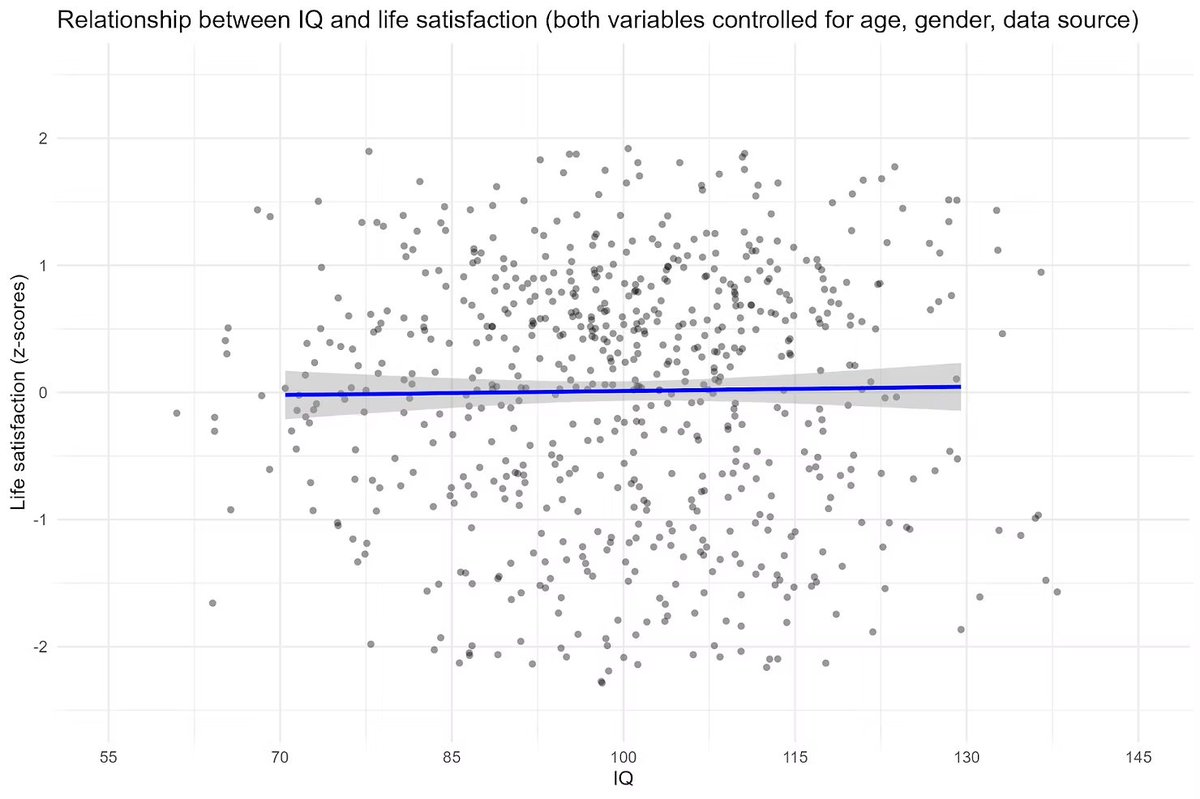
Question 5: Are people with higher IQs happier (moment to moment) or more satisfied overall with their lives?
Nope! We found no link between IQ and moment-to-moment happiness or life satisfaction.
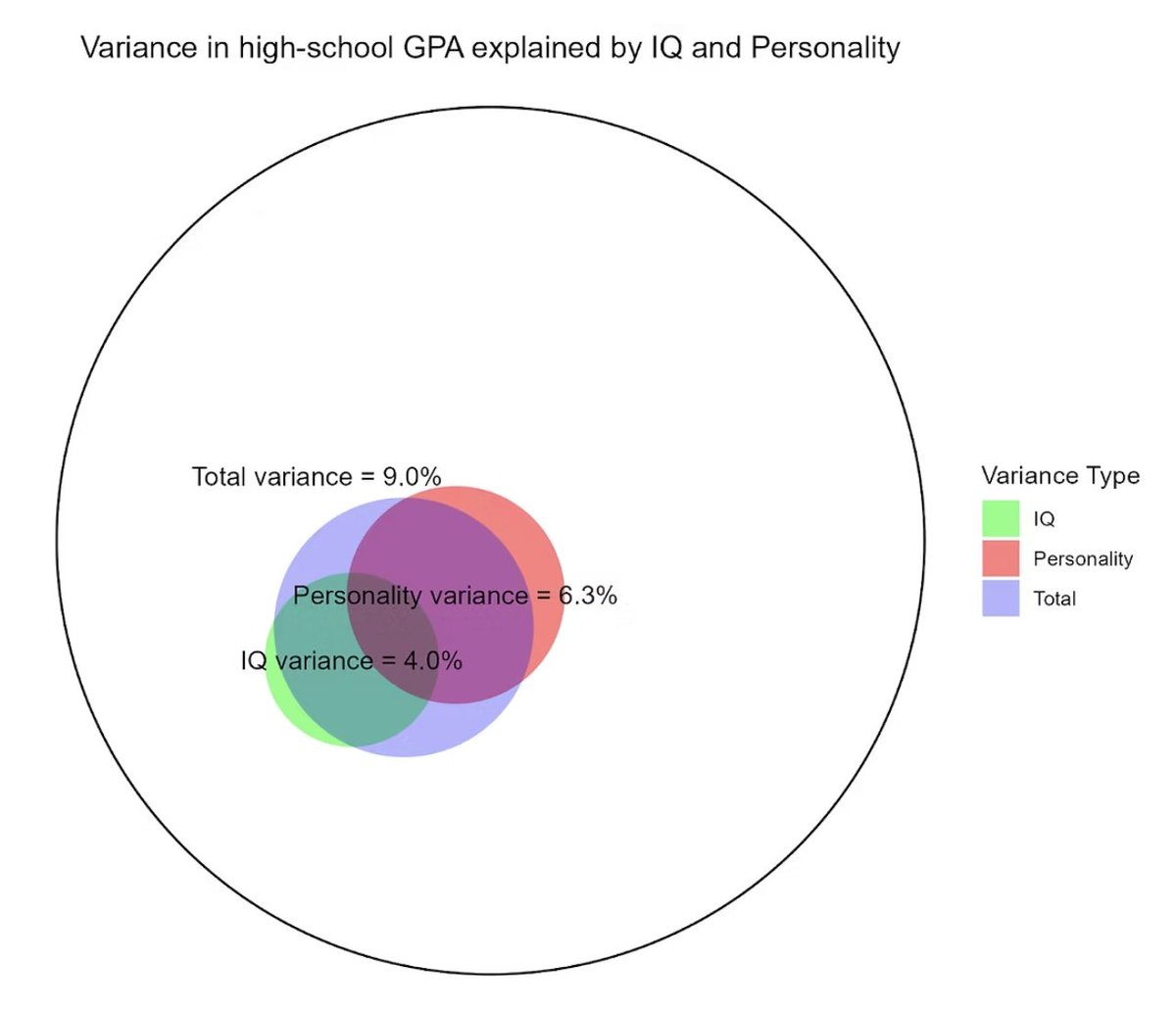
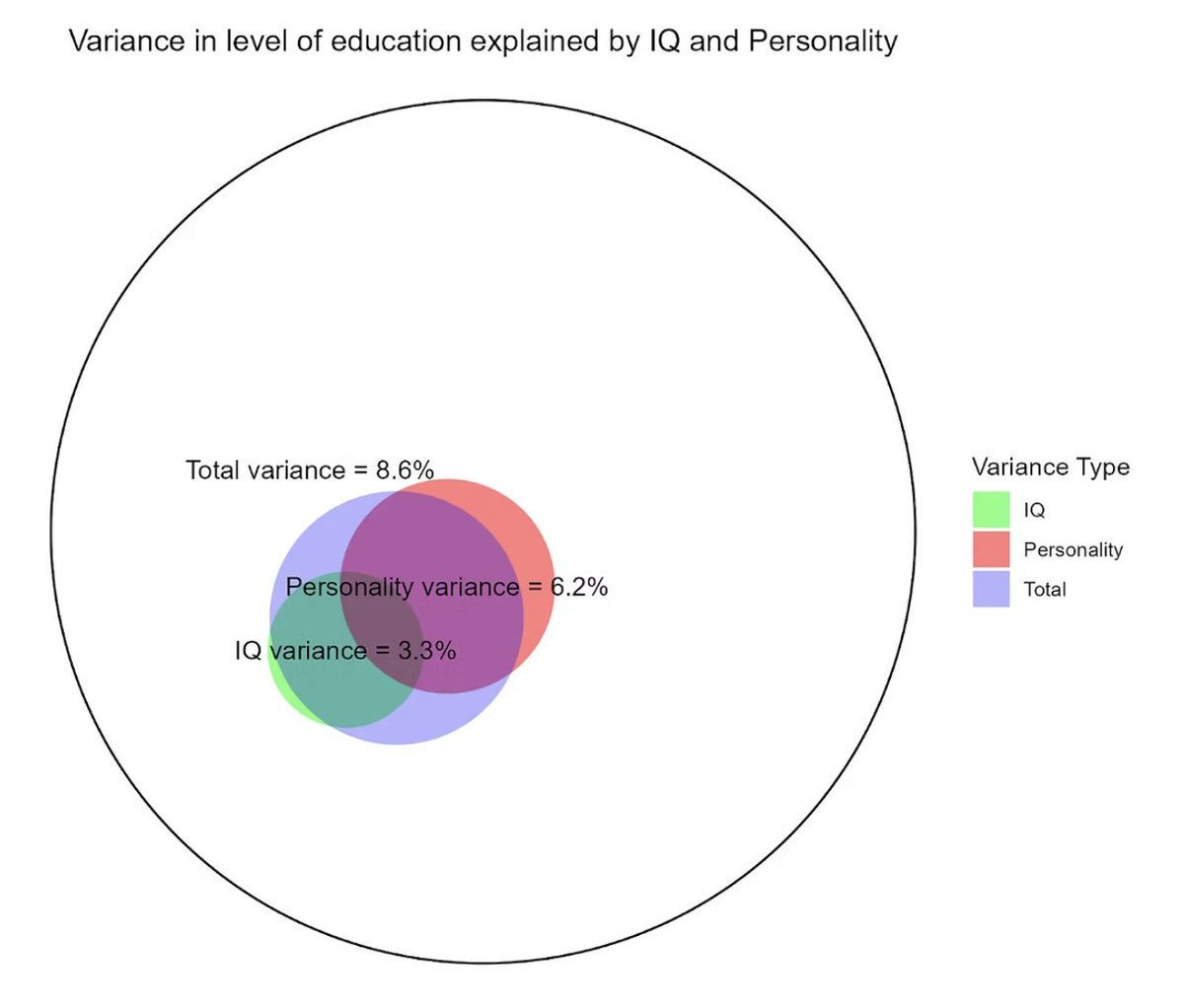
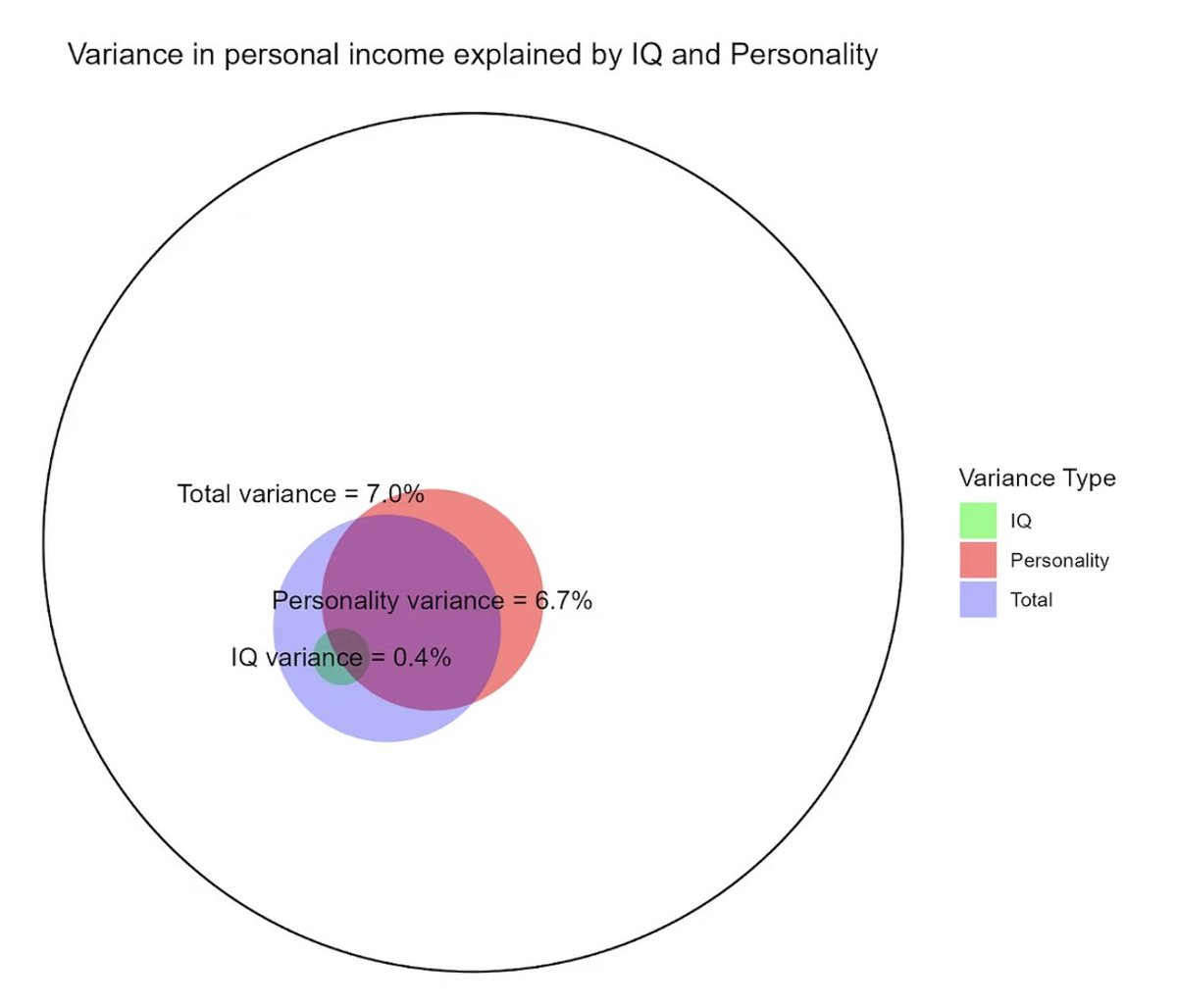
Question 4: Is IQ a better predictor of life outcomes than personality (i.e., taking into account someone's Big Five personality scores all at once)?
No, personality generally predicted outcomes as well or better than IQ did!
People can want romantic relationships because they enjoy them or because they feel pressured into them. Our new paper uses Self-Determination Theory to measure motivations for relationships, organize the literature on relationship desire, and predict who starts a relationship.
To get reimbursed for a talk or flight at a German university, *everybody* now needs a German tax identification number.
Even if you are not German, don't live in Germany, or don't pay taxes in Germany.
And getting such a tax number is, obviously, tons of work.
ಥ���ಥ
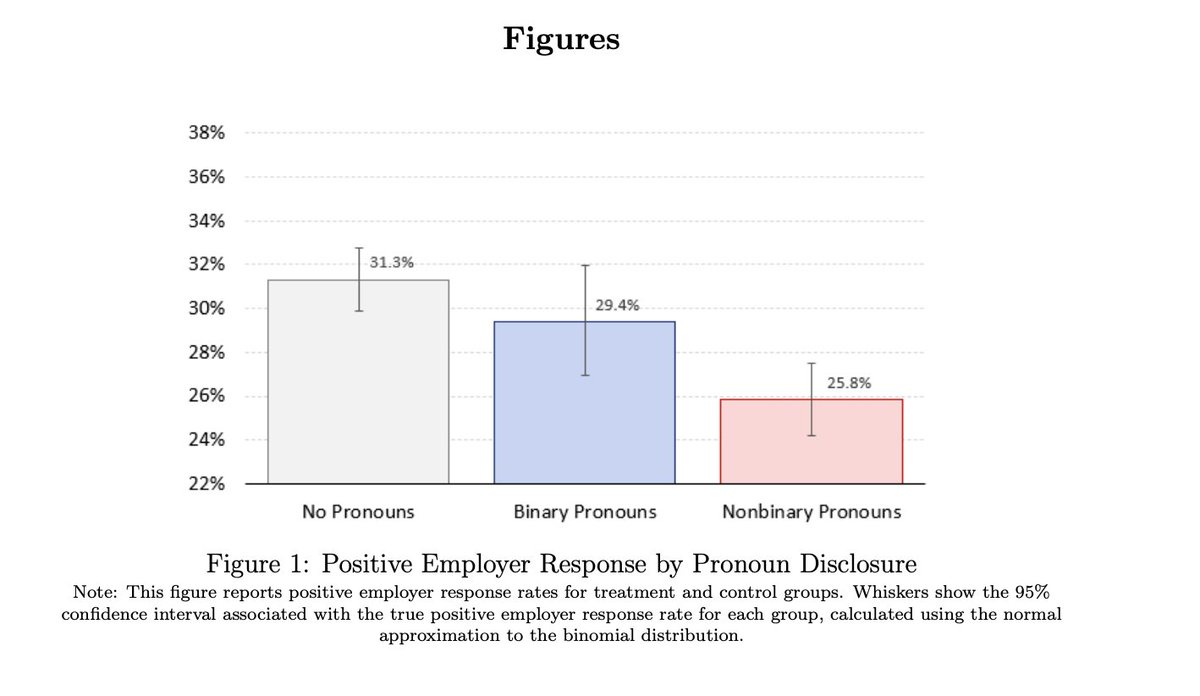
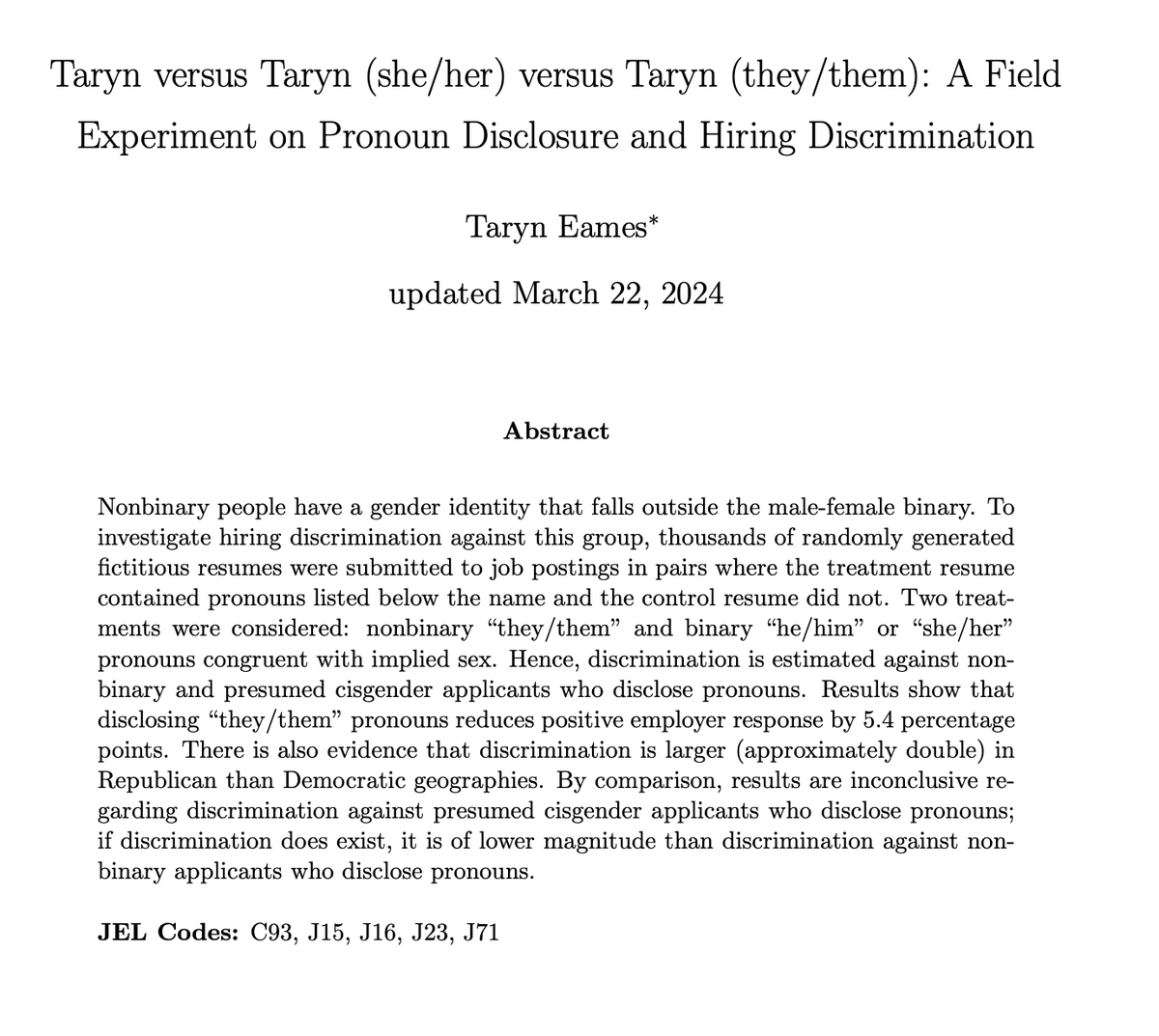
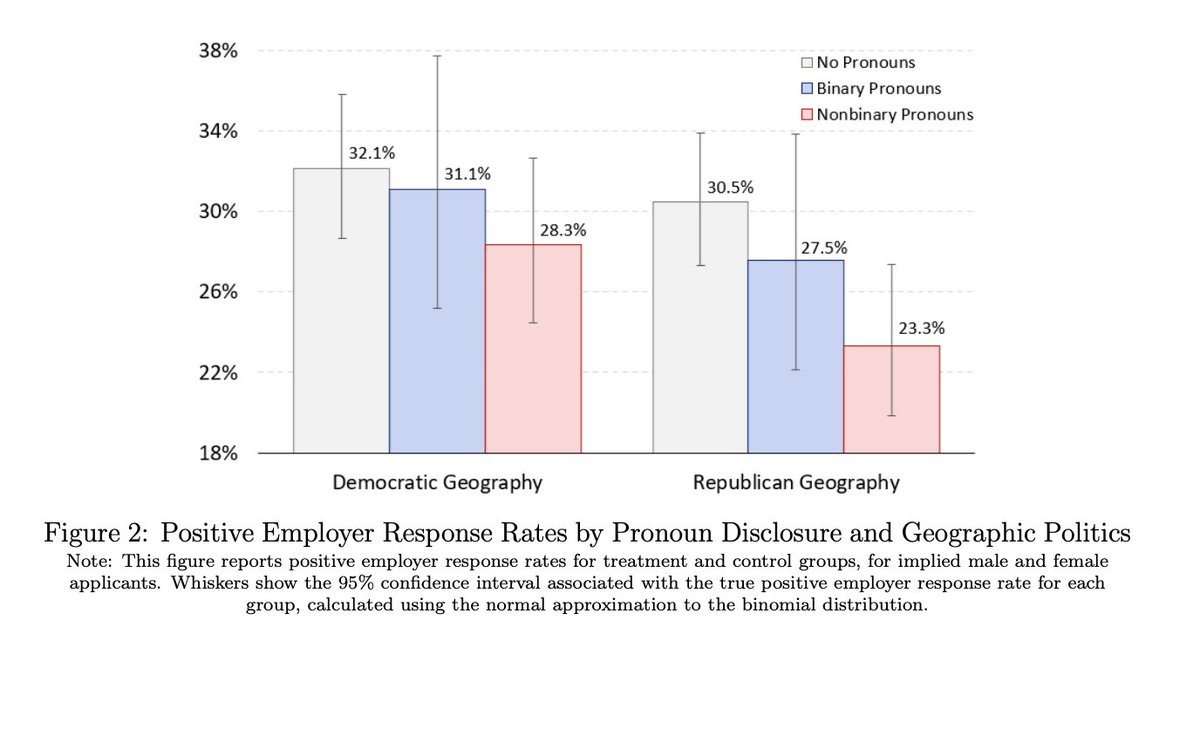
Clear evidence that employers discriminate against nonbinary individuals.
All-else-equal, disclosing that one uses "they/them” pronouns substantially lowers the chances of getting a job interview.
https://t.co/VJ8LlQR77H
PNAS recently published what is hands-down the most detailed study of the relationship between measured personality and intelligence
Let's go through it
First up: Neuroticism and the General Factor of Personality
Intelligence is negatively related to uneven temper and anxiety!
"The Big Five" won out because different scales, motivated by different theories, constructed in different ways, all seemed to fit under those five constructs.
It's really remarkable how well different constructs fit into the Big Five. Here's a clear example:
While dictionary methods (such as LIWC) are very widely used in psychology, GPT-4 is vastly superior at detecting manually-annotated sentiment and discrete emotions (r = 0.66-0.75) as compared to dictionary methods (r = 0.20-0.30)
Our paper on social and moral psychology of COVID-19, with the excellent lead by @Flavio_Azevedo is now out at Nature Scientific Data @Nature. Part of the ICSMP initial project led by @jayvanbavel and @alekscichocka that still gives a lot! Link: https://t.co/7DjQ4yH2Fk
What the research paper actually says: "Results are in line with previous research suggesting a consistent weak effect that is heavily moderated and mediated by contextual factors." What the press says: "All porn is bad for your sex life no matter what." 🙄https://t.co/FnVvsPiH5S
NEW (SPECIAL) EPISODE!
@EricNeumannPsy chats with ELLIOT ARONSON, one of the 100 most influential psychologists of the last century.
The 91yo (!) legend shares how he co-developed COGNITIVE DISSONANCE and the JIGSAW CLASSROOM.
https://t.co/oiJx1UrFDT
📢Need some inspiration to develop your political psychology?
There is still time to register for
5TH ANNUAL UK POLITICAL PSYCHOLOGY CONFERENCE
📆27 March - 31 March - Free & Online
👇
https://t.co/Ts4lJ5Ls7g
A collab: @psych_political@PSA_PolPsy@iccs_bham