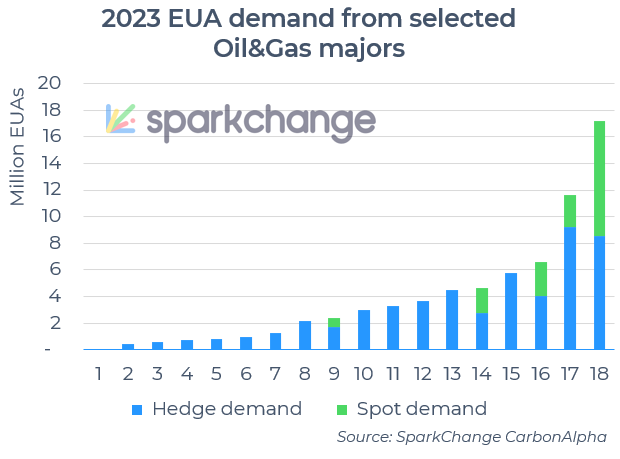
@SparkChangeCo2 data shows that most Oil&Gas majors are hedging their EUA demand, and just selectively complement this with spot purchases.
Find out more here: https://t.co/NknFtyiDNJ
(5/5)
Two truths and a lie:
1) Polish #power emissions are down ~15% against 2022
2) Polish refinery throughput is down 6% Year on Year
3) 2023 #EUA demand from Polish energy companies is down accordingly
A thread (1/5)
#OCTT#carbon#ORLEN2Q23#EUETS#carbonmarkets#ESG
Understanding how corporates manage their carbon allowance price exposure is critical to
👉 assess true EUA demand
👉 understand the competitive positioning against its peers. (4/5)
NABE – the biggest #EUA buyer you never heard of!
Something is rotten in the State of Poland: Being a laggard in decarbonisation for quite a while, the Polish government is now effectively forming a “bad bank” for emissions intensive assets.
(1/7)
https://t.co/78YAaNTC0t
💲 Furthermore, the positive impact on the four utilities is striking: @SparkChangeCo2 data shows that the utilities would have faced an EUA bill of €8.6 bn in 2024. A 1€/tonne uptick in carbon prices would have on average impacted the EBITDA by 7%.
(6/7)
At @SparkChangeCo2, we track more than 9,000 corporates globally on how they are exposed to carbon pricing. Emissions and free allocation in each carbon market like the #EUETS, #WCI, #RGGI and more, and how these companies purchase EUAs. Get in touch to learn more! (7/7)
‼️ Conclusion: Going forward, the utility hedge will reduce excess EUA demand. On the other side, the MSR reduced the available “excess” EUAs. But watch out: As industry receives less free allocation, they will start hedging EUAs, leading to increased excess EUA demand (6/7)