Today I returned to a 'Antique/Vintage Reclamation Shop' in #Suffolk, and bought these two beauties which I spotted the other day. Was delighted to find them still there. Original French milk bottles. Absolutely charming. Tactile, and just lovely.
@London_W4 What drama! A sorry start to your #Suffolk adventures. That dinghy has a lot to answer for. I hope it doesn't put you off, Suffolk is a beautiful county, and has much more to offer than a dunking. Sorry to read about your losses of equipment and valuables.
Cedars Hill, Wetheringsett in #Suffolk taken spontaneously with my android phone while passenger in a car, out of the open window. No edit/filter.
We were intrigued as to what the flowers on the verge might be?
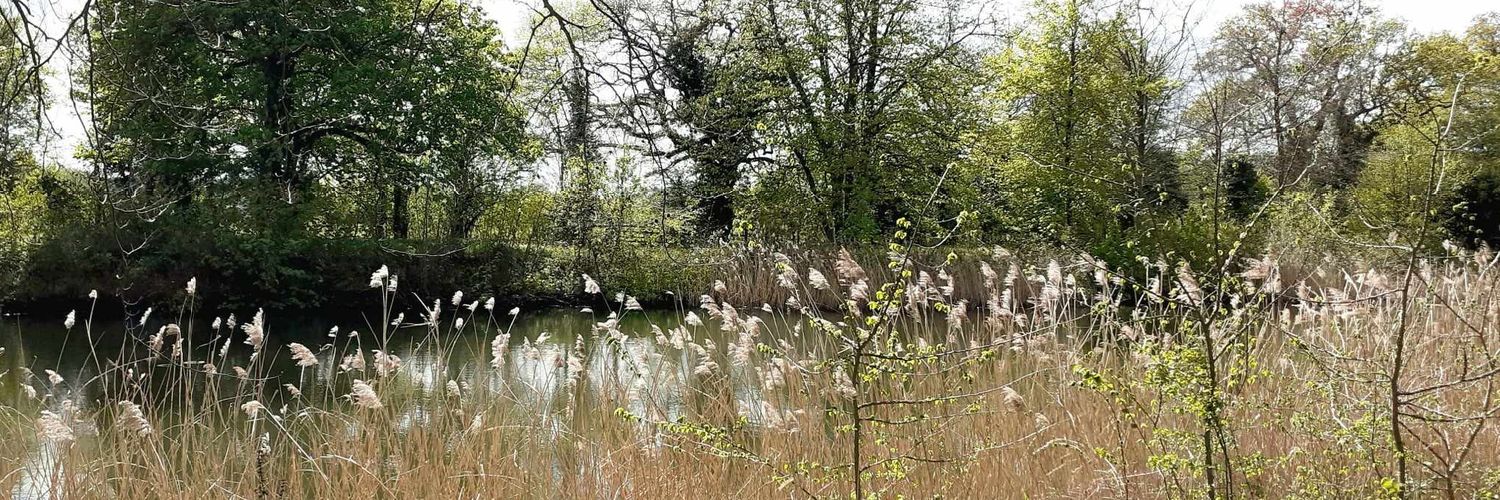
A beautiful #rural Suffolk scene to share taken by me 13.05.2026
@ahistoryinart What an atmospheric painting. I can almost feel the mood of that room, and the people at the table. I can hear the silence - is what it makes me want to say.
@rlrossi64
Great to see you again 😊 Thank you for telling / bringing friends to https://t.co/nr2mXSCt1K on Weds.
Pity you missed the #Love Train 😁💕
Next one Wed 17th Sept
@London_W4 It IS lovely. Near home for us. Lots of super places - and pubs - to visit in the area. Are you going to leave your boat locally, in Suffolk?
@London_W4 Omigod! This is so awful, your poor poor daughter, she must have been so frightened, and now undoubtedly feeling shocked and traumatised. I'm not surprised you are angry A. I am really sorry to read this. It's terrifying. Thank goodness you were nearby, you may not have been😢
Liver and onions was on the kitchen table of roughly every British household in the country, at least once a fortnight, from approximately 1850 to approximately 1985.
A Tuesday meal. Whatever day the butcher had lamb's liver in, or pig's liver if you were further down the week, or ox liver if the household was stretching the budget.
Your mother bought it that afternoon. Still warm, or nearly. Deep burgundy, slick and glossy on the butcher's paper. Half a pound. Tuppence. Change from a shilling.
She sliced it quarter of an inch thick, dusted it in seasoned flour, and laid it in a pan where a pound of onions had been going soft in bacon fat for twenty minutes. Two minutes one side. Two minutes the other. The middle still faintly pink. Overcooked liver was a mortal sin in a British kitchen, spoken of by grandmothers with genuine sadness, the way a priest might discuss a lapsed parishioner.
Pan juices deglazed with water and Worcestershire, poured over. Mashed potato. A pile of cabbage. A rasher of bacon laid across the top if it was a good week.
The whole thing cost, in 1962, approximately 8p per serving. It delivered, in a single plate, the highest concentration of bioavailable vitamin A in any food on earth, more B12 than any supplement will ever contain, haem iron at absorption rates a plant source cannot match, copper, zinc, choline, folate, and selenium.
Nobody called it a superfood. Nobody called anything a superfood. It was called Tuesday.
Then, between 1985 and 2005, liver quietly disappeared. Mothers stopped buying it. The butcher stopped ordering it. The supermarket stopped stocking it. By 2010, most British adults under thirty had never knowingly eaten it.
The word now carries a faint cultural embarrassment. A food your nan ate. Something to move past.
Meanwhile, 20% of British women of childbearing age are anaemic. The NHS prescribes them ferrous sulphate tablets that cause nausea and take six months to address a deficiency one plate of liver a fortnight would correct in weeks.
The women taking the tablets are, in many cases, the granddaughters of the women who ate the liver.
The deficiency is cultural amnesia with a prescription attached.
Your butcher still has lamb's liver in the counter. Ask him. He will be delighted. He might throw in the kidneys.
Flour. Bacon fat. Onions. Four minutes total. Worcestershire. Mashed potato underneath.
The grandmother is gone, but the dish remembers her, and so do you, whether you knew her or not.
Eat it. Pass it on.