A school that adopts retrieval practice without understanding the testing effect has not adopted retrieval practice, it has adopted a quiz. Understanding the underlying theory underpinning any strategy is absolutely key to avoiding lethal mutations.
I will be talking about the importance of a shared understanding of how learning happens and how leaders need to lead on this. Honoured to be giving a keynote at the Victorian Government Schools Principals Conference today.
If you teach anyone at all, and you don't know about @helenrey's CogSci book summaries, you are missing out. It's a wonderful resource summarizing the most important books on cognitive science: https://t.co/TB0bPExfck
Would highly recommend you watch David Foster Wallace talking about boredom, and why some people now find it so hard to read.
Sorely wish he were around today to hear his views on TikTok and the like.
New article from E. D. Hirsch and me on (1) the evidence for the importance of knowledge in reading; (2) why it’s taken so long for people to acknowledge the evidence; (3) what we predict if the role of knowledge is taken seriously. https://t.co/JJONYhQCxQ
Finished teaching #Macbeth to my top set Y10 last week - Tomorrow we do a knowledge check, then we plan for an essay! Hoping to get them pushing conceptually by considering the tragic structure of the play. #gcselit
I am loving creating quotation explosion sheets at the moment. I feel like it is such a useful visual aid for my classes before they tackle a full essay! I use them via I do, we do, you do.
The student who can't write a coherent paragraph about photosynthesis doesn't have a "paragraph structure" problem; they have a photosynthesis problem.🧵⤵️
This is a MEGA BUNDLE of EVERY SINGLE resource in my shop (last updated 08.02.26 and nothing new since). https://t.co/LY8cQsjrVs #teachers#englishteacher
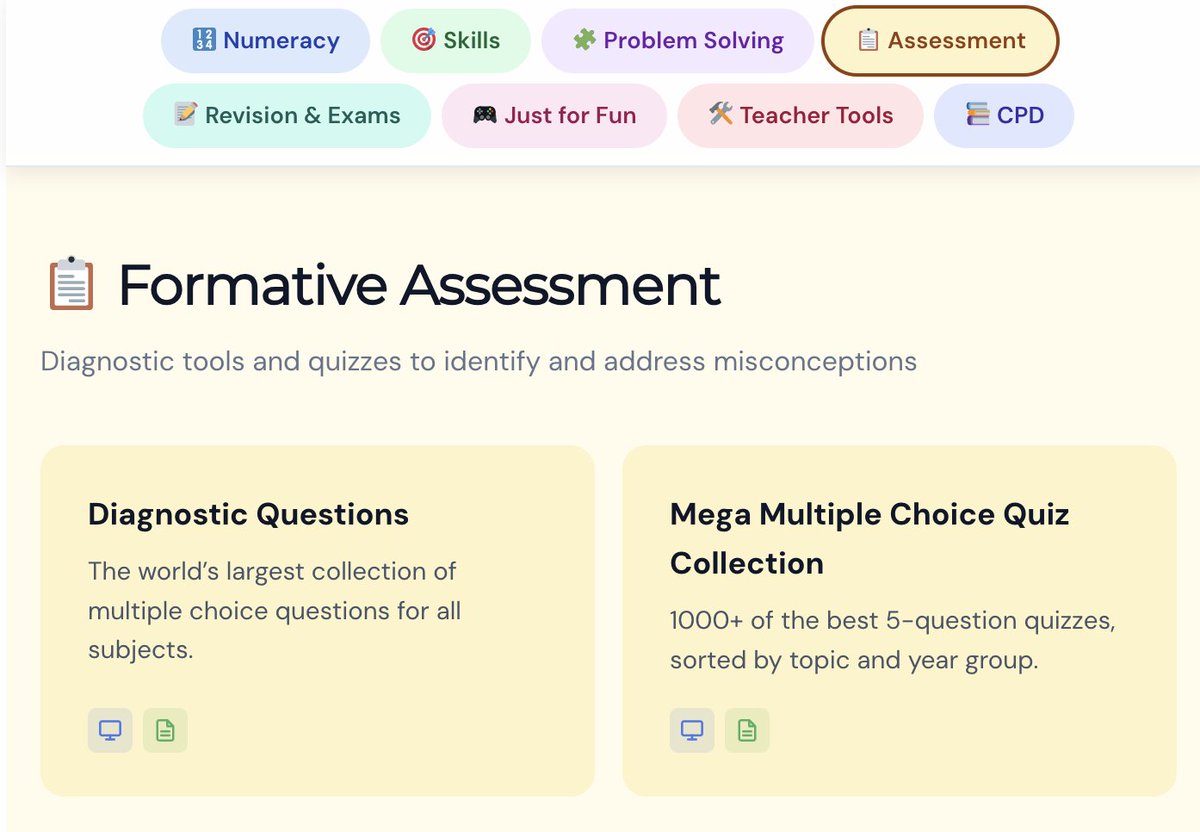
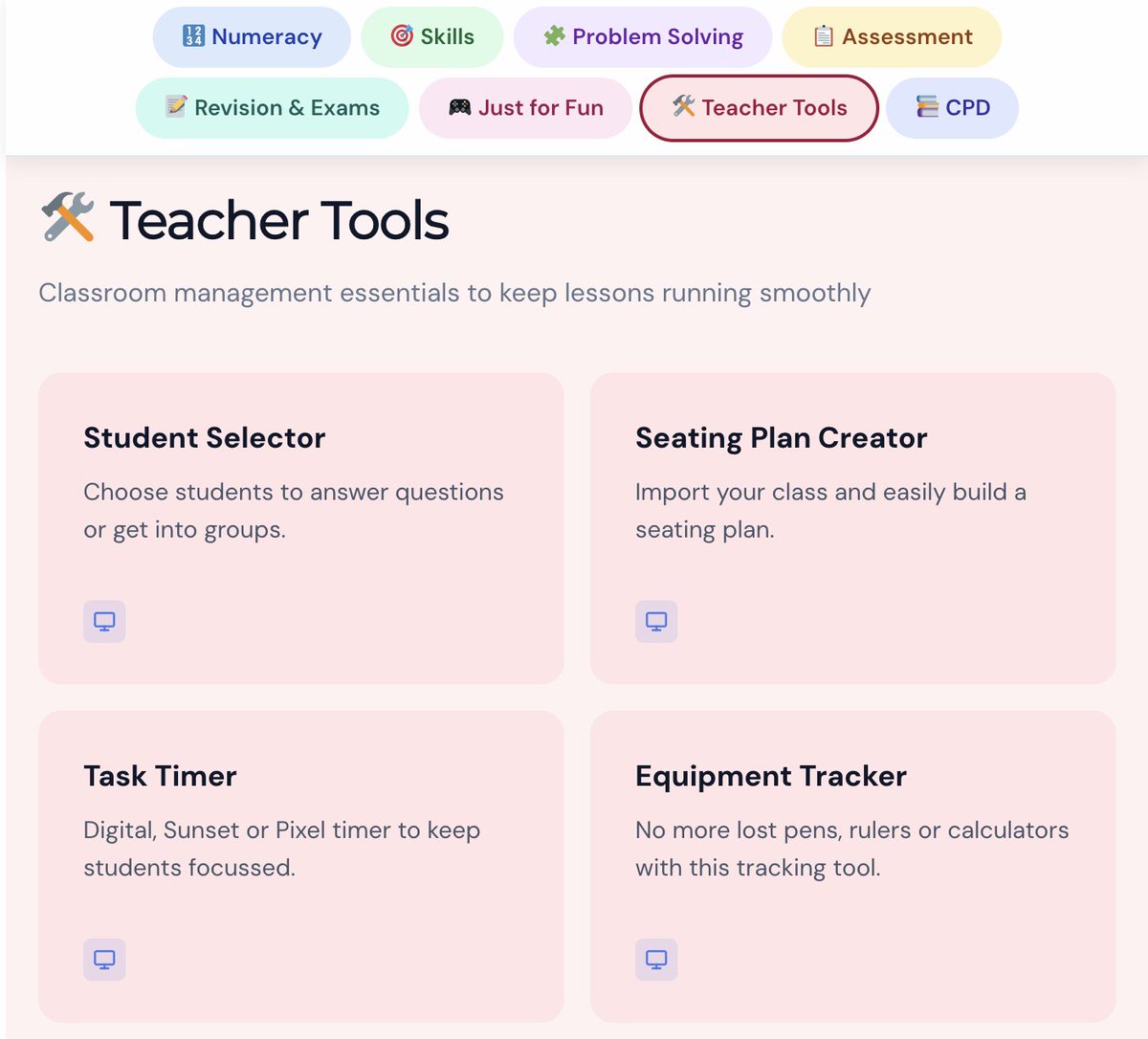
I have just pushed live a MASSIVE update of my Mr Barton Maths website - all 100% free. If you find it useful, please help spread the word by sharing this post 🙏
Jared Cooney Horvath refers to AI as "the tool nobody asked for, solving problems nobody had." The problem with AI in education? Kids will use it to offload thinking and they don't know enough to vet the output. It helps experts, but not novice learners. Watch the clip below ⬇️
The activity fallacy: an obsession with instructional novelty has produced a strange inversion of priorities. Teachers are sent on courses to acquire new “strategies,” to diversify their repertoire of techniques.
Meanwhile, the curriculum they are teaching may be completely incoherent, the sequence arbitrary, the assessment disconnected from both. This is what @Counsell_C calls an “intransitive pedagogy”; a pedagogy without an object.
Study of 364 students finds that morphological awareness (roots/suffixes) is a top predictor of reading efficiency in Grades 3–5. https://t.co/rSKgjQxqlt
England’s school's have achieved competitive advantage over those in the US by stressing knowledge-rich curriculum, more rigorous assessment & teaching informed by principles of cognitive psychology.
Now they’re phone free too. And good for them. English kids deserve that.
The question is: Will US schools keep pace or let themselves fall even further behind?
“Teachers of young students at all levels can readily use this upward/downward scaffolding framework to help them answer open-ended questions about books read aloud.”
Oral language skills are often assumed, undervalued, and under-taught in early elementary years yet are essential for reading and writing proficiency.
This article highlights the importance of Oral Langauge skill instruction in the classroom while providing practical, evidence-based instructional strategies to support students’ oral Langauge development.
SORticle: Asking Questions is just the First Step:Using Upward and Downward scaffolds by Dr. Sonia Cabell and Dr. Tricia Zucker, authors of the Strive-For-Five book by Scholastic.
Link: https://t.co/mVCqa8pluz #SoRticle @SoniaCabell@tricia_zucker
Why do students keep using study strategies that don't work? (even when they know they don't.) A big takeaway from this study for me is the claim that if classrooms cue weak strategies, students will keep using them.
https://t.co/QspIppFvzB
Cognitive psychology tells us something about memory, attention, cognitive load; the underlying machinery. But instructional design requires a different kind of knowledge: knowledge of how to arrange conditions so that learning actually occurs.
This is knowledge of the artificial. It cannot be derived from psychology alone any more than architecture can be derived from physics alone.
@Kris_Boulton is absolutely right about this and echoes something I read recently from Herbert Simon which is that learning to read or solve mathematical problems is artificial and needs artificial solutions.
Expert instructional design asks: what might this learner become that she could not become without intervention? What knowledge, inaccessible to spontaneous acquisition, might be made accessible through the deliberate arrangement of experiences, explanations, practice, and feedback? The answers are not given by nature. They must be designed.
See Kris's excellent discussion of this topic here: https://t.co/kBenfyeL3E
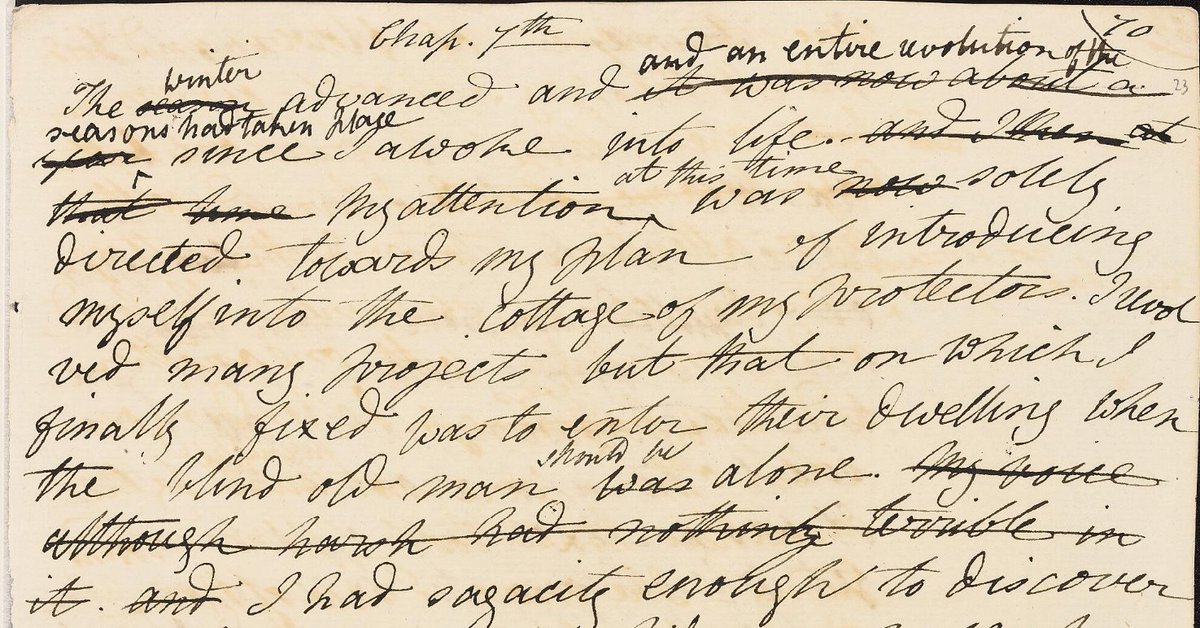
Mary Shelley drafted Frankenstein in two tall notebooks. The first was probably purchased in Geneva, the second several months later in England. They were later disbound, and now exist as single sheets, which we have digitized for your online perusal. https://t.co/8mK93abWGe