I have set out the washi (和紙 paper mache) decorations for Tango-no-sekku (端午の節句 Boys' Day). Do you see the little paper hat on the tiger? Next to him on the right is a set of bow and arrows, on the left a samurai sword, and beyond that a drum. "Capture the flag" in a fun game for kids in any country!
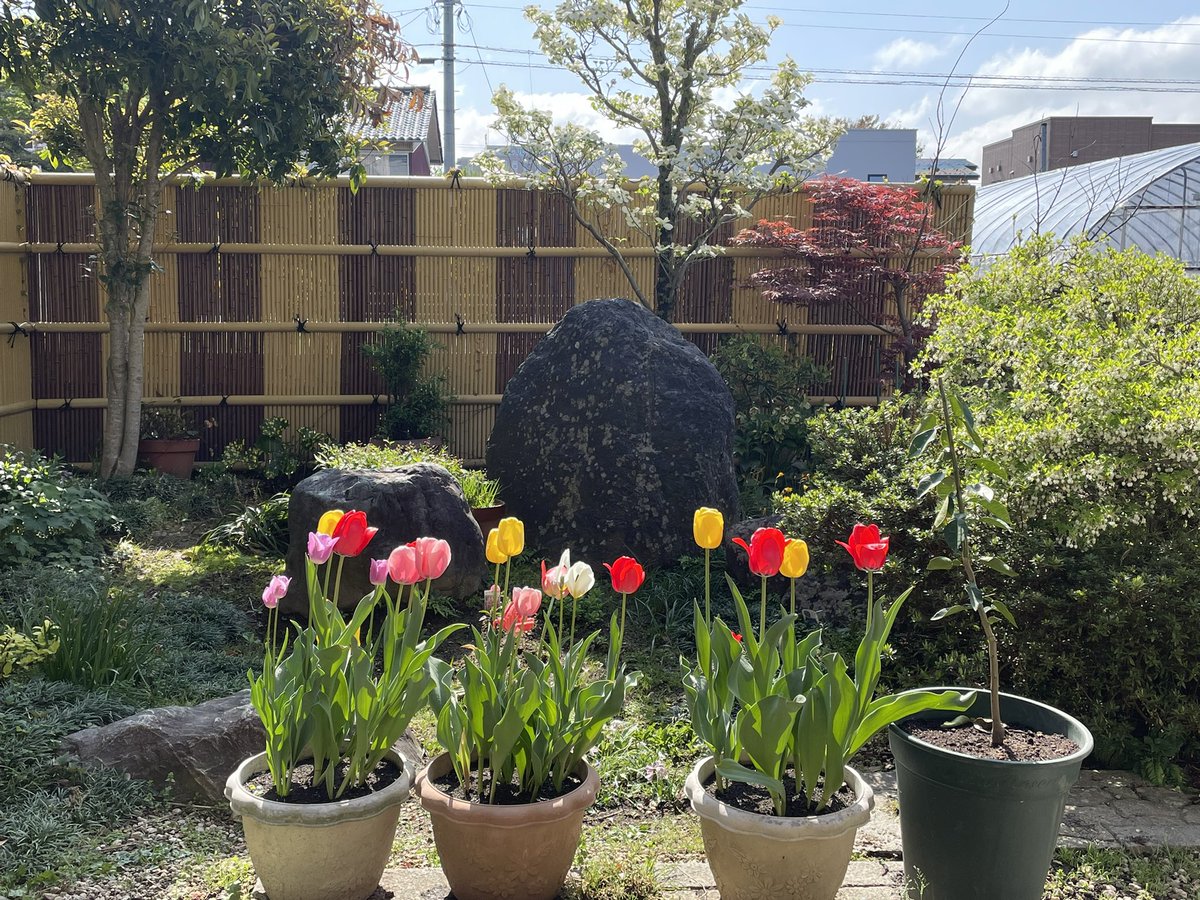
The sakura season hasn’t finished! Through the beginning of May certain gardens and shrines will feature yellow sakura (黄桜). It’s at mature and understated blossom! Ours are in full bloom now.
今日の射 todays sha🎯
午前中お仕事済ませ
午後のお稽古は少人数で
落ち着いてゆっくり研究🥰
Happy Tuesday (feels like Monday😙)Chill afternoon practice after work today.
#kyudo#弓道#研究#冬#Japan#gaijintwitter
Check out this short performance of Atsumori (敦盛) by actor Minamoto Koshiro (源光士郎). It includes noh (お能) utae (謡) singing and stylized kata in a type of theatre called buraku (武楽).
Though there are many, let me tell you the two types of sakura that define the season: Kawazu Sakura (河津桜) and Somei-yoshino (染井吉野).
Kawazu sakura are the earliest blooming sakura, with full blossoms as early as February. They're remarkably strong, too, with a whole month of bloom. They're a bright, vivid pink, competing with the late seasonal plum flowers.
But the main star of the show - the point at which everyone breaks out the hanami - is the somei-yoshino. This blossoms in late March, traditionally during the period of "Sakura Hajimete Hiraku" 桜始開. These flowers are only barely pink themselves, but when layered at their fluffiest they're akin to cotton candy. They last about as long as cotton candy, too; more or less a week before they fall to the ground. This short but dramatic lifespan is what inspires poetry and adoration.
In conclusion, the sakura season is from February to early April, but the main show is the last two weeks of March.
I kinda love the Ghibli store in Shinsaibashi 🤗
There's always something cute to see like these adorable finger puppets. Plus some excellent photo spots📸