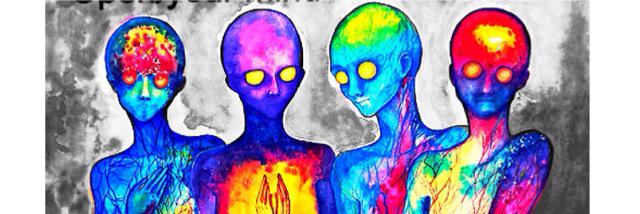
Pattern Recognition is also the form of intelligence that causes the most stress.
You will see things that others do not.
You'll feel crazy.
Things will be *so obvious* to you, and others will just deny it.
In May 1860, she kissed her six children goodbye. She thought about the dinner she would cook later. She thought about the laundry. She thought about the quiet life of a mother in Illinois.
She had no idea that when the front door clicked shut, it would stay locked for three long years.
Her husband, Theophilus Packard, was a respected minister. To the neighbors, he was a man of God. But inside their home, he was a man who could not stand a wife who thought for herself. Elizabeth Packard liked to read.
She liked to debate religion. She had her own opinions about life and faith. In the 19th century, for a woman to have a brain was considered a danger.
Theophilus decided to end the argument once and for all. He didn’t need a crime. He didn't need a witness. In those days, the law in Illinois said a man could commit his wife to an insane asylum without any evidence or a public hearing. He simply had to say she was "disturbed."
One morning, a group of men arrived at her home. They didn't listen to her logic. They didn't care about her tears. They dragged her away to the Jacksonville Insane Asylum. Elizabeth was 43 years old, perfectly sane, and suddenly a prisoner.
When she entered the asylum, she expected to see people who needed medical help. Instead, she found a warehouse of "inconvenient" women. There were wives who had argued with their husbands about money. There were daughters who refused to marry men they didn't love. There were women who were simply too loud or too independent.
"This is not a hospital," Elizabeth realized. "It is a cage for the unwanted."
The doctors tried to break her spirit. They told her that if she just admitted her husband was right and she was wrong, she could go home. They wanted her to say she was crazy for wanting her own thoughts. Elizabeth looked them in the eye and said, "I cannot buy my liberty by a lie."
She didn’t give up. Instead, she started to write. She hid scraps of paper in the linings of her clothes. She tucked notes under floorboards. She recorded every abuse, every scream in the night, and every story of the women around her. She became a secret journalist inside a living nightmare.
After three years, she was finally released, but her husband locked her in a room at home. He planned to move her to another asylum in a different state. This time, Elizabeth’s friends helped her get a message to a judge.
A trial was finally ordered to determine if she was actually insane.
The courtroom was packed. Theophilus was confident. He brought "experts" to say that her religious doubts proved her mind was broken. But then, Elizabeth stood up.
She didn't shout.
She spoke with the calm power of the truth. She explained her beliefs. She showed the jury that having a different opinion is not a disease.
The jury only needed seven minutes. They came back with a single word: Sane.
Elizabeth walked out as a free woman, but she found that her husband had taken everything. He had sold their furniture, taken her money, and disappeared with their children. She was alone and penniless.
Most people would have disappeared into the shadows. Elizabeth did the opposite. She spent the next forty years traveling the country. She stood before the legislature and demanded new laws.
She said, "A woman's mind is her own, and the law must protect it."
Because of her, states changed their laws. They made it illegal to lock a person away without a fair trial and a medical exam. She turned her private pain into a public shield for thousands of other women.
She proved that even if you take away a woman’s home, her money, and her children, you can never truly take away her voice.
Winston Churchill fought his depression with bricks. He'd lay them for hours at his country home in Kent. He joined the bricklayers' union. And in 1921 he wrote about why it worked. It took psychology another 75 years to catch up.
He called his depression the "Black Dog." It followed him for decades. His method for fighting it back was as basic as it sounds: laying brick after brick, hour after hour.
Churchill spelled out his theory in a long essay for The Strand Magazine. People who think for a living, he wrote, can't fix a tired brain just by resting it. They have to use a different part of themselves. The part that moves the eyes and the hands. Woodworking, chemistry, bookbinding, bricklaying, painting. Anything that drags the body into a problem the mind can't solve by itself.
Modern psychology now calls this behavioral activation. It's one of the most-studied depression treatments out there. Depression sets a behavior trap. You feel bad, so you stop doing things, and doing less means less to feel good about. Feeling worse makes you do even less. The loop tightens until you can't breathe inside it.
Behavioral activation breaks the loop from the action side. You schedule the activity first, even when every part of you doesn't want to. Doing it produces small rewards: a wall gets straighter, a painting fills in, a messy room gets clean. Those small rewards slowly rewire the brain. Action comes first, and the feeling follows.
Researchers at the University of Washington put this to the test in 2006. They studied 241 adults with major depression and compared three treatments: behavioral activation, regular talk therapy, and antidepressants. For the people who were most severely depressed, behavioral activation matched the drugs. It beat the talk therapy. A 2014 review of more than 1,500 patients across 26 trials backed up the result.
Physical work like bricklaying does something extra on top of this. It crowds out rumination, the looping bad thoughts that grind people down during the worst stretches of depression. Bricklaying needs both hands and gives feedback brick by brick: each one is straight or crooked. After an hour you can see exactly how much wall you built. No room left for the mental chewing.
The line George Mack used in his post, "depression hates a moving target," is good poetry. The science behind it is sharper. Depression hates a brain that has somewhere else to be.
we live on a planet where trees warn each other of danger through underground networks. where octopuses dream. where elephants return to the bones of their dead and stand over them in silence. where bees communicate through dance, showing each other where to fly. where flowers bloom...where crows remember human faces -especially those who were cruel to them - and pass that memory on to their young. where ants build entire cities. where cats purr at a frequency that can help heal bones. where forests, after fires, grow flowers first.
After a certain age, your parents slowly become your children. They ask simple questions, repeat stories, and depend on your patience the way you once depended on theirs. Very few understand this role reversal.What looks like innocence or inconvenience is really time coming full circle. Don't correct them harshly. Don't rush them. Care for them the way they once protected you. This is not a burden. It is repayment.
my life got significantly better once i realized that the suffering I've experienced doesn't make me more interesting or more complex, and that I would enjoy life more if i moved on and earnestly tried to be the happiest version of myself every day
If you're the mother who was reading Harry Potter and the Philosopher's Stone aloud to your child on the LNER train from London to Edinburgh yesterday, one of my grown up children was listening and says you did the voices brilliantly❤️🥹
i just dont understand how in 3 years people went from knowing how to google to forgetting google even exists.... like why r we using chatgpt as a search engine ITS NEVER BEEN A SEARCH ENGINE
Why do you think our lives have been perfectly created in a way to pull us away from silence? All these perfectly engineered forms of media made to capture and direct your attention towards the sustainment of our own destruction. News, Brain-rot, Status Farming, Looksmaxxing, Flexing, Rage Bait etc..
It’s all made to rot your soul, to scramble the signal that is always trying to reach you. You’re manipulated to feed into the fear, the lack, the conditioned desires, the stimulation and continue drowning yourself into a deeper void that you can’t even consciously perceive. Each person stuck here fulfils the solidity of illusion which engulfs our perception as a collective. Bringing forth hell, to step over another to get ahead, to focus purely on the serving of the self, games of taking to gain, to idealise bathing in the praise of those bow beneath you.
Most people can’t sit in silence because they can’t face themselves. They can’t face the truth of what is, what they’ve been running away from, not because they are cowards but because they are ignorant. They’ve been conditioned to feel pity for themselves, to believe they’re horrible people, that they’re not good enough, that they’re not deserving but don’t you see. This flawed perception is the ultimate illusion? Your view is tainted.
See yourself how God sees you. Learn how to love yourself unconditionally, to forgive yourself, to forgive others, to have faith in the events that did happen, where you are and where you’re going. Learn how to cultivate this within yourself and bring it to the world. To be one who walks the way of Truth, To show who you are with grace instead of hiding behind a “perfect” persona.
To humble yourself before the Truth of WHAT IS and transform their perception and approach to life. This is one the most beautiful things to do, to authentically radiate your energy in the world and inspire that uniqueness out of others, to dance in the playground of life with your brothers and sisters.
Silence is where you’ll discover the presence of God and be reminded of what you always have been. The best approach is not to wallow in silence, but to learn how to transform your perspective into that of ultimate love and wisdom through listening to the silence.
The most dangerous thing about leaving Earth isn’t the vacuum.
It’s the clarity.
When astronauts return from long missions, most talk about the Overview Effect in poetic terms. They describe seeing Earth as fragile, borderless, beautiful.
What rarely gets reported is the second layer of that experience — the part where the beauty curdles into something more disturbing.
Because once you’ve watched the planet from that altitude long enough, the human activity you observe starts to look less like civilization and more like a colony of organisms running programs they never consciously chose. Wars over invisible lines. Cities choking on their own exhaust. Seven billion people sprinting toward goals that were handed to them before they were old enough to question whether they wanted them.
I don’t think the “Big Lie about humanity” he’s describing is some kind of a conspiracy.
It’s something quieter and far more pervasive. It’s the collective hallucination that the world you were handed at birth is the world as it actually is. That the values you absorbed from your culture are the values that exist in nature. That the urgency you feel about status, money, and approval reflects something real about the universe rather than something manufactured by systems that benefit from your compliance.
Orbital altitude strips that hallucination away with brutal efficiency.
Gravity keeps more than your body on the ground. It keeps your perspective locked inside the consensus.
Astronauts who spend months outside that gravity field don’t just lose bone density. They lose the psychological weight of inherited assumptions. And when those assumptions lift, what sits underneath them is a question most humans never get forced to confront in a lifetime.
What would you actually want if nobody had ever told you what to want?
The Big Lie was never about them.
It was always about that question and how hard the entire structure of modern life works to make sure you never stop long enough to ask it.
Let me explain what this means so that you understand better.
.
Sometimes tiny cells in our stomach get very stubborn and turn into bad guys called cancer. They grow way too fast and don't listen to the body's rules.
.
But you see, these smart scientists in Korea didn't want to fight them with big scary bombs and bazookas like old medicines do. Instead they sat the cells on a wooden bench and said "Look here you stubborn cells, why don't you just remember who you really are and be good again?
.
So they made a pretend computer twin of our belly cells. Just like a magic video game version. (something like that sha) so they played around in the game to find the three bossy switches that were making the cells stay stubborn.
.
.
Those three bossy switches have funny names. They are MYB, HDAC2, and FOXA2.
Fantastic 3 lool
.
The scientists turned those three mean switches Off. Poof.
And just like that guess what? The stubborn cancer cells were like "Ohhh… I remember now!
.
Then they calmed down, grew up properly, and turned back into nice, normal belly helper cells. No more bad growing.
They then tried this in Mice, and the poor mice got better. The bad lumps got smaller because the cells stopped being the bullies they were.
It's like telling your barking Dog at home to shusss and calm down. And it actually calms down.
.
.
This isn't ready for humans yet, as it's still developing. But it's going to help out someday. And well, a lot of people are gonna be wayyyy happier.
.
.
.
Kudos to the scientists once again and I'm super happy about this development and the positive impact it's going to have on affected people 💪🏾💪🏾
.
✍️ Vincent The Therapist
Your brain doesn't age because of time. It ages because of repetition. The more predictable your days become, the faster your neurons quiet down. Your brain builds neural pathways based on experience. New experiences create new connections. Repetition strengthens old ones. But when you repeat the same patterns for years, your brain stops building. That's why time feels faster as you age. Your brain stops encoding new memories. It just references old ones. A year at 40 feels shorter than a year at 10, because at 10, everything was new. At 40, everything is familiar. But neuroplasticity doesn't stop. You can still grow new neurons. You can still learn. You can still change. You just have to break the loop. Your brain will wake up. And time will slow down again.