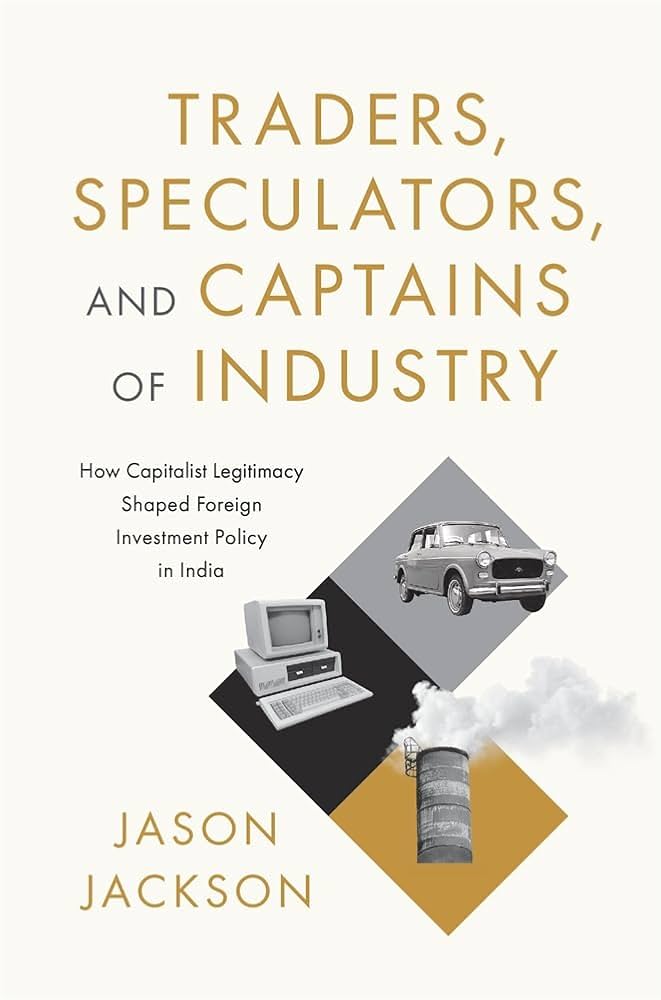
My book “Traders, Speculators and Captains of Industry: How Capitalist Legitimacy Shaped Foreign Investment Policy in India” published by @Harvard_Press is out! https://t.co/Yeqp4htpn4
Today, Patrick Lin explains how surveillance pricing is making it easier for corporations to exploit consumers, how states are starting to push back against these practices, and why those efforts are running into First Amendment challenges.
Looking forward to this Zoom discussion of my @Harvard_Press book “Traders, Speculators, and Captains of Industry” hosted by the @APPEALResearch Law and Political Economy Collective this Friday (4/10) at 3pm ET. Join us!
https://t.co/RUXpKj3JAj
Today, Noam Maggor concludes our symposium on @JasonBJackson's *Traders, Speculators, and Captains of Industry.*
Although rooted in Indian history, he argues, the book’s thoroughly global-comparative mode of analysis allows it to resonate far beyond South Asia.
Week in review: Seven of our favorite labor scholars on a pro-labor vision of the Constitution, @jeenashahesq on Trump’s contradictory treatment of Hernández and Maduro, & @NMaggor on how “good” and “bad” capitalists are not born but made.
Plus, new CFPs, talks, and rankings!
Today, Aditya Balasubramanian continues our symposium on @JasonBJackson's *Traders, Speculators, and Captains of Industry.*
Given that Indian firms spend virtually nothing on R&D, he asks, how we should understand the modernity of so-called “modern Indian capitalists”?
Today, @veenadubal and @AzizaAhmed discuss the feminist lawyers and activists who transformed the law and science of AIDS, the CDC’s willful ignorance around the disease’s reach, and the adverse public health consequences of carceral feminism.
Appreciate Amy Cohen’s response to my book, esp the link w/Melinda Cooper’s “patrimonial capitalism” + moralized distinction btwn firms that are privately held or founder-controlled thru complex legal structures (eg tech) & the publicly traded corporation of managerial capitalism
Today, Amy Cohen continues our symposium on @JasonBJackson's *Traders, Speculators, and Captains of Industry,* considering what his framework might tell us about the recent return of patrimonial capitalism in the United States.
Watch the latest @SouthAsiaBrown Book Adda with @JasonBJackson on Traders, Speculators, and Captains of Industry, exploring how Indian and foreign business leaders shaped foreign investment policy through questions of capitalist legitimacy. (VIDEO)
https://t.co/Dbp1SBLkc3
Sven Beckert argues that market and state expansion have run parallel for 500 years. For him, the idea that they are opposing forces is historically inaccurate; the state is a co-producer of capitalism.
Full episode of the EPH Podcast with Sven: https://t.co/eTjbDlGXTu
Today, Amy Cohen continues our symposium on @JasonBJackson's *Traders, Speculators, and Captains of Industry,* considering what his framework might tell us about the recent return of patrimonial capitalism in the United States.
@veenadubal Thank you so much @veenadubal! Especially grateful for the kind words as I continue to learn so much from your work on labor, law, and tech esp in the urban mobility and ridehailing platform space. 🙏🙏
So honored to have an @LPEblog symposium on my new @Harvard_Press 📕“Traders, Speculators, and Captains of Industry”! Am deeply grateful to @LPE_Project colleagues for the opportunity, and to my respondents @NMaggor, Aditya Balasubramanian & Amy Cohen for engaging w/my work. 🙏
Today, @JasonBJackson kicks off a symposium on his new book, *Traders, Speculators, and Captains of Industry: How Capitalist Legitimacy Shaped Foreign Investment Policy in India.*
Economic policymaking, he argues, is best seen as a state-led project of moral ordering of capital.
Today, @JasonBJackson kicks off a symposium on his new book, *Traders, Speculators, and Captains of Industry: How Capitalist Legitimacy Shaped Foreign Investment Policy in India.*
Economic policymaking, he argues, is best seen as a state-led project of moral ordering of capital.
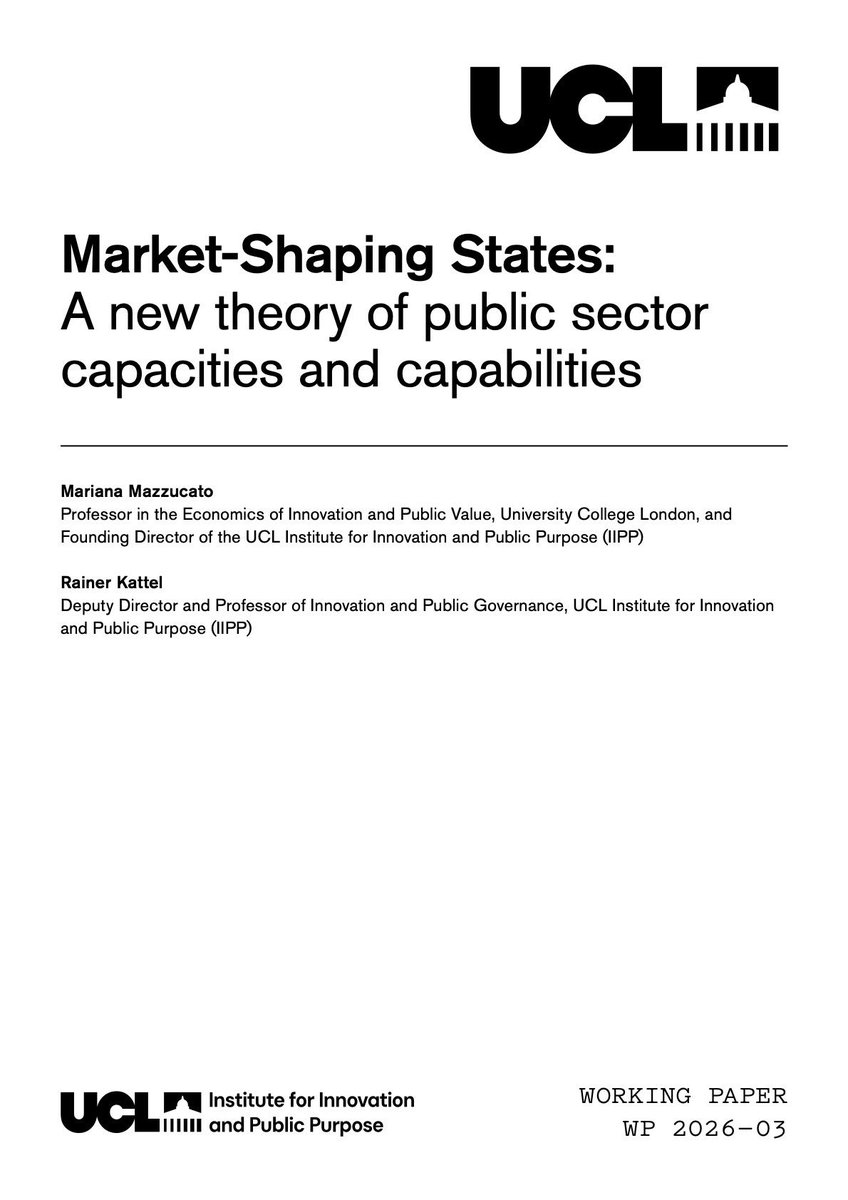
New working paper with Rainer Kattel: Market-Shaping States.
Governments face a paradox—they need stability to sustain direction over time, yet agility to adapt when conditions change. These aren't opposing forces. They're complementary capabilities that must work together.
We present a framework showing how structural capacities, organisational routines and dynamic capabilities interact to create public value. Strong strategy without learning leads to rigidity. Strong delivery without direction leads to fragmentation.
Read the paper ➡️ https://t.co/uG02EbD4n8
**CALL FOR PAPERS**
LSE–NYU Conference 2026
Making States Work: Capacity, Accountability and Economic Foundations
🗓 Deadline: 6 March
More details and how to submit your paper 🔽 https://t.co/DLqDrRxuzA
#PoliticalEconomy
Why did India welcome some capital—and rejected other forms?
🎙️ New episode of the EPH Podcast with @JasonBJackson
A conversation on:
• “Good” vs “bad” capital
• Coca-Cola, nationalism & legitimacy
• Why capitalism is a moral system
▶️ YouTube: https://t.co/3t8Zwp2Yq6
Deadline for paper/panel submission for the 1st ever @isanet conference in South Asia has been extended (March 2)! And we are working on resolving the technical problems with submission asap. More on the conference 👇