Of the 56 men who signed the Declaration of Independence, Abraham Clark may have paid the highest personal price. Almost nobody knows his story. Buckle up.
He was a New Jersey farm kid considered too frail for farm work, so he taught himself math, then surveying, then law. He never got rich from it because he kept defending poor farmers who could not pay him. His neighbors called him "the Poor Man's Counselor."
In the early hours of July 4, 1776, while Congress debated independence in Philadelphia, Clark wrote a letter to a friend with one of the most chilling lines of the Revolution: "Perhaps our Congress will be exalted on a high gallows."
He signed anyway.
Then the British made it personal. Two of his sons were officers in the Continental Army, and both were captured. They were thrown onto the prison ship Jersey in New York Harbor, the deadliest place of the entire war. More Americans died on British prison ships than in every battle of the Revolution combined.
One son got it even worse. He was locked in the dungeon and given no food except what other starving prisoners could push through the keyhole of his cell.
The British reportedly offered Clark a deal: renounce the Declaration, switch sides, and your boys go free.
He refused.
Here is the part that breaks me. Clark sat in Congress through all of it and never once brought it up. No special pleading, no favors. Congress only found out through other channels and threatened retaliation against a British officer, which finally got his son out of the dungeon.
After the war, he kept choosing the little guy. He fought for debt relief for struggling farmers and refused to support the Constitution until he was assured a Bill of Rights would protect ordinary citizens.
In September 1794, at age 68, the self-taught surveyor who outlasted the British Empire died of sunstroke after a long day working on his own farm.
No statue on the National Mall. No musical. Just a small town in New Jersey called Clark, and most people who drive through it have no idea why.
Some men signed the Declaration with ink. Abraham Clark signed it with his sons.
On this night in 1781, one man on a horse saved the American Revolution from losing Thomas Jefferson, Patrick Henry, and half of Virginia's government in a single morning.
You were never taught his name.
June 3, 1781. The British had chased Virginia's entire government out of Richmond. Jefferson, in his final days as governor, and the legislature had fled to Charlottesville, thinking they were safe in the foothills.
They were wrong.
That evening, 26 year old militia captain Jack Jouett was at a tavern in Louisa County when roughly 250 of the most feared cavalry in the British army came pounding down the road. Their commander: Banastre Tarleton, nicknamed "The Butcher," the man whose dragoons had cut down surrendering Americans at Waxhaws.
There was only one place they could be going. Charlottesville. 40 miles away. And the capture of Jefferson, the author of the Declaration of Independence, would be the prize of the war.
Jouett couldn't outrun them on the main road. So he didn't use it.
He swung onto overgrown backwoods trails and the abandoned Old Mountain Road, riding 40 miles through the dark with only the full moon for light. Legend says low hanging branches whipped and scarred his face for life.
Tarleton stopped his men for a 3 hour rest. Jouett never stopped.
Before sunrise on June 4, he came up the mountain to Monticello and woke Jefferson. Then he rode down into Charlottesville and warned the legislature.
Jefferson got out with minutes to spare. British dragoons were coming up his mountain as he left. The legislature escaped over the Blue Ridge to Staunton. Tarleton caught only seven stragglers, one of them a frontiersman serving in the legislature named Daniel Boone.
Paul Revere rode about 12 miles in 1775 and got captured before reaching Concord. Longfellow wrote him a poem and made him immortal.
Jack Jouett rode 40 miles, lost nothing, saved everything, and got a thank you gift of two pistols and a sword from the Virginia Assembly.
No poem. No fame. Almost no memory.
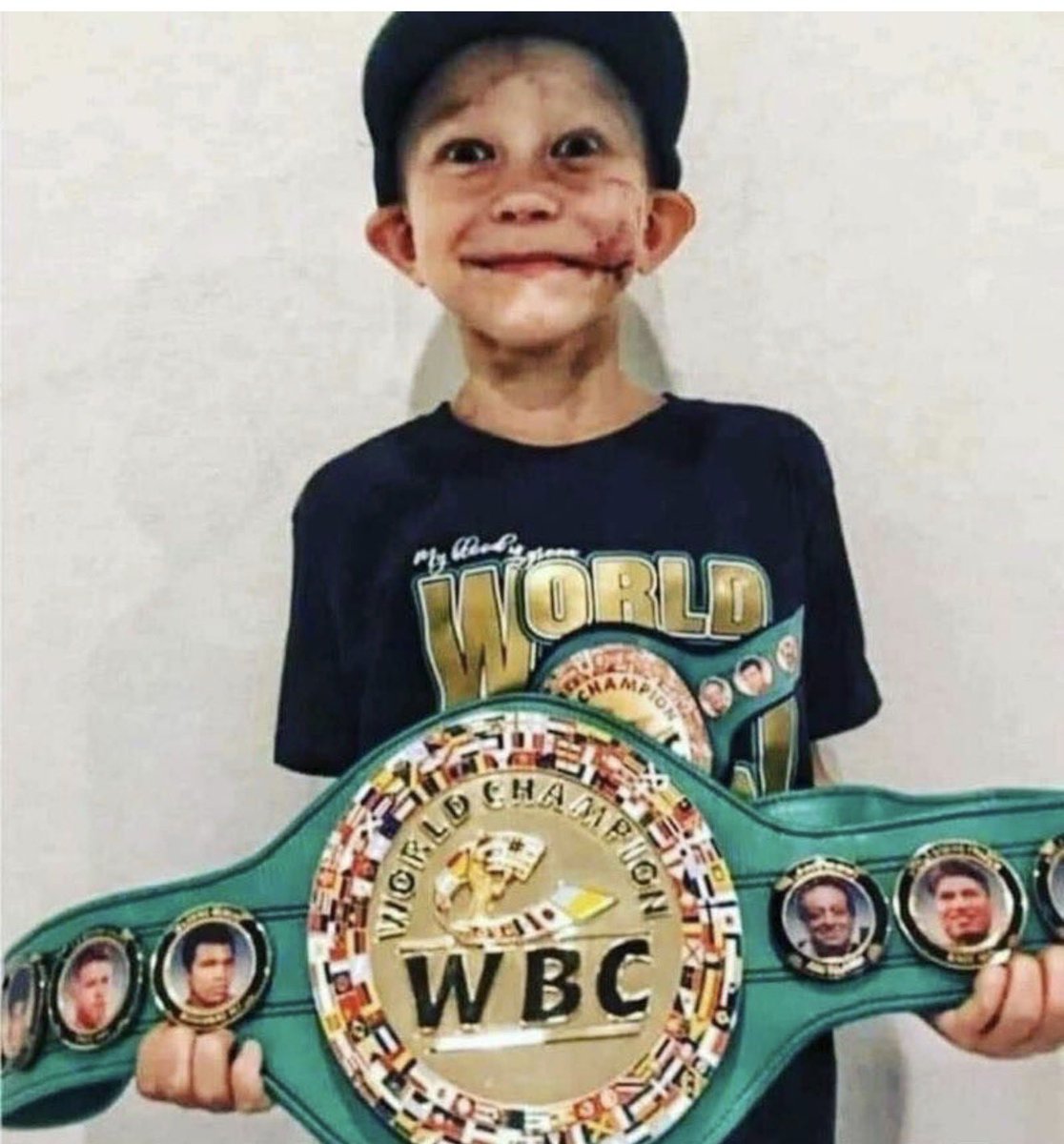
"Bridger Walker is the boy who saved his younger sister from a vicious dog attack...
He received ninety stitches throughout his body, but saved his three-year-old sister from certain death.
"If someone was going to die, it must be me, I'm the older brother."
The World Boxing Council (WBC) recognized him as a World Heavyweight Champion for a day!
It will remain in the official historical record of the WBC.
For that one day, he was the best fighter in the world."