Dad to a butterfly child, and 2 rescues. Husband to an inspiration. Author, Olympian, high performance coach, keynote presenter—TEDx, and workshop facilitator.
Why do I cry more now than I used to?
I know, right? Like, what the hell is up with that, anyway? And, for me, Terry Fox commercials are the worst—images of him running in the rain with some reflective piano music, and I'm toast!
In my second version as a rowing coach, I distinctly remember the first time the crew I was working with did a workout called “ten 70-strokers.” It was very much like it sounds; you row for seventy strokes at or above race pace, and you do that ten times on two minutes’ rest. If it sounds challenging, that’s because it is. 700 hard strokes that help build a quiet knowing in every athlete courageous, or crazy, enough to venture that there isn’t too much you can’t do when you have a good enough reason.
What I recall about the times I did that workout, as a teenager in high school, is that our coach, Neil Campbell, would putter off in his coach boat while we rested between pieces. It wasn’t until I began to coach that I understood why.
Watching a boatload of athletes writhe in pain, especially when you’re the catalyst, is hard to take. Knowing that the immense discomfort they’re feeling is a result of your instructions is a visceral experience. Part of why is that they trust you so much; they’re willing to endure that workout because you asked them to.
Continued in my Substack—link below! Enjoy...
https://t.co/rlOVzVKqcw
Out of the mouth of babes.
Last week, I had an "Out of the mouth of babes" moment that came in the form of a question from someone much younger than I. It was a good one, and still has me reflecting.
What happened is, my wife, Robyn, booked an acupuncture appointment for me at the local college that offers a multi-year program in Chinese Medicine. I’ve been on the receiving end of those tiny needles for decades. So, no big deal, really. I always find that in the days following a treatment, I’ll experience better sleep, more energy and improved digestion. It’s what brings me back time and again.
However, this session proved a little different. When my name was called, I got up to meet the instructor as she came into the waiting room. Bright smile. Firm handshake. A good start. She turned and asked me to follow her.
As we walked towards the treatment room, I turned off my phone and tried to forget about the dozens of balls that were mid-air that day. I reminded myself this was a treatment, not a meeting—take a deep breath, Jase, and get present.
Continued in my Substack—link below! Enjoy...
https://t.co/klKXJ2EkKv
I need your help.
Not a question I've asked many times in my life, but one I'm trying to get more comfortable with—mainly because I'm appreciating how good it feels when others ask for mine.
For anyone who has faced a moment where you were called upon to execute a task, whatever that may have been… in sports, the arts, you name it, what I believe is an accepted truth is that if you were prepared for that moment—practiced—you were more likely to knock it out of the park. “Practice makes perfect” is the mantra many of us grew up hearing.
True enough, really; I mean, if you practice a tennis serve, a dance routine, a business presentation, hell, a cookie recipe—it doesn’t matter what it is—the more times you do it, the easier and better it gets. Right?
Well, that’s where I thought I was heading with my new book, Love First: Your Journey to Self-Worth and Synergy. Why? Because I’ve done this before, as in three times before! And, for that reason, I figured, “I’ve got this! And it’ll prove my easiest book yet.”
So far? Not a chance!
Continued in my Substack—link below! Enjoy...
https://t.co/UcO9QiRGqE
The Case for Being Less Useful
I know, not my usual "performance-centred" topic, but stay with me—being useful is golden, it is! But when being useful is how we define ourselves, that can be a slippery slope.
Wow—so this one hits a little close to home. And maybe it does for many of us. I mean, who doesn’t want to be considered “useful?” Well, actually, maybe the better question is who wants to be considered “useless?”
Not me! I like it when people call and ask for help because they consider me useful. Or, when a neighbour knocks on our front door and asks for a hand with something—that’s a nice feeling. It’s good to feel helpful, right?
Yes, I think that’s part of the message here: this isn’t about not being useful, it’s more about ensuring that our response to help comes from a healthy yes, and not a need to appear as someone who drops everything to be of assistance so that our sense of self feels, well, good enough.
Continued in my Substack—link below! Enjoy...
https://t.co/9JkmVTVn6q
Stop Offering Coffee You Don’t Intend to Drink.
A 'soft rant' about commitment, integrity, and the quiet way we teach people whether our words can be trusted—and the costs are bigger than you may think.
I received some feedback the other day from a reader asking why I always write about uncomfortable things—things that are hard to read, hard to acknowledge, and hard to deal with.
Hmmm, good question, I guess. I mean, I do ask for feedback, and believe me, I always appreciate hearing what the readers have to say—even when it’s not flattering.
And, just so I’m clear, the feedback wasn’t aggressive or even a complaint, really. It was just someone saying it would be nice if I wrote about my dogs more often! I laughed out loud when I read that, mainly because some of my family members have said that exact same thing!
Continued in my Substack—link below! Enjoy...
https://t.co/6Tv0cWGtho
AI Won’t Burn Us Out. Chasing Relevance Will.
AI burnout isn’t really about AI. It’s about what happens when human beings feel pressured to keep proving their relevance in an AI-speed world.
The talk around the water cooler at the moment seems omnipresent: AI replacing our jobs. But maybe there’s something else we should be discussing, instead. Like, what happens to the human experience when we start to believe our worth depends on keeping up with the pace of machines?
Because if we look at the data, that’s where AI burnout begins. And not because of the technology itself—nope, not even the extra tools, prompts, dashboards, and workflows. It begins in the unspoken fear that if we slow down, fall behind, or fail to adapt quickly enough, we become less valuable … shhhhhhh!
And that is not a workplace problem or a technology problem. No, that’s a human problem, and it has everything to do with self-worth or a lack thereof.
Continued in my Substack—link below! Enjoy...
https://t.co/thhqPnQ68D
#AIBurnout #FutureOfWork #HealthyHighPerformance #HumanFirstLeadership #SelfWorth #BurnoutPrevention #AIAndWork
How gardening may help you live longer—and almost certainly live better.
What—growing my own food may help me live longer? Well, it's not guaranteed, but there's a lot of research that says more of us should be doing it!
And, yes, traditionally, gardening hasn’t been sold to us as a longevity practice, but maybe it should have been. Think about it—bending, stretching, moving, carrying, all while outdoors breathing fresh air, and in the sun, soaking up Vitamin D. It’s like an all-natural supplement!
And it’s not just our physical health; our mental and emotional well-being gets a boost, as well. It's like Mother Nature doubling as your shrink—turns out spending time in the garden lowers stress, too. Yup, quiet time with a hoe in your hands acts as a de-stressor, lowering blood pressure and providing some purpose to our days outside of the usual stuff we’re madly engaged in.
Recent studies have linked gardening to lower overall and cause-specific mortality and to healthier aging outcomes in older adults. I mean, it really shouldn’t come as a huge surprise to any of us. After all, gardening does tick a lot of boxes.
Continued in my Substack—link below! Enjoy...
https://t.co/SdT5iDyy0p
We train people how to treat us.
Agreed, it's not pleasant or easy to consider—but it's true; whether we like it or not, when we reflect on the dynamics of our relationships, they're based on the ground rules we've established.
Ugh, not exactly light conversation material for your next cocktail party, but, oh my, so much opportunity in this one! And, if we’re being honest, I think we can agree that we’ve all been there—we’ve said, “Yes,” when we really should’ve said, “No.”
Goodness, the number of times I caved to bosses or workplace superiors is embarrassingly high. But, like all of us, I was still figuring it out. Today, would I respond differently? I like to think so. But not because now, I don’t take shit from anyone! No, I understand what and why my younger self was doing, and today I understand better that it wasn’t the best choice for anyone.
And, let’s face it, none of us wants to be a pushover, a people-pleaser, a yes-man or woman, or a doormat. It doesn’t matter how you frame it; we don’t want to be taken advantage of. But, perhaps, a better way to consider it is not what we don’t want, but what we do want… to be respected, appreciated, acknowledged, you name it: we want to feel good about ourselves in all of our relationships.
Continued in my Substack—link below! Enjoy...
https://t.co/xekGuyTu3O
Psychological safety—it’s not fluff.
And it's also not coddling, lowering accountability, enabling, or a grit crusher. No, instead, it's an essential component of high performance on all levels.
Honestly, this one took me a long time to figure out—mainly because it ran counter to the macho-tough-guy-narrative I was taught and willingly embraced as an athlete and coach. In my competitive days, if someone had suggested that I needed to feel safe to fail in order to discover my potential, I would’ve laughed an arrogant and dismissive laugh right in their face!
Safe to fail—are you kidding me? Not failing was what drove me to train and compete. As I’ve said before, I didn’t like winning so much as I hated losing. Therefore, racing not to lose was the goal and subsequent source of my fuel.
Man, I was a jack-ass back then!
Today, we know better—well, I know better! I’m sure this thinking has been around much longer than the time it took me to a) ask my ego to park it, b) recognize the research, and c) implement the key pieces of what a psychologically safe culture would look like. Once I finally did that and saw the athletes that I was working with thrive, there was no more convincing to be had—I was sold!
Continued in my Substack—link below! Enjoy...
https://t.co/2eGTJ7WVQM
When Winning Costs Too Much
Hands up who was surprised to hear that Canada's sports system is "broken?" A few of you, no doubt—ya, not a great look, eh... we clearly have some work to do!
As reported in the news last week, “The Future of Sport in Canada Commission’s final report, released Tuesday, found the country’s sport system is broken and unsustainable, noting that serious failures have occurred in all sports from grassroots, all the way to the Olympic level.”
Sorry to sound like a broken record; I’ve been playing this tune since Own the Podium (OTP) came onto the scene in 2010, when Vancouver hosted the Winter Olympics. Right from the get-go, my red flag concerned the effects of focusing on one outcome—winning! As I would’ve said back then and would still say today, if the only reason we’re playing sports here in Canada is to win, we have to find another reason—because winning ain’t goin’ cut it!
And sure enough, here we are a decade and a half later, and we’ve had to hire bureaucrats to tell us what many in sport have known for years.
Continued in my Substack—link below! Enjoy...
https://t.co/wshlQYKPqQ
Like anything worth having, friendship requires work.
And I don't imagine this understanding surprises anyone. However, as with so much in life, it's not enough to know it to be true—you have to be proactive.
I’m fortunate enough to have friends in my life that I consider close, important, and worth “that work.” But most of those relationships have evolved to where they are today, not by happenstance, but by a conscious effort to stay connected—more so in my later life.
And, no surprise, most of those same friendships began when we were younger and involved in sport—namely, rowing. Turns out the people I toiled with during challenging training sessions and hard-fought races have stuck around. And, yes, there’s research that supports that outcome: a Psychological Science study found that shared pain or difficulty can increase bonding, suggesting that hard experiences do not just test relationships—they can help create them. High-quality friendships in our youth help strengthen our capacity for closeness and intimacy that carry forward into adulthood, and I’m the beneficiary of that phenomenon.
The work part of those relationships has gotten a boost in the last few years, with both COVID and the passing of some dear friends since. Yup, sadly, sometimes we have to lose something or someone to finally take action, ensuring we don’t become complacent in our relationships.
Continued in my Substack—link below! Enjoy...
https://t.co/e6NuvHgdJu
Perfectionism Isn’t High Standards—It’s Fear in a Tuxedo.
When that penny finally dropped for me, I was better equipped to name my moments of perfectionism and lean on strategies that moved projects forward.
Whoooweee! Sometimes my topic of choice seems more like a looming journal entry demanding my attention—stuff that needs sorting out. So I exercise those topics here on this platform—lucky you! I mean, what did that Richard Bach guy have to say, “You teach best what you most need to learn.” Holy crap, ain’t that the truth!
And I won’t lie, this new book that I’m writing has tested me in ways I’ve not experienced in a very long time. “But Jase, you’ve already written three books—what’s the big deal?”
Well, first of all, shut the hell up—that question’s not helping! ;) And, secondly, I’m human, and I keep trying to remind myself of that. Because, for whatever reason, this book keeps inviting my tendency to strive for perfection in a way I’ve never experienced before while writing.
Continued in my Substack—link below! Enjoy...
https://t.co/AcI8yBZZR1
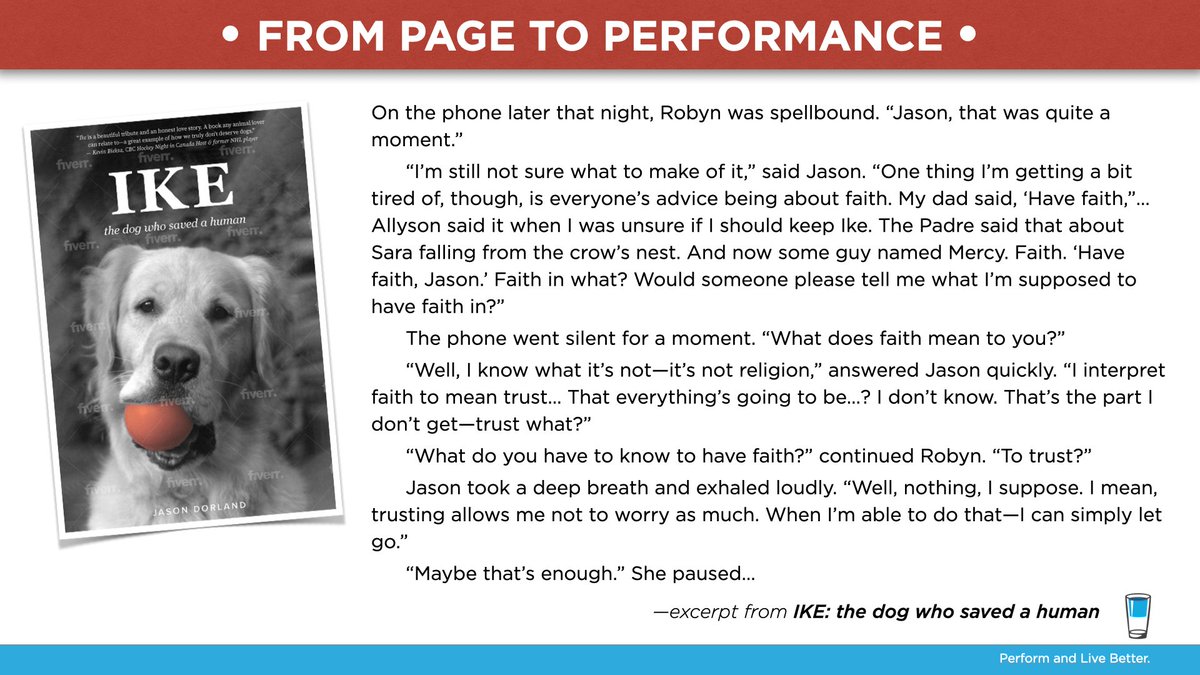
There are moments in life when effort alone no longer seems to explain what’s unfolding.
You’ve prepared and done the work. You’re passionate—you’ve taken care of your part. And then, somehow, something else seems to enter the room.
Call it faith, trust, God, spirit, the universe… or Bob—it doesn’t really matter.
What matters is that many of us have experienced moments when life moves in ways we can’t fully explain—moments when the path forward becomes clear not because we controlled it, but because we finally let go enough to see it.
I’ve been thinking a lot lately about the idea of faith—not as religion, necessarily, but as trust.
And not just trust in outcomes, where what I’m hoping for comes to fruition, but instead, trusting that the intention I bring to our work, our relationships, and our lives matters.
That when we show up honestly, when we lead with love, when we do the work for the right reasons, THAT, sometimes, is enough.
Again, not enough to control the future, but enough to move forward without gripping so tightly. Enough to take the next step, to release the exhausting need to have every answer before we begin.
There are forces in play that we cannot always understand or articulate. And yet, they shape us. They guide us. They nudge us forward.
I’m not suggesting passivity—not at all. Nor am I suggesting we become less ambitious and stop striving. I’m suggesting that sometimes our best strategy is to do our part with integrity—and then let go.
To trust that not everything meaningful can be measured, that not everything important can be explained, that life is often working on us and through us, even when we don’t yet understand how.
Sometimes, letting go isn’t giving up—it’s simply the deepest form of trust we have left.
#leadership #highperformance #selfworthmatters #faith #trusttheprocess #LetGo #LoveFirst #PersonalGrowth #HealthyHighPerformance
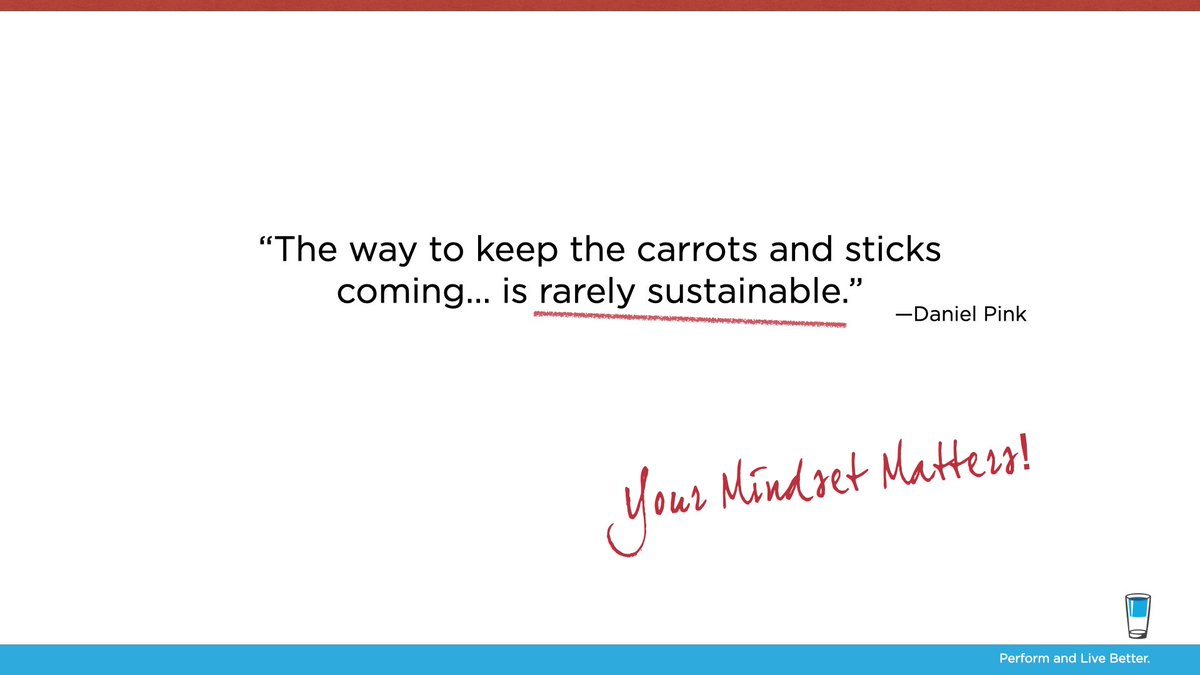
Daniel Pink wrote:
“The way to keep the carrots and sticks coming… is rarely sustainable.”
What I appreciate about this quote is that it forces us to ask an uncomfortable question:
If we know that external rewards like bonuses, trips, cars, and incentives can actually interfere with creativity, problem-solving, and sustainable high performance, why do so many organizations, mainly corporate, still rely on them?
I think it’s because carrots and sticks are easy—they’re visible, they’re measurable, they give leaders the illusion of control, and they’re what we know.
But short-term compliance is not the same as long-term excellence. When people are driven mainly by external rewards, they often become less connected to purpose, less creative, and more focused on the reward than the work itself, and that’s the problem.
Most meaningful work today requires trust, initiative, teamwork, and creative thinking. You can’t incentivize people into bringing their best selves to the table. Instead, we believe you have to invite them by creating the conditions that support autonomy, mastery, and purpose.
That’s why Your Mindset Matters!
Real, sustainable performance grows in cultures where people feel valued, trusted, and connected to something deeper than the next reward.
#YourMindsetMatters #Leadership #HealthyHighPerformance #WorkplaceCulture #IntrinsicMotivation
@barenakedladies 1992 in Vancouver at A&B Sound downtown. It was a performance and a CD signing event. Gave my signed CD to my girlfriend at the time—ugh!
Need thwarting—it's a thing. And if it's alive and well within your culture, it's a problem, too.
That's because it happens when leadership doesn’t just fail to support people—it actively undermines their sense of agency, capability, or belonging.
Imagine yourself sitting in gridlock traffic. The driver behind you honks their horn. You jump because it startles you—gets you curious. So, you look in your rearview mirror, then quickly glance left and right to see if there’s something that needs attention. There isn’t, frowning, you face forward and resume waiting for the traffic to move.
Moments later, their horn goes again. Agitated, you stare at the person in your mirror and yell, “WHAT? What do you want me to do? I can’t move!” Frustrated, you finish with a dismissive huff.
Soon after, it blasts once more—this time a little longer. You shake your head and sit still, trying not to respond. You quietly utter a pejorative comment and continue ignoring the subsequent blasts.
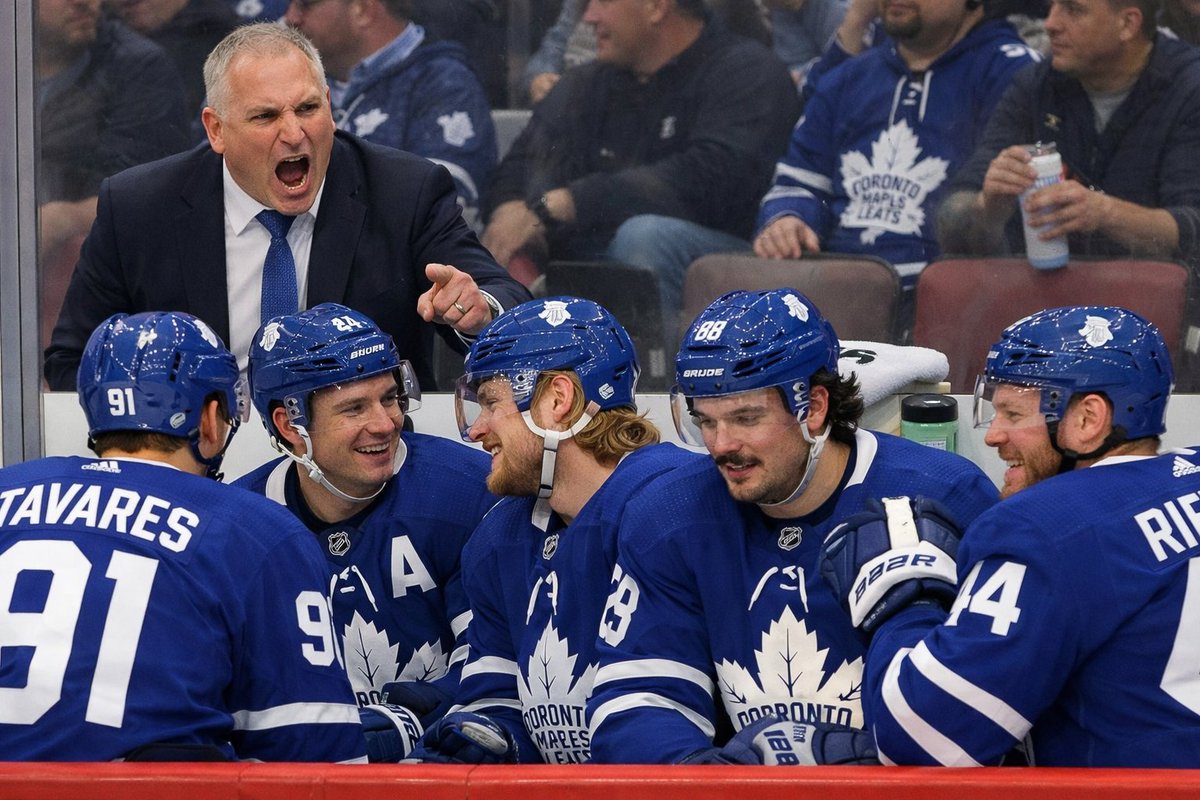
This is the impact of what’s referred to as a “stick” in coaching and leadership circles. I wrote about this more than a year ago when discussing the coaching philosophy and tactics of the Toronto Maple Leafs head coach, Craig Berube.
Continued in my Substack—link below! Enjoy...
https://t.co/JeRJbk5GRx
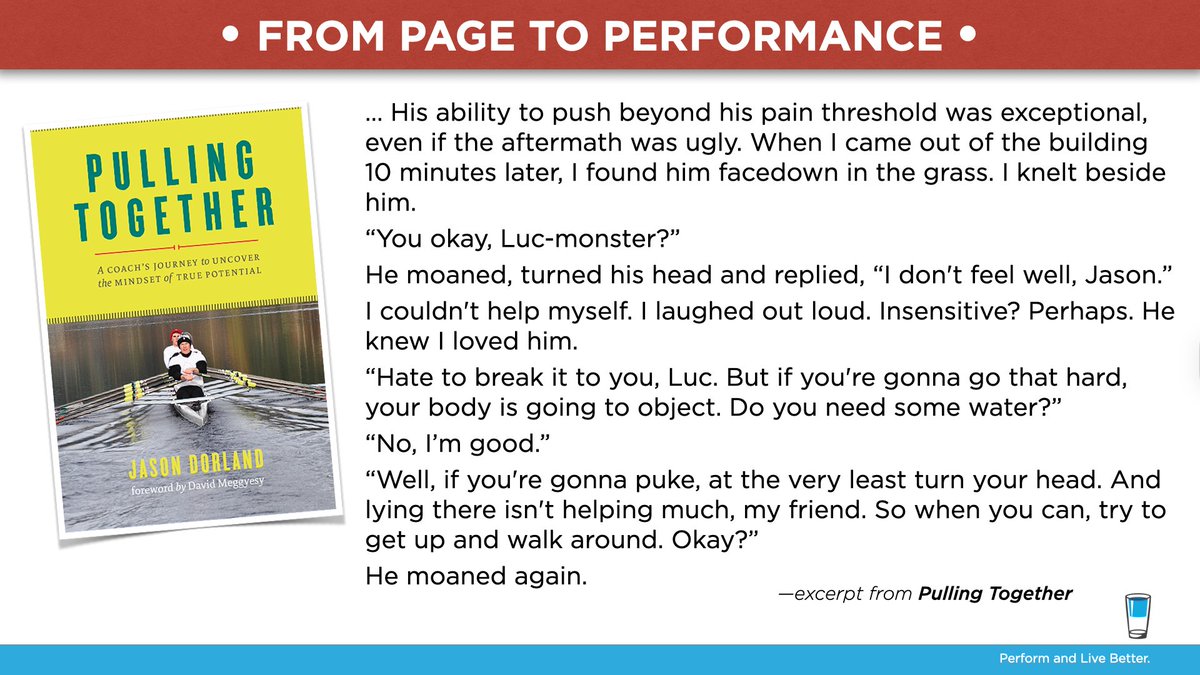
I once watched an athlete I was coaching achieve a PB by pushing himself so hard that 10 minutes later, I found him facedown in the grass.
I knelt beside him. “You okay, Luc-monster?”
He moaned, turned his head, and said, “I don’t feel well, Jason.”
Here’s the truth: when we push to our absolute limits, the aftermath isn’t always pretty. Sometimes growth looks like grit. Sometimes it looks like suffering. Sometimes it looks like lying in the grass, wondering what the hell just happened.
But here’s what I learned watching Luc that day: he was willing to discover what was possible. And that willingness came with a cost, which he paid. Because he was open to going there, he met a part of himself he had never met before—a part he didn’t even know existed.
That’s what’s on offer when we move beyond our perceived limits. And not just in sport—in leadership, business, relationships… in life. High performance isn’t something we hope for. It’s something we create—through hard work, commitment, courage, curiosity, and a willingness to find out what we’re actually capable of.
The question is… what might you discover about yourself if you were willing to go a little further than you think you can?
#FromPageToPerformance #HighPerformance #Leadership #GrowthMindset #Courage #Commitment #Potential #PullingTogether
“Almost everything will work again if you unplug it for a few minutes, including you.” — Anne Lamott
I love this quote because it’s both funny and painfully true. So many of the high achievers we work with are running a “never power down” operating system where they’re always on, always available, always producing, always pushing!
And we’ve normalized it, because Hustle Culture sells the lie that rest is laziness and recovery is something you “earn” after you’ve done enough.
But here’s the paradox—your best performance doesn’t come from grinding harder; it comes from recovering smarter.
When we start prioritizing our health and well-being, so much more becomes possible: clearer thinking, stronger emotional regulation, better relationships, more creativity, sustainable energy, and a healthier relationship with your own worth. Basically, it means unplugging isn’t quitting… it’s maintenance.
A simple challenge for this week: Take 10-minutes and “unplug” on purpose—no phone, no fixing, no optimizing, no nothing. Just breathe, walk, stretch, hydrate, sit quietly—anything that signals to your nervous system that things are all good and you’re safe here.
Because burnout isn’t a badge of honour. It’s a design problem that can be redesigned.
Recovery Is a Skill: How to Train It Like You Train Output.
"I'll rest when I'm dead!" Ya, well, carefull what you wish for!
Believe me, as someone who embodied the grit and grind MO for many years, not just as an athlete, I can tell you, my thoughts on this one have changed significantly. Yes, I’ve finally realized that the tankrequires regular refuelling. And when I reflect honestly on why I hung on to the “I can work all day and then some” persona, it’s undoubtedly because of what I thought it said about me. Yup, the same tough-guy BS that I clung to as an athlete.
What began the shift was when I had to travel for work. Sometimes, on longer trips, I was unable to get into a weight room or find time to run. In the past, that would’ve really bothered me—as in, really, really bothered me! The idea of taking a day or a number of days off was not something I enjoyed or easily got used to. I would dread my next workout, thinking that I had lost my lifting strength and running fitness.
Continued below in my Substack—enjoy!
https://t.co/qDGoJvQ60E