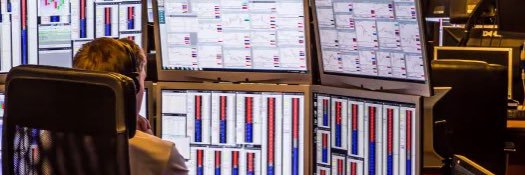
@aryan97158@Positive_Equity Join a firm and work with experienced traders and learn on somebody else's dime. Bar that, read everything you can on trading and the products you want to trade, spend 10,000 hours on simulation or until you have repeatable edge.
If anyone has trading questions, post them below.
Happy to let you pick my brain a bit.
Just not too much… I still need it for trading, my wife, helping my kid with algebra homework, and working with the trainees and traders at @Positive_Equity
Time to sell? Caught myself checking P&L too much this week. Never a great sign.
When traders start watching net worth instead of process, things can get a little bubbly.
Anybody else seeing signs?
Spoke with a trainee today fighting for his seat.
Expected bad trading. Found edge and consistency.
Problem is he trades almost everything the same size. Great setup appears… nothing changes.
Consistency keeps you alive.
Sizing properly is what changes your life.
Vol traders have had a great run since March.
But markets change.
Easy trades disappear.
Small losers start showing up first.
That’s usually the signal.
I’ve slowed down and gone back to grind mode.
Some are still swinging hard.
Are you adjusting, or fighting the tape?
Speaking to traders today:
Vol down. Big trades done.
Small losing days creeping in.
Short bull run — less chaos, less opportunity.
In-between market.
Don’t force it.
Don’t dig holes.
Keep the powder dry.
Be ready to attack if things shift.
Until then, grind it out.
From recent conversations with traders I’m mentoring: Simulation is an amazing tool. It costs you nothing but time. The mistake? Going live too early. You can never go live too late—but rushing early? That’s when people overestimate their edge. Build consistency first. No rush.
@jrouth9@Positive_Equity JR: Best trainees don’t ask better questions. They watch more tape and find more edge.
Edge comes from screen time. Seeing it thousands of times until it’s obvious.
Brains and skill matter.
Hard work and grit beat both.
All four together = game over.
@yogesh234@Positive_Equity Good q Yogesh: can t cut losers fast enough, lack of intellectual curiosity, poor work ethic…don t trade enough, try 2 do it their own way, ignore advice, afraid of taking risk, afraid of loss, low standards, low expectations of success, some are hard 2 see, some are easy.
@trulinkz@Positive_Equity I got no good answer here Mr Linkz. I started when electronic trading was slow and easy, so I was in the right place at right time. I ve been able to evolve with the market, learn each new iteration. Surrounding myself with talented traders and strict risk managers kept me alive.
Amen Mr Boxes, I hear so much “sim is useless, sim isnt real, sim is no proxy for real markets.” That is rubbish. That is impatience talking. Now if you are running some HFT app, ok maybe, but for retail, point and click, prop, its awesome. Free education.
Excellent.
We have trainees sim for 9–12 months before going live. Thousands of trades. Thousands of data points on what works and what doesn’t.
By the time they go live, they’re executing, not experimenting.
The moment you add a new variable in live trading, you are no longer executing.
You are starting research with money at risk.
Live is not where you find a better system.
Live is where you run the version that was already defined, tested, and practiced through your own hands.
The sample size in live is far too small for testing.
So you will end up changing things based on wins and losses.
That means randomness is now controlling your behavior.
That is how you enter an endless loop of improvement.
The only thing you should be improving in live is your execution.
Why did you fail to follow the rule.
Why could you not do what was already decided in advance.
Focus on that process, not on the trade result.
For that to happen, your testing and practice must already be finished.
@WallstreetFelon@Positive_Equity Great question Mr Fellon. The more confident you are in your ability to hit your stops, the less fear that any trade will be lethal. That is emboldening when taking risks. Plus having excellent edge also helps.
@mo1lerr@Positive_Equity Hi Jan, I don t have a one style except tight stops. I trade many set ups: trends, fade, mean regression, spreads, outrights, etc. Time frames are secs to hours to overnight, rarely days. After 25 yrs watchin markets u just see things. The longer you watch, the more u see.
@StonksI9948@Positive_Equity Strong traders are paid very well. Exact splits depend on capital, risk, and consistency.
What matters more is the environment. Capital, risk, and being around serious traders is what actually lets you make the real money. No edge, no PnL to share.
You looking for a home?