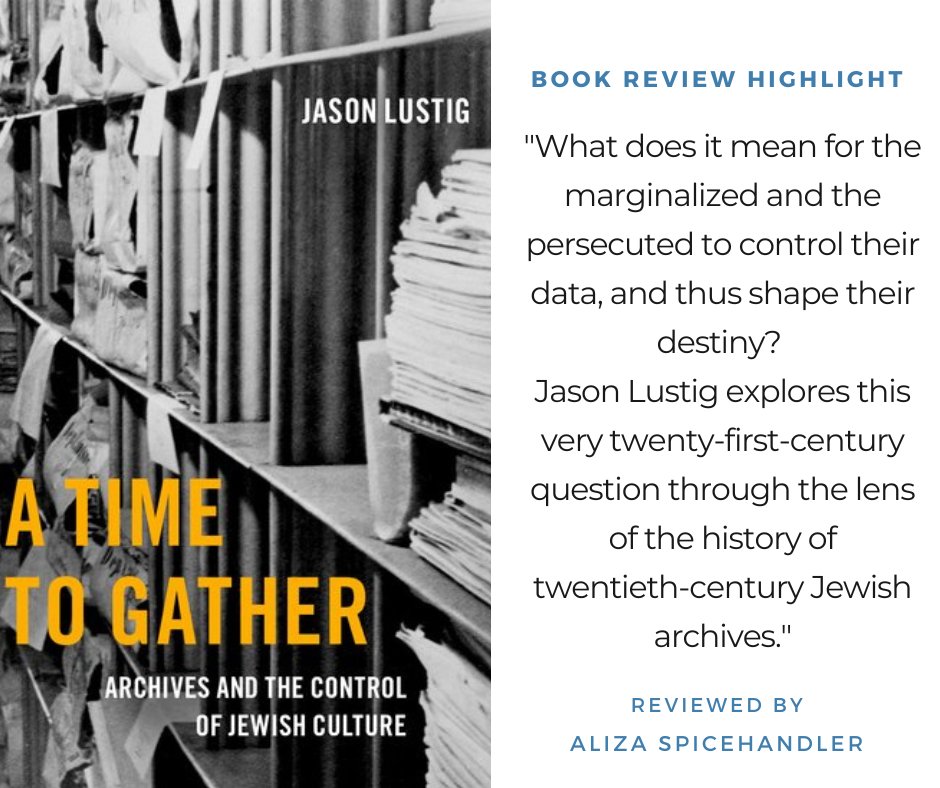
I'm absolutely thrilled that my book A TIME TO GATHER: ARCHIVES AND THE CONTROL OF JEWISH CULTURE is officially available today from @OUPHistory.
Listen to the opening paragraph:
“By focusing on such essential issues as identity, power, memory, and destiny, Lustig has written a captivating book with broad and lasting appeal.” Read the free review of @JasonLustig's book “A Time to Gather…” by Aliza Spicehandler for a limited time: https://t.co/QIuaXnWtZ0
I am absolutely floored that Judaica Librarianship (@JewishLibraries) published two reviews of my book by @amaliasl & @LarissaAllwork - super exciting and I can’t wait to read them.
And not one, but TWO reviews of Jason Lustig's "A Time to Gather," which has generated much discussion among practitioners.
@amaliasl: https://t.co/zAr3InnQWb
@LarissaAllwork: https://t.co/yLdJBUBFvM
Comparing - eg fascism, the Holocaust, and colonialism - does not mean equating or relativizing, but it allows us to put our issues into sharper relief.
3 key themes of the restitution conference at GHI from @biancagaudenzi: 1) the important role of material culture. The conference has shown how fundamental material culture is. Whether we’re talking about books, ritual objects, architecture.
@ElishaFine6 In grad school I had a mentor who told me that JS is always about 10 years behind the rest of the humanities. May or may not be true, but the idea is that theoretical trends appear at some kind of delay in JS
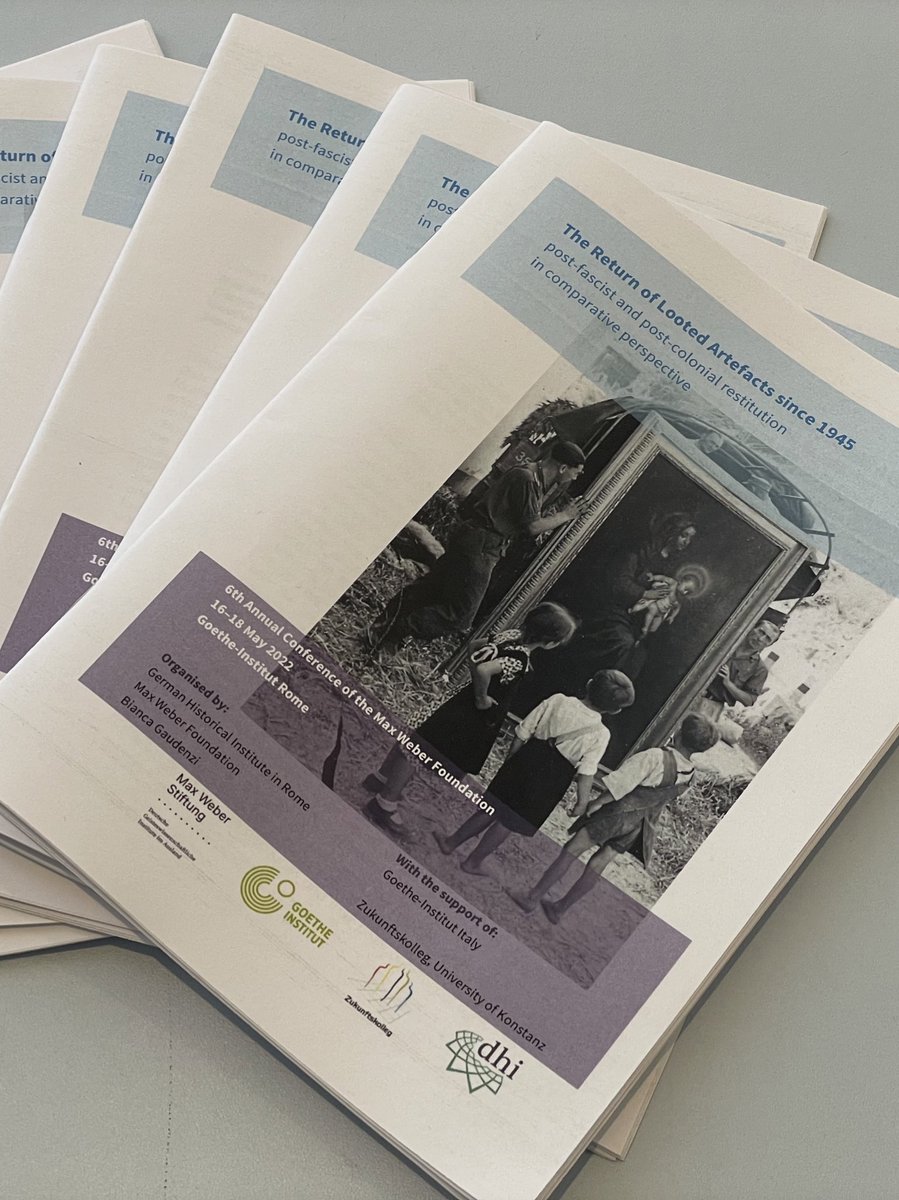
Super excited to be at GHI in Rome to participate in the conference on the return of looted artifacts since 1945. My paper: “To the victors go the definitions? Looting, restitution, and the culture wars”
An issue we have been dancing around is, if the Holocaust/fascism is deeply tied to European colonialism, why has the restitution of Nazi spoliated art/cultural treasures been broadly pursued (and often successful) but the restitution of colonial loot is like pulling teeth
Just a big question about the fundamental violence embedded in the project of knowledge collection / production which essentially is about the process of removing knowledge and objects from their historical/cultural context and placing them under the authority of experts
I’ve been thinking about Hans Jörg Rheinberger’s notion of epistemic things. I’ve used the idea to talk about the creation of archives, that materials of history are given epistemic meaning in the context of archives. It applies more broadly to the process of colonial collecting
in the context of colonialism, objects are removed from their cultural context and put into a museum where they can be “studied”, both by scholars and also a particular gaze of the public
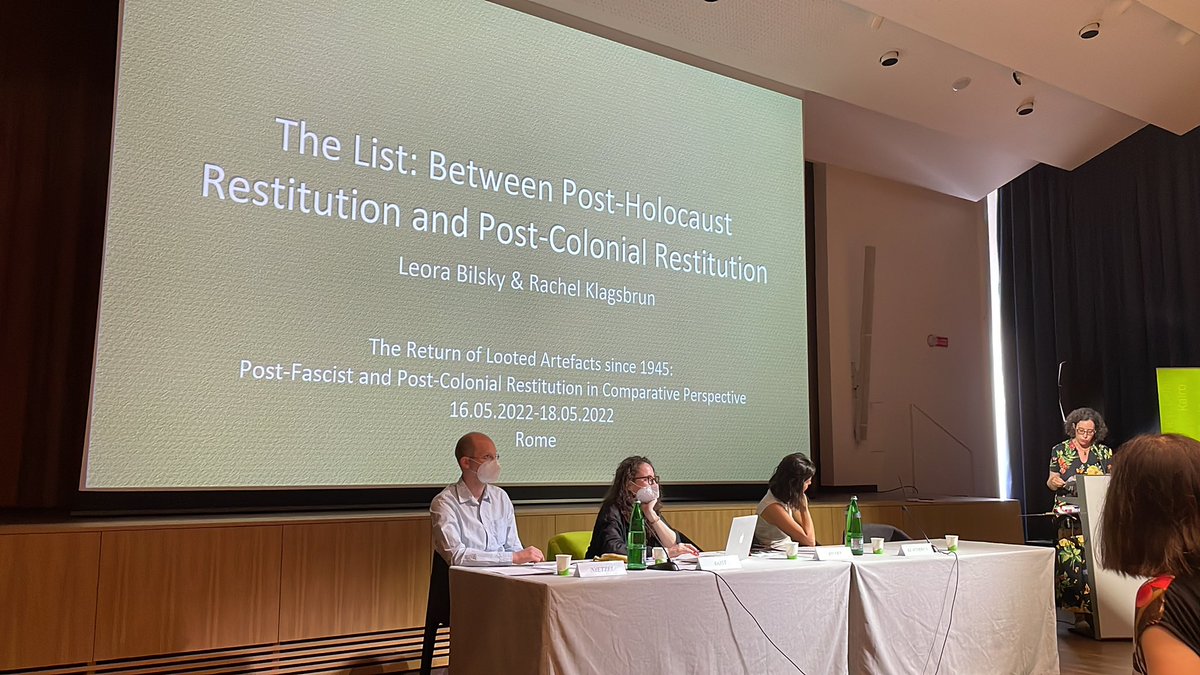
And Rachel Klagsburn: the creation of lists is crucial for the ongoing process of decolonizing museums. The big question is about how we bring a critical comparative perspective to fascist and colonial looting.
Liora Bilsky: lists of looted cultural property (i.e. JCR) are manifestations of the powerlessness of victims, instead of narrative it’s an undirected list of looted treasures. Looking to show how the list became a tool to push against conservative legal approach of restitution
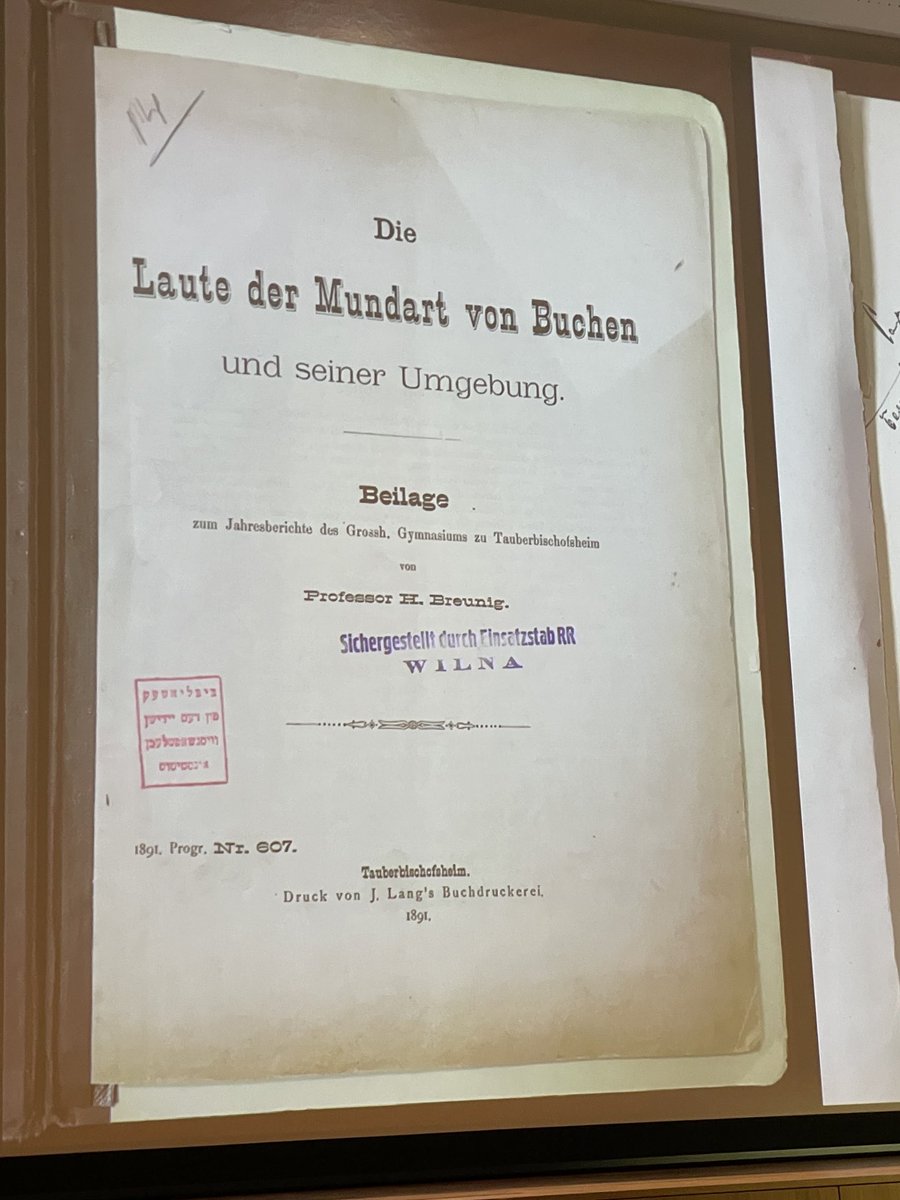
At the restitution conference at GHI Rome: James Mcspadden speaking about stolen books. Here you can see a book stolen from @yivoinstitute by the Einsatzstab Reichsleiter Rosenberg (ERR)… now available for purchase on @AbeBooks