Asst Prof at CMU BME | Parker B. Francis Fellow | Interested in cardiovascular growth and remodeling, pulmonary hypertension, and engineering vasculature
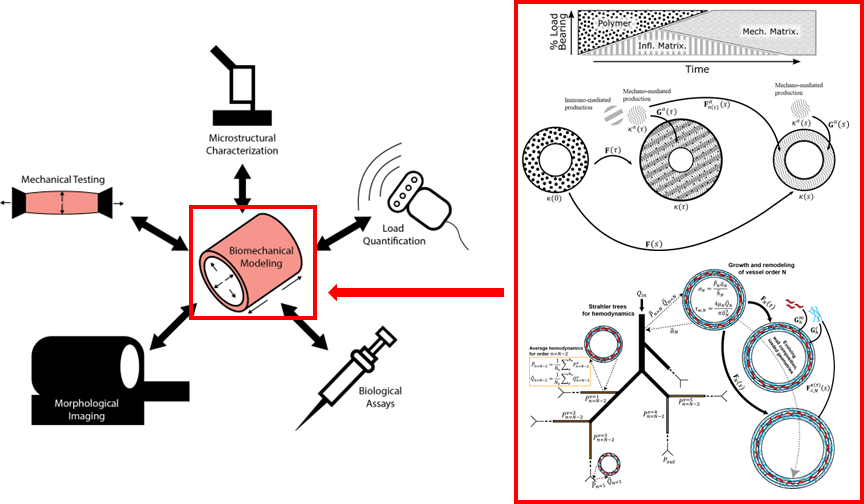
.@cmu_bme's Jason Szafron recently discussed his research in computer modeling that can predict how cardiovascular disease progresses over time and how treatment can be improved.
https://t.co/3fYaBfzPLn
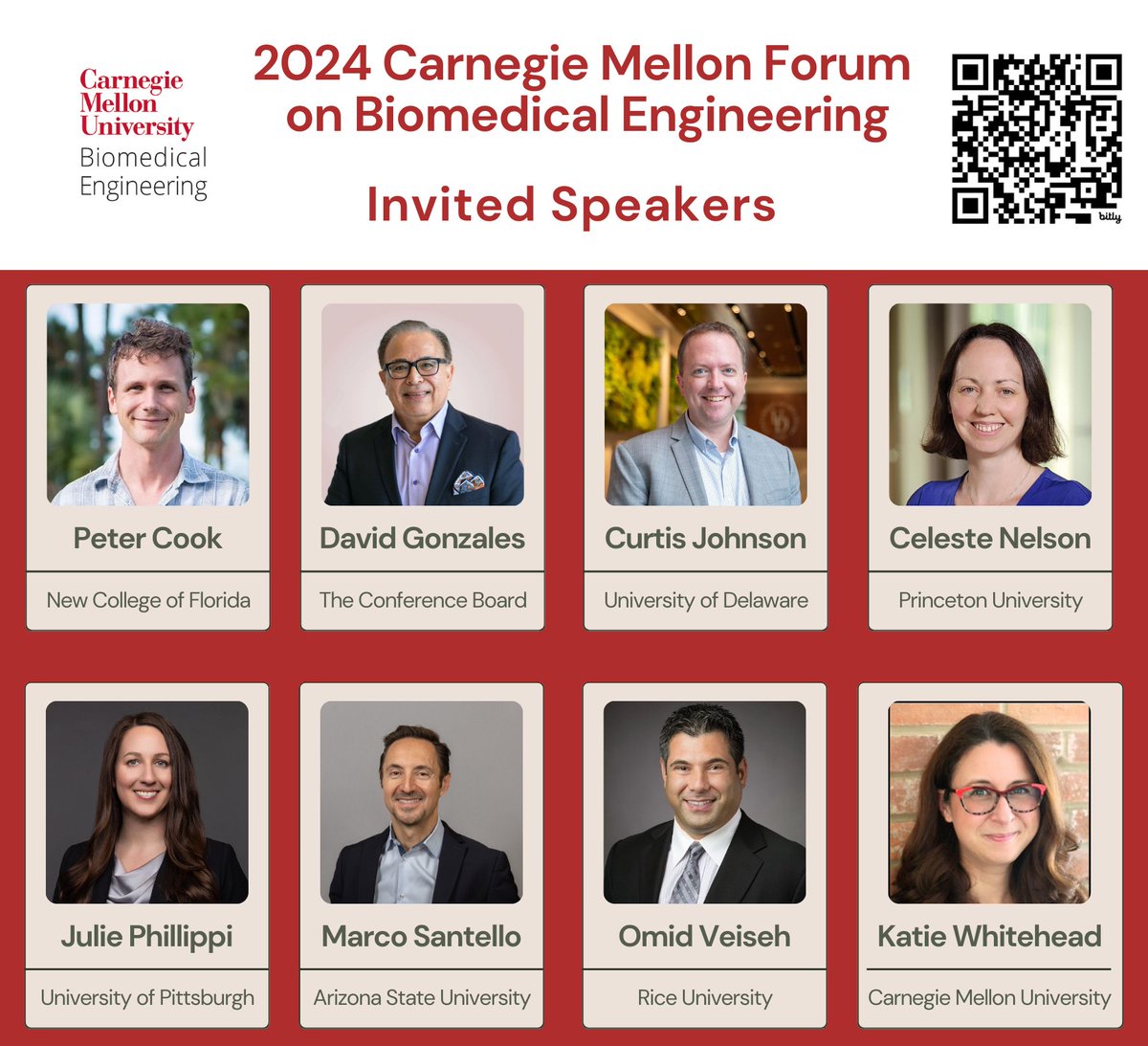
We are thrilled to announce the Invited Speakers for the 2024 Carnegie Mellon Forum on Biomedical Engineering! Join us on September 20, 2024 with no registration fees—just pre-register to secure your spot. Don’t miss out—register today at https://t.co/1zfGFSrbkX!
A fun project that I got to mostly work on with pen and paper! We looked at the potential for mechanical instabilities when simulating vascular smooth muscle contraction and found potential issues with simple constitutive models:
https://t.co/LCxz7lGNau
Excited to share our review on biomechanics in vascular graft failure! We cover both fluid and solid mechanics, as well as grafts in coronary, peripheral, and congenital heart disease applications.
@kurt_prins@mark_toshner@jeanlucvachiery@bmprii@RRVdpool@RyanTedfordMD @GiessenPh It's also helpful to think about Fontan patients with PA remodeling. That flow is basically steady, which could also be the cause of PA remodeling. Average WSS may not be high or low but its temporal profile is different.
@kurt_prins@mark_toshner@jeanlucvachiery@bmprii@RRVdpool@RyanTedfordMD @GiessenPh Olufsen/Chesler have nice unsteady flow papers. I would think in CTEPH or PPAS, there could be distal remodeling with less wave propagation down the PA tree so the variance in WSS across the cardiac cycle would change.
@mark_toshner@jeanlucvachiery@bmprii@RRVdpool@RyanTedfordMD @GiessenPh And it looked like differences in WSS between large and small vessels could explain differential remodeling in proximal vs distal vessels. Without heterogeneity in the stimulus for remodeling, the proximal vessels didn’t tend to dilate that much, even with decent pressure rise.
@mark_toshner@jeanlucvachiery@bmprii@RRVdpool@RyanTedfordMD @GiessenPh Also, depends on pruning, which we haven’t modeled. Presumably narrower vessels get pruned first, so their flow gets redirected into bigger vessels, which then increases their flow rates/WSS as more and more vessels get pruned.
@mark_toshner@jeanlucvachiery@bmprii@RRVdpool@RyanTedfordMD @GiessenPh Once CO starts to go down with RV failure, WSS will start to decrease but may/may not still be elevated from healthy levels depending on the relative narrowing vs flow changes.
We'll be studying growth and remodeling in the cardiovascular system, including pulmonary and engineered vessel evolution. Come find me at BMES this week if interested in graduate research positions at CMU!
Very excited to be starting as an assistant professor in Biomedical Engineering at Carnegie Mellon University (@cmu_bme) in January! Huge thanks to all my mentors (@MarsdenStanford), colleagues, and collaborators who made this possible.
Our latest work from postdoc @JasonSzafron introduces a computational growth and remodeling framework for pulmonary arterial hemodynamics - just out in BMMB! Joint work with the Rabinovitch lab @StanfordBASE@StanfordChild https://t.co/zaqXUO2TA5
Excited to share our latest work:
A Computational Growth and Remodeling Framework for Adaptive and Maladaptive Pulmonary Arterial Hemodynamics https://t.co/THwoMaUFqK
Announcing the 2023 Keystone Meeting on Pulmonary Hypertension in New Mexico from June 25-28. The abstract deadline is March 23. For registration and agenda details, click below:
https://t.co/jpRv1HBZ0O