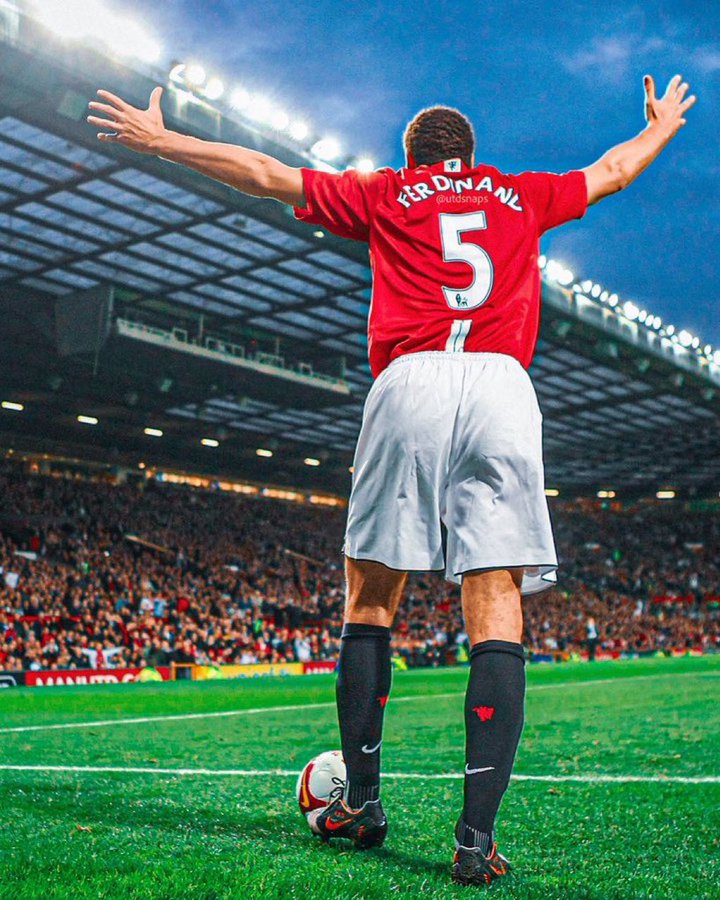
One thing I’m sorry for and I was wrong about. I do love Harry Maguire I should have said this years ago he’s I smile whenever I see him on the team sheet
⚡️ Update on rewards and payout economy
Many of you noticed the reduction in prize pools. These changes were made a few weeks ago. We are sharing this explanation now to rely on stable metrics and balanced product decisions.
How the economy works
The project economy is built on real revenue. Before rewards are distributed, the funds go through taxes, operational expenses, and net profit formation. Only after that, they are allocated to events, quests, social activities, and referral payouts.
We also released a page with a detailed explanation of where event rewards come from and how profit is distributed. You can find it in the Profit Distribution section in our GitBook 👉 https://t.co/UgRTETipAY
What changed
At the early stage, we used an aggressive reward model — 80,000–100,000 pre-TGE tokens per week. After analyzing the metrics, we saw that the reward level was higher than the real economic balance. The pools were adjusted to match the real project economy.
Our goal is to move to a stable post-TGE structure. The token multiplier will gradually decrease to zero. Only economically supported rewards will remain in the system.
Current reward model
- USDT — around $150 per week, distributed among top participants. These are real payouts.
- Pre-TGE tokens — are credited with a ~10x multiplier, fixed on balance, and unlocked after TGE through a vesting system.
Why this logic
If TGE happened today, rewards would be paid only in tokens, without multipliers, in a dollar value similar to the current USDT payouts. Right now, participants receive real payouts plus bonus token accumulation.
Before TGE, USDT and the multiplier remain, with gradual reduction. After TGE, USDT will be removed, the economy will move fully to the token, and multipliers will disappear. The economic value of rewards does not decrease — only the form of payment changes.
Conclusion
The reduction of pools is necessary for a sustainable economy and to protect tokenomics. Current participants remain in a strong position: real payouts, bonus tokens, and early access to the project economy.
Thrilled to win the @Polkadot "Build Resilient Apps" Hackathon! 🏆
I built Genesis Authentic Marketplace: A custom Substrate solochain that eliminates counterfeits by verifying manufacturers on-chain.
Demo at: https://t.co/15rx2YMyOb
GitHub: https://t.co/KvbcwL75zX
#Rust#React
When Ugarte was playing consistently we all hit on him steady, no one cares about his mental health. No one cares about caring enough not to further bring him down.
Everyone have sad and ugly things to say about him but when it gets to your favourites ya'all hypocrites jump outta your covers to dish advice.
@AdetonaAde91839 @GodswillOs30688 Tall CFs too score well
But they don't normally stand in the middle
They stay at the edge so I have to place it differently
But this is a very good card TBH
Successful traders do consistently what unsuccessful traders do occasionally. Trading rewards boring discipline, not occasional brilliance. The problem is that the “right” behaviors are usually uphill (they require effort, patience, and restraint), while the “wrong” behaviors are downhill (they feel natural, fast, and emotionally relieving). Carrying this into trading means treating your edge like hygiene: it works because it is repeated, not because it is heroic.
What “uphill” looks like in trading (the good habits)
These are the actions that feel slightly uncomfortable but compound over time:
•Wait for A-setups instead of forcing action to relieve boredom.
•Predefine risk (entry, stop, position size) before you click buy.
•Take the stop without negotiation when the thesis breaks.
•Trade small when conditions are unclear; press only when conditions are favorable.
•Journal and review even after a green day (because comfort hides mistakes).
•Follow a process (checklist, rules, timing) instead of “feel.”
What “downhill” looks like (the habits that feel good now, cost later)
These are emotionally convenient, which is why they’re seductive:
•Chasing because price moved without you.
•Moving stops to avoid being wrong.
•Oversizing to “make it count.”
•Revenge trading to erase discomfort.
•Constant switching of strategy when the last trade hurt.
•Taking profits early to lock relief, not because the setup says so.
The key translation: consistency beats intensity
Most losing traders know the right moves. They just do them sometimes—usually when they feel calm. Successful traders do them especially when they don’t feel like it.
A useful rule: your discipline must be strongest at the exact moment your emotions demand the opposite. That is the uphill battle.
Make it practical: convert “uphill” into defaults
If you want this to show up in your P&L, you need systems that reduce decision fatigue:
•One-page playbook: 3 setups, 3 invalidations, 3 “no-trade” conditions.
•A trade checklist you must clear before entry (trend, liquidity, volume, location, risk).
•Hard risk caps: max loss/day, max loss/week, max positions, max correlation.
•If/then rules for the downhill moments:
•If I feel urgency, then I must wait 5 minutes and re-check the checklist.
•If I get stopped out, then I must pause 20 minutes before any new entry.
•If I want to move a stop, then I must reduce size instead—or exit.
Bottom line
The market doesn’t pay for what you know. It pays for what you can repeat. The edge is not a secret strategy—it is the ability to execute boring, correct decisions so consistently that your downhill habits don’t get a vote.
𝐎𝐋𝐈𝐒𝐄 𝐂𝐋𝐎𝐒𝐈𝐍𝐆 𝐈𝐍 𝐎𝐍 𝐇𝐈𝐒𝐓𝐎𝐑𝐘 👑
With 𝟐𝟏 assists and counting, Olise's chasing the record for 𝙢𝙤𝙨𝙩 𝙖𝙨𝙨𝙞𝙨𝙩𝙨 𝙞𝙣 𝙖 𝙨𝙞𝙣𝙜𝙡𝙚 𝙨𝙚𝙖𝙨𝙤𝙣 by players from Europe’s top five leagues, across all competitions 👀
30 | L. Messi (2011/12)
29 | J. Mata (2012/13)
27 | K. De Bruyne (2014/15)