💗RN, React, JS, CSS. Software architect building web, eCommerce, orchestration, APIs & modern UI architecture. Creative coder. Cat person. Opinions are my own
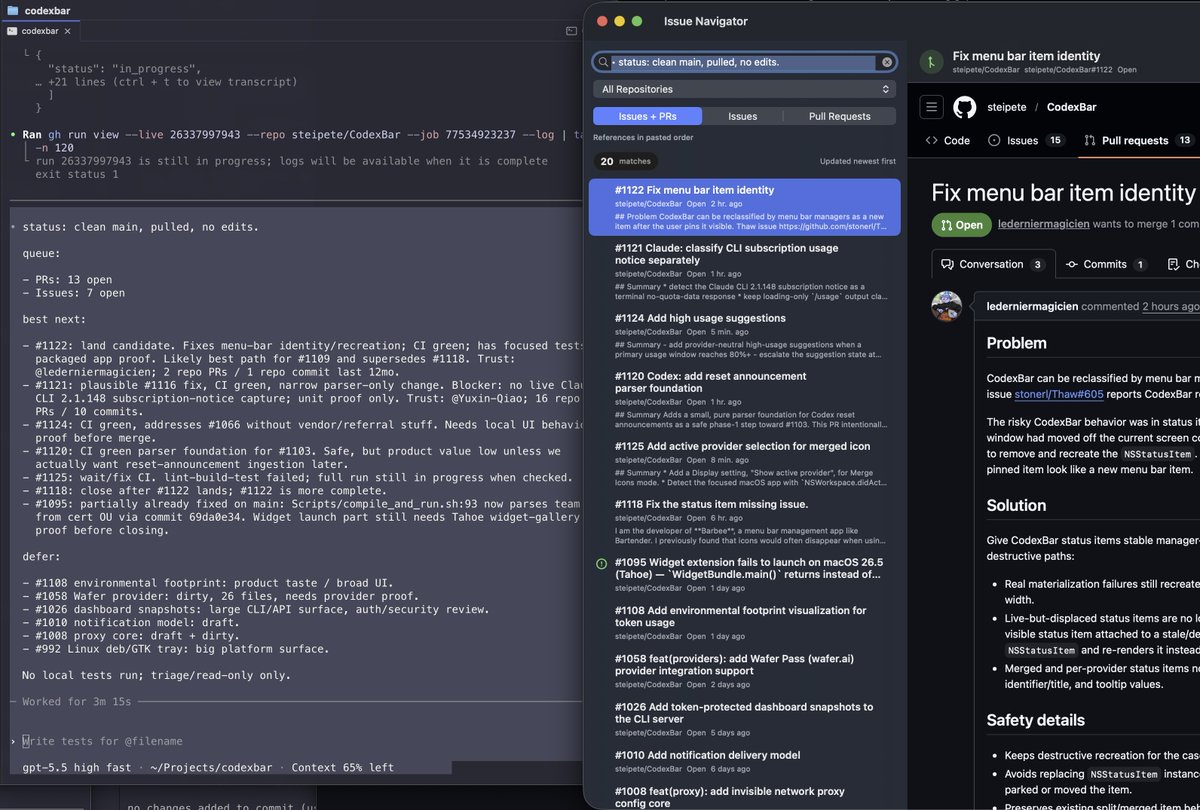
I built an autotriage skill for codex that has a set of guidelines + reads VISION.md from my repos, so issues/prs that have a clear way of
- fit vision of the project
- being inferrable in code with high confidence
- clear fix
- can be live tested
Are now worked on autonomously. Codex can use a VM + computer vision (via https://t.co/2T5aNF5jTT , new parallels backend) to verify fixes, so it can work without interrupting me. I manually review suggestions. Since it was tedious to type in issues, I added an issue browser into https://t.co/NfEoHIQPil that parses common clipboard formats by codex so I can click through them conveniently.
In light of what happened, I'm doubling down on skills like /improve.
A frontier model got pulled. If it happened once, it's gonna happen again. Fable today. 4.9 tomorrow or maybe gpt 6 one day.
So, treat intelligence as borrowed. Drain intelligence when it's available. Build a catalog of plans today. Then implement later with a cheaper, open source, or a model you control.
Build the backlog now.
https://t.co/rqHw0fPv4G
There's a lot of systems assembled here for 11 days of work. At the same time, before vibe-coding I don't know anyone who would show a project in this state as if it's impressive. There's an outstanding number of bugs at all levels. Weekend game jams produce more polish...
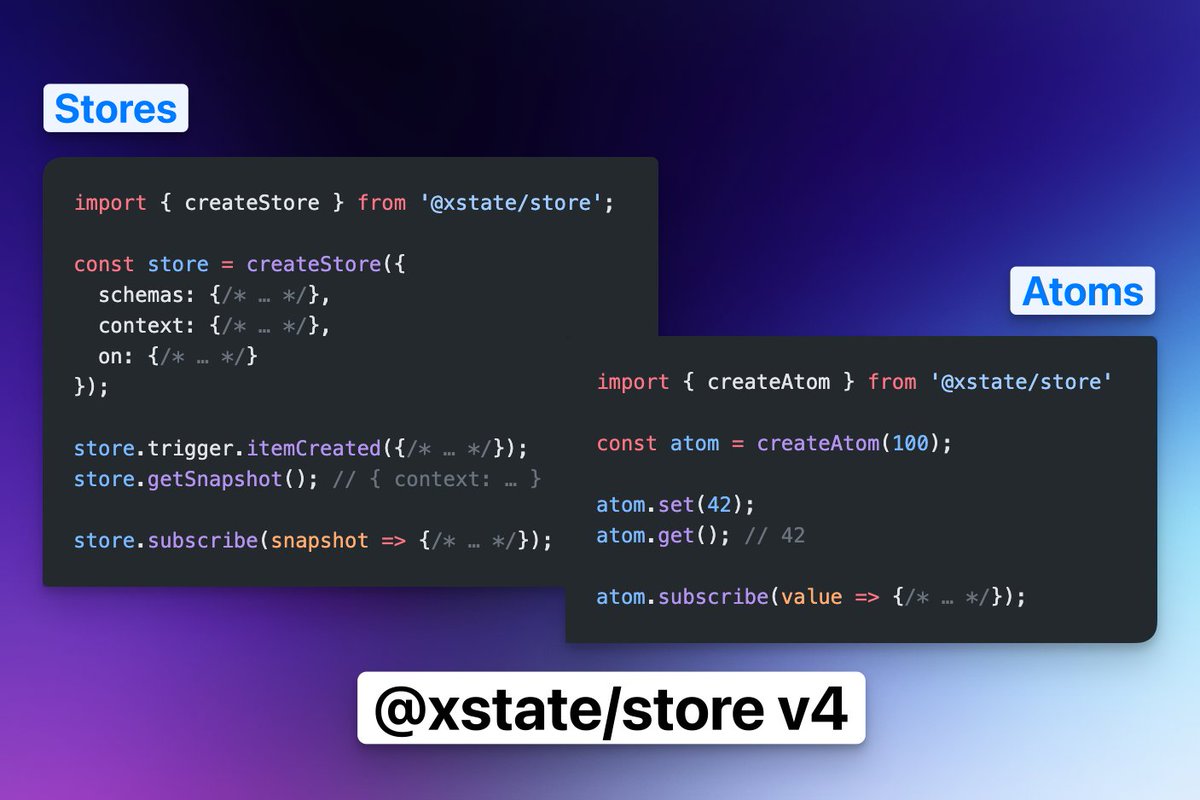
XState Store v4 is released 🚀
Simple, small state management for stores (like Zustand/Redux) + atoms (like Jotai/Recoil)
Works everywhere: vanilla, React, Vue, Svelte, Solid, and more. Event-driven, type-safe, batteries included, *really* agent-friendly.
npm i @xstate/store
Some new features:
After 9 years, I just finished my last week at Expo.
Started working on it when I was 19, and it's been the center of my life ever since.
Incredibly grateful to the team and community we built along the way!
After a very thorough 3 day full security sweep and hardening process, we'd like to issue an official all clear ✅ on TanStack repo and package security. Full details have been updated in our post-mortem and security followup blog (linked below).
TL;DR:
- Only the Router/Start repo was affected. 42 monorepo packages, 2 versions per package. These were promptly deprecated within the hour and removed by NPM shortly after
- All other repos and packages were unaffected and remain secure including: Query, DB, Store, AI, Table, Form, HotKeys, Virtual, Pacer, Config, Devtools, CLI, Intent, etc.
- All available and published versions of every TanStack package are safe to download, including TanStack Router/Start.
https://t.co/KQSXhUM4XM
https://t.co/mtN9hF5Ioy
Got back to this demo again today. Two thoughts:
1. as usual, the hardest part is knowing what you actually want. Took a lot of trial-and-error to find a collision approach that felt good.
2. Creating a data-only functional model for the schedule was key for the agent to really rip with requirements:
blocks = moveBlock(blocks, blockId, placement)
handle.update()
The Remix 3 component model purposefully does not have a "state management" and is not reactive to state changes for this reason: Model your data however you want, add event handlers, then update the component when you have your new data
This is 100% coded with gpt-5.5-extra-high in Cursor's agents window and mostly voice prompts.
Here's the code, it's the first time I've looked at it and I don't hate it: https://t.co/pcUUL6e0iG
In Expo SDK 56, the `expo` package no longer requires react-native-web installed. We rewrote the log-box to be react-dom only in 55.
Next step is to make RNW optional in expo-router. This will allow for full universal apps with react-strict-dom `<html.div>` instead of `<View>`
To give people confidence that we are not secretly manipulating the 𝕏 recommendations, it is critical that we open source anything that influences what people are shown
I've been coding for 40 years. Here are the top 5 things I wish I knew when I started.
1. 90% of the job is debugging and fixing, not creating new code. Which is still fun if you're good at it.
I used to think programming was mostly writing fresh, clever stuff. In reality, most of your time is spent in other people's (or your own past self's) messy code, chasing down why something that "should" work doesn't. Get really good at debugging early. Learn assembly reading, call stacks, and kernel debuggers. It pays off hugely. The best engineers I saw were absolute magicians at this.
2. Manage complexity from day one (ie: don't write slop and "fix it later" if it goes somewhere).
Very early on, I'd hammer out code and refactor afterward. Big mistake. Now I start with clean, skeletal structure (minimalism first) and flesh it out carefully, with AI or not.
Messy code compounds and becomes unfixable. Upfront discipline on architecture, naming, and simplicity saves enormous pain later, especially in large systems like Windows.
3. Tools and processes matter more than you think
We suffered with basic diff/manual deltas instead of modern source control like Git. Branching, testing, and good tooling would have made porting and collaboration way smoother. Invest in your environment, automation, and reproducible builds early. Good tools amplify your output; bad ones (or none) drag everything down.
4. Understand the problem and existing code deeply before writing
Don't jump straight to coding. Map out the problem, study what's already there (you'll inherit a lot), and plan. Low-level knowledge (hardware quirks, alignment issues on different architectures like MIPS/Alpha) was crucial. Also: assert early and often. It forces clarity.
5. People, politics, and "the right tool for the job" beat pure tech arguments.
Brilliant engineers still argue endlessly. Sometimes it's about ego, not merit. Learn to spot the difference and "steer" the conversation rather than "winning" it.
Bonus from experience: Side projects like Task Manager (started at home because I wanted the tool) can become your biggest hits. Ship small, useful things often. If you're just starting, focus on fundamentals, patterns over syntax, and building resilience for the long haul. It's going to be a wild ride, but the fundamentals still matter.
So, Chrome's "web standard" Prompt API:
Mozilla: Opposed
WebKit: Opposed
Microsoft: Several concerns
W3C TAG: Several concerns
Developers: Mostly negative
Chrome: Ships anyway.
A sad time for web standards. But, I guess someone at Google will get promoted, so 'every cloud…'
In the “Pi-Hard” movie trailer (https://t.co/3V3ZmHOn6W), is that the best Alien AI could come up with? A hairy lizard-monster dropped from a vortex in the sky over my City? That scene stretched credulity.
Everybody knows Reptiles have no hair.